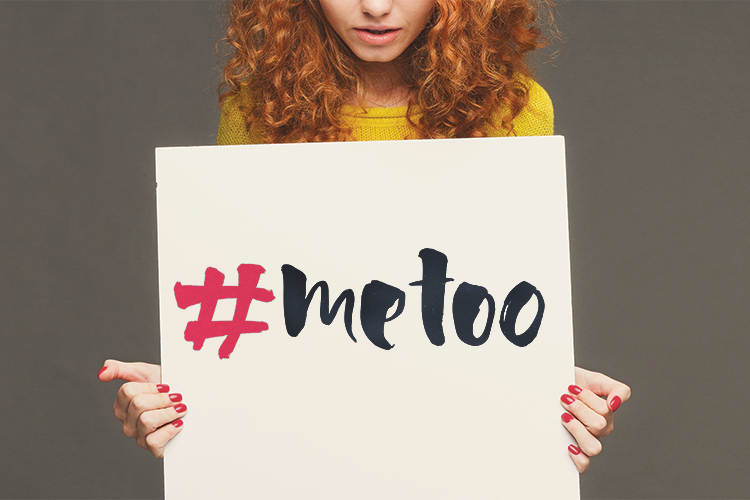
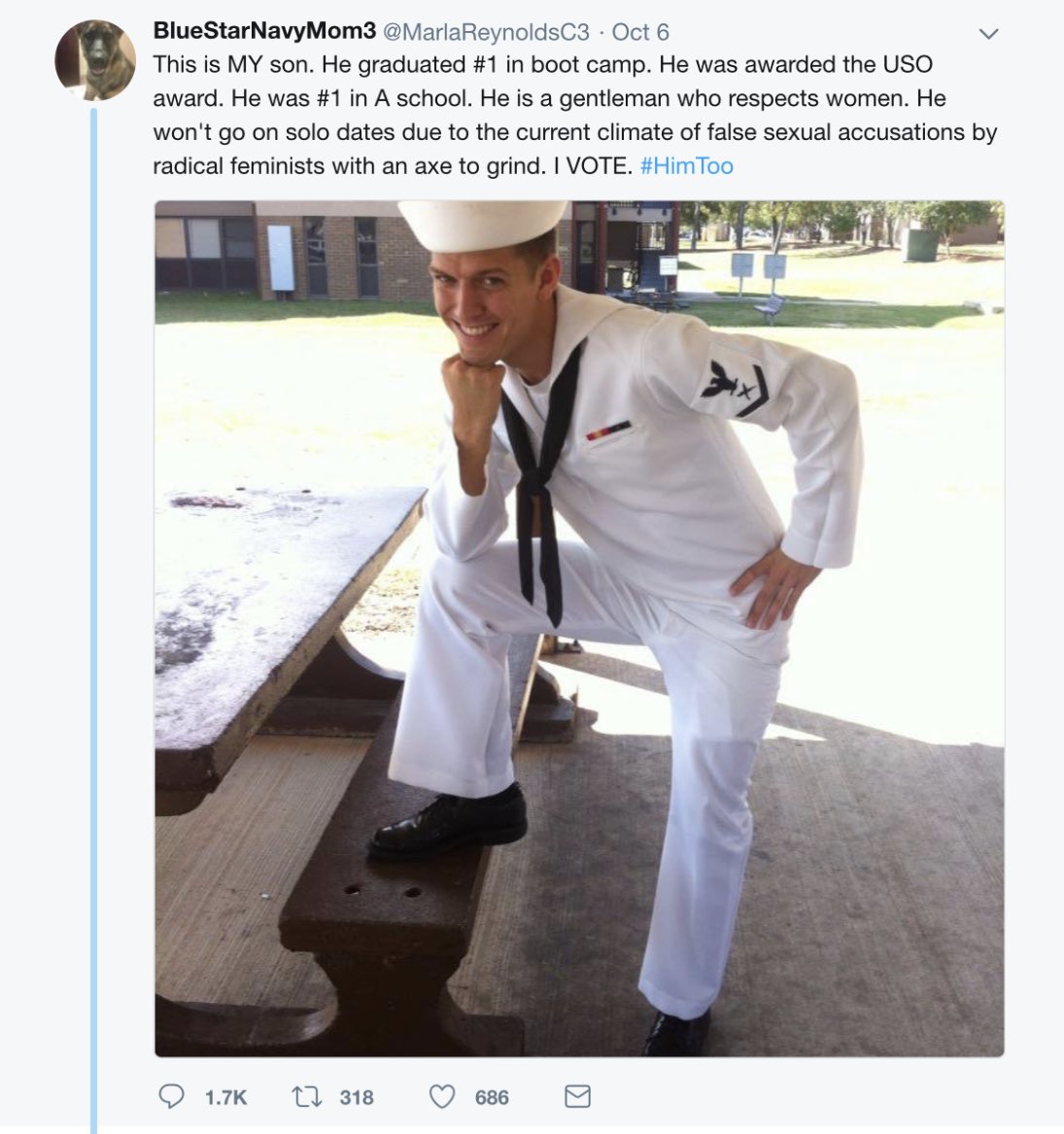
A hashtag started as a reaction to #MeToo, put forth by those who believe that false accusations of rape and sexual assault against men are common and happen way too often.
Employers, #HimToo is dangerous to your workplace.
If you believe that allegations of sexual harassment and sexual assault are presumptively false, your investigation is doomed to fail before it even starts. (Of course, the converse is also true; you cannot presumptively believe that allegations are true, either).
You must engage in a full, fair, and impartial investigation into all allegations of unlawful harassment. And, if you cannot do that, hire a third party to do it for you.
#MeToo has done an amazing job of creating an atmosphere of understanding for complaints of harassment and other sexual misconduct. Let’s not undermine all the good it has done with knee-jerk reactions in the other direction.
It’s not only the right thing to do; it’s also what is legally required.
Future-proof jobs include iOS developers, computer vision engineers and machine learning engineers.
Job seekers in Gen Z , people born from the mid-1990s to the early 2000s, have different interests than the oldest millennials, according to “What Jobs Are Winning the Interest of the Next Generation to Enter the Workforce?” This recent Indeed report analyzed job search patterns among Gen Z graduates. It found that while older millennials in their late 30s are taking leadership positions, Generation Z prefers something else.
The study found that Gen Z has a strong infatuation with “future-proof” jobs, jobs that provide stability. This doesn’t compare with millennials’ “job-hopping” stereotype. Generation Z is here to stay, and for a long time.
Paul Wolfe, senior vice president of human resources at Indeed, has a theory for why Generation Z is mainly interested in job stability.
“Having grown up during the Great Recession, the idea of job instability was the norm for much of this age group,” Wolfe said. “Because Gen Zers grew up in a time of economic turmoil, their parents probably instilled the idea that hard work and dedication is necessary for success.”
Unlike millennials, who grew up with landlines and AOL, Gen Z had access to smartphones during their childhood. The report claims Generation Z may be the first true “digital natives.”
Paul Wolfe, senior vice president of human resources at Indeed
Indeed conducted a popularity index, which evaluated how much more frequently graduation-aged Gen Zers clicked on certain full-time jobs compared to all other job seekers. The index provided a list of the top 15 job interests in that age group.
It consisted of mostly tech jobs, like iOS developers, computer vision engineers and machine learning engineers. Gen Zers’ digital native reputation just became more credible. Wolfe believes this has a lot to do with what Gen Zers experienced in their childhood.
“This is the first generation to grow up with an iPhone,” he said. “[Gen Zers] were 10 years old when the iPhone launched, so they have a different experience with technology than the previous generations.”
Another common interest among Gen Z was healthcare jobs. Anesthesiologists and associate dentists cracked the top 15 most coveted jobs.
It’s no coincidence that these two career options resonate with Gen Z’s future-proof craving. Technology and healthcare jobs are in fields that have suffered major talent shortages over the past couple years. This young generation is looking into the right departments and could significantly benefit from their desired fields’ job security.
Although Generation Z has some popular, common job interests, not all Gen Zers share the same traits. A shocking finding from the index was the number 10 job — bookseller, a job that contradicts Generation Z’s digital native narrative.
Knowing Gen Zers have various interests, Wolfe has a firm idea regarding how that can help them in the future.
“Because we know this generation is marked by looking for future-proof, secure jobs, they likely understand the need for constant skills development in order to grow in their careers,” Wolfe said. “This generation is expected to be hard working, but they will want to be rewarded for their efforts.”
Employees who receive backlash for listening to music while on the job finally have some credibility. Accountemps, a division of global staffing firm Robert Half, conducted a survey consisting of 1,000 workers in office environments, and the results are encouraging for music lovers.
Of those allowed to listen to music while working, 85 percent of participants said they prefer to bump tunes at work rather than listen to nothing. Further, eight out of 10 total survey respondents said they enjoy it, and 71 percent said it makes them more productive.
Meanwhile, employers themselves aren’t necessarily tone-deaf to these potential benefits. Ask Marie Tillman, founder and CEO of Mac & Mia, a curated children’s clothing service. Tillman believes music plays a beneficial role in helping her team of 30 employees at its Chicago headquarters.
“Happy workers are more productive workers,” Tillman said. “If music is something that makes someone happy, I think it makes them more productive.”
Music plays a solid role in making most employees better workers, and the type of genre that has this impact on employees varies by the individual.
According to the survey, out of the 85 percent of people who like listening to music at work, three genres topped the list in terms of popularity: pop, rock and country. Michael Steinitz, executive director of Accountemps, said this can be explained by generational preferences.
“It’s very much a product of the times where so many of the generations have changed in the workforce,” Steinitz said. “If you walk down the street or a college campus these days everyone has got headphones plugged in. That has transitioned into many cultures in the workplace.”
For these employees who are more likely to listen to music at work, these three genres are their favorites.
“Happy workers are more productive workers. If music is something that makes someone happy, I think it makes them more productive.” ~Marie Tillman, founder and CEO, Mac & Mia,
While music largely plays a positive role in a work environment, some people still won’t take kindly to it. Accountemps provided some do’s and don’ts of listening to music at work.
Among the list of do’s are to be respectful to one’s colleagues. Employees should wear headphones if they work in a shared office space to avoid disturbing their coworkers. If not, they should be respectful of their coworkers’ music tastes, as they may not be the same as theirs.
It’s also important for an employee to not play their music too loud. That way they can be attentive and hear their phone ring or a coworker calling their name.
“The only issue we have ever had is when someone is playing music for everyone to hear,” Tillman said. “Maybe someone doesn’t want music because it’s distracting, so that has caused some issues. Now we have employees wear headphones.”
Steinitz is familiar with instances of music being an issue in the workplace, too.
“I’ve heard of stories where people probably weren’t as mindful or respectful for people around them and just were playing music too loud or things that may have been inappropriate.”
There are many other things that employees shouldn’t do in the workplace, like sing along or tap their hands and feet. That will most likely bother coworkers sitting near them. If they have their music playing when coworkers request their attention, it shows a lack of care. Busting out the Beats by Dre headphones when a coworker is requesting attention isn’t the smartest or nicest move.
Steinitz hopes people learned a valuable lesson from this study: don’t be afraid to try new things. Doing the unordinary in the office shouldn’t be frowned upon any longer.
“In this day and age, when it’s such a tight market and you need to keep employees engaged, it’s good to be open-minded to different sort of avenues to keep people motivated.”
When Congress reformed the tax law earlier this year, one key change that might have flown under your radar is an employer tax credit for paid family and medical leave.
You have a written policy that provides employees with at least two weeks annually of paid family and medical leave (that is, leave for a reason that would otherwise qualify for unpaid leave under the FMLA, whether or not you are covered by the FMLA or the employee is eligible for FMLA leave); and
The written policy applies to all full-time employees, and, on a prorated basis, to all part-time employees; and
The paid leave is not less than 50 percent of the wages normally paid to the employee; and
The written policy is separate from your vacation, sick leave, or general paid-time-off policy; and
The employee worked for you for more than a year, and earned no more than $72,000 in 2017
Then you are eligible for a general business tax credit equal to a percentage of the amount of wages paid to a qualifying employee while on family and medical leave for up to 12 weeks per taxable year.
If you have questions about whether you can take advantage of this tax credit, and if so, how, speak with your employment and tax counsel, as well as your accountant.
Gap Inc. was an early supporter of predictable schedules for hourly workers in its stores. In 2015, the San Francisco-based retailer started posting employees’ shifts at least 10 days in advance. It also stopped assigning on-call shifts, a practice that low-wage workers and their supporters claim makes income less reliable and things like child care harder to plan.
That was well before July 2017, when Seattle passed a citywide secure scheduling ordinance requiring that large employers in service industries like retail offer more predictable schedules. However, in the first 10 months the law was in effect, one of the 11 employers that the city investigated based on employee complaints was none other than the global clothing giant.
In February, Gap agreed to pay $20,186.24 in back wages to 268 employees at several of its Seattle stores to settle the complaint, according to city records. As part of the settlement order, Gap also agreed to put local store managers through mandatory training and to allow city inspectors to visit its stores to check shift-scheduling record keeping. In exchange, the city didn’t charge Gap with a violation and dropped further investigation.
The clothing retailer’s situation highlights the plight that service-industry employers could find themselves in as a growing number of cities and states pass laws to make hourly workers’ schedules more reliable and schedule changes less frequent.
Predictable scheduling laws passed in the past few years cover an estimated 740,000 workers and 1,000 employers in at least four cities and one state, according to a July research report from the Economic Policy Institute, an independent nonprofit think tank. In addition, San Francisco, New Hampshire and Vermont have passed laws that give more than 1 million workers the right to request scheduling accommodations, according to the EPI report.
The past few years have witnessed an uptick in city and state laws meant to make work more equitable for low-wage earners and other workers. Predictable schedule laws are the latest manifestation of that trend.
Gap isn’t the only major U.S. employer forced to pay back wages or penalties after failing to comply with newer city or state requirements. Since early 2017, government agencies have collected at least $108,000 from multiple employers for running afoul of the laws.
Whether companies and their human resources departments are compelled to adopt predictable schedules because of the laws or decide to make the switch on their own to gain a competitive edge in a tight labor market, they may find that it’s one thing to embrace the policy in theory and quite another to implement it.
“There’s a gap in communication between corporate and HR and the managers on the ground carrying out the policies,” said Karina Bull, policy manager for Seattle’s Office of Labor Standards.
“Scheduling is one of those applications that are seen as a utilitarian tool like payroll, but can have a major impact on peoples’ lives and work environments,” said Stacey Harris, Sierra-Cedar vice president of research and analytics.
Part of the lag could be attributable to scheduling not having a clear owner within a company. Depending on an organization’s orientation, the function could be run by HR, IT, finance or a combination of all three, said Lisa Disselkamp, a longtime workforce management consultant and managing director at Deloitte who advised the Obama administration on labor-scheduling issues.
Regulations are prompting organizations to take more action, including making modifications to ensure they’re compliant, Disselkamp said.
Adopting better scheduling systems can pay for itself by eliminating costs associated with absenteeism, high turnover and a disengaged workforce, Disselkamp said. More efficient scheduling also provides top-line benefits in the form of additional revenue, especially at companies that have not reviewed labor standards and scheduling in a year or two, she said.
Aside from that, treating employees better by giving them better schedules can improve a company’s public image, Disselkamp said. “It becomes a brand issue. People don’t want to shop at places where they don’t think companies are treating their employees well, especially retail.”
Making Schedules Work for Workers
The past few years have witnessed an uptick in city and state laws meant to make work more equitable for low-wage earners and other workers, including laws enacting higher minimum wages, paid sick leave and paid family leave.
Predictable schedule laws are the latest manifestation of that trend. The laws generally require larger employers in retail, fast food, hospitality and other service industries to give hourly workers some amount of advance notice of shifts and shift changes — typically seven to 14 days. Depending on the jurisdiction, the laws may direct employers to offer additional hours to existing part-time employees before hiring new help or guarantee new employees the minimum hours they were promised when they were hired. Some laws also direct employers to pay employees extra for last-minute schedule changes. In addition to paying back wages, laws may direct employers that fail to comply to also pay fines and in some cases damages.
Anecdotal evidence shows that the laws are already starting to help low-wage earners. “Getting the hours I need means I can count on my paycheck. I always have enough money to buy groceries and save whatever’s left,” said Aubrie, a Starbucks barista, in a statement issued last summer by the activist group Working Washington about Seattle’s new law.
In New York, where a Fair Workweek law took effect in November 2017, “Workers have told us that just having the law in place meant employers’ attitudes changed and that they are already benefiting from it without any enforcement,” said New York City Department of Consumer Affairs Commissioner Lorelei Salas.
Academic researchers studying the impact of laws in Seattle and elsewhere expect to release some of the first data-backed findings later this year or in early 2019. “The real question is going to be whether these laws in general will be enforced and complied with,” said Kristen Harknett, an associate professor of sociology at University of California at San Francisco, and a collaborator on the Shift Project at University of California at Berkeley, which studies service-industry employment. “It’s no small task. Compared to minimum wage, this is much more complicated.”
Some cities have already begun bringing the hammer down on employers that failed to bring their scheduling practices in line with new laws. Since Seattle’s Secure Scheduling ordinance took effect in July 2017, the city has received 200 worker inquiries — not all of which became formal complaints — and investigated 13. By mid-July, the city’s labor standards office had collected close to $100,000 in back wages for 500 affected employees from Gap, Red Robin, Tesla, California Pizza Kitchen, and a Seattle location of pub chain Elephant & Castle. As of mid-September, another 18 investigations were active or pending.
Bull, the Seattle OLS policy manager, would not discuss complaints against specific employers, including Gap. A Gap spokesperson also declined to comment on the investigation, but said there are occasions when store teams go through a period of transition as they get up to speed on new regulations and compliance practices.
Gap “is fully committed to complying with all applicable laws and standards,” spokesperson Lauren Wilkinson said. “We hold our employees accountable for doing what’s right. We’re continually working to make meaningful improvements that benefit our employees and balance the needs of our business and customers.”
Laws Spreading to More Cities, States
Seattle is not the only area investigating complaints. Since New York City’s Fair Workweek ordinance took effect, the city’s consumer affairs department has followed up on more than 115 complaints that led to 69 investigations, and collected $6,175 in payments for workers and $2,000 in fines.
The city’s Fair Workweek law established different requirements for employers in retail and fast food because of those industries’ differing scheduling needs. To date, most complaints have been against fast-food employers, primarily for failing to give new employees an estimated number of hours they could expect to work, as stipulated by the law, according to Salas. Employers also have been fined for making schedule changes without notifying employees within the designated time period, she said.
But because the law is still so new, the city has focused on education rather than penalties. DCA has held 220 training events and had outreach teams walk door to door to hand out business background information and worker notices to post. “Our goal is to get employers to comply, not to fine people left, right and center,” Salas said.
San Francisco’s secure schedules law is part of a package of protections the city passed specific to retail workers. Since 2016 when it became the first city in the country to pass a predictable shift law, San Francisco has launched 11 investigations, all of which are ongoing, according to Patrick Mulligan, director of the city’s Office of Labor Standards Enforcement. He declined to share details about the investigations.
Oregon has investigated three complaints since becoming the first state to enact a predictable shift law, which took effect July 1. Employers under review include a Dollar Tree location in Warrenton for allegedly failing to post information about the new law; a Safeway grocery store location in Portland for an overtime pay dispute, and a Portland-area Domino’s pizza franchisee for allegedly failing to give enough advance notice of schedules, according to state records. As of mid-September, investigations by the state’s Bureau of Labor and Industry were ongoing.
In Washington, legislators were expected to hold hearings on a statewide measure in mid-October. “They’re keeping a close watch on what’s happening in Seattle,” Harknett said.
Creating More Predictable Schedules
Predictable schedule laws do not dictate how employers must create the schedules they are bound to offer, but could lead more of them to automate or improve the existing processes.
The scheduling systems that employers use to comply with the new laws are all over the map, according to city labor officials involved with training and enforcement. That includes bare-bones paper and pencil schedules, Excel spreadsheets and shift scheduling software that can be customized to comply with laws, or a combination of one or more of those, they said.
Larger employers are likelier to use electronic scheduling apps. Fifty-six percent of enterprises with more than 10,000 employees use some form of labor scheduling application, according to the 2018-19 Sierra-Cedar survey. That compares with 46 percent of midsized organizations with 2,500 to 10,000 employees, and 43 percent of organizations with 2,500 or fewer workers, according to the survey, which polled 1,636 global organizations representing 23.6 million workers.
Labor scheduling systems are the least used of any workforce management application with the exception of labor budgeting systems, according to the survey. For example, 90 percent of employers of all sizes use some kind of time and attendance system, twice as many as use a scheduling system.
Employers would be smart not to wait for cities to pass predictable shift laws to act, since they won’t get the employee-side recognition from making the change but will still have to do the work, said Clay Robinson, director of solution architecture at Shiftboard, a shift-scheduling software vendor.
The Seattle-based company has sold its shift-scheduling app to employers in and outside the city limits. Forward-thinking customers use it as a strategic advantage for attracting and retaining workers, Robinson said. “We had a customer that wasn’t inside the city who came to us after the city council approved the law and wanted to offer it to employees in order to be able to say they had taken care of it before they had to.”
Gap has continued to update its shift-scheduling management. After testing several options, last spring the company rolled out an app from Shyft that employees can use to swap shifts. The technology, which the company introduced to all its brands, “helps provide additional flexibility to our store employees while ensuring that our stores are staffed appropriately,” said C. David Ard, senior vice president and global head of people for Gap Inc.’s Gap brand, in a prepared statement.
Among other actions, Gap also changed staffing levels to track traffic instead of projected sales. The company’s brands — which include Old Navy and Banana Republic — also are testing other scheduling systems based on store size and markets.
“There’s no question that store scheduling is an issue that challenges our entire industry,” Ard said. “As a company that seeks to attract and retain the best talent in the business, we recognize the importance of finding ways to enhance and improve the store experience for our employees and customers alike.”
Now that companies have finally settled their core systems into the cloud, HR leaders need to get ready for a deluge of innovation.
The agility of the cloud means technology teams can deliver new features and interactions quickly and seamlessly. Cloud-based HR systems also mean vendors can implement new iterations faster and with a lot less hassle.
That is good news for clients, said Dan Staley, principal HR technology leader for PwC in Atlanta. “Vendors used to roll out upgrades every one to two years, now they are coming out quarterly.” That adds value for users, who get access to the latest features as soon as they are ready, and allows vendors to increase the functionality of their products.
This is allowing them to speed road map timelines, and making it easier for larger vendors to acquire best-of-breed smaller firms and integrate them into their suite of tools. “We expect to see vendors taking their products’ capabilities further, faster,” he predicted. That includes embedding more social and collaboration capabilities and adding new reports and dashboards. It will also allow them to integrate data from multiple sources, to support workforce analytics — which is where the real business value will be generated.
HR management systems vendors have been promising predictive analytics for a long time, without much significant progress. Though that could soon change, said Christa Manning, vice president of Solution Provider Research at Bersin, Deloitte Consulting LLP. “Most platforms are experimenting with machine learning to derive meaningful insights from the masses of employee data they have.”
A Big Year for Big Data
While true predictive analytics for workforce management is still something of a pipe dream, several vendors, including Workday, Visier, Vista, IBM Watson and SAP Successfactors now offer some data analytics capabilities. These tools promise to provide a range of insights into things like whether companies are meeting diversity goals, where they face turnover risks, and training advice for career development.
Many of them are taking advantage of the vast databases stored in the public cloud to hone these systems. The public cloud holds masses of workforce data, which is critical for creating useful algorithms, which in turn are a set of rules the computer uses to analyze the data. “Algorithms need to be trained on large data sets to understand what information is relevant,” Manning pointed out. “They learn from every exchange and get better over time.”
As these algorithms are able to tap more data sets they will be able to offer more targeted insights, Staley predicted. For example, imagine a single system that can review employees’ overtime log sheets, travel spending and their LinkedIn behavior to determine which overworked employees are most likely to quit — then offer HR advice on what they can do to get them to stay. “There are a lot of possibilities for using predictive analytics for making sure your best talent doesn’t leave,” he said.
Analytics tools in the HRMS will also play a role in managing gig workers, according to Cristina Goldt, vice president of HCM products for Workday in Pleasanton, California. Being able to review data regarding all types of workers and projects in a central location will help companies better analyze where and when to hire contractors versus full-timers, who to choose and what to pay them. “They can match skills to different roles, and make their hiring systems more efficient,” she said.
Some vendors, including Workday, are also offering customers the ability to compare their data insights to industry standards to see where they stand. “It makes it possible to benchmark themselves against their peers,” Goldt said.
Are We There Yet?
All of these scenarios are enticing, though the days when business leaders can predict workforce trends through a cursory glance at an analytics dashboard are still well into the future. Unlike other software that is rolled out and ready to use, machine learning takes time and training, and requires access to linked databases with relevant data, Goldt said. “It’s called machine learning for a reason.”
Customers are also still somewhat uncertain about how they will apply analytics in their own organizations. This is partly due to the lack of meaningful case studies, Manning said. “Every vendor is talking about machine learning for HR, but there aren’t a lot of examples yet.”
For companies hearing pitches from their vendors about the magic of workforce analytics, she urged them to “demand live customer references” and real world examples that prove what other companies are doing, how they did it and what results they saw. “Training algorithms requires strong partnerships with vendors who understand the technology as well as how it can deliver actionable information,” she said. This transformation will take time so choosing a vendor you can trust is important.
It should come as no surprise that Alzheimer’s disease has a big impact on the workforce.
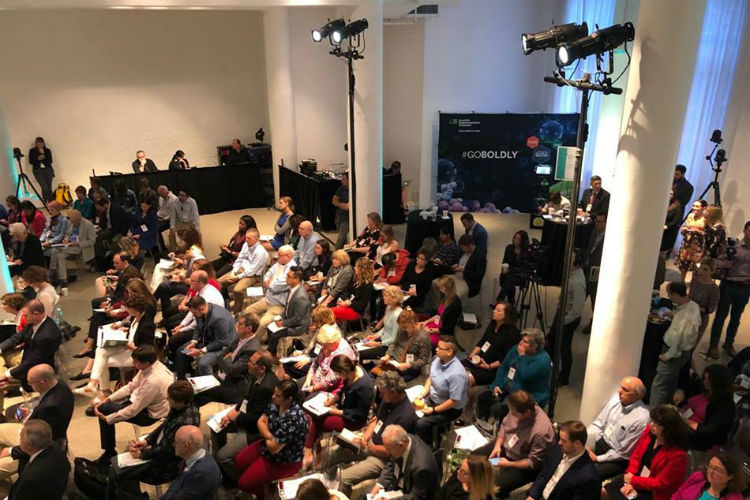
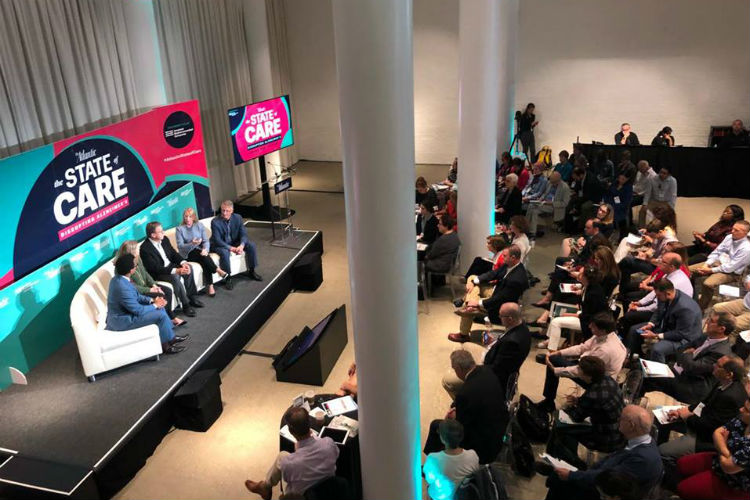
The Atlantic held the event “The State of Care: Disrupting Alzheimer’s” on September 12 in Chicago.
After all, as one speaker at a recent Alzheimer’s-focused event pointed out it’s a devastating disease both for patients and for caregivers.
The event, themed “The State of Care: Disrupting Alzheimer’s” on Sept. 12 in Chicago, covered many facets of the issue: the current state of affairs with Alzheimer’s; why it’s important to confront this public health crisis now; the quest for early detection and a cure; and a view form Capitol Hill.
Start with caregivers: 16.1 million people provide $232.1 billion in uncompensated care a year and tens of thousands of Alzheimer’s caregivers are teenagers, according to speakers at the event. A different source states there are “250,000 children and young adults between the ages of 8 and 18 who are child caregivers to those with Alzheimer’s disease or dementia.”
Whatever the correct number, the takeaway for employers is there is a large number of young people — perhaps not yet graduated from high school and still trying to get an education — whose careers could be impacted early on by their caregiver status. What happens when these children enter the workforce? Is a college education as attainable for these people compared to those who don’t have caregiving responsibilities yet?
Employment issues are commonplace for these people, according to panelists. Caregivers worry if they can afford to send a sick relative to out-of-home care or if their need to work fewer hours will impact their employment.
To be ready for aging and Alzheimer’s, we have to start by actually valuing caregiving, says @jwjnational‘s Sarita Gupta. Caregivers are some of the nation’s most vulnerable workers, mostly making poverty wages, often needing food assistance. #AtlanticStateofCarepic.twitter.com/DrUxS0gw2o
There are programs and benefits that can help caregivers in the workplace. Workforce’s benefits columnist Jennifer Benz wrote on the importance of these programs, which include referral resources, backup child care, eldercare, extended leave, flexible schedules, work from home options and more. Further, Benz argued, organizations can’t simply have these programs in place; they also should “have cultures of trust and compassion, so employees can be transparent about the burdens they manage outside of work and so their work can flex around those needs. “
The caregiver lifestyle isn’t easy, even going past the uncompensated care consideration. For one, caregiving is a big time commitment; 36 percent of caregivers spend 31-40 hours a week caregiving and 19 percent spend 40+ hours per week, according to the “Generational Considerations for America’s Workforce,” a June 2018 report from Unum. The report also found that caregiving may have unwanted physiological and personal problems, with 61 percent of caregivers experiencing stress, anxiety and/or depression, 27 percent reporting marital or relationship stress and 25 percent missing their own medical appointments.
And what about when an employee gets Alzheimer’s?
Let’s start looking at this from a broader perspective. Alzheimer’s accounts for $277 billion a year in direct medical costs. According to speakers at the event, two-thirds of the victims are women (just like 67 percent of the caregivers for this disease are women). Even though there is no cure and the most we can do is on the preventive front, there’s still not enough being done early on. “Our nation is not a prevention-focused nation,” said one speaker.
One medical necessity they recommended: “the checkup from the neck up”. This type of checkup, in which doctors test for cognitive health, isn’t as common as it should be.
Here are a couple resources for employers who find out one of their employees has been diagnosed. This Workplace Strategies for Mental Health webpage includes a case study of an employer who found out an employee had dementia, the steps they took to offer accommodations and eventually the steps they had to take to ultimately terminate the employee. And this guide from the Alzheimer’s and Dementia Alliance of Wisconsin tells employers how to identify, approach and assist employees with early onset dementia.
The major takeaway I got from these sources was that when an employee develops Alzheimer’s, they can continue working with accommodations for a good amount of time in many cases. They may have to quit eventually or an employer may have to let them go, but that shouldn’t be the immediate response.
Millennials are as concerned about Alzheimer’s and dementia as they are about retirement, says Harry Johns of @alzassociation at #AtlanticStateofCare. Seeing the human impact of the disease mobilizes people to make change and progress. pic.twitter.com/N8HUTB5zzF
Some questions I have for employers: How do you plan on dealing with dementia/ Alzheimer’s as your workforce ages? What are you doing to address the caregiving concerns of your employees? Do you have any unique resources that encourage employees to focus on their brain health or get that “check-up from the neck up”?
I want to mention one other moment from the State of Care event. At one point, a panelist asked everyone in the audience how many people have been personally touched by Alzheimer’s or some other form of dementia. I didn’t raise my hand, as so far none of my relatives have developed one of these diseases yet, and I was in the very small minority. It was a strong reminder that this has impact either directly or indirectly on a lot of people, and that’s not going to change any time soon, both publicly and in the workplace.
Emotional intelligence is largely thought of as people skills — how we perceive and express ourselves and how we develop and maintain social relationships. But neuroscience and brain-based leadership studies have shown that it is so much more.
There is a direct correlation between increased job performance when employees are high in EQ. Emotional intelligence is responsible for 58 percent of performance in all types of jobs, and 90 percent of top performers are high in EQ.
There are direct business benefits to increasing employees’ EQ. Focusing on emotional intelligence alongside skill development can help managers improve worker performance and the company’s bottom line. According to a research paper entitled EQ and the Bottom Line, “restaurants managed by managers with high emotional intelligence showed an annual profit growth of 22 percent versus an annual average growth of 15 percent for the same period.” In addition, people with high EQ scores make on average $29,000 more per year than their lower EQ counterparts. These benefits and others like it are seen across cultures and societies.
For organizations to boost employees’ EQ and then translate that into tangible business results, it is critical that managers help their staff improve self-awareness, become better listeners and more effectively manage their stress.
Unlike IQ, emotional intelligence improves with age and is something that can be developed over time. Here are three steps that employers can take to boost their employees’ EQ.
1. Provide communication skills training that helps develop self-awareness and teaches employees to recognize their colleagues’ verbal and non-verbal cues. This means learning how to read the emotional needs of others by assessing facial expressions, gestures and postures and thoughtfully considering others’ feelings when responding and making decisions. This is important in peer-to-peer communication as well as between supervisors and employees. Increased self-awareness boosts interpersonal communication and improves team dynamics.
2. Help employees understand the importance of listening by providing hands-on listening training. Often in meetings employees wait for a pause in the conversation so they can offer their opinion. They are not really listening they’re just waiting to speak.
Melissa Daimler, Pepperdine Graziadio alum and former Head of Learning and Organizational Development at Twitter, so aptly said in a Harvard Business Review article that “’360 listening’, where you’re not only listening to what the person is saying, but how they’re saying it, and even picking up on what they’re not saying, is a powerful — and often overlooked — leadership tool.”
3. Teach employees to manage stress and work collaboratively to develop time management plans. According to the American Psychological Association, 61 percent of Americans say that work is a significant source of stress. To help with stress management, managers should encourage employees to physically remove themselves from a situation that is stressful.
This could mean recusing themselves from a meeting, taking a walk outside or taking time to talk through the situation with a colleague. Managers can also help employees who feel overwhelmed improve their time management skills by working with them to set realistic expectations and deadlines and having regular check-ins to adjust workload and goals as needed.
Managers need to create a work environment that fosters respectful and thoughtful interactions by encouraging employees to use emotional information to guide team dynamics and decision-making. A strategic cycle of assessment, learning, practice and feedback over time will help employees build EQ competencies and become high-performing leaders in their organization.
If employers can raise the collective level of their employees’ emotional intelligence, organizations of all sizes will benefit from stronger teams, more effective leaders and increased bottom-line performance.
The first wave of Generation Z is entering the workplace, and companies may be surprised by how much they differ from millennials. They care more about things like technology, diversity and money than the last generation, and employers will need to adapt to win them over.
“They are the first generation of true digital natives,” said Rachel Harris-Russell, global head of corporate strategy and marketing for Allegis Group a staffing and recruiting company in Hanover, Maryland. “They have a built-in expectation for immediate access to information, and seamless employee interfaces that match their consumer experience.”
They are also more ambitious, socially conscious and diverse than their elder peers. Almost half of this generation in the U.S. identify as non-Caucasian according to the U.S. Census Bureau, so diversity and inclusion efforts have to be more than lip service, Harris-Russell said. “If a company talks about its D&I commitment but doesn’t match that profile, it will put them at a disadvantage with this generation.”
The same goes for corporate social responsibility. Fully 82 percent of Gen Zs consider CSR a major factor when deciding where to work, and 66 percent would take a pay cut to work for a more socially responsible company. “They want their work to have a larger world purpose,” she said. “The more companies embrace this, the more they will attract Gen Z.”
But don’t be fooled. This generation — more than millennials — also cares about money and career development, and they will be more loyal than millennials because of what they lived through during the Great Recession, said Penny Queller, senior vice president and general manager for enterprise talent solutions at Monster. “Seeing their parents get laid off [during the Great Recession] made an impression,” she said. “It caused them to value financial security more than other generations.”
Companies should view all of these expectations as opportunities — not problems. This generation could actually solve the attraction and retention issue so many companies struggle with by bringing a new way of working to the workplace, Harris-Russell said. But companies have to embrace the ideas they bring to the table. “It’s easy to dismiss a younger generation’s ideas as naive, but that would be short-sighted.”
Generation Z could actually solve the attraction and retention issue so many companies struggle with.
Instead, she suggests companies use their Generation Z workers and interns to help evolve their recruiting and retention efforts. “It may change the way you look at old problems.”
Her team works with a big tech firm in San Francisco that regularly assigns new Gen Z staff age-old tech problems to solve — without telling them that no one has been able to crack the code. “They bring a fresh perspective, and 52 percent of the time, they find solutions that deliver a massive step forward,” she said.
Deloitte is taking a similar tack with its Generation Z employees and interns, said Heidi Soltis-Berner, managing director of Deloitte University and workforce talent leader. The company has started recruiting interns as early as freshman year both to engage them before other companies make contact, and offer training to bolster their skills. “This generation has great technical skills, but they also need critical thinking, problem solving and analytical skills,” Soltis-Berner said.
Part of the training includes presenting teams with a real life client problem to solve (with no names) to see how they collaborate and adapt to curve balls. “It’s a safe environment to test what they can do,” she said.
They are also developing a series of digital and virtual reality tools to engage them earlier and more completely in the recruiting process. Last year, Deloitte began building a virtual reality experience for campus recruiting, using Gen Z interns’ feedback to shape the content. At campus recruiting fairs, students can don VR headsets and tour the company on their phones.
“It showcases the Deloitte culture while also giving them a great recruiting experience using technology,” Soltis-Berner said. The company also added an “Explore Your Fit” tool to the website that gives students a sense of the career paths they could follow at Deloitte and how to get there. The tool was initial used only to promote the brand, though Deloitte is starting to use it as a funnel for new recruits.
These kinds of technology-driven tools and branded digital experiences are vital to attract Gen Z, Harris-Russell said. “The idea that recruiting has to be a human-to-human experience is outdated. This generation will find their jobs online.” She urges companies to start refining their recruiting messages and platforms to personalize the brand to this generation.
That includes promoting the brand through YouTube, Facebook and other social spaces that showcase real employees and authentic content showcasing how your company invests in the community, technology, and employee development.
It’s impossible to ignore the benefits that technology plays in people’s lives, but there are also underlying negative effects. Look no further than the workplace, where employees and leaders alike may feel duty bound to respond to emails at night or be available around the clock via their digital device.
“I see this tug of war between, ‘I want to leave my phone behind’ but also looking at it from a very positive light which is, ‘Technology is truly an enabler in what you want to achieve in your health and wellness,’ ” said Swati Matta, director of member engagement and health at employee benefits company League Inc.
Although there are many digital wellness plans available now, employers also are instituting onsite programs to ensure that employees are taking time out of their day to disconnect, she said.
Being constantly connected contributes to depression and anxiety, according to the “2018 Global Wellness Trends” report from the Global Wellness Summit. It reports that human connection is a strong driver of happiness and that 2018 is the year when people will acknowledge the ways in which tech is making them feel ill and strive to reclaim peace of mind.
Swati Matta, director of member engagement and health at League Inc.
In response, League is trying a few things to renew a sense of workplace humanity including walking meetings.
“It’s interesting because when you’re doing these walking meetings, while obviously stacking up on your steps, you’re also instilling this culture that it’s OK to step away from your desk, and you can have a meeting when you’re away from your meeting notes … or whatever you use to have a conversation,” Matta said.
Through its Health at Work program, League works with clients to identify goals and build custom wellness programs, which can include aspects like 10 minutes set aside once a week for meditation or massages. The organization also offers this program to its employees, which is another part of its well-being strategy.
Employees appreciate the connections they have with others at work, and although they don’t fear technology itself, they may be apprehensive that the changing workplace will put them in a position where they can’t connect with others, according to Todd Katz, executive vice president at insurance giant MetLife.
“If employers preserve that sense of connection in the workplace, our view is that companies will be in a better position to recruit and retain. They’re also going to get better engagement, productivity and loyalty,” Katz said.
As disconnecting becomes increasingly attractive to people, the oxymoronic “tech-fighting tech” has been trending in the general wellness space, the “2018 Global Wellness Trends” report also stated. This includes apps like Off the Grid, which allows users to block their phone for any amount of time, and The Moment, which lets people set daily time limits on devices.
Such tech tools are already being used in the workplace, according to Autumn Krauss, principal scientist, human capital management research at SAP SuccessFactors.
The Thrive Away app — developed by Arianna Huffington’s wellness company Thrive Global — deletes new emails a person receives while on vacation, she said. Companies can also restrict sending emails during off hours or create computer pop-ups with messages like “Take 10 minutes to stretch.” Other companies may have their computers lock after a certain amount of time so employees can take a break to step away from the computer.
Krauss said there is value in such solutions but they come with flaws. Employees’ responsibilities continue, so a stretching reminder may come in the middle of conducting a webinar. Or, an employee may leave early to pick up their child from school and find that not being able to send emails at night makes work-life balance more difficult.
“If we really want companies to think about how they can help employees disconnect, that comes from a cultural perspective, and that’s where I’ve seen a lot of this work done,” Krauss said.
Organizations should recognize if they’ve either implicitly or explicitly created an environment that signals to employees that they must always be on, she said. Often, executives set the example by regularly working weekends, taking meetings early in the morning or conference calls late in the evening.
Having coached executives, Krauss said she’s had conversations about re-establishing their own behavior when it comes to these habits. Leaders could work to change such habits, for example by not taking a meeting before 9 a.m. and communicating clearly with the overall workforce in a compelling way that this is acceptable behavior.
“Role-modeling is going to be the first part of this process,” Krauss said, adding that employers should consider how they can cultivate a change in what’s expected of employees through executive communication, leadership behavior and the norms created and reinforced in the office environment.

 You must engage in a full, fair, and impartial investigation into all allegations of unlawful harassment. And, if you cannot do that, hire a third party to do it for you.