Skip to content

Workforce

Author: Rick Bell

Posted on January 17, 2017June 29, 2023

The Workplace Legacy of Barack Obama

Lilly Ledbetter stands with President Barack Obama the day he signed the Lilly Ledbetter Fair Pay Act. Courtesy LillyLedbetter.com

Barack Obama had been in office a mere eight days when he signed the Lilly Ledbetter Fair Pay Act making it easier for women to sue employers for equal pay.

It was the first law he passed as president and a bellwether of eight years of actions to expand rights and protections for American workers that had employers balking at the prospect of added regulation.

Fair pay was just the start. From the early days of the recession, the Obama White House promoted policies to put people to work, improve pay and benefits and protect their rights on the job.

Workplace boards and agencies soon flexed muscles atrophied by eight years of the Bush administration. Other prominent initiatives extended minimum wages and overtime pay for home health workers, and provided guidelines to stop employers from misclassifying employees as independent contractors. The Affordable Care Act, arguably Obama’s biggest, most controversial achievement, gave people not covered by employer-sponsored health insurance — including millions working in the growing gig economy — the opportunity to buy coverage through online marketplaces.

A Republican Congress pushed back on his efforts, leading Obama to use an unprecedented level of executive orders to change workplace and employment-related regulations for federal employees and contractors, moves he hoped private-sector employers would follow.

Not all of Obama’s labor and workplace initiatives succeeded. He failed to raise the federal minimum wage. Immigration reform remains in a holding pattern. An overtime pay law, a hallmark of his administration that would have affected about 4.2 million middle-wage workers, all but died after a federal judge blocked it in late November of 2016 shortly before it was set to take effect.

His relationship with unions was also inconsistent. A two-tier wage contract with union auto workers helped save U.S. automakers during the recession, but was widely unpopular with workers, as was Obama’s stance on trade. Obama appointees to the National Labor Relations Board, the federal agency that oversees labor laws and employees’ right to organize, issued more pro-union decisions than at any other time in 30 years, but other efforts to push through pro-union legislation weren’t successful.

As Barack Obama leaves the White House, what will his labor legacy be?

As Obama vacates 1600 Pennsylvania Ave., other policies and programs he championed could be uprooted by Republican President-elect Donald Trump and a partisan Congress.

Regardless of what Trump’s presidency brings, the uncertainty that comes with such a radical transition presents even more challenges for companies and human resources departments, said Nancy Hammer, the Society for Human Resource Management senior government affairs policy counsel.

“Employers need to know what they’re working with so they can plan and organize policies and employees around what the rules are and get going,” Hammer said. “That was a challenge under the Obama administration because so many changes were made and requirements were piling up. Now we’re facing a situation of wondering whether some of those will be repealed. All of that causes difficulties for employers, and can require them to spend too much time on compliance when they really want to focus on the core mission of their business and keeping employees engaged and productive.”

Digging Out of the Recession

Obama inherited a flailing economy and didn’t waste time addressing it. In 2009, he passed a stimulus package that Rep. Carolyn Maloney, D-N.Y., calls the most significant economic legislation of his tenure because of the tax incentives and infrastructure spending that saved jobs from being axed and created new ones. “We went from losing 800,000 jobs every month at the end of the Bush administration to gaining an average of 180,000 jobs a month in 2016,” said Maloney, the ranking House member of Congress’ joint economic committee.

During his time in office, Obama increased family leave and paid sick leave, and blocked companies from retaliating against employees for talking about pay and other parts of their jobs. As on-demand services such as Uber produced more opportunities for work in the so-called gig economy along with lawsuits over worker misclassifications the Labor Department issued guidelines spelling out the standards companies should use to determine the difference between employees and independent contractors.

Obama also oversaw passage of a regulation that required 401(k) funds to disclose fees that could eat into workers’ retirement savings, and another directing public companies to disclose the pay gap between CEOs and average workers that’s set to take effect in fiscal 2017.

His worker-friendly policies helped the United States dig out of the recession. The country added a total of 15.8 million private and public sector jobs since early 2010, including 156,000 in December 2016 to keep unemployment at 4.7 percent, less than half what it was at the recession’s peak. Wages didn’t bounce back as quickly, though average hourly earnings for private sector workers grew 2.9% percent last year, the fastest pace since 2010.

Executive Orders to Direct Workplace Policy

Obama’s focus on improving fairness for workers through executive orders was unprecedented, according to Lisa Maatz, vice president of government relations and advocacy for the left-leaning American Association of University Women.

One highlight, according to Maatz, was an update to Office of Federal Contract Compliance Programs regulations barring federal contractors from discriminating or retaliating against employees and job applicants for sharing salary information. Another OFCCP rule change mandated paid sick leave for employees of federal contractors.

The guidelines were written in such detail “you could lift it and put it into your employer policy manual,” said Hammer, the SHRM legal counsel.

Having such a template can be a good thing, but it can also lead employers to adopt whatever the federal government minimum is as their own baseline, even if they previously offered something more, in which case, employees lose out, she said.

Under Obama, the NLRB was particularly active, especially on issues regarding terms and conditions of employment. The agency scrutinized to a much greater degree than past administrations employer policies that could squelch employees’ protected speech about terms and conditions of their employment, Hammer said. “The NRLB took a lot of those interpretations, through cases they decided, to an extreme level,” she said.

In another of his more significant organized labor actions, Obama convinced auto industry unions to accept a two-tier wage system that paid entry-level workers significantly less than what they would have made in the past. The deal kept U.S. automakers afloat during the worst of the recession, but was extremely unpopular with workers, dividing union solidarity, and transferring cost-cutting from other industries to manufacturing, according to the LA Times.

The administration also backed the Employee Free Choice Act, which would have required companies to recognize a union if over half the employees in a proposed bargaining unit signed on. But the legislation failed after Democrats couldn’t collect enough votes to defeat a Republican filibuster.

Also on his watch, five states — including Kentucky on Jan. 7, 2016 — passed right to work laws banning union membership as a condition of employment, bringing the total to 27 nationwide.

Growth of anti-union state laws coupled with Obama’s support for the Trans-Pacific Partnership pact, which unions opposed on grounds that it would hurt U.S. jobs, added to a string of grievances organized labor held against the Obama administration. Those grievances also included Obama’s decisions not to make union-favored changes to the Affordable Care Act and safety regulations, according to Bloomberg.

Despite the support he was able to provide, U.S. union membership continued a gradual but steady decline during Obama’s presidency. By 2015, just 11.1 percent of all U.S. private and public sector workers were union members, down from 20.1 percent in 1983, according to the Bureau of Labor Statistics. Shrinking numbers and frustrations could explain why rank-and-file union members who voted for Obama in 2008 and 2012 switched party allegiances to support Trump in the 2016 election.

States Pick Up the Slack

Some of Obama’s most enduring labor legacies could be the employee-friendly laws passed by cities and states that he wasn’t able to enact nationwide.

On Jan. 1, minimum wages rose in 19 states affecting an estimated 4.3 million mostly low-wage workers, the most states to ever increase minimum wages without an increase in the federal minimum wage, according to the Economic Policy Institute. A total of 29 states now have minimum wages over the $7.25 an hour federal minimum, representing 60.8 percent of the country’s total nonfarm workforce, according to the independent think tank.

State and local governments also passed laws mandating paid sick leave and paid time off, and barring employers from discrimination based on gender, race and sexual orientation. In addition, cities such as San Francisco, Seattle and New York passed or are considering instituting so-called predictable shift laws that require employers to give hourly workers schedules two or more weeks in advance, among other provisions.

But a patchwork of local laws and regulations is hardly ideal. It adds to the complexity and costs companies bear setting up payroll and other human resources systems they need to manage people working in different geographic areas. Laws and regulations that vary by area don’t provide the uniform protections people count on. “We’ve always supported the idea of some uniformity across the country. Without it, it makes multistate companies hard to function,” said Hammer, the SHRM government affairs counsel.

Even so, state and local laws show “that you can be pro-growth and pro-employee at the same time,” AAUW’s Maatz said. “You can raise the minimum wage and companies will still form, and they’ll still hire people.”

H-1B Reform in Holding Pattern

Obama’s commitment to work-related immigration reform went largely unfulfilled. Left virtually intact is a contentious H-1B visa system that brings 85,000 highly skilled foreign workers a year into the country to work, ostensibly in jobs employers can’t find equally trained U.S. workers to fill.

Opponents of the program argue that U.S. companies rely on it for cheap labor. In an instance that supports their theory, Accenture paid a $500,000 settlement in October to a former H-1B employee from India for dropping a lawsuit that claimed the outsourcing and consulting giant treated him as a second-class citizen. In the suit, the senior software engineer claims he and other Indian H-1B workers who worked for Accenture in the United States were paid significantly less than U.S. employees and received inferior benefits, discrimination he alleges was based on nationality. Accenture didn’t admit wrongdoing as part of the settlement, according to Law360.

Ironically, a group of ex-Disney information technology employees who are suing that company after being displaced by H-1B workers, also claimed they were discriminated against because of their nationality — as U.S. citizens. That suit, filed in December of 2016, is pending.

By contrast, major U.S. technology companies and other supporters of the current H-1B program say it doesn’t go far enough. They’d like to expand the current 85,000 visa limit to accept more of the tens of thousands of H-1B applications the U.S. Customs and Immigration Service receives a year over that amount, so many the agency holds a lottery every April to pick the winners. The lottery is oversubscribed to the point that a majority of winners historically have been well-heeled information technology outsourcers that can afford to file more applications than they need to beat the odds of being selected, applications that run thousands of dollars each.

John Miano isn’t an Obama fan. Miano, a computer programmer turned labor advocate and immigration policy expert and coauthor of the 2015 book “Sold Out,” said raising the minimum wage for federal employees didn’t affect tech workers, and the H-1B program hurts them.

Miano isn’t convinced Trump can solve the H-1B problem either, especially since multiple bills introduced in Congress in recent years that haven’t gone anywhere. Sure enough, as the 115th Congress opened earlier this month, Rep. Darrell Issa, R-Calif., re-introduced legislation that would radically reform or even gut the controversial H-1B guest worker visa program. Trump has indicated he supports such a step.

Michelle V. Rafter is a contributing editor. Comment below or email editors@workforce.com.

Posted on January 17, 2017June 29, 2023

Big Data and the Law: New Tools but a Better Workplace?


Making employment decisions using cold, hard data seems wrong and risky. But is it?

Big data analytics promises to save companies millions of dollars by streamlining employment decisions and preserving workforces. But is there risk in relying too heavily on automated workforce decisions?

We encounter the results of big data analytics every day, yet we rarely question the appropriateness of its use. Think about the last time you applied for health insurance — the application likely requested information regarding your health history. Your personal health history can help predict whether you will become seriously ill in the future; a prediction that will partly determine your insurability. The process of applying for a loan is similar. The lender will review your credit history to determine how likely you are to repay the loan based on the lender’s experience with others with a similar credit history. This is analytics at work, and, for the most part, it operates very effectively.

Despite widespread adoption of big data analytics in virtually all aspects of business and business management, use of analytics in workforce management has lagged. This is due in large part to the way human resources professionals have been trained to manage personnel matters.

HR often involves emotions and complex notions of equity and fairness. This is a far cry from the sometimes cold, dry reality of financial transactions. HR professionals are trained to examine each personnel matter individually, talk to the parties involved, review documentation, and consider institutional employment policies in the legal context. Making employment decisions using cold, hard data seems wrong and, perhaps, risky. But is it?

Several reports, including from the U.S. Federal Trade Commission and the White House, have cautioned on the risk of making biased workforce decisions based on big data analytics. Users of HR analytics tools even have been advised to monitor their workforce for any evidence of “discrimination by algorithm.”

The Equal Employment Opportunity Commission held a public meeting on the use of big data in employment in October 2016, during which the Agency explored the benefits and risks of using big data analytics in the workplace.

Do the benefits outweigh the risks? Yes, if the analytics are designed and deployed properly. Appropriate use of analytics allows corporations to predict attrition likelihood, optimize recruitment efforts, gauge employee morale, and focus training and development efforts on what requires the most attention, among other benefits. These use-cases not only can result in a more efficient and better workforce, they can translate directly into company savings.

In Eric Siegel’s “Predictive Analytics, The Power to Predict Who Will Click, Buy, Lie, Or Die,” he points to case studies that demonstrate the value big data analytics brings to the workplace. In one, a well-known tech company used big data analytics to create a scoring system that predicts which of several hundred thousand employees were more likely to leave the organization. The flight risk score empowered company managers to prevent the loss from actually occurring or to plan for the departure. He said the system resulted in $300 million in potential savings.

The benefit is real, but commentators ask how real is the risk? Are the analytics and the algorithms on which they are often based tainted with bias?

Algorithms created to help employers make employment-related decisions certainly could be tainted with bias. For example, one designed to help a talent acquisition team identify successful candidates may take race or gender into account.

Even if race or gender is not used to explicitly identify successful candidates, using the algorithm could unintentionally result in disproportionately excluding a particular race or gender from the preferred applicant pool. Bias is entirely avoidable, however, if the analytics are carefully and correctly designed.

Humans, of course, are not perfect. We have a number of unintentional biases arising from seemingly well-informed decisions based on the experience and intuition of talent management team members. If used correctly, big data analytics can remove potentially biased intuition and, instead, support decisions with reliable and neutral data science.

Why do some commentators remain concerned? Perhaps it’s the feeling that employment decisions are about people, not cold, hard data.

In any event, responsible employers contemplating employment analytics platforms must ensure their algorithms and models do not incorporate protected characteristics such as race and gender as a predictive variable. Moreover, employers must review periodically the models to determine whether certain individuals are being disproportionately excluded or harmed.

The most reliable and effective HR analytics platforms provide guidance to companies faced with employment-related decisions. The algorithms alone should never drive the decision. This point is nicely illustrated in the above example of using flight risk scores. Once flight-bound employees are identified, managers can try to affect employees’ decisions to leave. This hybrid approach leverages the analytics to identify the areas of highest risk and permits companies to focus their efforts and resources in a meaningful and effective way.

Use of big data analytics in the workplace is here to stay. Embrace it. When utilized properly, analytics can have a significant impact on companies’ bottom lines and help preserve their employees.

Eric J. Felsberg is a principal and national director of JL Data Analytics at Jackson Lewis P.C.


Posted on January 17, 2017June 29, 2023

Gaming the System to Boost Recruiting

Gamification is helping companies curb unconscious bias from recruiting.

Consumer goods maker Unilever announced the launch of a new digital recruitment program that will use gamification to eliminate unconscious bias from its hiring process. The technology, unveiled in September, mixes gaming elements with video interviews to identify the best candidates among its 250,000 annual graduate applicants, said Leena Nair, chief HR officer for Unilever.

“It is hoped that this innovative approach will help us attract new talent to the company,” Nair said in a statement.

This trend, which promises to make every aspect of the talent development experience “fun and engaging!” has led to a surge of new tools, vendor platforms, and social features across the HR tech platform, from recruiting through training, performance management and succession planning. It is important to note that gamification is not the same as gaming, said Kyle Lagunas, analyst for IDC.

“It’s not about turning work or job applications into games,” he said. “It’s about leveraging game mechanics for other use cases.”

For example, a status bar letting candidates know where they are in the application process is a gaming mechanic, as is giving employees points or badges for submitting good referrals. “The end goal is to incentivize a certain behavior through these technologies,” he said.

Unilever joins a number of global brands including Google, Uber, Marriott, and Deloitte , using gamification in their recruiting strategy in an effort to increase candidate engagement, shorten screening time, and build brand awareness. Though using it to eliminate bias is somewhat new.

The platform invites candidates to play a series of games that allow Unilever to gain insight into their skills and potential, which may not show up on a résumé. It also gives them a sense of how well the candidates “connect with the company’s goals and purpose.”

Nair called it a “truly interactive experience” that will allow the company to connect with applicants in a more meaningful way.

Dishwasher Hired in Coding Challenge

It’s an interesting spin on a difficult problem that recruiters and hiring managers struggle to address. “The challenge with bias is that most people don’t realize they are doing it,” said Vivek Ravisankar, co-founder of HackerRank, a tech talent recruiting platform that uses coding challenges to assess candidates’ skills rather than résumés.

Bias isn’t just limited to racial or gender issues. It can extend to what schools a hiring manager thinks are relevant, where a candidate is from and what past experience they have. “We are drawn to people who are like us,” he said. That can subconsciously impact hiring decisions, leading managers to dismiss the most skilled candidates in preference for someone more familiar, or to leave the job open. Ravisankar notes that unconscious bias has led to the myth that talented developers are impossible to find. “When you eliminate bias and just look at a candidates skills, you’ll find there are a lot more options.”

Ravisankar shared the story of a former dishwasher who taught himself to code on the side but was repeatedly rejected by companies because of his non-traditional career path — until he completed a HackerRank challenge for VMware, the virtualization software subsidiary of Dell.

“He did great on the challenge and got the job,” Ravisankar reports. “It’s a great example of someone who was repeatedly rejected in every résumé screen but now works for a Fortune 500 company.”

Gamification can also be used to challenge decisions made by recruiters and hiring managers to further drive bias out of the process, Lagunas said. For example, having recruiters and managers rate candidates with a five-star tool that requires them to provide justification for low ratings. “They can’t just say ‘poor culture fit,’ ” he said. Instead they are prompted to explain how that candidate doesn’t align with the core pillars of the company’s culture. “People often use ‘culture fit’ as an excuse not to hire someone. This use of gamification challenges that excuse.”

But technology alone, no matter how fun or engaging, will not solve the entire problem of bias, Lagunas said. While these tools help companies look beyond the résumé, managers still need to be aware of their internal biases when making final hiring decisions. “The biggest hurdle is admitting we all have them,” he said. “You have to embrace your bias before you can find a solution.”

Sarah Fister Gale is a writer living in the Chicago area.

Posted on January 12, 2017June 29, 2023

First Entry for Worst Employer of the Year

Jon Hyman The Practical Employer
We already have a nominee for worst employee of 2017, so why not share the love and nominate a worst employer.
Drum roll …

Man Fired For Attending Son’s Birth

The first day of the new year was pretty eventful for Lamar Austin. The 30-year-old welcomed a son and got fired on the very same day — Jan. 1. …

On Dec. 31, Austin’s wife Lindsay went into labor. He decided that he was going to stay by her side for the birth of their son … . Yet, in order to do this Austin had to forgo two days of work as a part-time security guard with a company called Salerno Protective Services while his wife was in labor.

“I thought, ‘I’m just going to do what I feel is right for my family,’ and that’s it,” he told the Huffington Post.

Austin, a military veteran and father of four, had just started the job and was on a 90-day trial period. Despite having shown up to all his previous shifts, he received a text at 1 a.m. on Jan. 1, informing him that he was terminated due to his absences.

Thankfully, my faith in humanity is not shaken. The Huffington Post reports that Austin’s email has been flooded with job offers since this story broke.

And, yes, I get it. New employee. No FMLA. Unclear whether he properly called off work. But seriously? Military vet. New father. Fired via text while by his wife’s postpartum bedside. Am I wrong to think that Salerno Protective Services deserves this nomination?

We will circle back at the end of the year to see if any employer can top this. But, for now, congratulations Salerno Protective Services, you are my first nominee for the Worst Employer of 2017. Follow along all year for future nominees, and an exciting year-end poll to name the winner (or is it the loser?) of this new feature.

Jon Hyman is a partner at Meyers, Roman, Friedberg & Lewis in Cleveland. Comment below or email editors@workforce.com. Follow Hyman’s blog at Workforce.com/PracticalEmployer.

Posted on January 12, 2017June 29, 2023

Sexism Remains an Unwelcome Advancement in the Workplace

When Andee Harris launched an HR tech startup nearly two decades ago she took pride in creating a workplace that supported women with family friendly benefits and ample career opportunities. She never imagined that when the company was acquired in 2011 the culture that she helped to build would change dramatically. Suddenly, she found herself unable to attend her firm’s executive retreat because it was at a male-only hunting lodge.

“Every year they did strategic planning over the weekend at a hunting lodge in Montana,” said Harris, 43, who was chief marketing officer at the time and the only woman on the executive team. “For 10 years it wasn’t an issue and then I joined the team. My CEO said, ‘We just realized that they don’t allow women so we’ll just take notes and follow up with you.’ I said, ‘No, I’m going to go.’ ”

wf_0117_feature2
Some experts are warning of a rise in gender discrimination in the workplace. Illustration by Anna Jo Beck

The CEO called the lodge and convinced them to make an exception, but according to Harris the damage was done. She resigned soon after.

“They weren’t trying to be mean about it, but they didn’t realize the position that they put me in,” said Harris, who is now chief engagement officer at HighGround, a Chicago-based tech firm. “I pushed back and accused them of being sexist, but in their eyes they accommodated me. In tech, sexism is not as blatant as some women think it is. It’s not ‘grab ’em by the pussy.’ It’s a lot of little things that add up.”

Harris was referring to comments made in 2005 by newly elected President Donald Trump that were caught on a videotape uncovered by the Washington Post in October of last year. Trump, then a private citizen, can be heard boasting about kissing and grabbing women by the genitals.

wf_0117_feature_sexism_harrismug
Andee Harris experienced workplace sexism shortly after her former company was sold.

Most sexual discrimination in the workplace is much more subtle than blatant harassment and takes many forms, according to Rosalind Barnett, a researcher at the Women’s Studies Research Center at Brandeis University. While sexual discrimination in hiring, pay and other aspects of employment is illegal, attitudes and certain behaviors are much harder to prove. Sexism can mean being denied a promotion in favor of man who is deemed a better cultural fit, being talked over in meetings or never getting credit for your ideas, she said.

“Gender discrimination hasn’t gone away, its gone underground,” said Barnett, who coauthored the 2013 book “The New Soft War on Women: How the Myth of Female Ascendance is Hurting Women, Men, and Our Economy.” “We’re talking about things that are not legally actionable. People who do this are often not even aware of it. Sexism is in the air.”

While Trump’s comments were roundly condemned, some brushed them off as “locker room talk,” which women’s rights advocates see as a tacit acceptance of sexist behavior, including harassment. Many fear that workplace sexism could get worse.

“[November’s presidential] election threw so many of us for a loop,” said Meg Bond, psychology professor and director of the Center for Women & Work at the University of Massachusetts Lowell. “You realize that there are people who are not bothered by deep sexism and racism and that’s disturbing. Are we are bracing for more sexism in the workplace? Absolutely.”

Bond is a member of the U.S. Equal Employment Opportunity Commission’s special task force on the study of workplace harassment, which released a lengthy report in November showing that it remains a big problem. In 2015, the EEOC received 28,642 sexual harassment complaints, representing nearly one-third of the all complaints filed that year. That averages to 76 complaints a day, according to the report.

Defining Discrimination

Sexual harassment is a violation of Title VII of the Civil Rights Act of 1964, which prohibits employment discrimination based on national origin, sex and religion. The most common type of sexual harassment is called quid pro quo harassment and involves demanding sexual favors in exchange for some kind of employment benefit, according to Tom H. Luetkemeyer, an attorney with Hinshaw & Culbertson in Chicago. The other kind is hostile environment harassment, which is defined as “frequent or pervasive” unwanted sexual advances or comments that create a hostile workplace, he said. Harassment also includes making offensive remarks about a person’s sex — whether female or male — or being subjected regularly to offensive jokes or images.

wf_0117_feature_sexism-leutekmeiermug
Tom H. Luetkemeyer, attorney with Hinshaw & Culbertson.

“If it’s severe and objectionable on an objective and subjective basis and it’s based on gender, it will likely rise to the level of sexual harassment,” Luetkemeyer said.

And if left unchecked, employers could ultimately pay a big price.

In 2015, the EEOC settled 5,518 sexual harassment cases totaling $125.5 million. Since 2010, employers have paid out $698.7 million to employees alleging harassment through the EEOC’s administrative enforcement pre-litigation process alone, according to the report.

In addition to legal expenses, employers who fail to address sexual harassment are likely to see a decline in productivity and higher health care costs, according to Bond. Workers who experience sexual harassment often suffer depression, anxiety, turnover, more sick days and a host of physical ailments that come with psychological distress, she said.

“Women who work in an environment where there’s harassment are less happy, and men are also less satisfied,” Bond said. “It’s not just a few targets that are victims. It’s the whole workplace.”

Yet, only 30 percent of employees who experience sexual harassment report it to their employer, according the EEOC report. Most try to avoid the harasser, deny or downplay the incident, or try to live with it, the report found.

HR’s Harassment Role 

That is not surprising to Michelle Phillips, an employment attorney with Jackson Lewis. She questions whether HR is the right place for victims to go to lodge a complaint. She said that women may feel unsafe telling their stories to employees who may have been hired by the executives accused of the harassment.

“HR professionals play a critical role in a company’s culture, so it’s important for them to set the standard and be part of the enforcement mechanism to make sure complaints are heard and that no retaliation occurs,” she said. “The number one reason employees don’t report harassment is retaliation. They are afraid of being fired, shunned, ignored or intimidated. Like with Roger Ailes, a company can have a culture of not reporting things. HR plays a critical role in that.”

Please also read: Building a Sexism-Free Workplace

In July, Fox News CEO Ailes resigned amid accusations that he sexually harassed current and former female employees throughout his career. The scandal left many observers wondering how he was able to do this unchecked for so long.

Liz Washko, an employment attorney with Ogletree Deakins, advises employers to provide multiple ways for employees to report harassment or other types of sexual discrimination, such as a hotline and one or two HR representatives to hear complaints. But most importantly, she urges employers to follow through.

“You can have best policies but if you don’t act it means nothing,” she said. “We recommend that employers take complaints seriously and investigate them, and if they conclude there is an issue, then take corrective action.”

Claiming ignorance doesn’t protect employers from liability, according to Washko.

“I would urge vigilance right now,” she said. “People might not come to you. Make sure that front-line managers understand the importance of protecting employees and ask them to keep their ears to the ground so that maybe they can alert you. Even if people don’t complain, the company could be liable if these things are happening in the workplace.”

Identifying the Disconnect

The first step is learning how to spot sexist behavior, according to Valerie Aurora, CEO of Frame Shift Consulting, a San Francisco-based tech diversity and inclusion firm. This is especially challenging in tech where sexist attitudes are common, even though the industry prides itself on its progressive culture.

wf_0117_feature_sexism_valerieauroramug
‘A lot of us think sexism is bad but a lot of us are acting in sexist ways,’ says Valerie Aurora.

Aurora started Frame Shift last year to help companies address this disconnect. One of the services that Aurora offers are ally skills workshops, training that teaches people how to use their societal privilege, like being white, or male, or wealthy, to help others. She said she developed the program in 2011 after a friend was groped at an open source software conference.

“I think our self-image as an industry and our actions are out of sync,” she said. “A lot of us think sexism is bad but a lot of us are acting in sexist ways.”

While many companies believe that sexual harassment training is the key to tackling the problem, she said most approaches are ineffective.

“Many times the instructors are rolling their eyes and telling people that they don’t want to be there, that they’re forced to do this legally, so no one takes it seriously,” she said. “You watch a 10-minute video and go home thinking, that was pointless.”

A better approach is to help people walk in someone else’s shoes in order to make them aware of their own subtle biases. Ally skills workshops focus on real-life scenarios to drive the point home.

“For example, you’re in a meeting and a woman has an idea and everyone ignores it and 30 minutes later a man voices the same idea and everyone gives him credit,” she said. “What can you do to make sure that first person gets the credit?”

Harris agreed that having allies in the workplace who are willing to speak out against instances of sex discrimination is key to creating a civil workplace. But she also encourages women to speak up for themselves.

“We need people who will have your back — whether they are men or women,” she said. “As women we tend not to fight and we sometimes let people take credit for our work. I think it’s also important that women stand up. Many companies focus on diversity and inclusion, however, a lot of companies don’t even realize how biased they really are.”

The workplace has become the front lines in the battle against all forms of discrimination, and employers have a responsibility to address them, according to Bond.

“The workplace is one of the primary places where people can and often do come into contact with people of different views,” she said. “It is an important setting for increasing understanding and equity. Some employers do see that they can play an important role in our society by helping to bring people together across differences.”

Rita Pyrillis is a writer in the Chicago area. Comment below or email editors@workforce.com.


Posted on January 11, 2017June 29, 2023

The Implications of Obamacare’s Future on the Workplace

Dueling meetings regarding Obamacare took place last week on Capitol Hill, with President Barack Obama leading the Democratic lawmakers and Vice President-elect Mike Pence leading the Republicans. Both sides discussed the future of the Affordable Care Act and of health care in America.

The Republicans want to replace and repeal, but they don’t yet have the replacement plan. According to ABC News, after repealing it, they would delay any major changes for 18 months to three years in order to find a replacement. The Democrats want to make sure the health care law stays intact. Obama reminded Democrats that real lives are at stake and that the ACA is popular with many voters.

Meanwhile, President-elect Donald Trump said earlier this week on Jan. 10 that he wants to repeal the ACA soon but pass a replacement “very quickly or simultaneously.”  

Whatever the future of the Affordable Care Act is, it will have an impact on employers who provide health care and employees who rely on the ACA for coverage.

What the country needs is a bipartisan replacement which provides a patients’ bill of rights but is also easy for business owners to execute from the administrative standpoint, said Gretchen Van Vlymen, head of human resources at StratEx, an HR consulting firm.

Gretchen Van Vlymen, head of HR at StratEx.

“The heart of Obamacare is great,” said Van Vlymen. “That’s the patients’ bill of rights, which has important parts like making sure younger people up to 26 can stay on their parents’ plan and ensuring that people with preconditions can get health insurance.”

Even with a Republican president and a Republican majority in both the House and Senate, she believes the patients’ bill of rights will remain intact. Republicans, from a PR standpoint, probably won’t want to take away insurance from people who need it the most.

That being said, certain mandates won’t last from a business standpoint, like the individual mandate requiring individuals to have health insurance and the employer mandate requiring employers to cover full-time employees.

A major takeaway from this meeting is that the impact of Republicans repealing the law but having no replacement plan would have major consequences, said Van Vlymen.

“That scares me a little,” she said. “I want to make sure if we do repeal the law, we replace with something bipartisan that makes sense.”

Whether Republicans and Democrats will come up with a bipartisan plan is a different story.

“I hope that politicians are thinking about not only employees but also HR practitioners and business owners who have to follow the rules,’ said Van Vlymen. “I hope this becomes a more cooperative effort than a divisive one.”

Meanwhile, as businesses move forward, what they should do is realize that the ACA is still law and that they need to follow it unless it is repealed. With a Republican plan likely in the future, it would benefit HR people to make sure they educate themselves and employees on health savings accounts and high deductible plans, which may be the future of health care in the workplace.

Andie Burjek is a Workforce associate editor. Comment below, or email at aburjek@humancapitalmedia.com. Follow Workforce on Twitter at @workforcenews.

Posted on January 10, 2017June 29, 2023

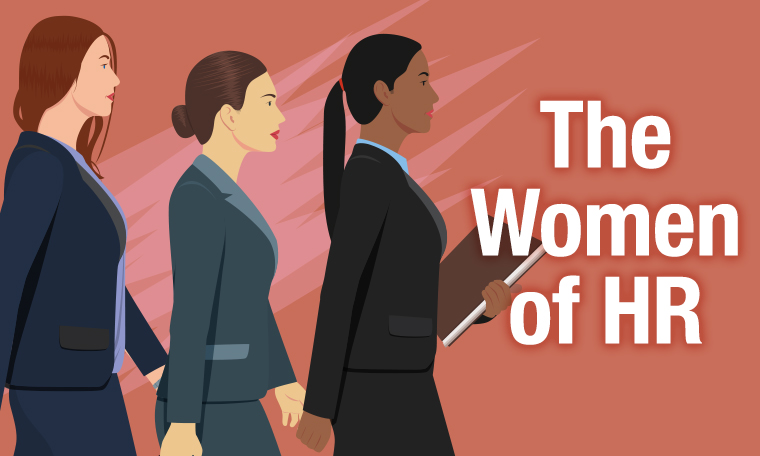
The Awesome Influence of Women in HR

Women of HR

Organizations are transforming how they manage their workforces, and women in C-suite human resources positions are leading the way.

As you read each profile, you’ll see how these women are ending formal annual performance reviews, closing the wage gap, improving gender parity and diversity, and increasing employee engagement, among other initiatives.

It’s also the only leadership role that is predominantly female. Seventy-three percent of HR practitioners at the manager level are female, according to 2015 Bureau of Labor Statistics data, compared against 43 percent in marketing and 27 percent in IT.

Although the numbers dwindle at the highest level of HR, women still hold an employment edge when compared to their male counterparts. CEB, a best practice insight and technology company, analyzed 382 HR executive appointments between 2011 and 2016 and found that 55 percent of these new hires are female. This coincides with separate data from executive search firm Korn Ferry, which found that from a sample of top 1,000 U.S. companies, 55 percent of CHROs are women.

Some women managing these changes are well known. One is IBM CHRO Diane Gherson, who helped Big Blue end performance reviews based on stack-ranking employees. Another is Kathleen Hogan, the Microsoft human resources executive vice president who in 2016 closed the gender pay gap at the company so salaries for women are 99.8 cents for every $1 earned by men.

But people management power players are as likely to work at enterprises with fewer than 5,000 employees as they are to head HR at companies with hundreds of thousands of workers.

Workforce contacted professionals at business schools and HR associations, along with six female CHROs, to explore the position further: Why are women faring better in this field than others? What roadblocks still exist? And what does the future of HR look like?

Despite the fact that the equality of the position in terms of gender is unparalleled in other fields of business, there’s still ample room for improvement, said Bill Greenhalgh, CEO at the Human Resources Professionals Association. Male HR managers make about 40 percent more than female HR managers, according to the 2014 U.S. Department of Labor statistics, and in 2013, only 11 out of the 50 highest-paid HR leaders were female despite the fact that it is a female-dominated profession.

Regardless of company size, the women profiled here exemplify how HR and CHRO roles have evolved over the past decade. A competitive job market and technology advances have seen the function shift from practical and administrative to strategic.

Still, there remains the so-called “glass elevator,” said Matthew Bidwell, associate professor of management at the Wharton School at the University of Pennsylvania. That is, men tend to fare better in female-dominated roles than females in male-dominated jobs.

“What you see in female dominated industries is they become progressively less female as you rise up [the career ladder],” said Bidwell. “Our stereotype of a manager or a leader is too often a man.”

In general, male CHROs tend to spend the most time on strategic activities (i.e., adviser, counselor, coach) while female CHROs tend to spend more time as “talent architects,” said Greenhalgh. In the current talent economy, where attracting and retaining the best talent is increasingly a challenge, this has positive implications for female CHROs.

“There’s a great opportunity here, because female CHROs spend more time in that area,” he said. “It’s an area where they can really add value.”

Just as the field of HR is shifting to become more strategic, HR leaders are moving in the same direction. When HR was more people and process driven, the clichĂŠ of an HR practitioner generally had those stereotypically female traits, like caring about other people and being communal. Now, as HR leaders gain more strategic and analytic roles, the skill set needs to be successful in shifting as well.

“This has implications for the profile of HR people,” said Bidwell. “The people who will do the best will have a combination of [these skills]. We’re looking for people who blend the understanding of how people work and also have the ability to analyze and understand data and make data-driven decisions.”

The female CHROs showcased in this feature represent a variety of industries, company sizes and business challenges, and they have that unique blend of people and strategic skills that HR professionals need to succeed in the modern workplace.

Read about the Women of HR highlighted in our January/ February issue:

  • Ellyn Shook, Chief Leadership and Human Resources Officer, Accenture
  • Alison Quirk, Executive Vice President, Chief Human Resources and Citizenship Officer, State Street Corp.
  • Kim Davis, Chief Human Resources Officer, NFP Corp. 
  • Anjani Panchal Bhargava, Senior Vice President, Chief Human Resources Officer, Topco Associates


Posted on January 10, 2017June 29, 2023

Being Light on Your Feet a Big Help in HR

wf_0117_womenchros_quirk
Alison Quirk, Executive Vice President, Chief Human Resources and Citizenship Officer, State Street Corp., Boston

One of the enjoyable aspects of watching a dance routine is how something that looks so seamless requires so much strength, flexibility and preparation. Dancers memorize their routine, but while preparing for the next step they must remain in the present. Each small movement contributes to the dance holistically. There is also a degree of strategy, mental capacity and intelligence along with the creativity, flexibility and pure strength.

Alison Quirk — who took dance classes recreationally through college and is the vice chairman of the board of Boston Ballet Inc. — brings the same mental and creative stamina to her role of chief human resources and citizenship officer at financial services company State Street Corp., where she’s worked for 14 years.

“I never thought I’d be as involved in an arts organization as I am, but I love being involved in it. It really stretches me in ways I’m not used to,” said Quirk, 54. “Working with artistic people is a lot different than working with people in the financial services. It helps me think differently and helps my innovation and creativity in my day job.”

She began her career at Boston Financial Data Services as a compensation and benefits specialist. She remained for 16 years, attaining functional experience in every area of HR and ending up as head of HR. She continued on to Liberty Financial Cos. and FleetBoston Financial.

When she had been at her first company for 15 years, she was getting itchy to do something else. She had to decide between “the devil you know versus the devil you don’t. Why would I give up everything I put into this to take a risk to go do something new? I had a young family, and [there’s] a lot of uncertainty with moving to something new.”

Some advice from her father, whom she described as the biggest influencer in her career, made her decision easier: Treat your career like you’re making strategic decisions for a business, he advised. Is a career move now good for that business? The advice has guided her throughout career junctures since then.

That willingness to make hard admissions and necessary change is apparent when talking to her, whether it’s admitting she needs to move on to the next career opportunity or admitting her own shortcomings and improving on them.

wf0117_womenofhr_200pxwideShe’s always enjoyed multifaceted roles that have a level of complexity to them, and big, general management jobs are her sweet spot. Persuasion, though, is a skill she’s focused on and improved.

“One of the skills that I have that makes me effective there is I can see broad landscapes and the implications of decisions into the future pretty clearly,” said Quirk. But she’s “had to learn how to articulate a vision of what it is I actually see. I’ve had to learn how to articulate that so that other people will follow.”

Several years ago, State Street was going through a major transformation across the entire organization, which has 32,000 employees in 28 markets. To deal with the confusion involved, Quirk realized they had to change the way State Street was communicating the company’s strategy to employees. She led a team, and together they developed a new way of talking about the future of the organization called The Way Ahead, which was based on the foundation that people don’t follow what you want them to do unless they understand why you’re doing it.

“It was a big departure from the way we talked about the strategy in the past,” said Quirk, adding that ideally it results in improved communication across the company. The CEO originally wasn’t keen on it but gave it a shot. “It took a lot of time, persistence and personal risk, but I really believed it was worth the risk because we needed something different,” she said. “We needed something disruptive to get employees’ attention and [have them] understand what it means to move through this change with us.

Taking risks, taking action and taking control of her own decisions are qualities that make her an effective HR leader, such as when communicating a disruptive strategy to employees.

“There have been junctures in my career where I felt like I was running out of opportunities, therefore I had to take it upon myself to do something about that,” said Quirk. “The trick there has been to recognize what it is I’m wrestling with.” At times like this, she added, it’s important for people to realize that no one else will fix their problems. They should take action themselves to do something about it.

“It could mean something outside work, like joining the Boston Ballet board, or it could mean changing jobs and going in a different direction,” she said. “The trick is to recognize when you’re there, and not keep spinning and expect someone else to solve for it.”

Click here to see the other Women of HR.

Andie Burjek is a Workforce associate editor. Comment below or email editors@workforce.com.

Posted on January 10, 2017June 29, 2023

Upon Further Review …

ellynshooknew
Ellyn Shook, Chief Leadership and Human Resources Officer, Accenture.

CEO Pierre Nanterme broke the news when Accenture switched up performance reviews in 2015, but the heavy lifting fell to Ellyn Shook, the management consultancy’s chief leadership and human resources officer.

Accenture isn’t the first U.S. multinational to move away from once-a-year ratings-based reviews. But with 375,000 employees worldwide, it is among the biggest.

The reasons were simple. Accenture was reshaping its business units to meet changing customer needs, and the firm’s existing performance management system and talent pipeline weren’t producing employees with skills that fit.

Accenture’s workforce spans five generations, but 72 percent are millennials, and annual reviews didn’t give younger employees the regular feedback they desired. Then there was the amount of time spent on reviews: 2 million hours a year, 75 percent of it on paperwork and only a quarter on people actually talking to each other.

wf0117_womenofhr_200pxwide“The amount of energy and time that went into this distribution curve was not time adding value to our people or helping them be better,” Shook said.

She crowdsourced — a millennial favorite — to find out how employees wanted Accenture’s people practices to change. They said they wanted real-time feedback on how they were doing, personalized career training, opportunities to provide input on how business got done, and for the firm to be more transparent about diversity and other company practices.

Shook used the input and Accenture’s objectives to transform the existing performance management process into what she refers to as a performance achievement culture. Instead of rating employees along a distribution curve, Accenture switched to using Gallup’s StrengthFinder to identify and build on what people are good at.

In-house software developers built an app called Accenture People that employees use to set priorities and share them with work teams. The app works on iOS and Android phones and has voice recognition. That makes it fast and easy for an employee to ask a coworker for feedback, “and they can speak it into the app so it’s captured, and they’ll see it immediately so they can improve their skills,” Shook said.

Shook, 53, tested the new feedback system on 20,000 employees in multiple business units and countries for four months before introducing it to the entire company in January 2016 along with other changes, including a new on-demand online learning program. Early results have been positive. Employee mood improved along the way and remains high, Shook said. Accenture recruiters mention it in job interviews as a selling point of working there.

Change of such magnitude takes time and resources. Shook estimates she spent a third of the past year restructuring reviews, which she calls “probably the most significant talent transformation we’ve ever undergone in our history.” She got help from a cross-functional team of 2,500, and an outside communications firm. An Accenture spokeswoman declined to say how much the firm spent on the retooling.

As part of the new performance achievement culture, Accenture is spending thousands of hours training managers to coach employees to reach performance goals, because “looking ahead is different than providing backward-looking feedback,” Shook said. Time will tell if the investment pays off.

Click here to see the other Women of HR.

Michelle V. Rafter is a contributing editor. Comment below or email editors@workforce.com.

Posted on January 9, 2017June 29, 2023

Failure to Follow Employer’s Reporting Rules Dooms Employee’s FMLA Claim

Jon Hyman The Practical Employer

F-M-L-A: Four letters that cast fear in the heart of any HR professional. So many rules to follow, so many ways to mess up and cost an employer. It’s not just an employer that has FMLA rules to follow, however. Employees also have rules that they must follow, or the FMLA will not protect their leave.

In Alexander v. Kellogg USA (6th Cir. 1/4/17) [pdf], an injured production operator terminated for unexcused absences lost his FMLA claim because he failed to follow his employer’s attendance policy.

Christopher Alexander injured his neck in a slip-and-fall at work. He sought and obtained intermittent FMLA leave for the injury. Kellogg has an attendance policy that requires employees intending to be absent to use a call service to notify the company at least two hours before the designated start time. Kellogg uses Cigna to administer its FMLA leave. Cigna separately requires an employee on approved intermittent FMLA leave to report any FMLA absence within 48 hours of missing work; otherwise, the absence is unexcused.

Alexander reported his FMLA absences to Kellogg using its call service, but failed to separately notify Cigna, which logged the absences as unexcused. When Alexander amassed enough absences, Kellogg terminated his employment.

Alexander sued for FMLA interference and retaliation. The 6th Circuit affirmed the dismissal of his claims:

The record does not permit even a prima facie case for FMLA interference. Alexander neglected to notify Cigna, and thus Kellogg, of his intent to be absent on November 20 and from December 9 to 11 under his approved FMLA leave. He admits not reporting any of the absences to Cigna within forty-eight hours of missing work by phone or online—Kellogg’s internal requirement.… [A]n FMLA regulation authorizes employers to deny FMLA leave for failure to comply with internal notice requirements “absent unusual circumstances.” … Alexander has neither offered evidence of unusual circumstances in his case nor has he alleged ignorance of Cigna’s/Kellogg’s internal notice requirement. …

There is [also] no evidence that Alexander exercised a right under the FMLA for the purposes of his retaliation claim. The catalysts for Kellogg’s supposed retaliation—terminating Alexander—were his unexcused, ultimately excessive absences beginning on November 20.… Since the statute cannot protect non-FMLA leave, Alexander cannot satisfy the first element of a prima facie FMLA case.

While it may seem as if employees hold all the high cards in the FMLA poker game, employers are well within their rights to enforce attendance policies against employees who fail to follow their rules. Now, go check your attendance policies to see if they contain these types of notice and call-in rules, and, if not, consider implementing reasonable call-in requirements to help curb FMLA abuse and over-use. If the law allows you to take advantage of these policies, why not help level the playing field against a statute that, more often than not, favors the employee.

Jon Hyman is a partner at Meyers, Roman, Friedberg & Lewis in Cleveland. Comment below or email editors@workforce.com. Follow Hyman’s blog at Workforce.com/PracticalEmployer.

Posts navigation

Previous page Page 1 … Page 81 Page 82 Page 83 … Page 95 Next page


Webinars


White Papers


  • Topics

    • Benefits
    • Compensation
    • HR Administration
    • Legal
    • Recruitment
    • Staffing Management
    • Training
    • Technology
    • Workplace Culture
  • Resources

    • Subscribe
    • Current Issue
    • Email Sign Up
    • Contribute
    • Research
    • Awards
    • White Papers
  • Events

    • Upcoming Events
    • Webinars
    • Spotlight Webinars
    • Speakers Bureau
    • Custom Events
  • Follow Us

    • LinkedIn
    • Twitter
    • Facebook
    • YouTube
    • RSS
  • Advertise

    • Editorial Calendar
    • Media Kit
    • Contact a Strategy Consultant
    • Vendor Directory
  • About Us

    • Our Company
    • Our Team
    • Press
    • Contact Us
    • Privacy Policy
    • Terms Of Use
Proudly powered by WordPress