
A few people have emailed me since the election wanting me to write something scathing and heated about the outcome, but I didn’t for two reasons. One, the less I talk about that situation the better I feel. I have to live it, as do many Americans, and that’s more than enough. Two, politics has its connections, but not necessarily a place in this workplace diversity-themed blog.
That changed when I ran across an NPR article detailing the drama diversity trainers are facing post-election. The piece, from writer Kat Chow, described it as a heightened sense of us vs. them, and spoke from multiple diversity consultants’ perspectives.
For instance, consider Dorcas Lind. As the election results rolled in and it became clear that Donald Trump would be the next president, Lind, founder and president of Diversity Health Communications, wondered if she should think about another career.
Lind was shocked when she saw how many people supported Trump — “the stretch of red in her district, a New Jersey suburb, which she said had once been celebrated for its diversity.” She experienced feelings of hopelessness and futility as she contemplated the amount of work that needed to be done and her marked lack of interest in doing it.
Like many, Lind associated a vote for Trump with a vote for intolerance, the antithesis of strategic diversity and inclusion practice. But Chow wrote that many consultants are expecting an increase — however slight — in calls for business in the near future. Why? “The corporate world is a microcosm of the larger world. People who voted for Trump work at the same companies as those who voted for Hillary Clinton or other candidates. And with a contentious post-election environment, employees will inevitably clash over matters of race.”
Basically, HR and business leaders will be super busy, and many have little to no experience dealing with the kind of problems that will crop up thanks to the political polarization in the country right now. Lind said leaders will need to create an entirely new language to deal with the election aftermath. It sounds exhausting.
Chow also interviewed Luby Ismail, head of Connecting Cultures, a diversity consulting business in the Washington, D.C., area. Ismail, an Egyptian-American Muslim, helps companies like Sodexo, Nike and Walt Disney Co. better understand American Muslims and Arab-Americans. She said the quandary in the workplace — should we talk about politics and religion or not — is tricky because right now, since people actually need to talk about these things. They’re actively processing what’s happened and what are the potential implications for them and for their families.
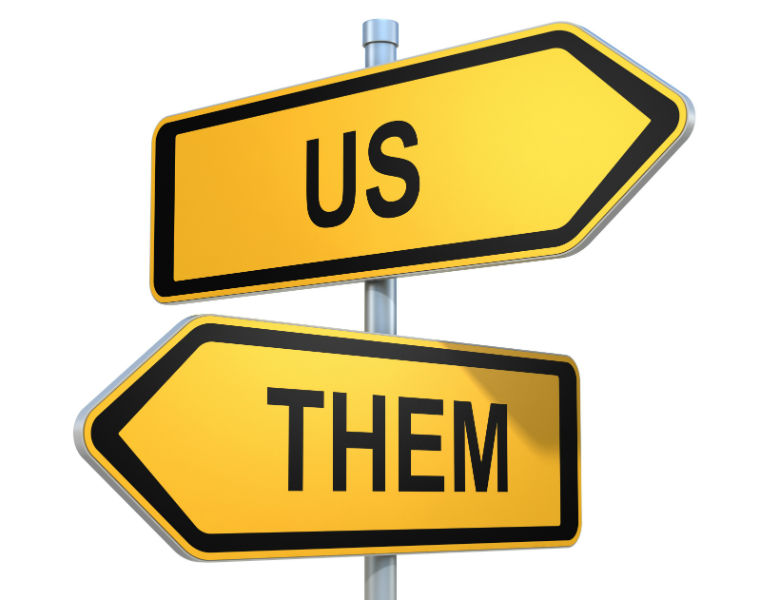 There is no if. That us vs. them feeling, Trump vs. Clinton, or whatever camp you may fall into, will filter into the workplace. To ignore it, feeling that avoidance of this particular issue is possible because professional courtesy will mitigate or suppress issues, simply won’t work. To coin the popular vernacular, people are feeling some type of way about the current state of political affairs. And that’s putting it mildly.
Now more than ever diversity executives have to ensure that everyone’s concerns are addressed — including white men, said Doug Harris, head of the Kaleidoscope Group, a Chicago-based diversity company. “I think right now there’s a temperament within society of exclusion on both sides of the table,” Harris said. “And those who may have been seen to have been historically included are feeling just as excluded as everyone else.”
On the one hand, that shared sentiment might be used as a connector, common ground — however wretched and ill conceived — but it doesn’t make things any easier for diversity trainers and consultants who have to deal with this angst on top of historically rooted bias, ignorance, racism and all the other dimensions of diversity that we shake our heads over.
Lind said one can’t think of all challenges as equal because the rhetoric at play is, “One side has lost, one side has won, and everybody needs to get together and move forward for all Americans in the country.” Diversity executives and consultants are left to walk a very narrow and rocky line to keep everyone engaged in productive dialogue and to promote positive action and behavioral change.
Even using the word diversity before the word consultant is a problem for some. Leah P. Hollis, president of Patricia Berkly LLC in Philadelphia, specializes in workplace bullying. She said as soon as she uses the word diversity “she loses the room.”
It’s tough. Rather, it was tough before, and it’s even tougher now. Diversity executives have to not only pursue their individual missions to advance equality and tolerance and strategic diversity management for their respective workforces and businesses, they have to navigate a sticky layer of political sensitivity as well. I don’t envy them the task.
It reminds me of an old Guns N’ Roses tune, “Welcome to the Jungle.”
Kellye Whitney is associate editorial director for Workforce. Comment below or email editors@workforce.com.