Much of the news lately has focused on how we, as employers, can do a better job training and otherwise educating our employees about workplace harassment.
So, I ask — is this parody the worst harassment training video of all time, or, is it so bad, that it’s actually the best training video?
I think I’m leaning toward the latter — that this video is so brilliant in its awfulness that it might just make a really good training tool, or least part of great compliance and education program.
What do you think?
Share your thoughts in the comments below.
Jon Hyman is a partner at Meyers, Roman, Friedberg & Lewis in Cleveland. Comment below or email editors@workforce.com. Follow Hyman’s blog at Workforce.com/PracticalEmployer.
When employers hear the word “accommodations” they might respond in several ways.
Some immediately see dollar signs, thinking accommodating an employee’s health condition may require a high price tag for multiple pieces of adaptive equipment. Others may think providing accommodations are too complicated and would rather wait until an employee is 100 percent healthy before having them return to work. And, there may be others who are apprehensive about finding and sourcing accommodations, as they don’t know where to begin.
Employees who received reasonable accommodations for their health conditions returned to work sooner, according to a recent survey.
However, these perceptions are inaccurate and can be potentially harmful for an organization’s overall productivity. An absent employee often can result in reduced output and additional burden on other employees who may have to work overtime or take on additional responsibilities. This can lead to employee turnover or additional staffing issues.
In addition to productivity concerns, there also are serious legal and compliance issues that could ensue from failing to accommodate an employee. Fines or legal action under the Americans with Disabilities Act Amendments Act could result if an employer neglects to provide an employee with reasonable accommodations that can help the employee better perform his or her job.
A recent survey from The Standard found that employees who received reasonable accommodations for their health conditions returned to work sooner, felt better about their employers and were more effective at their jobs. Ninety-three percent of employees surveyed said they could perform their job more effectively after receiving an accommodation.
As an employer, you can work with your disability carrier to implement a disability management strategy that helps create a supportive environment and allows employees to receive the accommodations and assistance they need to succeed in the workplace. Here are a few insights on how your organization could benefit from this type of partnership.
One issue that can drive an employee’s poor performance is a health condition. While a direct supervisor may see an employee’s performance declining, he or she may not equate it to a health issue.
An employee may be fearful of proactively bringing attention to their condition at work. The Standard’s survey found that 53 percent of employees were too scared to bring up their health condition with a supervisor, while 49 percent felt they were treated differently after speaking with their supervisor.
This disconnect could translate into a less productive or absent employee. Working with a disability carrier and implementing a comprehensive disability management program can help address these concerns and create a supportive environment that helps employees get the accommodations needed to stay at work or return to work. A disability carrier can help implement a process for identifying an employee who needs assistance and helping to train direct supervisors on what to do if an employee does need assistance.
Implementing the Right Type of Accommodations
The most important thing to consider when implementing an employee’s accommodation is that it should be tailored to each employee and his or her unique situation. No two employees or conditions are the same. For many employers, this can sound daunting, but they don’t need to manage it alone.
Some disability carriers have consultants who can work alongside an employer to coordinate an employee’s stay-at-work or return-to-work accommodations. This approach is more common than you may think, as 77 percent of employees were helped by their employer’s disability carrier, according to the survey.
Disability consultants can connect with the employee’s medical team to discuss restrictions or limitations, collaborate with you on a return-to-work plan and determine potential accommodation ideas. Disability consultants can rely on their own expertise, including years of helping other employers with reasonable accommodations under the ADAAA.
This approach can have big results. Employees who took a disability leave and received accommodations required a shorter disability leave by almost 30 days than those who didn’t receive support, according to the survey. Consider how your organization could benefit from an employee who is back to work almost one month sooner.
Finding Straightforward Solutions
Sometimes, simple adjustments are exactly what an employee needs to help boost his or her productivity and help mitigate their illness or injury. Accommodations don’t have to be elaborate to be helpful for an employee working through a health condition. Of the accommodations provided to help support employees’ health conditions or disabilities at work, many were simple adjustments, according to The Standard’s survey:
61 percent said they were provided with flexibility to attend doctors’ appointments.
58 percent were provided with schedule modifications.
40 percent noted they received workstation modifications.
Overall, these accommodations and support can help increase employee productivity. Forty-two percent of employees surveyed felt they could perform their job extremely effectively after receiving support from their employer, while 50 percent of respondents agreed with the statement that they felt more productive after receiving accommodations.
Accommodations are an effective way to help an employee with a health condition either stay at work and avoid a disability leave or return to work sooner after requiring a disability leave. Working with a disability carrier can not only provide you and your employee with the right support, but help boost your culture and productivity overall.
Tom Foran is the vice president of underwriting and product development at The Standard. Comment below or email editors@workforce.com.
Jason Shann worked as the Enterprise Desktop Management Team Leader in the IT department of Atlantic Health System.
He also suffered from tinnitus, a crackling and buzzing noises in his left ear caused by an Eustachian tube dysfunction. His tinnitus would flare up unpredictably, and, as it worsened, it caused him to suffer anxiety and depression.
As a result, he applied for, and was granted, a 21-day FMLA leave, and intermittent leave thereafter upon his return to work. Despite the intermittent FMLA leave, his tinnitus continued to worsen. Ultimately, he decided to take short-term disability leave, which he intended to roll into long-term disability and retirement.
Before leaving Atlantic Health, the company discovered that he had “removed” a plethora of computer assets from his workplace. According to the police report, he took four laptops, one iPad, three hard drives, one portable DVD-R/RW and RAM drive, one mouse and an AC adapter for one of the laptops. The company also discovered that he had used unauthorized third-party software to overwrite more than 27,000 files on the one hard drive he left at his desk.
Needless to say, Atlantic Health cut short Shann’s retirement plans and terminated his employment. It also emailed one of its computer vendors to advise that it had “launched an internal investigation to determine if Atlantic Health employee Jason Shann has been operating a side business performing computer support while on Atlantic Health time clock.”
The court had little difficulty concluding that Shann’s disability played no role in the termination decision:
It should be no surprise that “the removal of [Atlantic Health] equipment and software from the facility without authorization” could precipitate Shann’s termination. Atlantic Health’s employment policies unequivocally state that behavior that warranting immediate termination is “theft, misappropriation, or unauthorized possession of property belonging to Atlantic Health System.” Here, Atlantic Health’s corporate investigator reviewed security video tapes from August 16, 2011. In these videos, Shann is seen “carrying what looked to [be] computer hardware on both occasions.” …
Additionally, Atlantic Health terminated Shann for “the removal of proprietary hard drives from his workstation’s computer without authorization.” At his workstation, Shann had a desktop computer containing three hard drives. On August 16, 2011, Shann removed two hard drives from the desktop computer by “pop[ping] the case off, unplug[ing] it, and tak[ing] [them] out.” Shann did not ask for authorization before removing the hard drives and taking them home. …
Lastly, Atlantic Health also terminated Shann for using an “unauthorized … third-party program” to “overwrit[e] … over 27,000 files from his workstation’s computer.” Notably, the record indicates that the third-party program was run on August 16, 2011.
As a result, Shann lost his disability discrimination, and FMLA interference and retaliation claim.
The employer, however, was not able to convince the court to dismiss Shann’s defamation claim resulting from the post-termination comments made to its computer vendor.
What lessons can we learn from this case?
Employers must tread very carefully when communicating personnel decisions, or the facts underlying them, to third parties. The employer really did not have a compelling need to disclose its beliefs about Shann’s wrongdoing. And I’m not sure it disclosed anything untruthful (at least as the facts are presented in the case). But the court was not necessarily convinced and held that issue over for trial.
In other words, be careful what you communicate about employees and their terminations. Sometimes (most times), less is very much more.
Come back tomorrow for a discussion of the other issue in this case — whether the employer failed to accommodate Shann’s tinnitus.
Jon Hyman is a partner at Meyers, Roman, Friedberg & Lewis in Cleveland. Comment below or email editors@workforce.com. Follow Hyman’s blog at Workforce.com/PracticalEmployer.
The recent Harvey Weinstein allegations have caused an outpouring of personal experiences with sexual harassment shared under the hashtag #metoo. What is deeply disturbing are the accusations that HR has been complicit and has failed to take appropriate action to address this scourge.
In Laurie Ruettimann’s Oct. 18 Vox post, “Let’s face it. HR is powerless to help women who are harassed,” she suggests that many of you are simply ignoring complaints of sexual harassment in your workplaces because HR’s function is to protect the company from employment-related risks.
Is that really how HR is thinking?
It is a huge risk for companies when you consider the enormous cost of turnover, low productivity and poor morale that happens when complaints are ignored. Even more devastating and tragic is the debilitating harm to employees, not only to the employee experiencing the harassment but also to other employees who are deeply affected when learning of or seeing their colleagues being mistreated. Sexual harassment creates a hostile working environment and it cripples an organization.
One very important thing that you need to know that Ruettimann does not mention in her article: Sexual harassment in the workplace is illegal. It is a crime. If you fail to stop sexual harassment in your workplace, you are aiding and abetting criminals. You are breaking the law.
Drive vs Sexual Harassment abstract with words related to sexual harassment.
Ruettimann recommends that employees bypass you and form their own affinity groups or quit their jobs. I have a better idea, HR: Do your job and don’t participate in or allow criminal activity! There are effective actions you can take right now to rid your workplace of this scourge and be a champion for your employees. The law is on your side. Start now to:
Inform everyone in your company, including your board of directors, that sexual harassment is illegal and you have a zero-tolerance policy. This means that anyone found to be harassing anyone in the workplace will be fired or kicked off the board. Full stop. No second chances.
Make it very clear what is illegal behavior. This is straight from the Equal Employment Opportunity Commission: It is unlawful to harass a person (an applicant or employee) because of that person’s sex. Harassment can include “sexual harassment” or unwelcome sexual advances, requests for sexual favors, and other verbal or physical harassment of a sexual nature.
Harassment does not have to be of a sexual nature and can include offensive remarks about a person’s sex. For example, it is illegal to harass a woman by making offensive comments about women in general.
Both the victim and the harasser can be either a woman or a man, and the victim and harasser can be the same sex.
Although the law doesn’t prohibit simple teasing, offhand comments or isolated incidents that are not very serious, harassment is illegal when it is so frequent or severe that it creates a hostile or offensive work environment or when it results in an adverse employment decision (such as the victim being fired or demoted).
The harasser can be the victim’s supervisor, a supervisor in another area, a co-worker or someone who is not an employee of the employer, such as a client or customer.
Inform everyone in your company that everyone is responsible for reporting sexual harassment in the workplace even if they are not the target. If you see something, say something! Failure to report is also cause for disciplinary action.
Immediately suspend the alleged perpetrators and get them out of the work environment. Yes, you can still pay them while you conduct the investigation but you cannot take the risk of further harassment or interference with the investigation. If they communicate with the person(s) alleging harassment or talk to any potential witnesses while on suspension, fire them. (This will be policy.)
Establish an independent third party confidential hotline for those who are afraid of reporting incidents of sexual harassment directly to you. Keep in mind that zero tolerance means that if you — the HR professional — fail to address sexual harassment in your workplace, you will be terminated.
The above strategies work. As a 30-year HR veteran, I have used these strategies to address sexual harassment, exploitation and abuse in very diverse settings from corporate to nonprofit, including international operations.
The bottom line for HR: No excuses. Take action now. Do not enable sexual harassment.
Colleen Striegel is the vice president for HR and administration at the American Refugee Committee, a humanitarian and relief agency based in Minneapolis with operations in Africa, Asia and the Middle East. She has worked with a United Nations agency team to investigate sexual abuse of refugees by aid workers in Africa and was a part of an independent task force charged with examining how allegations of clergy sexual misconduct were handled by the Archdiocese of St. Paul and Minneapolis.
Do you know what to do if one of your employees dies on the job?
Here are nine steps to follow: 1. Call 911, ASAP. There is never a reason to wait to inform the authorities, period.
2. Immediately thereafter, notify the employee’s emergency contact person, preferably in person. This news should not be delivered over the phone if at all possible. If you must deliver the news via a phone call, arrange for a company representative to meet the family, likely at the hospital.
3. If the death is work-related, contact your nearest OSHA Area Office, or OSHA’s national 24-hour hotline at 1-800-321-OSHA. All fatalities must be reported to OSHA within 8 hours.
4. Notify executives and HR, and other employees with a need to know what happened.
5. Notify your remaining employees of the fact of the fatality, and let them know that details will follow.
6. Follow your internal procedures for contact with the media. If you do not have any such internal procedures, or if you are not comfortable with anyone in your organization facing the media, engage a public relations firm, as soon as possible. You will need someone to say something. “No comment” is not a good statement under these circumstances; it will look like you’re hiding something.
7. Show extreme sensitivity to the family of the deceased. Who do they want to be their contact person? Who will disseminate funeral arrangements and how? What are the family’s wishes regarding flowers, donations, calling, visitations, and other contact? How and when does the family want to handle necessary employment issues (medical benefits, life insurance, workers’ comp, retirement accounts, etc.)?
8. Designate one internal contact person to disseminate information to employees, and for employees to ask any questions. Unless the family directs otherwise, instruct employees not to contact the family.
9. Arrange for grief counseling or other mental-health services for those employees who witnessed the accident, or are otherwise impacted.
Jon Hyman is a partner at Meyers, Roman, Friedberg & Lewis in Cleveland. Comment below or email editors@workforce.com. Follow Hyman’s blog at Workforce.com/PracticalEmployer.
In the world of HR management systems, the transition to the cloud is finally old news. While some companies are still waiting out their old on-site solutions, when they are ready to upgrade the path is clear, said Mike DiClaudio, principal in management consulting for KPMG in Detroit. “It is rare that you talk to an organization choosing an HR management system today that isn’t in the cloud.”
Thanks to the agility and rapid upgrades that are possible in the cloud, the new focus is on transforming the HRMS from a repository of information to a business management tool, he said. Vendors are rolling out artificial intelligence tools, machine learning, mobile apps and other automated features that are making it possible for customers to use their HR data to support business decision-making. Whether companies want to determine who deserves merit raises, help employees select the right benefits packages or let recruiters figure out where the best candidates come from, these tools promise to change the way employers and employees use an HRMS, DiClaudio said. “These tools are driving innovation in this space.”
Different vendors are taking different approaches. In 2016, for example, SAP SuccessFactors outlined plans to use machine learning to detect bias in every decision point of the talent life cycle, from hiring through succession. “We believe technology can help root out and eliminate bias, and promote more diversity and inclusion across the entire business,” said Mike Ettling, president of SAP SuccessFactors in a 2016 statement from the company.
Workday Inc. also is rolling out a series of employee engagement tools, such as the Opportunity Graph, which shows employees the transitions that others have made from their role, to help them identify potential career paths and training opportunities. “It harnesses the power of data to help them see what might be possible,” said Cristina Goldt, vice president of HCM products for Workday.
While some vendors are developing these tools in-house, industry experts, including DiClaudio and Josh Bersin of Bersin by Deloitte, believe the rise in advanced analytics and automation tools for HR will trigger another merger and acquisition spree. The industry has already seen a few deals, including Ultimate Software’s 2016 acquisition of Kanjoya, a predictive analytics solution provider; and ADP’s acquisition of the Marcus Buckingham Co., a cloud-based performance and talent management solution.
The buying trend is likely to continue as vendors look to expand their use of analytics, and to incorporate better survey tools, performance management features, and self-service tools. “The world of talent management is being disrupted by new technologies,” Bersin said. “There will always be the need for new innovations.”
Though unlike the past, much of the innovation in analytics technology are coming from big players, like IBM Watson and Blue Prism, which aren’t likely to be for sale. That may force HRMS vendors to partner rather than acquire to achieve their analytics goals, DiClaudio said. “It’s a highly competitive space that will require a lot of collaboration.”
Alexa for HR
Companies are also looking to their HRMS vendors to provide a better overall user experience that mimics the way employees engage with consumer sites. “The HRMS should be like Echo,” said Bersin, referring to Amazon’s voice-controlled intelligent assistant, Alexa. He envisions a future where such interactive technology will sit on top of the HRMS — and every other technology platform in the company — providing employees with a single environment to access all of their workplace software. “It won’t matter what system they are using, all they will see is that technology layer.”
For companies making HRMS buying decisions today, DiClaudio warns not to get too enamored with all the new features. He suggests companies look for alignment between their own strategic goals and the vendors’ technology road maps.
“You want your vendors to be able to scale with you,” he said. “These conversations should less about process and features, and more about how they are going to integrate the next great technology to support your business.”
Sarah Fister Gale is a writer based in the Chicago area. Comment below or email editors@workforce.com. Follow Workforce on Twitter at @workforcenews.
Each month Workforce looks at important stats in the human resources sector. Here’s the topic we’re keeping an eye on for September 2017: workplace communications. Comment below or email editors@workforce.com. Follow Workforce on Twitter at @workforcenews.
Have HR’s best practices of the past become biased practices in today’s shifting workforce?
People in human resources often refer to certain methods as their “best practices.”
The term best practice is somewhat misleading since it is not possible to find a method that is best for every company’s culture and industry. Nevertheless, it is commonly used when referring to HR practices that are widely accepted as “the way we do things.” These tend to be traditional HR processes — things like merit increases, annual performance reviews or the nine-box grid for succession planning — that haven’t changed in decades, and continue not to change simply because, well, they continue not to change.
The problem with many of these best practice methods is they were designed for a workforce that looked different in the past than it does today. Decades ago the workforce was much more homogenous than it is now with significantly fewer women, minorities and older workers.
At that time the norm for these individuals was to pursue other life goals that weren’t necessarily compatible with a traditional career. Now they are entering the workforce in droves, but the concept of career remains traditional, and so do the practices we use to develop employees and grow careers within our organizations.
The annual performance review is a great example of a common “best practice” that is now being recognized as being far from best for today’s workforce. In the past several years, organizations realized that this practice isn’t effectively meeting the needs of their people. It has prompted a performance management revolution with companies ultimately finding ways to embed more ongoing feedback, continuous learning, and relationship-based coaching and guidance into those traditional evaluation processes. What a great thing it was to be able to recognize so broadly the need for change in this area.
But what if your pain points were hidden beneath the surface? What if your company was adopting other traditional best practices that were ultimately hurting the productivity of your workforce and you didn’t even know it?
Chances are this is happening in your company to some degree. But the people your practices are hurting are underrepresented and are therefore sometimes invisible when it comes to your company’s programs and initiatives designed to engage, retain and develop them. Somewhat ironically, your company is also probably struggling with how to build and maintain a diverse workforce. This is ironic because the resolution to one challenge lies in resolving the other.
There are key decision points that tend to favor majority status employees over the underrepresented ones. But it can be difficult to create change in these processes, especially when we’ve done them a certain way for so long. Take, for instance, the extremely common practice of awarding merit-based raises and bonuses that are a percentage of an employee’s current salary. This practice makes a lot of sense. After all, we want to motivate employees to perform well in a way that effectively rewards their contributions and encourages them to strive for more. Where it doesn’t make sense is in the real world, where salary gaps continue to exist between men and women, and between white employees and those of different races and ethnicities. Those who start out with higher salaries are going to see greater rewards, and more importantly, they’re going to grow that salary at a faster rate because of their initial advantage, perpetuating the gap to an even greater extent over time.
Consider also the example of employee self-assessments as part of the performance evaluation cycle. For a long time we’ve used self-assessments as a way of giving employees voice in the process, allowing them to make the case for the performance rating they feel they deserve. The problem is research has shown that women tend to underrate themselves in an effort to appear humble and cooperative, and these lower self-ratings influence how their manager then evaluates their performance. And yet we continue to encourage employees to rate themselves and share these ratings with their manager. In an effort to be fair in our performance management practices we are unknowingly creating a further obstacle for women seeking to grow their careers.
We are in a new era of workforce management where we are increasingly realizing that solving the diversity challenge is not going to happen with greater investments in diversity training or by continuing to carry the “be less biased” message forward that business leaders adore hearing.
Where we need to focus is our people processes, recognizing that the best practices of the past have become biased practices that are no longer what is best for our changing workforce.
Gabby Burlacu is a human capital management researcher at SAP SuccessFactors. Comment below or email editors@workforce.com.
Three months after the acquisition of U.K.-based software company Rivo Software, Sphera Solutions is working to bring employees into the Sphera family. Chicago-based Sphera is a global provider of operational excellence software and information services with a focus on operational risk, environmental health and safety, and product stewardship. Laura Hanson, Sphera’s chief human resources officer, is working to assimilate the common culture of both companies as well as recruit the best tech talent to add to Sphera’s workforce. Hanson has 25 years of human resources experience in technology, engineering and professional service firms, and has been with Sphera for six months. Workforce intern Ariel Parrella-Aureli spoke with Hanson about life post-acquisition, finding unique tech talent and Sphera’s communication methods to keep its employees informed, including its 23 percent remote workforce.
Workforce: What are the challenges of being a CHRO at a tech company?
Laura Hanson: Recruiting is definitely one — attracting the right people. A lot of things that attract tech workers are nowadays really table stakes, like stability, working from home [and] developing good snacks. We have a great mission to make the world a more safe, productive, more sustainable place and people who are actually passionate about that kind of thing has helped us. We will target universities or people who have environmental programs.
WF: How have you kept employees engaged and the company culture alive after the acquisition?
Hanson: Acquisitions are so tough but we really have learned a lot; it’s such a great learning but painful [experience]. One thing we do early on, which we have learned from previous ones, is even in diligence, we find out if there is a culture miss; it is so hard to overcome that amid the integration. Assuming you have a good culture mix, then part of it is just highlighting what parts of the culture are alive and then reinforcing it. For example, this company had similar dynamics to us — they were really passionate about the environment and what they do for clients and the world — so we helped cement them as part of Sphera. We also pulled them in immediately to highlight what they are doing; we bought them for a reason: They have a fantastic technology space and people and they came in almost immediately and started teaching others, highlighted their benefits and what they are bringing to the organization, so that has helped a lot. The other thing is we communicate until we are sick of hearing from each other — our throats are sore because we have meeting after meeting with them, touching base, checking in. We are trying really hard to get them into the family but not lose their culture.
WF:How do you attract new talent to a tech company when tech talent is in the highest demand, especially among millennials who are increasingly joining the tech workforce?
Hanson: We have to identify what are we, what behaviors work well here and what does success look like here, and then it makes it harder to search because it narrows our search. However, the upside is you get people who are more productive, stay longer, more intrigued in the organization and opportunity. With the different populations, attracting them to what we do here is part of it. Making sure we have all the things important to them — the flexibility, the balance, the giving back to the community, is critical. The other thing is making sure there is good development opportunity and that doesn’t just mean, ‘Hey I took this training class at this really expensive conference.’ It really means making your learned skills marketable because that is a big deal. One of our mottos is to make a more sustainable world but we are trying to make more sustainable people, too. We want you to build your skill — if you are going to be somewhere else that’s OK, but we want to keep you and make sure we are getting a benefit from you and you are getting a benefit from us.
WF: What is the demographic of your company?
Hanson: I wish we have a more diverse demographic. We don’t have enough women! We don’t have enough women in the tech world. We have a relatively older population because people have long tenure here; we have retained these developers for many years. They have migrated their skills and learned new platforms. We do have a lot of work to do to get more cross-training for these people and learning different platforms and tech as well, but we have a great retention record.
WF: How are you going to bring more women into the workforce?
Hanson: We got a lot of people to stay with us for a long time, so as we bring in new talent, we are being more diligent about opportunities. Part of our strategy going forward is to target other organizations where you can find good tech talent. Teaching tech skills is less difficult than teaching behavior skills. There is so much talent out there and we could really be helping in that regard. I am a big fan of women in tech.
Ariel Parrella-Aureli is a Workforce intern. Comment below or email editors@workforce.com.
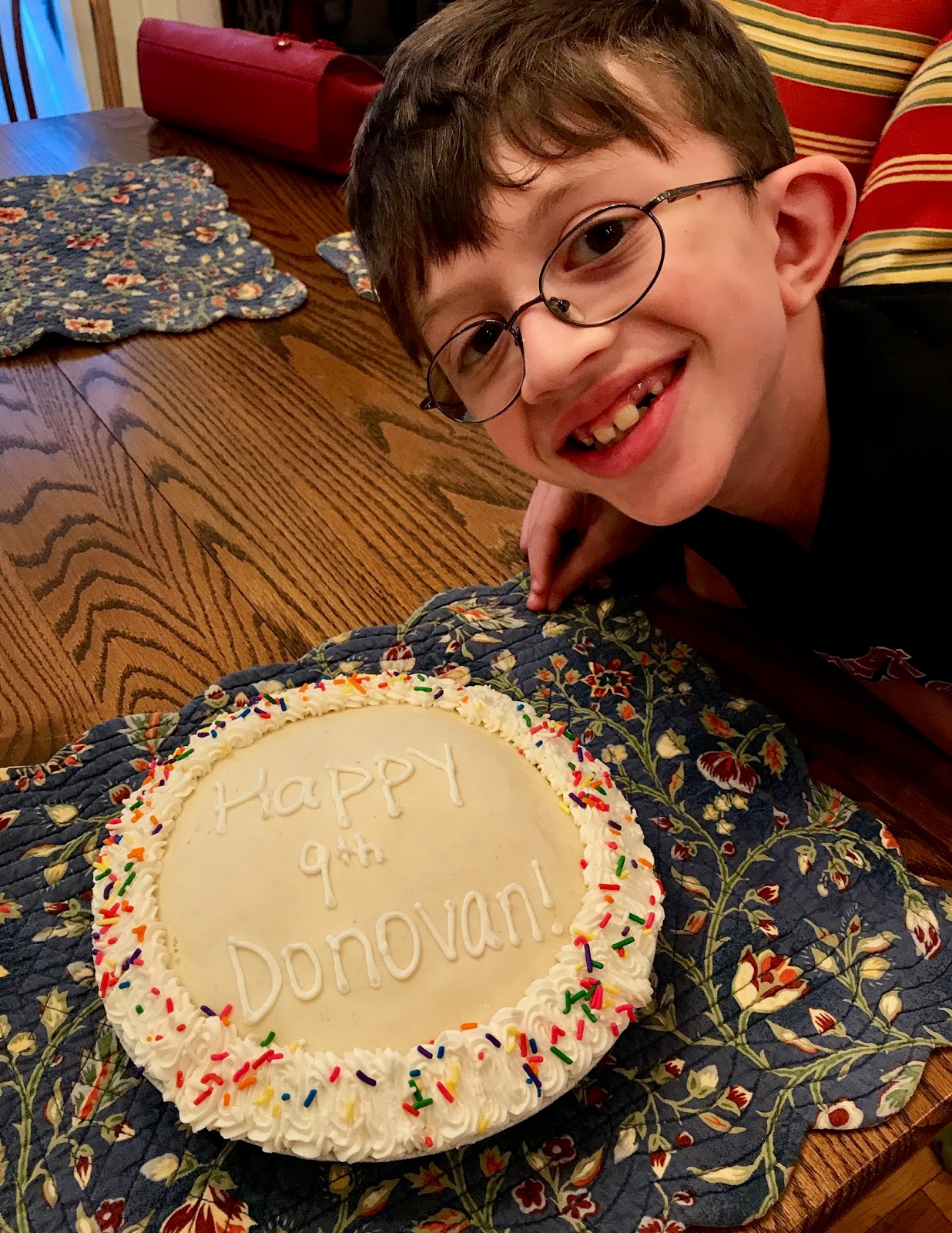
Last week, my son Donovan turned 9. Since we were in California during his birthday, we’ve had a bit of a delayed celebration back home. Since D-man has Celiac Disease and cannot eat anything with any gluten, he wanted an ice cream birthday cake. For him, however, ice cream can be tricky. Even if the ice cream itself contains zero gluten in its ingredients, it can still make him ill if it becomes cross-contaminated.
Enter Mitchell’s Homemade Ice Cream (which is not only Cleveland’s best ice cream, but also happens to be some of the best ice cream anywhere). Mitchell’s takes its allergens seriously. All you have to do is mention a gluten allergy, and the servers know exactly what to do to eliminate any risk of cross-contamination.
They not only sanitize the scooper, but also open a fresh, untouched container of the flavor-of-choice. For these reasons, we have as much confidence as one reasonably can have that Donovan can enjoy his ice cream without ingesting any accidental gluten.
When we celebrated my daughter Norah’s birthday in May, we also ordered an ice cream cake from Mitchell’s. At that time, we advised of the gluten issue, and they prepared the cake with zero cake base, all ice cream.
Since May, however, Mitchell’s has discontinued its prior practice of gluten-free, ice-cream-only cakes. Thus, when we called earlier this week to order Donovan’s cake, the response was, “We don’t do that anymore.”
Unwilling to accept “no” for an answer, I asked for the store manager to give me a call. He explained that his hands were tied, and that corporate decided that a missing cake base allowed for too many irregularities in shape. Thus, no more gluten-free cakes.
Still unwilling to accept a flat “no”, I asked for the phone number of Pete Mitchell, one of the company’s founders, owners, and executives. With phone number in hand, I left a message for Pete, explaining my dilemma, asking that he make an exception for Donovan. Within a couple of hours, the store manager with whom I had previously spoken, Adam, called me back.
He said that Pete Mitchell had received my message while on. Pete called Adam, and they discussed a possible solution, which Adam relayed to me. Instead of making a gluten-free cake, they could clean and sanitize a pie tin and craft a gluten-free birthday “pie”.
Problem solved. Satisfied customers. A happy birthday boy.
And, an employment-law lesson to boot. When dealing with a disabled employee, the ADA requires that you engage in what is called the “interactive process”. This process is one of communication and cooperative problem solving; you must talk to your employee to identify appropriate reasonable accommodations and implement one, if available and without imposing an undue hardship, that will enable the employee the perform the essential functions of the job. The failure to engage in this interactive process (even if you view it as an act of futility) is, in and of itself, a violation of the ADA.
Don’t take the easy way out with your disabled employees when they ask for accommodations. Talk to your disabled employees and see if there is an available solution. Even if you are legally right (and, the odds are good that you won’t be), you will leave the employee feeling offended and upset. Those feelings breed discontent, which, in turn, breed lawsuits.
It would have been easy for Mitchell’s to keep saying “no” until I went away. Thankfully it didn’t, and crafted a solution that fit within its new policy and provided Donovan the gluten-free ice cream cake he wanted.
So thank you Pete Mitchell and Adam, the Strongsville store manager, your flexibility and accommodating nature made a 9-year-old boy very happy.
Jon Hyman is a partner at Meyers, Roman, Friedberg & Lewis in Cleveland. To comment, email editors@workforce.com. Follow Hyman’s blog at Workforce.com/PracticalEmployer.





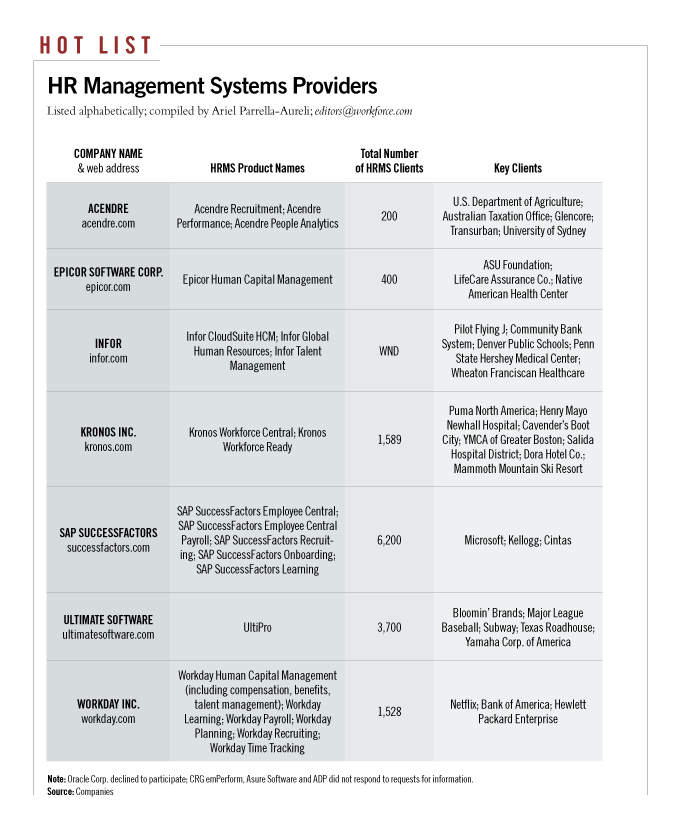
 Thanks to the agility and rapid upgrades that are possible in the cloud, the new focus is on transforming the HRMS from a repository of information to a business management tool, he said. Vendors are rolling out artificial intelligence tools, machine learning, mobile apps and other automated features that are making it possible for customers to use their HR data to support business decision-making. Whether companies want to determine who deserves merit raises, help employees select the right benefits packages or let recruiters figure out where the best candidates come from, these tools promise to change the way employers and employees use an HRMS, DiClaudio said. “These tools are driving innovation in this space.”
 For companies making HRMS buying decisions today, DiClaudio warns not to get too enamored with all the new features. He suggests companies look for alignment between their own strategic goals and the vendors’ technology road maps.