Skip to content

Workforce

Category: HR Administration

Posted on January 11, 2019June 29, 2023

Public Sector Workplaces Turning to the Cloud

public sector HR techology

h

When Alex Smith was hired as the chief human resources officer for the city of Memphis in 2016, she had never previously held a public sector job — one of the reasons she was selected.

City leaders wanted to bring fresh eyes to the team to address the ongoing problem of how to attract and retain the best talent to city jobs. Smith found that many of the city’s human resources processes were still paper-based and data was stored in siloed databases, which added time and confusion to hiring and talent management.

“I knew we needed to automate some of these processes,” said Smith, who previously held private-sector HR jobs with Brightstar Corp. and Target Corp. One of her first suggestions was to implement a cloud-based HR technology system that would streamline hiring and better manage candidates and employee data. After some negotiating, the chief information officer and head of finance agreed, and they adopted a cloud-based human capital management system from workplace software giant Oracle.

“It was a huge win,” Smith said.

The technology eliminated many of the manual tasks like copying addresses into multiple databases and producing monthly trend reports.

“Now I can focus on tasks that matter the most and I can track hiring data in real time,” she said. It also streamlined the candidate experience and helped her expand the city’s social recruiting and brand recognition. “It is helping us to be more proactive in attracting talent,” she said.

A few years ago, this kind of story — of a public sector agency investing in cloud-based HR technology and social recruiting platforms — would have been unusual. The public sector has a reputation for being slow to adopt HR technology to empower workers and streamline HR tasks, said Sean Morris, a principal at Deloitte covering human capital trends in the public sector. “There is a history of under-investing in human capital by government due to limited budgets.”

Public sector HR people also don’t have a seat at the funding table, which means there is no one to champion their cause, said Sean Osborne, vice president of product management for public companies for Acendre, a cloud-based talent management software company that serves the public sector. “We often find that HR doesn’t have the budget or authority to effect real change.”

Even when these agencies have funding for technology upgrades, the siloed nature of government agencies and opposing funding priorities can quickly push HR investments to the end of the line, Smith added. “If HR is competing with the police or fire departments for project funding, police and fire will always win.”

This lag effect is about more than just money. There is also a change management challenge. In government, many senior leaders and IT staff have been in those roles for years and they have a set way of doing their jobs and making decisions. Moving to the cloud is a completely different way of managing technology and data, and there is a lot of resistance to change, especially from employees who fear their jobs will be at risk.

Technology and Talent Are Getting Old

These delays have had a long-term impact on recruiting talent management trends across the public sector. Many public sector agencies still rely on paper-based recruiting and onboarding steps, which are cumbersome and can add weeks to the hiring process. “Millennials and Gen Z don’t understand why it would take that long,” Morris said, noting that the negative experience may cause them to look elsewhere for work. These organizations also lack tools and transparency to effectively support career development, or to use people analytics as part of business and talent decisions. All of this is making it difficult for public sector agencies to attract and retain talent, said Morris. “That has put them in the situation they are in now.”

That situation is a rapidly aging workforce and a recruiting environment that makes it difficult to attract and retain young talent. Data from the Office of Personnel Management shows that less than 7 percent of the federal workforce is millennials, even though they make up 35 percent of the workforce nationwide; and 44 percent of federal workers are over the age of 50, which means they are inching ever closer to retirement with few younger staff ready to take their place.public sector HR technology

“If HR is competing with the police or fire departments for project funding, police and fire will always win.”

— Alex Smith, CHRO, City of Memphis

This combination of aging talent and outdated technology is making it difficult for them to compete for young talent, said Daniel Torrens, global public sector HCM strategist for SAP SuccessFactors. “Candidates have a lot of choices today, and public sector organizations haven’t been building their brand or engagement strategies.”

These pressures are forcing public sector agencies to shift their attitude about cloud-based HR technology and to prioritize these transitions as they consider their future talent development and workforce management needs.

“Government CIOs no longer question whether they should move to the cloud, it’s all about, ‘How do we get there,’ ” Torrens said.

That’s good news for vendors. Torrens noted that four years ago, these agencies were still paying off their on-premise solutions and wouldn’t even consider a move to the cloud. But in the past 18 months that has changed. “We are having a lot more conversations about how to build a business case and get funding to adopt the cloud.”

Talent Needs Force the Issue

Fully 81 percent of public sector respondents now consider the cloud to be one of the top three technologies for ROI potential, according to the 2018 SolarWinds “IT Trends Report.” Almost as many (79 percent) see cloud as a top three solution to achieve productivity and efficiency benefits.

To support these interests, many public sector organizations, including government, education and health care, have adopted a cloud-first policy to replace legacy systems and design new more agile service-based solutions, said Sherry Amos, director of market development for education and government at Workday.

HR is also gaining more visibility in decision-making as public organizations acknowledge that talent management is a strategic issue that needs to be addressed. “In the past, finance drove all of these acquisitions,” Amos said. “But HR now has a seat at the table.” This is giving public sector HR leaders an opportunity to shape the future of workforce management and the technologies their organizations will use to support them.

This is where the challenge of moving public sector HR into the cloud shifts to the vendors, Morris said. The decision to move to the cloud is only the first in many steps for public sector clients. “If a vendor wants to support customers in the government cloud space, they have to federalize their tool.”

FedRAMP and Title 5

The majority of government organizations have to meet a very unique set of rules and requirements for adopting any cloud-based solutions, and they rely on vendors to adapt their systems accordingly. These include ensuring all data centers meet FedRAMP, the Federal Risk and Authorization Management Program requirements, which include an extensive list of rules for security assessment, authorization and continuous monitoring of cloud products and services.

“Meeting FedRAMP is a high barrier to entry in this space,” Osborne said. Vendors also have to adapt their platforms to meet Title 5 rules regarding administrative personnel, which cover issues such as pay schedules, job titles and priority hiring for veterans and people with disabilities. It can take months and a significant financial investment to adapt current HR platforms for a public sector workplace environment.

The majority of civil government organizations have to meet a unique set of rules and requirements for adopting cloud-based solutions.

Vendors also face a ton of pressure to get it right — because if they screw up things like data security it could result in national security risks. “Any time you move a large swath of data to a new environment you have to do your research because no system is foolproof,” Morris said.

The challenges are significant, but the effort to meet regulations and cater to this clientele is clearly worth it. “The federal government is the largest employer in the country,” Osborne said. And since most of these agencies are only just now considering cloud-based HR technology solutions, the commercial opportunities are bountiful. “The time is ripe right now for public sector organizations to move to the cloud,” said Eva Woo, global vice president of solutions management for SAP SuccessFactors.

Public Sector Tipping Point

The enormous sales potential is causing vendors across the HR technology industry to pay closer attention to the needs of public sector clients and to prioritize meeting regulatory requirements and adapting their customer management processes for a public sector environment. That includes adapting their sales and marketing strategies for longer procurement cycles.

“It can take two years just to secure funding and execute procurement,” Amos said. Public sector clients also tend to pursue a phased approach to their transition to the cloud, starting with low-risk systems to demonstrate safety and performance before moving to more mission critical systems that support HR and finance.

Morris noted that SAP and Oracle were among the first HR cloud-based solution providers to embrace public sector clients and their regulatory and procurement needs, though other vendors have been quickly following suit. He believes that the next three to five years will see a flurry of cloud-based HR projects across the public sector, including local and federal government, education, health care, and other agencies that need a better, faster and more transparent HR solution to deal with their recruiting and talent management needs.

Morris encourages vendors to make the continued investments in meeting regulations and to hire people with experience in public sector HR and IT who can help them navigate the complex procurement process. “The public sector is a massive market, but you have to play the long game,” he said. These agencies know they have to make investments in cloud-based HR solutions, but they will need vendors who can help them get there.

Vendors may also need to provide more IT support and education. City of Memphis’ Smith noted that many public agencies don’t have the head count or expertise to manage a cloud transformation on their own, so they will rely on vendors to fill gaps. “Having partners who will support training and change management needed on these projects is very important.”

These clients may have more needs than private sector companies, but the vendors who can support them and prove they understand how the public sector environment works will be will be best positioned to win these clients in the future.

Posted on January 10, 2019June 29, 2023

Human Resources Gets Its ISO Approval

ISO approval

The first-ever ISO standard for human capital reporting was passed in November 2018. Officially titled the “Human Resource Management — Guidelines for Internal and External Human Capital Reporting,” it was scheduled for publication Dec. 18. ISO approval

Some background: ISO is the International Organization for Standardization. It is a worldwide federation of national standards bodies — the ISO member bodies.

The member body for the United States in the ISO is ANSI — the American National Standards Institute. The work of preparing international standards is normally carried out through ISO Technical Committees. In this case, the work was done by Technical Committee 260.

In 2011-12, there was an ANSI effort to create a human capital reporting standard for the United States. Those of us involved in the early ANSI work were disappointed when it failed to progress; we had hoped that an ANSI standard would eventually lead to an ISO standard. Although the ANSI effort was ultimately tabled, a subsequent ISO group formed to tackle the issue, resulting in the standard that was finalized Nov. 22.

Having an ISO standard is a much bigger deal than merely having an ANSI standard. Here’s what Jac Fitz-enz, who is often referred to as the Grandfather of HR Analytics, has to say about standardization: “An ethical code, a body of research, specialized education and performance standards are the basis of a profession. The adoption of ISO standards supports human resources’ claim to be a profession. It’s been a long, difficult journey from the founding of the American Society for Personnel Administration by 28 far-sighted people in 1948, but now the goal is within reach.”

Why Standardization?

We’re willing to guess that HR professionals are asking some variant of one or more of the following:

• I work in a small firm, nonprofit organization or government agency; how can this possibly be relevant to me?

• Can I just ignore this?

• Is this standard a threat to me (and/or my employer)?

• Is there some way that I (and/or my employer) can benefit from this new development?

In order to answer these concerns, let’s first discuss some additional background that helps put this standard into context.

Why Has This Standard Emerged?

The fundamental source of value creation in advanced economies such as the United States has shifted from tangible assets to intangible assets. Tangible assets have a physical form — machinery, buildings, land and inventors — whereas intangible assets are nonphysical, such as patents, goodwill and brand recognition.

Financial services firm Ocean Tomo reported that in 1975, 83 percent of the market value of S&P 500 firms was accounted for as tangible assets, with the remaining 17 percent of assets attributable to intangible assets.

Also read: Human Capital Disclosure May Soon Be Mandated By the SEC

A mere 40 years later, this ratio had flipped: In 2015, only 16 percent of the market value of S&P 500 firms was accounted for as tangible assets and the remaining 84 percent was attributable to intangible assets.

Since human capital is the fundamental source of most intangible assets, there is a much greater need today for measuring, monitoring, tracking and understanding how well people are being managed and developed. A broad array of stakeholders — executives, investors and employees themselves — want to know more about the people side of the businesses with which they are involved.

In light of this, “Workforce reporting is rethinking how organizational value should be understood and evaluated,” said Stefanie Becker, HR project director, HR strategy and planning for SAP SE. Becker also convened the working group initiated by the German Mirror Committee in the ISO Technical Committee 260 and oversaw the drafting of the human capital standard.

ISO certification
Stefanie Becker

“The new ISO standard about workforce reporting assists organizations to move toward a more data-driven decision-making process across all facets of workforce management,” Becker said. “By using it for the public reporting, organizations can also fulfill the requirements of investors and other stakeholders by offering more transparency on their most valuable resource, human capital.”

And, indeed, investors are beginning to demand more insights on the people side of business. For example, the Human Capital Management Coalition, which is led by the UAW Retiree Medical Benefits Trust and includes 26 influential institutional investors representing more than $2.8 trillion in assets, “engages companies with the aim of understanding and improving how human capital management contributes to the creation of long-term shareholder value,” according to the coalition’s mission statement. 

ISO certification
Cambria Allen

Cambria Allen, corporate governance director for the UAW Retiree Medical Benefits Trust, said, “The Human Capital Management Coalition filed its rule making petition with the U.S. Securities and Exchange Commission in 2017. We presented the investor case for more effective disclosure of human capital information from our portfolio companies and urged a multi-stakeholder effort to develop reporting standards that would provide shareholders critical access to relevant and reliable quantitative and qualitative data.

“This data will allow us to better understand and assess how well portfolio companies are managing their talent,” Allen said. “The work of the ISO represents an important contribution to this dialogue.”

In short, if there was doubt previously about demands in the investor community for reporting on the people side of the business, it is now clear investors view such information as central to their work.  The time has more than come for a standard for reporting on the people side of the business.

Overview of the Standard

Before getting into the details of the standard, a high-level view reveals some key facts that inform answers to the previous list of questions. First and foremost, the standard is about guidelines. There is nothing mandatory or compulsory about it, so there’s no need for anyone to get up in arms about it.

Second, the standard provides guidelines for both internal and external reporting and for large and small businesses, so there is something here for everyone. Some components are more appropriate for internal reporting or more relevant only to larger businesses.

Third, it represents the culmination of a tremendous amount of effort by a large and well-informed group of HR leaders from a wide range of backgrounds. There is a lot of wisdom, free advice and counsel built into it.

And fourth, the standard is very broad. So there may be parts of it that seem irrelevant for your organization. Our advice is not to be tempted to throw out the baby with the bathwater. Use what you can and what will be most valuable for your organization.

The standard provides guidelines on the following core human capital reporting areas:

• Compliance and ethics.

• Costs.

• Diversity.

• Leadership.

• Organizational culture.

• Organizational health, safety and well-being.

• Productivity.

• Recruitment, mobility and turnover.

• Skills and capabilities.

• Succession planning.

• Workforce availability.

Lee Webster, who served as the secretariat of the ISO Technical Committee 260 that created the standard, said, “This document is a first step. It will evolve, and additional definitions and formula will be added in future versions. We’re only at the 50-yard line. There’s still lots more work to do.”

What the Standard Suggests for Internal and External Reporting

The standard is a 44-page document that contains lots of narratives, definitions and background discussion. Most useful for beginning to understand what it’s all about is Table 2 of the standard, which provides a summary of the recommendations for both internal and external reporting for both small and large organizations. The table on this page summarizes the standards’ recommendations for external reporting.

What This Means to Your Organization

The demands for better management, accountability and transparency with regard to human capital will only continue to grow in the coming years. This is the inevitable result of the increasing role that human capital plays in the creation of economic value. Within that context, the standardization of human capital measurement and reporting is a natural development.

This is good news, we believe, for those HR professionals and employers who have a good story to tell. But there is no getting around that this is not a happy development for some: those who would prefer to be able to keep stakeholders in the dark regarding their “people track record.”  So this is not a universally positive development for everyone. But it is certainly one that will benefit the “good guys.”

Our advice is to give the new ISO Standard careful consideration. There may be components of it that are not relevant to your organization (at least currently). But it is also the breadth of the standard that ensures there is something for every type of organization, including yours.

Posted on December 6, 2018June 29, 2023

Does Title VII Protect an Employee’s Self-help Discovery?

Jon Hyman The Practical Employer

Suppose one of your employees believes that she was discriminated against because of her protected class.

She files a charge of discrimination with the EEOC, and in support of the charge, provides the agency information from your confidential personnel files that she had copied. In response, you fire the employee for violating your confidentiality policy? She then files a new charge, alleging that her termination was in retaliation for her protected activity of gathering evidence in support of her discrimination claim.

Does her retaliation claim succeed?

Lawyer answer: it depends.

Most recent answer: The 4th Circuit Court of Appeals, in Netter v. Barnes.

Under the opposition clause, unauthorized disclosures of confidential information to third parties are generally unreasonable.…

However, the participation clause offers more capacious protection for conduct in connection with Title VII proceedings. Application of the participation clause must account for the evidentiary difficulties many plaintiffs face when pressing claims of workplace discrimination.…

That said, we cannot conclude that Netter’s unauthorized inspection and copying of the personnel files constituted protected participation activity for a straightforward reason. She violated a valid, generally-applicable state law [against the] “knowingly and willfully examin[ing]…, remov[ing,] or copy[ing] any portion of a confidential personnel file” without authorized access. “[I]llegal actions” do not constitute “protected activity under Title VII.”

We are loath “to provide employees an incentive to rifle through confidential files looking for evidence.”

In other words, because Title VII’s anti-retaliation provisions do not permit an employee to engage in illegal activities, and because this employee’s state law prohibits the copying of confidential personnel files, Title VII does not protect her copying in this case.

That said, your mileage on this issue will vary based on your jurisdiction and the nature of the how the employee gained the information.

Courts generally balance the following factors to determine whether the employee’s gathering of the documents was reasonable, and therefore protected:

  1. How the documents were obtained
  2. To whom the documents were produced
  3. The content of the documents, both in terms of the need to keep the information confidential and its relevance to the employee’s claim of unlawful conduct
  4. Why the documents were produced, including whether the production was in direct response to a discovery request
  5. The scope of the employer’s privacy policy
  6. The ability of the employee to preserve the evidence in a manner that does not violate the employer’s privacy policy.

For example, in Niswander v. Cincinnati Ins. Co., the 6th Circuit held that an employee who purposely rifles through confidential personnel records to locate evidence to support a discrimination claim cannot support a retaliation claim.

Yet, in Kempcke v. Monsanto Co., the 8th Circuit permitted the retaliation claim based on the fact that the employee had innocently stumbled across the evidence of potential discrimination in a computer that his employer had issued to him.

What does all of this mean for you?

First, review your company privacy policy to ensure that it sufficiently covers employee personnel files so that you can rely upon it if you have to terminate an employee for engaging in some self-help to support a discrimination claim.

Second, before you take any action, check in with your employment counsel to discuss the circumstances and the potential risks of stepping into a retaliation claim.

Posted on November 28, 2018June 29, 2023

The 4 Keys to Being a Best-in-Class D&I Professional

“How can I do what you do?” asked a bright young woman on the phone one spring morning. She enthusiastically described how she’d studied and experienced various cultures and was inspired to do work that makes a difference.

She’d read some of my articles, saw me speak and felt a spark of connection. She wanted to turn her passion and values into a career, like I had. And because she was resourceful, she reached out for advice.

One of the joys of being a mid-career D&I professional is that I often get inquiries like this. One of the burdens, however, is providing a helpful response to new professionals facing a world that’s quite different from the early ’90s landscape I navigated, yet troublingly similar.

What’s different is our technology, our demographics, our polarized politics and a resurgence of overt white supremacy and bigoted violence. What’s the same is the lack of credibility many D&I professionals command relative to other professionals and organizational functions. I believe one of the reasons is insufficient rigor in developing the necessary skillset to garner results that matter and exude excellence.

Here are four keys that will equip D&I professionals at any career level to embody excellence and establish themselves as best-in-class D&I professionals, indispensable to those we serve.

Identify and live from your personal “business case.” I’m struck by D&I practitioners who have no substantive answer to the question: “Why do you do this work? (How do you benefit?)” “New school” D&I isn’t just about helping others. It’s about creating a world that works better for more of us and attaining meaningful results that matter. Best-in-class professionals work from their heart, mind and soul, and have personal skin in the game. Being grounded in the heart balances intellectual rigor, and adds depth, integrity and authenticity to our work. A personal business case provides motivation and inspiration when we’re weary. My personal business case is that from a very young age I experienced and witnessed firsthand how traits over which people have no control (sex, race, nationality and social class) can cause other people to treat them as less than they are, thwarting their happiness and ability to contribute.

A personal business case requires not just knowledge of self, but clarity of values and vision. I deeply value integrity, authenticity, excellence, connection and expression. My vision is a world where everyone has access to all the knowledge and resources necessary to live their happiest, healthiest life, contributing their brilliance for personal fulfillment and collective benefit. I stand for a world where we get out of each other’s way — and our own way.

Do your personal work. Having personal skin in the D&I game and caring about people means that the work can be emotionally triggering and exhausting. Those of us who are especially sensitive and empathic can experience second-hand trauma or be re-traumatized by interpersonal dynamics in a workshop or workplace. I’ve witnessed how a facilitator can injure workshop participants through ineffective behaviors driven by their unresolved anger or guilt. I’ve seen how leaders driving organizational D&I initiatives can subvert their own efforts through counterproductive behaviors stemming from exhaustion, mistrust or shame. Many of us who do D&I work do it because we (or a loved one) have been wounded in some way. Do not allow the impact of this important work to be diluted or tainted by you trying to resolve your personal pain through the work alone.

There’s a saying: “If you don’t heal what hurt you, you bleed on those who didn’t cut you.” While it’s true that if we all waited to tackle D&I work until we were fully healed that the work would never happen, it’s critical to be on a path of personal growth. Become intimately acquainted with (and honest about) your motivations, triggers, weaknesses and sore spots. Build keen self-awareness and be in ongoing curious dialogue with yourself about what’s going on with you and how you can develop. Build your emotional intelligence and resilience. If you’re a facilitator, hone your ability to self-manage, and develop a superpower around being present, relaxed and extremely attentive to the subtleties of human communication. Engage difficult questions — in the classroom and the field — with curiosity and courage. Establish healthy boundaries in all areas of life, practice radical self-care, and invest in your physical, mental, emotional and spiritual wellness. And forgive yourself for your shortcomings and bad days!

Be highly competent in multiple areas of D&I. D&I professionals who seek to be expert trusted advisers should be able to effectively answer a broad array of “diversity” questions. At the very least, you should have sophisticated knowledge about the history, terminology and practical applications of: (1) race/ethnicity (including racism), (2) sex and gender (including sexism), (3) LGBTQQIA+, (4) disability, and (5) major local racial/ethnic/cultural groups (in the U.S.: African Americans, Latinos/Hispanics, Asians and Native Americans). You must also be well-informed about the growing body of research establishing the organizational business case for diversity and the myriad tangible benefits of inclusion. You should know the basics of the latest brain science that impacts our current understanding of bias and interpersonal communication. You should read widely, listen to podcasts, attend conferences and lectures and stay informed about local and global current events. As a bonus, become familiar with the decades of theory and knowledge amassed in intercultural communication, a field similar to D&I.

Be highly competent in an area outside of D&I. Best-in-class D&I professionals are well-versed in at least one additional area outside D&I, such as organization development, leadership development, human resources, professional coaching, training facilitation/design, adult learning, assessment, business administration or international management. Many have first-hand leadership experience, have worked abroad, and/or speak more than one language. These skills equip the D&I consultant to accurately assess a client’s current state, identify strategic opportunities, and make impactful recommendations (read this article for more guidelines for consultants). They also equip the D&I facilitator to establish credibility, better understand their workshop participants and serve them where they are.

“Some think my standards are too high,” I told my caller that morning. “It’s true these are high expectations,” I added, “but they’re not unreasonable.” No one says the professional standards set for attorneys or accountants are too high, and we’re just as necessary. Expecting anything less than these four keys from D&I professionals is to diminish the quality of our expertise and its crucial importance to the success of organizations and the societies they shape and inhabit.

Posted on November 26, 2018June 29, 2023

Avoiding Pregnancy Discrimination in the Workplace

pregnant employee

News broke in early 2018 that Walmart was facing a potential class-action lawsuit in New York for allegations of pregnancy discrimination.Pregnancy Discrimination in the Workplace

This lawsuit is one of several nationwide that claim that some of the nation’s largest businesses are systematically punishing pregnant employees with discriminatory policies.

Employers are facing increased exposure and liability for pregnancy discrimination in the workplace claims. The number of pregnancy discrimination claims filed annually with the Equal Employment Opportunity Commission has been steadily rising for two decades and is hovering near an all-time high. In 2017, more than 3,174 cases of pregnancy discrimination were filed with the EEOC.

The federal Pregnancy Discrimination Act is an amendment to Title VII of the Civil Rights Act of 1964, and it makes discrimination based on pregnancy, childbirth or related medical conditions unlawful. The act covers employers with 15 or more employees, including state and local governments. Women who are pregnant or affected by related conditions must be treated in the same manner as other applicants or employees with similar abilities or limitations. The law’s protections include:

Hiring and working conditions: An employer cannot refuse to hire a woman because of pregnancy, pregnancy-related conditions, or based on the prejudices of co-workers or customers. The act prohibits discrimination when it comes to working conditions, including pay, job assignments, promotions, layoffs, training, firing and any other condition of employment.

Pregnancy and maternity leave: An employer may not single out pregnancy-related conditions for special procedures to determine an employee’s ability to work. For example, if an employer does not require its employees to submit a doctor’s statement concerning their inability to work before granting leave or paying sick benefits, the employer may not require employees affected by pregnancy to provide this documentation.

Pregnancy and temporary disability: An employee that is temporarily unable to perform her job due to pregnancy must be treated the same as any other temporarily disabled employee.

Health insurance: Any health insurance provided by an employer must cover expenses for pregnancy-related conditions on the same basis as costs for other medical conditions. Pregnancy-related expenses should be reimbursed exactly as those incurred for other medical conditions.

Fringe benefits: Benefits must be the same for pregnancy as other medical conditions. If an employer provides any benefits to workers on leave, the employer must provide the same benefits for those on leave for pregnancy-related conditions, including accrual and crediting of seniority, vacation calculation, pay increases and temporary disability benefits.

Further, it is unlawful to retaliate against an individual for opposing employment practices that discriminate based on pregnancy or for filing a discrimination charge, testifying or participating in any way in an investigation, proceeding or litigation under Title VII.

Although pregnancy itself is not considered a disability, some pregnant workers may be eligible for additional protection under the amended Americans with Disabilities Act Amendments Act due to conditions related to pregnancy. The ADAAA applies to employers with 15 or more workers.

Affordable Care Act

Under the Affordable Care Act, employers must provide two things to employees for one year after a child’s birth: (1) a reasonable amount of time to express milk each time that she needs to express milk; and (2) a location to express breast milk (not a bathroom) that is shielded from view and free from intrusion from co-workers and the public.

Employers are not required to compensate nursing mothers during breaks to express milk, but if an employee has compensated breaks and she uses them to express milk, then she must be compensated in a similar way.

The ACA provides an “undue hardship” exemption for certain employers that employ fewer than 50 employees. An undue hardship will be found if the requirement imposes on the small employer significant difficulty or expense when considered in relation to the size, financial resources, nature, or structure of the employer’s business.

Importantly, the ACA provides a “floor” not a “ceiling” for regulation in this area. States remain free to adopt laws that provide additional protections beyond those provided in the ACA.

Best Practices

In some instances, employers may claim that excluding pregnant or fertile women from certain jobs is lawful due to a bona fide occupational qualification defense, or BFOQ. This defense, however, is extremely narrow and the employer must show that pregnancy actually interferes with an employee’s ability to perform the job based on objective, verifiable skills required by the job.

Employers have rarely been able to establish a pregnancy-based BFOQ. Liability under the federal and state laws can be avoided with the following best practices:

• Effectively train managers on applicable laws, workplace policies, and how to respond to requests for assistance and accommodation.

• When complaints occur, respond promptly.

• Implement strong policies against pregnancy discrimination and harassment.

• Evaluate leave policies to ensure restrictive provisions or practices do not discriminate on the basis of pregnancy or related medical conditions.

• Evaluate any workplace accommodation policies and ensure they are available to workers with pregnancy-related impairments.

• Never require — explicitly or constructively — a pregnant employee to take leave, light duty or other work accommodations that she does not want or did not request.

• Make sure policies and facilities comply with breastfeeding requirements under the ACA.

• Check state and local laws for additional requirements.

Jay Starkman is the CEO of Engage PEO, a professional employer organization providing HR outsourcing to small and mid-sized businesses across the United States. Camille Cooper is the assistant general counsel and HR consultant for Engage PEO.

Posted on November 14, 2018June 29, 2023

How HR Benefits By Getting Political

politics, election, vote

This month, I spent a long weekend before the midterm election supporting my brother-in-law’s campaign for a state Assembly seat in rural Wisconsin.

We traveled to several campaign offices and spent the days knocking on doors in small towns. Approaching strangers’ houses to ask them about their political affiliations or their plans to vote can be an uncomfortable experience at first. But it quickly becomes energizing as you encounter incredibly interesting people and witness their reactions.

For me, being part of the boots-on-the-ground effort to motivate voters was deeply inspiring, and it renewed my appreciation for the tireless work that happens outside the cable news cycle.

I was struck by the varied examples of people stepping up and stepping into an opportunity to do something for their community. Whether actually running for office, as my brother-in-law did, or staffing a field office, managing a campaign, hosting an event or attending a town hall meeting, there are countless ways to engage in local issues. And it got me thinking about all the other ways I — and our industry — could be adding to important local and national dialogues.

Given the big challenges facing our country, I can think of no group more qualified or capable of influencing our political climate than HR and benefits leaders, who all have expertise in many of the areas being debated at the national level. HR leaders know all about balancing competing interests, creating equal opportunities and managing complex health and financial programs.

We know how to create policies and programs that can scale. We also know that a solid safety net benefits not only those who need it but also the community around them.

benefit of politicsKatherine Eyster, deputy director of workplace programs at the National Partnership for Women & Families, agrees that HR leaders have valuable insights: “HR professionals have a key role to play in sharing their experiences with policymakers and advocates to ensure that legislation is thoughtfully and effectively designed with real companies and workers in mind.” Through her organization’s work, more than 75 companies and business leaders recently endorsed the need for a strong national paid family and medical leave policy.

“For too long the false narrative has endured that what is good for workers is bad for business, when evidence shows time and again that when workers thrive, businesses and the economy grow,” she said.

Adding our voices to the national debate is an idea gaining momentum among HR leaders. Rosemarie Day, founder and CEO of Day Health Strategies, has a forthcoming book about engaging in politics to protect access to health care. In it, she presents a “continuum of involvement” that shows the various ways to get involved.

She shares ways you can speak as a private citizen or spokesperson for your organization. The first step is getting (and staying) informed, followed by sharing information, supporting a cause, speaking up, showing up (at events, rallies and more), organizing people and even running for office.

“As a society, we need safeguards and safety nets,” she said. “Benefits managers can represent the human side of capitalism, and they know the limitations of what private companies can do and the gaps that are very critical for the government to fill.”

Renee Lutzen, director of health care product management at UMB Healthcare Services (one of our clients), is a member of the Employers Council for Flexible Compensation. In that capacity, she has been able to visit legislators and regulators and educate them about the issues we face every day.

“Legislative offices are interested in and very receptive to hearing real stories from real people — those of us who are working in the industry of health care, HR and benefits administration. We’re not just sitting at a desk crunching numbers against theoretical concepts. We have real-life examples we can share on how current health care policies are impacting individuals along with insights on the potential effects proposed policies will have,” she said.

This year, I’m vowing to get more involved and helping others do the same. As for my brother-in-law, he lost by a tiny margin, but I have no doubt he’ll have a fantastic career in public life. His efforts and the integrity and vision that guided his campaign inspired thousands of people in his district and beyond. I hope our efforts will do the same.

Posted on November 8, 2018June 29, 2023

Jeff Sessions’ Resignation in Lieu of Termination Is (More or Less) Still a Termination

Jon Hyman The Practical Employer

“At your request, I am submitting my resignation.”

So wrote now-former Attorney General Jeff Sessions in his resignation letter to President Trump.

Yet, no one reasonably believes that Sessions resigned. “At your request, I am submitting my resignation” is a termination, period.

Clients ask me all the time, about an at-risk termination. “Jon, what if we just have him resign? He can’t sue us for discrimination, then, right?”

Wrong. Of course they can.

Compelling someone to resign in lieu of terminating them is no different than terminating them. They are leaving your employment through your choice, not theirs. So, no, you can’t avoid a discrimination or other wrongful termination lawsuit merely by forcing an employee to resign instead of firing them.

That said, there are a couple of advantages to couching a separation as a resignation instead of termination.

First, it might make it easier for employee to find a new job. (Mr. Sessions, meet Fox News.) A prospective employer is more likely to hire someone who resigned than someone who was fired, and the employee is not lying on their resume if they list “resignation” as the reason for separation (a fact you’ll support if the new employer calls).

Secondly, an employee who resigns might not be eligible for unemployment. Or at least you can reach an agreement with the employee that he or she won’t file for unemployment.

So, there you have it. No, there is no functional difference between a termination and a compelled resignation, yet there are some strategic reasons why you, and the employee, still might want a signature on the resignation letter.

Posted on November 7, 2018June 29, 2023

Finding the Way of the HR Warrior

HR warrior
HR warrior
Author Keri Ohlrich

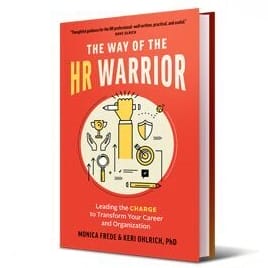
Author Keri Ohlrich asks whether you’re an HR warrior or HR weenie in her new book, “The Way of the HR Warrior.” Workforce Editorial Director Rick Bell caught up with Ohlrich via email.

Workforce: Are HR practitioners viewed as second-class citizens in the corporate world?

Keri Ohlrich: Short answer: Yes. If we’re being cheeky here, we might wish to be second-class citizens, but we’re more like third or fourth class.

Long answer: It depends. There are wonderful leaders and cultures who adore HR, understand the value and expect high performance from the HR department. Unfortunately, the majority of businesses and employees do view HR as second-class citizens and a department that does not contribute to the bottom line.

Why second-class citizens? Let’s look at leadership, HR, and society. Leadership sometimes only wants tactical and administrative HR support. Why wouldn’t they want a strategic HR professional? A strategic HR person questions and discusses how to help their organization reach higher levels. There are leaders who don’t want dissent or to be challenged. They simply want HR to do compliance work and payroll. You can spot companies who view HR as second class when they have HR reporting to Finance or Legal. Or even worse, when they give HR responsibilities to anyone in legal or finance because let’s face it, they would rarely, if ever, ask HR to handle finance or legal matters.

There are some HR talent who are only at the level of tactical and want to stay that way. They crave checking off tasks on the to-do list and completing what is easy. They get a charge from accomplishing tasks. Creating strategy and pushing the organization takes courage and long-term thinking. There are some in HR who resist that level of responsibility and are comfortable being second-class citizens—it’s a safer position.

Lastly, let’s look at society in general. Professions that are human focused are often not given the respect and/or paid like technology-focused professions (think teachers, nurses, social workers versus engineers). Human resources already starts in a one-down position as the “touchy-feely job” and “you just listen to people all day.” Then, let’s consider that the majority of HR professionals are females. Do I need to discuss how females are often viewed as second-class citizens? Cue mic drop.

WF: Since the beginnings of the #MeToo movement there were a lot of questions surrounding, ‘Where was HR’? So, where was HR?

Ohlrich: Great question. First, let’s address a couple types of HR professionals. Yes, there are definitely the HR professionals that we can all point at and call low-performing. And yes, there are HR professionals who knew about harassment and did nothing. They likely did nothing because they were afraid for their job, afraid to speak out, or even worse, just didn’t care that much. That’s the typical story we hear about, but let’s talk about another type of HR professional.

There were amazing HR professionals who were horrified by the behaviors of their leaders. They brought issues to the attention of those leaders and—wait for it—nothing happened. This occurred for a number of reasons: “he brings in so much revenue,” “he has great customer contacts,” or one of my favorites, “we cannot do anything about it because the CEO does the same thing.” There are many HR professionals who had the courage to address hostile work environments, discrimination, and harassment, and if leaders or the board of directors don’t care about it, HR becomes stuck. I know many HR rock stars who have left, had their departments reduced in size, or been fired for their courage and commitment to integrity. It is much easier to fire the trouble maker than to address the issue.

So, here’s my question: where were the leaders?

HR WarriorWF: Your book in part is titled HR Warrior. But you also cite the HR weenie. How can it be both ways in one profession?

Ohlrich: Ah, just like in every profession there are low- and high-performers. There are great CEOs and weenie CEOs, wonderful IT professionals and weenie IT, you get my drift.

But I think there are two main reasons why there is a question of why HR weenies and why that low expectation persists. One, HR is very visible in companies and, two, they are involved in emotional events (hiring, performance issues, layoffs). Therefore, when they’re HR weenies, that behavior is magnified.

Employees and hiring candidates will tell stories to family and friends about what horrible thing HR did (“they didn’t call me back,” “my resume went nowhere,” “they gave me zero severance”). Almost everyone has looked for jobs, received merits, or left jobs. All these situations involve HR and if there is a bad experience during these emotional times, well, then the stories about HR weenies grow exponentially!

But just as there are HR weenies, there are HR warriors who can change the perception. HR warriors can counteract the negative image of the HR weenie one employee at a time. And the same HR warrior might have been an HR weenie in the past. Heck, we all develop and grow—it’s possible for each of us to start off as an HR weenie and grow into an HR warrior. However, a true HR weenie wants to stay in a static position — they refuse to do the hard work to become a resilient and exemplary member of their organization. There were times in my career when I was sure I was more on the weenie side than the warrior side!

WF: Does HR exist to represent the best interests of the organization or the employee?

Ohlrich: It is not a zero-sum game. HR needs to represent both but it is difficult to strike this balance. Oftentimes the best interest of the company and the employee are opposing sides (should we talk about employee health benefits?). This is what makes HR work a wonderful challenge and not for the faint of heart. Unfortunately, I’ve seen many HR Weenies only side with either the employee or the organization and stick to that side no matter what!

Additionally, I think employees want to feel we are there for them, but don’t truly believe that. There are managers who won’t coach or have difficult conversations with employees. Instead, they have HR do “the dirty work.” As an aside, oh how I wish HR would get out of the business of doing managers’ jobs of talent management! Consequently, the employees see HR as the police, because poor managers say, “let me tell HR.” Frequently, employees only see HR when something bad is happening (layoffs, terminations, performance issues). We have an exposure issue. For example, when you only take your dog for a car ride when it’s time to visit the vet, what does the dog think? Car = bad. If HR is only there for bad times, employees think HR = bad. At the same time, organizations tend to believe that HR is there to support only the business.

HR needs courage to balance that tension and understand that the job is a lonely one. Sometimes an HR professional works behind the scenes to get laid-off employees an extra month of insurance, but employees will never know that. Sometimes HR works with legal to figure out the quickest, most efficient way to terminate an underperforming employee and help the organization save on a potential lawsuit, but it isn’t fast enough for the organization.

An HR warrior maintains this tension, and they’re courageous for both employees and the business. An HR professional who only uses one lens (the business or the employee) just might be an HR weenie!

WF: Are HR practitioners afraid to speak up when they see inappropriate conduct by their superiors?

Ohlrich: Well, yes and no. If the inappropriate conduct is their direct supervisor that is a sticky wicket. HR at this point is just like any other employee who has an inappropriate manager. The questions are: What if I say something? Will I get fired? Will my job get worse? Will I need to quit? To make things a bit more complicated, employees have the option of talking to HR, but HR might not have that option for themselves.

It takes the utmost courage to speak out directly against your manager, especially if s/he is the CEO. Where do you go with the complaint: the board, your peers, the public? And as we’ve seen in the past, when victims speak out, it often does not end well for them. The stakes are often higher for HR to speak out because they know the impact that leader has on the entire organization.

If the inappropriate behavior is not caused by the direct manager, but others on the leadership team, then this falls into typical HR duties. Meaning, HR needs to call out these behaviors and try to change them. Again, like the direct manager, the politics of the situation get more complex as the leaders are usually in alliance with one another and will, therefore, protect each other. It can be very difficult for HR to break through the leadership clique when bad behavior is occurring.

WF: What’s an example of “HR speak” that HR professionals should try to avoid? How should they rephrase it?

Ohlrich: So much business and HR speak! I think the most cringe-worthy one that sticks out is “the policy says” or “according to the policy.” It’s better to say, “Well, we can do that, and let’s understand the consequences first.” Of course, if harassment is involved, it’s best to stop that behavior in the first place!

But I have heard HR professionals use “policy speak” on issues that are not as black and white as sexual harassment. Some HR professionals, when asked a question, have sent an email with a cut-and-paste description of the policy to managers. If we just make binary decisions, then we could be replaced by robots. We need to understand the goals and motivations of the audience. We need to tailor our message to them and avoid HR speak.

We bring so much more than just “the policy says.” We understand the business, the culture, and the people, and we can help leaders think through complex issues. It requires more than “policy,” it requires understanding the business and the people. Dare I say it? It requires an HR Warrior!

WF: HR practitioners will go to conferences like SHRM and WorldatWork and get all pumped up then go back and face the realities of their job. How do they carry forth and utilize that positive vibe?

Ohlrich: It’s exciting to hear great ideas and best practices at conferences! And it’s definitely tough to go back to the “real world.” In fact, it can be extra frustrating because an HR professional can visualize what a great organization can look like and realize, “Crud, we aren’t that — not even close!”

To avoid the “post-conference blues,” set realistic goals. First, focus on the big picture. What is a talent goal for the organization? Maybe the business needs to overhaul the way they approach performance. Then ask, where is the organization on its journey to this goal? The HR professional needs to meet the organization where it is and then push! Of course, we have to get leadership buy-in first and explain how we are pushing for good business reasons, and not just to push.

Now, the HR professional knows the overall goal and the maturity level of their organization. From there, create three mini goals to help move toward the overall goal. Consider three that can be achieved in the next six to 12 months. By creating mini-goals, the HR professional can channel the energy of the conference and accomplish great things.

WF: The 2005 Fast Company article ‘Why I Hate HR’ argued that HR is lazy, unhelpful, etc. Why do these arguments still seem to linger?

Ohlrich: Triple sigh. I could blame the media coverage, Dilbert comics, The Office TV show, and I could name more shows that depict HR as lazy losers and freaks (yeah, looking at some of my favorite shows like Unbreakable Kimmy Schmidt and A Series of Unfortunate Events). It reminds me of the statistics on plane crashes: because they’re covered in the media more often than car crashes, people tend to believe air travel is less safe than cars, when the exact opposite is true. We need a great PR firm to help overhaul the image of HR!

Now, I can’t just blame the media for HR’s poor image. We absolutely have poor talent in HR—the HR Weenies. As I mentioned earlier, HR interacts with every employee at some point in their lifecycle at work (hiring, performance, termination) therefore, one bad HR Weenie experience is told to an exponential number of people. The HR Warrior stories aren’t shared as widely.

We can do more with our profession. Leaders can demand more from HR (as well as themselves). HR can demand more from our profession. HR is indispensable for organizations and employees, and we HR professionals need to tell stories that showcase us in a different light. We have HR Warriors in companies and their voices need to be heard and their stories told. When we accomplish that, our perception of HR changes.

Posted on November 1, 2018June 29, 2023

The 5 Paths of Falling Into HR

Raise your hand if you grew up dreaming of a career in HR. No one? Of course not.

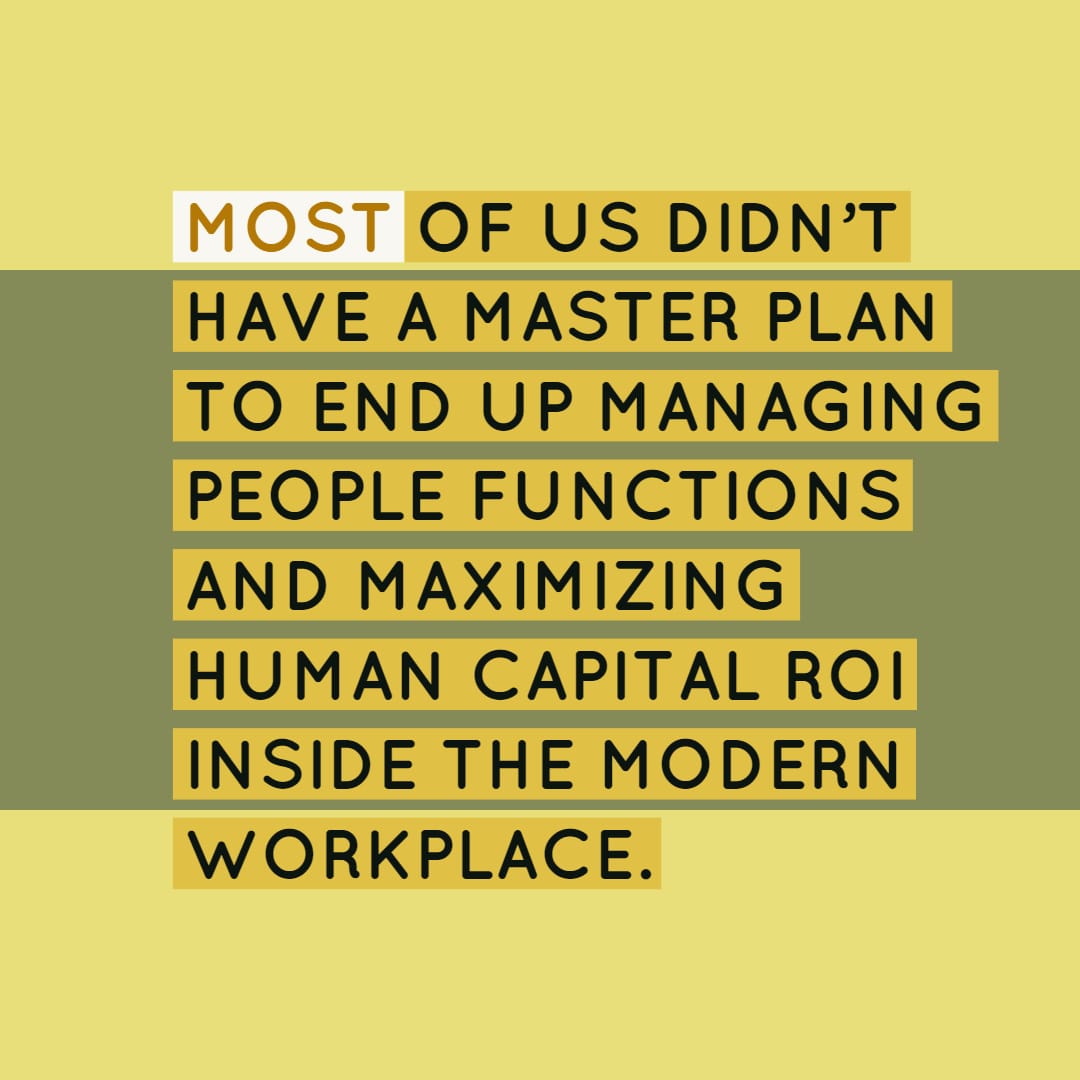
The dirty little secret of HR is that most of us didn’t have a master plan to end up managing people functions and maximizing human capital ROI inside the modern workplace. We grew up with bigger dreams, which is cool because no one grows up dreaming of being a director of account management, financial analyst or marketing manager, either.
Those dreams all stink when you’re 16.

Instead, our teenage selves dreamed of being  movie stars, recording artists or professional athletes. The freaks among us were entrepreneurial from the time they were 5 and likely knew they’d own their own business. The rest of us float, usually until the time we pick a major in college, at which time our career paths and ambitions solidify.

But the choice of HR as a career path happens later than most on average. For all the undergraduate programs in HR, the ubiquitous nature of the Society for Human Resource Management and the increasing importance of the human capital function, many HR pros don’t solidify a path into HR until they’re in the workforce doing other things.

Translation: Many HR pros will tell you they “fell” in to HR.

Falling into things can be a blessing and a curse. It’s all relative to the outcome. From my experience talking to the talented high performers who make up the world of HR, here’s some common ways people “fall” into HR without a real plan to enter it.

  1. I started at the bottom, now I’m here. You are a bootstrapper! Right out of college, these people took entry-level roles in our function, usually doing transactions as an HR coordinator, payroll specialist or similar role. They enjoyed the function and in many cases rose to run the whole thing.
  2. I’m a people person. These HR pros were generally present in a company and were identified as someone who was “good with people,” subsequently flipping into HR from another department. When looking at this group, “good with people” is a broad designation that can mean they are extroverted, a good listener or willing to take large amounts of abuse without exploding. It can also mean skill in solving other people’s problems and maximizing their performance inside the organization.
  3. I got dropped into HR on an interim basis and never left. Big companies have rotational programs for high potential employees as part of succession strategies, and HR is generally part of that rotation. From time to time, HIPOs are rotated into HR, love it, are highly effective and never leave or come back to HR after their rotations are complete. In other circumstances, high performers are parachuted into HR on an interim basis to put out a Dumpster fire, find their perfect match and stay for the good times.HR career development
  4. I was good at a specialty related to HR and ended up running the whole HR show. Feeder groups for HR include some specialties that are considered a distant or related cousin to the HR function like training or recruiting. This close proximity to the HR function provides a natural exposure and transition point to HR for the professionals in those functions with the chops to handle the chaos that awaits them in the big show.
  5. I failed in another job at our company and they moved me into HR so they didn’t have to fire me. I didn’t want to include this one, but no rundown of all the ways people fall into a HR career would be complete without it. HR has a reputation in some company cultures as a backwater, a way station for average people doing average things. This leads to the perception that good people struggling in other areas can be dumped in HR. This seems to be decreasing in frequency, but it’s a historic reality of our lives together in HR.

You can probably add to the list of ways that people fall into HR. If you’re an HR pro who has an HR degree and has always possessed the clarity that comes with knowing you’d be in HR since you were 12, Godspeed to you. Don’t mess up your dream.

The rest of us woke up one day in HR with the Talking Heads song “Once In A Lifetime” playing in the background. I’m glad I’m here; I bet you are as well.

Go here to read more columns by Kris Dunn. 

Posted on October 17, 2018June 29, 2023

Timing of Retaliation Is Key Factor to Reinstating Employee Suit

Jon Hyman The Practical Employer

“See something, say something” is one of the most important elements of any workplace intent on stopping harassment.

Employers are supposed to empower employees to report any harassment they witness, whether or not they are the target. Key to this idea is ensuring that employees who report harassment do not suffer retaliation as result. Retaliation of any kind will chill efforts of employees to say what they see.

With this background in mind, consider Donley v. Stryker Sales Corp. (7th Cir. 10/15/18) [pdf].

Kelley Donley, a manager for a medical technology firm, learned from co-workers that a manager had sexually harassed a subordinate. She exercised her right to file a harassment complaint against the manager with Stryker’s human resources director. That complaint triggered an investigation, which resulted in the manager’s termination.

Approximately one day after the manager’s firing, Stryker launched an investigation into Donley. The investigation focused on an incident six weeks earlier at a team meeting in Colorado, in which it was alleged that Donley had photographed the intoxicated CEO of one of Stryker’s vendors, and shared the photos with co-workers. The company fired Donley because “taking photographs of a valued partner while intoxicated was unacceptable.”

The 7th Circuit ruled that the trial court had improperly dismissed Donley’s retaliation lawsuit.

Donley’s timeline … exposes inconsistencies and contradictions … of why Stryker began the investigation that ended with Donley’s discharge. If the disputed facts are resolved in Donley’s favor, a reasonable jury could interpret the suspicious timing as evidence (a) that one or both decision‐makers initially found Donley’s actions in the Vail incident to be tolerable, and (b) that they decided only later, after she had filed her internal complaint, to use that incident as a pretext to fire her for retaliatory reasons.

What lessons can we learn from this case?

    1. Do not sit on allegations of workplace misconduct. If something is inappropriate today, the passage of time will not make it more inappropriate tomorrow. Indeed, waiting to take disciplinary action raises questions as to why you did not take action sooner. If protected conduct intervenes, the inference will be (as it was in this case), that retaliation motivated your ultimate (and untimely) decision to act.
    2. Adverse actions taken on the heels of protected activity is very dangerous. This is not to say that you can never discipline or fire an employee shortly after they engage in protected activity. Yet, if you are going to terminate an employee on the heels of any protected activity, you best have all of your ducks in a row. Employees who engage in protected activity aren’t bulletproof from termination. But, you better be sure you’re using the right ammo. If there can be any doubt about your motivation, you take a huge risk in firing an employee on this timeline.


Posts navigation

Previous page Page 1 … Page 7 Page 8 Page 9 … Page 45 Next page


Webinars


White Papers


  • Topics

    • Benefits
    • Compensation
    • HR Administration
    • Legal
    • Recruitment
    • Staffing Management
    • Training
    • Technology
    • Workplace Culture
  • Resources

    • Subscribe
    • Current Issue
    • Email Sign Up
    • Contribute
    • Research
    • Awards
    • White Papers
  • Events

    • Upcoming Events
    • Webinars
    • Spotlight Webinars
    • Speakers Bureau
    • Custom Events
  • Follow Us

    • LinkedIn
    • Twitter
    • Facebook
    • YouTube
    • RSS
  • Advertise

    • Editorial Calendar
    • Media Kit
    • Contact a Strategy Consultant
    • Vendor Directory
  • About Us

    • Our Company
    • Our Team
    • Press
    • Contact Us
    • Privacy Policy
    • Terms Of Use
Proudly powered by WordPress