Skip to content

Workforce

Category: Benefits

Posted on October 11, 2018June 29, 2023

Assessing the Impact of the Aetna-CVS Merger on Employer Benefits

Aetna-CVS merger

The Justice Department announced on Oct. 10 its approval of the $69 billion Aetna-CVS Health merger, the latest blockbuster deal between health care companies in recent years, according to the New York Times.

The Justice Department last month also approved Cigna’s takeover of Express Scripts, while Amazon purchased online prescription company PillPack in June 2018 as its entry into the prescription drug-health care business.

CVS is the nation’s largest retail pharmacy chain, and Aetna is the third largest health care company. CVS Health Corp. first announced its intention to acquire Aetna in December 2017.

Tucker Sharp, global chief broking officer at Aon Health Solutions, said the merger fits into a general trend in health care. Over the last five years, health care companies have been focusing on vertical mergers whereas in the previous 20 years they were aiming for horizontal mergers, which helped gain scale and leverage to build membership or seek better discounts. Vertical mergers, meanwhile, help change the delivery of care and gain growth and leverage in new areas, Sharp said.

An ecosystem transformation is happening in health care, he added. And employers seem to believe that this matters to them and the health care they offer to employees.

“In the short term, it’s too early to guess if employers will truly like this deal or not and whether it will have a significant impact on them,” Sharp said. “But they actually do think that this [Aetna-CVS] deal matters.”

Aetna-CVS merger
Tucker Sharp, Global Chief Broking Officer, Aon Health Solutions

Aon conducted a survey on Dec. 14, 2017 regarding employers’ attitudes toward activity in the health care merger and acquisitions. Of the 450 employers surveyed, 61 percent said that as a result of the vertical mergers, they will need to change their health care strategy; and 85 percent believe that these deals will have a moderate to significant change in how people

Although a consolidation gives reason to be concerned, the CVS-Aetna merger also poses interesting opportunities, said Rob Andrews, CEO of the Health Transformation Alliance, a nonprofit group made of 47 companies whose goal is to fundamentally transform the corporate health care benefits marketplace.

A supporter of fee-for-value over fee-for-service, Andrews believes the deal could potentially be a step in the right direction to achieve that transformation. With a fee-for-service system, health care providers are motivated to sell more drugs or provide more care, regardless of its value to the patient, he said. With fee-for-value, providers make more money if the patient gets healthier and are motivated to do what’s best for the patient’s health.

“Because you will now have Aetna, which has fee-for-value medical products, aligning with CVS, which is very good at identifying and distributing high-quality pharmaceutical products, we think that opportunity exists in a way it didn’t before,” Andrews said.

Aetna-CVS merger
The CVS-Aetna merger is just the latest blockbuster deal between health care companies in recent years.

Employers’ health care strategies are unlikely to budge — at least not for the 2019 plan year.

Although the merger is unlikely to have an impact on 2019 benefit plan designs, employers could make changes for the 2020 plan year, according to Kim Buckey, health compliance expert and vice president of client services at DirectPath, a Birmingham, Alabama-based health care consultancy. For example, an employer might have medical through UnitedHealthcare but drug coverage through CVS/Caremark.

“Employers’ ability to get the best deal for coverage may be hampered by these prepackaged entities,” Buckey said.

Also read: Anthem Inc.’s New PBM Predicted to Bring Cost Savings to Employers

Aetna-CVS merger
Jaja Okigwe President and CEO, First Choice Health

Jaja Okigwe, president and CEO of First Choice Health, a Seattle-based national health care provider network, seemed skeptical of the merger’s potential to create innovation in health care. The biggest opportunity for better care and better costs is “practical, lean solutions that can be offered at your workplace,” he said.

“More than ever, we’re seeing an increase in unexpected alliances and outside industries taking a stab at health care improvement,” he said. “The fact is, health care is complex and needs to change; however, consolidation of two large, traditional companies does not automatically generate innovation.”

According to a CVS statement, the deal is subject to state regulatory approvals, but many of those have already been granted. The merger is set to close early in the fourth quarter, Bloomberg reported. Bloomberg also described the merger as “among the most significant health care mergers of the past decade.”

CVS and Aetna are targeting the retail-consumer aspect being important rather than owning hospitals, physician groups and surgery groups like UnitedHealthcare’s strategy, Aon’s Sharp said.

“Employers are saying, ‘I don’t know which one is going to win, but we’re gonna’ sit and watch and not change our strategy yet. But we’ll be poised to do it [and] see what which has the [impact] on changing behavior,’” he said.
Posted on September 19, 2018June 29, 2023

Disrupting Alzheimer’s Inside and Outside the Workplace

alzheimer’s at workplace

It should come as no surprise that Alzheimer’s disease has a big impact on the workforce.

alzheimer’s workplace
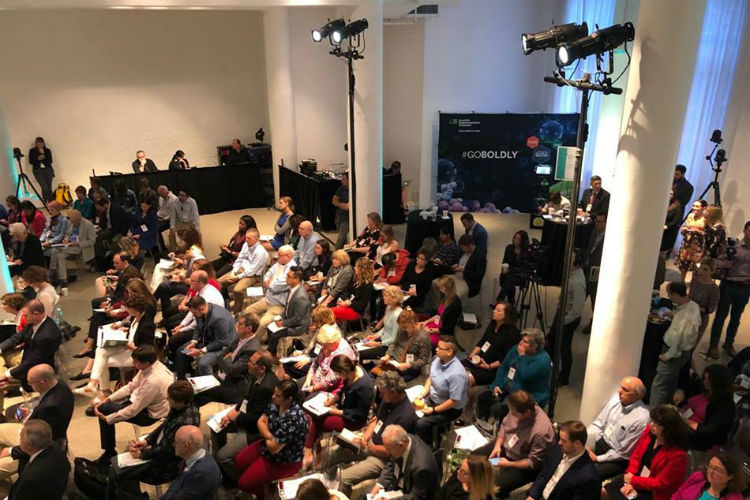
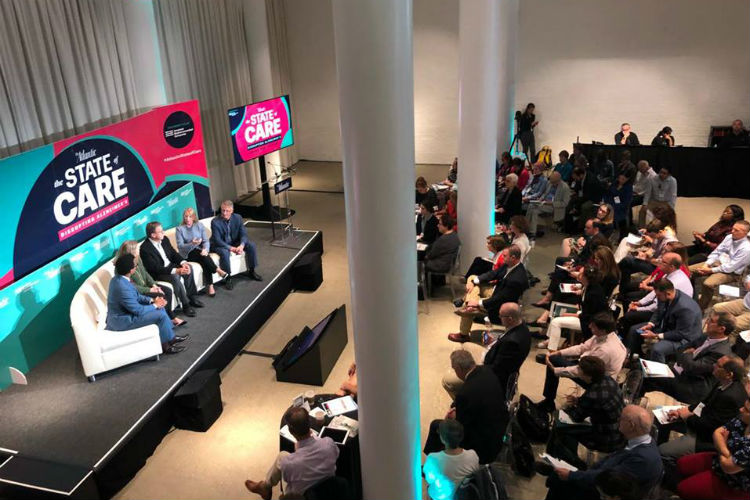
The Atlantic held the event “The State of Care: Disrupting Alzheimer’s” on September 12 in Chicago.

After all, as one speaker at a recent Alzheimer’s-focused event pointed out it’s a devastating disease both for patients and for caregivers.

The event, themed “The State of Care: Disrupting Alzheimer’s” on Sept. 12 in Chicago, covered many facets of the issue: the current state of affairs with Alzheimer’s; why it’s important to confront this public health crisis now; the quest for early detection and a cure; and a view form Capitol Hill.

Start with caregivers: 16.1 million people provide $232.1 billion in uncompensated care a year and tens of thousands of Alzheimer’s caregivers are teenagers, according to speakers at the event. A different source states there are “250,000 children and young adults between the ages of 8 and 18 who are child caregivers to those with Alzheimer’s disease or dementia.”

Whatever the correct number, the takeaway for employers is there is a large number of young people — perhaps not yet graduated from high school and still trying to get an education — whose careers could be impacted early on by their caregiver status. What happens when these children enter the workforce? Is a college education as attainable for these people compared to those who don’t have caregiving responsibilities yet?

Employment issues are commonplace for these people, according to panelists. Caregivers worry if they can afford to send a sick relative to out-of-home care or if their need to work fewer hours will impact their employment.

To be ready for aging and Alzheimer’s, we have to start by actually valuing caregiving, says @jwjnational‘s Sarita Gupta. Caregivers are some of the nation’s most vulnerable workers, mostly making poverty wages, often needing food assistance. #AtlanticStateofCare pic.twitter.com/DrUxS0gw2o

— AtlanticLIVE (@AtlanticLIVE) September 12, 2018

There are programs and benefits that can help caregivers in the workplace. Workforce’s benefits columnist Jennifer Benz wrote on the importance of these programs, which include referral resources, backup child care, eldercare, extended leave, flexible schedules, work from home options and more. Further, Benz argued, organizations can’t simply have these programs in place; they also should “have cultures of trust and compassion, so employees can be transparent about the burdens they manage outside of work and so their work can flex around those needs. “

The caregiver lifestyle isn’t easy, even going past the uncompensated care consideration. For one, caregiving is a big time commitment; 36 percent of caregivers spend 31-40 hours a week caregiving and 19 percent spend 40+ hours per week, according to the “Generational Considerations for America’s Workforce,” a June 2018 report from Unum. The report also found that caregiving may have unwanted physiological and personal problems, with 61 percent of caregivers experiencing stress, anxiety and/or depression, 27 percent reporting marital or relationship stress and 25 percent missing their own medical appointments.

And what about when an employee gets Alzheimer’s?

Let’s start looking at this from a broader perspective. Alzheimer’s accounts for $277 billion a year in direct medical costs. According to speakers at the event, two-thirds of the victims are women (just like 67 percent of the caregivers for this disease are women). Even though there is no cure and the most we can do is on the preventive front, there’s still not enough being done early on. “Our nation is not a prevention-focused nation,” said one speaker.

One medical necessity they recommended: “the checkup from the neck up”. This type of checkup, in which doctors test for cognitive health, isn’t as common as it should be.

Here are a couple resources for employers who find out one of their employees has been diagnosed. This Workplace Strategies for Mental Health webpage includes a case study of an employer who found out an employee had dementia, the steps they took to offer accommodations and eventually the steps they had to take to ultimately terminate the employee. And this guide from the Alzheimer’s and Dementia Alliance of Wisconsin tells employers how to identify, approach and assist employees with early onset dementia.

The major takeaway I got from these sources was that when an employee develops Alzheimer’s, they can continue working with accommodations for a good amount of time in many cases. They may have to quit eventually or an employer may have to let them go, but that shouldn’t be the immediate response.

Millennials are as concerned about Alzheimer’s and dementia as they are about retirement, says Harry Johns of @alzassociation at #AtlanticStateofCare. Seeing the human impact of the disease mobilizes people to make change and progress. pic.twitter.com/N8HUTB5zzF

— AtlanticLIVE (@AtlanticLIVE) September 12, 2018

Some questions I have for employers: How do you plan on dealing with dementia/ Alzheimer’s as your workforce ages? What are you doing to address the caregiving concerns of your employees? Do you have any unique resources that encourage employees to focus on their brain health or get that “check-up from the neck up”?

I want to mention one other moment from the State of Care event. At one point, a panelist asked everyone in the audience how many people have been personally touched by Alzheimer’s or some other form of dementia. I didn’t raise my hand, as so far none of my relatives have developed one of these diseases yet, and I was in the very small minority. It was a strong reminder that this has impact either directly or indirectly on a lot of people, and that’s not going to change any time soon, both publicly and in the workplace.

Also Read:

  • Alzheimer’s Poses Unique Challenges for Teen Caregivers (CBC)
  • The New Caregivers: Children, Teens and Young Adults (AlzLive)
  • Early-Onset Alzheimer’s: Too Soon to Forget: This outlines the benefits options available to those who have received an Alzheimer’s diagnosis (Workforce)
  • Effects of Dementia Inside and Outside the Workplace (Workforce)
Posted on September 6, 2018June 29, 2023

Behaviors, Not People, Are Cost Drivers

cost drivers
Everyone has a health-related vice. It’s more respectful to refer to them as a person and not by their unhealthy habits.

The language you use is important. People are people. Call them what they are.

I say this because of a common phrase I’ve come across occasionally in my health care research. I attended a webinar in which the speaker consistently referred to people as “cost-drivers.” Obese employees were referred to as “cost-drivers;” so were employees with diabetes. What does someone who is obese cost you compared to someone who is not obese, the moderator posed. This is a major pet peeve of mine in health care reporting — both the language used and the idea that a person’s health status could potentially influence a candidate’s perceived hireability for a company.

We’re all in the HR space here. I wouldn’t be surprised if you, too, have come across handfuls of headlines and articles about “putting the ‘human’ back in human resources.” I’d like to argue that when we’re talking about health care and health problems that need medical attention, let’s be careful to keep the “human” in mind, too.

There’s a person behind that health care cost, and you don’t know how much physical, mental or financial stress that health problem is putting on them. Stop acting like people’s health problems are more inconveniences for you than inconveniences for them.

Most people have some sort of cost-driving behavior, whether that’s smoking, not eating healthy enough, not sleeping enough or drinking too much coffee. Even people who work out, do yoga, practice mindfulness and eat healthy participate in some behavior that one might consider unhealthy. Most everyone has a health-related vice.

People should take responsibility for their own health, but adopting the perfect heath behaviors in every aspect of our lives is impossible. Every person, regardless of their health status, drives health care costs.

Yes, of course organizations have the responsibility to try to stay financially healthy, and a continuing, rising cost in many companies are health care expenses. It’s not surprising that businesses want to focus on decreasing health care costs, and it’s not negative that they want to do so.

Referring to employees as rusting machines that require constant maintenance rather than humans whose health problems are realistically more complex than a simple fix rubs me the wrong way. Ultimately, it’s an objectifying way to describe people. It comes across as a way to disregard the human behind the heath behavior.

Also read: Some Constructive Criticism on Workplace Wellness

Not long ago, a pre-existing condition was a valid reason for insurance companies to deny people coverage. And, with the future of health care legislation in the U.S. so uncertain, who knows what the future of this practice will be? Might employers possibly take a similar route and choose the healthiest candidates first, regardless of if they’re the best person for the job, to avoid those pesky, sick “cost drivers”?

That situation isn’t entirely ridiculous. For example, a few stories this past year have focused on the “potential nuances of a culture of health.” CNBC posted a story this past March about a health startup criticized online for being “cultish” and “fit supremacist.”

Corporate Wellness Magazine has published a feature about how companywide health goals and human needs can clash when things like weight-loss competitions and employees with eating disorders combine. Employees of a water company in Sweden risk lower wages if they don’t participate in a mandatory workout every week.

There has to be a way to mix financial responsibility and human understanding — at least if you truly do want to “put the ‘human’ back in human resources.”

My take on this: when you refer to a “cost driver,” make sure it’s a something and not a someone. And don’t let their status as a “cost driver” impact the value you place on them as an employee or as human beings.

Andie Burjek is a Workforce associate editor. Comment below or email editors@workforce.com.

Posted on September 5, 2018June 29, 2023

The FLSA’s Exemptions Are Becoming More ‘Fair’ for Employers

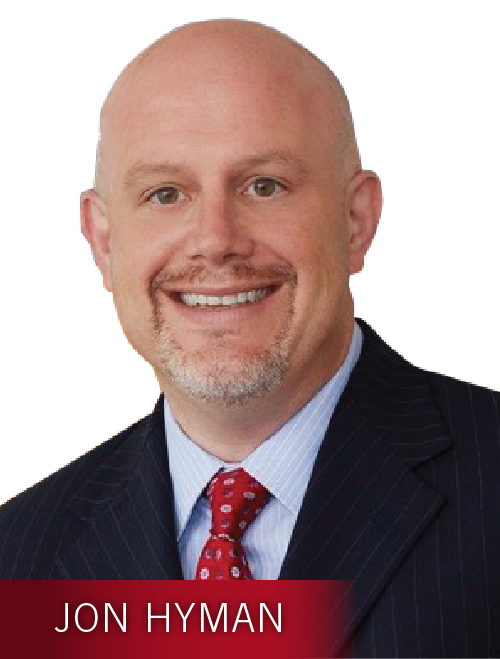
Jon Hyman The Practical Employer

In Encino Motorcars, LLC v. Navarro, the Supreme Court ruled that overtime exemptions under the Fair Labor Standards Act “are to be given a ‘fair reading,’ meaning they are not to be construed too narrowly” (as had historically been the case).

The court applied this “fair reading” standard to conclude that automobile service advisors are exempt under the FLSA’s automobile-service exemption.

Since Encino, federal courts have applied the “fair reading” standard to find that various classes of employee are non-exempt (or likely non-exempt) under various of the FLSA’s categories of exemptions:

  • Bookstore café managers
  • Lead underwriters
  • Information security specialists
  • Cementers
  • Network engineers

Recently, the Department of Labor itself applied this “fair reading” standard to conclude, in an Opinion Letter [pdf], that the FLSA’s “retail or service establishment” exemption applies to sales representatives who sell credit-card-payment platforms to merchants.

Courts and the DOL are more willing than ever to conclude that employees are exempt under the FLSA. Yet, employers should not read this “fair” construction test as a license to reclassify all of their non-exempt employees as exempt. However, it should give employers some comfort that in closer cases, courts should not be so quick to conclude that they misclassified an employee.

Jon Hyman is a partner at Meyers, Roman, Friedberg & Lewis in Cleveland. Comment below or email editors@workforce.com. Follow Hyman’s blog at Workforce.com/PracticalEmployer.

Posted on September 5, 2018June 29, 2023

Mindfulness Training Adds a New Peace to Wellness Programs

Team Horner Group, a pool-supply manufacturing and wholesale distribution company with a nationwide footprint of 480 employees, focuses on employee well-being to the extent that it was one of five companies nationwide to win the 2014 American Psychological Association’s Psychologically Healthy Workplace award.

mindfulness education
Jeska Brodbeck, a mindfulness education and performance coach, works with employees of Team Horner as an antidote to stress. Photo by Edison Rumbos

Not surprising, given that the company has offered employees yoga, meditation, financial and life coaching, and personal training at its in-house gym and exercise room, as well as a discounted massage program.

Team Horner has taken it up a notch recently, adding mindfulness education for its employees as an antidote to stress.

“According to the American Institute of Stress, 80 percent of workers feel stress on the job,” said Jeska Brodbeck, a Miami-based mindfulness and performance coach who taught Team Horner employees. “Stress is a tremendous issue at the workplace and is often only addressed minimally. Nearly half say they need help in learning how to manage stress and 42 percent say their co-workers need such help. Two-thirds of doctors office visits are for stress-related conditions.”

While a modest amount of stress in the workplace is normal, sustained levels can be harmful and lead to numerous health issues, affect professional and family relationships, and contribute to poor work performance, said Carol Ann Rydahl, a health strategy consultant with Minnesota-based managed health care company UnitedHealthcare.

A recent UnitedHealthcare survey indicated almost 90 percent of employees report a positive impact from meditation or mindfulness on their overall health and well-being, with 41 percent indicating a significant impact.

Mindfulness may be the answer to help lower employee stress and improve productivity through freeing employees of habitual patterns of thinking, judging, feeling and acting, and may help them perform better, ignore distractions and make better decisions throughout the day, Rydahl said.

mindfulness training
Team Horner employees practice mindfulness training. Photo by Edison Rumbos

As such, “Employers also may benefit by experiencing more productivity, with an enhanced sense of culture and connectedness that can drive more creativity and innovation while reducing absenteeism, burnout and turnover,” Rydahl said.

Mindfulness also can boost working memory, reduce emotional reactivity, offer greater cognitive flexibility and reduce rumination, Brodbeck said.

Following a solid body of research on mindfulness by universities and institutions that prove its multiple benefits, mindfulness programs are now offered by some health plans, including UnitedHealthcare, and medical centers, hospitals, schools and businesses, Rydahl said.

mindfulness training
Jason Rutz, Cigna health engagement specialist.

“We’ve found that mindfulness is an effective approach for relieving stress and improving focus. We encourage employers and employees to include mindfulness as part of a holistic approach to health and wellness,” said Cigna Health Engagement Specialist Jason Rutz, crediting Brodbeck for helping people recognize opportunities for self-improvement and develop new habits that can reduce stress, increase productivity and improve quality of life.

“Many times, we think of wellness programs as only focusing on nutrition and exercise and not mental health and the different ways of dealing with every day stress,” said Joel Staco, Cigna’s onsite benefits representative for the city of Hollywood, Florida, in its human resources office.

With roots in the corporate world, Brodbeck understands firsthand the challenges employees and executives face in the workplace. She has practiced mindfulness and yoga for more than 14 years, having trained at the U.S. Kripalu Center for Yoga & Health.

She is training in mindfulness-based stress reduction, a program based on the work of Jon Kabat-Zinn, founder of the Stress Reduction Clinic at the University of Massachusetts Medical School, a preeminent meditation-based clinical program.

Through her business, Be Light Consulting, Brodbeck brings her Mindful Performance Training program to C-level private and public-sector executives and employees, teaching them practices such as mindfulness “that can act as triggers for the ‘flow state,’ also known in science as transient hypofrontality or by athletes as being in ‘the zone,’ ” she said.

“When a person is in the zone, they can perform with high levels of creativity, little to no negative stress and complete focus and engagement,” Brodbeck said. “This training creates a paradigm shift in the way employees are working and living so that they can get their work done and also enjoy the process.”

Brodbeck’s science-based course is taught in eight modules that delve into meditation, shifting from stress to calm in under five minutes, reducing emotional reactivity, and moving into the flow against distractions.

Other topics include time management, relaxation techniques, harnessing the power of the mind, and mindful communication.

Brodbeck’s mindfulness lessons bring something different to the table, said Kim Kent, who coordinates the well-being department at Team Horner.

Brodbeck’s course “ties it together like a thread, putting together techniques that are takeaways you can implement in your daily life,” Kent said. “Mindfulness is not just about addressing stress, but also time management, which can be stressful if you don’t manage it well. We learn about mediation, focus and flow.”

Of all of the wellness programs Team Horner has offered, Brodbeck’s has drawn the highest participation percentages from warehouse employees to vice presidents, Kent said.

Kent also favors Brodbeck’s scientific approach, which helps participants not only understand the impact of mindfulness on brain function but why it is important.

“We are so thrilled with what Jeska has done, taking the mystery out of this buzzword ‘mindfulness,’ ” Kent said. “People are embracing how the strategies she’s given us can really help our lives.”

At Team Horner, the course is taught during the lunch hour, with lunch provided by the company.

The wellness programs — especially the mindfulness presentations — have benefited the company, Kent said. Employee surveys indicate positive feedback. Employees also are getting bigger insurance discounts based on annual health risk assessments.

“We see upticks on data like employees’ blood pressure getting better because we’ve been teaching people about stress,” Kent said. “This is an employee-owned company with the understanding that when you invest in your teammates, your teammates feel valued.”

mindfulness training
Tracy Duberman, president and CEO of the Leadership Development Group.

Of the city of Hollywood’s 1,300 employees, 25 to 30 voluntarily participated in Brodbeck’s program, Staco said, adding those who have participated in it have offered positive feedback.

As was the case at Team Horner, the driving factor for launching the mindfulness program was to provide a different aspect of wellness for city employees, Staco said.

“We all look forward to that hour respite from our daily work duties,” said Hollywood City Attorney Doug Gonzales. “The skills taught in that short period of time are invaluable and certainly lead to more productive employees, which in turn benefits everyone involved.”

Gonzales sees value for the program for anyone “who can use a relaxing moment to themselves during an otherwise hectic day.”

Health care facilities can be one of the most stressful workplaces and mindfulness can play a key role in stress reduction, said Tracy Duberman, president and CEO of The Leadership Development Group, a global talent development firm that works with health care leaders.

“In our experience coaching leaders, we incorporate mindfulness practices to center our clients as they begin and end a coaching session,” Duberman said. “This allows their minds to focus on the session goals rather than their next work task.

“Leaders begin to see the results of the practice in its ability to promote resiliency and the ability to lead in complex conditions,” she said. “Embedding the practice within an organization takes concerted effort, a conscious focus on personal daily practice and facilitated group-based meditation as part of the organization’s daily practices.”

Carol Brzozowski is a Florida-based independent journalist. Comment below or email editors@workforce.com.

Posted on August 30, 2018June 29, 2023

Does the FMLA Protect Organ Donation Surgery as a ‘Serious Health Condition?’

Jon Hyman The Practical Employer

Organ donors are living saints. If you are in need of an organ to save your life, and someone is willing to sacrifice a kidney, or a liver segment, or bone marrow, and selflessly accept the pain and inconvenience, you are very, very fortunate.

Sacrificing one’s organ to save another’s life should not also result in sacrificing one’s job.

Earlier this week, the U.S. Department of Labor Wage and Hour Division published Opinion Letter FMLA2018-2-A [pdf], which answers the question, “Does organ-donation surgery can qualify as a ‘serious health condition’ under the FMLA?” (Thanks to Eric Meyer for bringing this to my attention.)

The answer is yes.

The FMLA defines a “serious health condition,” in part, as an “illness, injury, impairment, or physical or mental condition that involves … inpatient care in a hospital, hospice, or residential medical care facility.” “Inpatient care” means as “an overnight stay in a hospital, hospice, or residential medical care facility, including any period of incapacity … or any subsequent treatment in connection with such inpatient care.”

According to the United Network for Organ Sharing, donors usually remain in the hospital four to seven days after the harvesting surgery. Thus, because organ donation commonly requires overnight hospitalization, it qualifies as a serious health condition covered by the FMLA.

Thus, covered employers (those with 50 or more employees on the payroll during 20 or more calendar workweeks in either the current or the preceding calendar year) must provide FMLA leave to an eligible employee-donor (someone employed for at least 12 non-consecutive months, who worked 1,250 hours during the 12-month period preceding the start of the requested leave, and who works at a location with 50 or more employees within a 75-mile radius).

What if, however, you are not an FMLA-covered employer? Or the employee-donor is not FMLA eligible? Or they already used up their 12 weeks of FMLA leave? Think twice before you deny requested time off for organ donation.

  • Many states have their own specific organ-donor leave laws that require leave above and beyond the FMLA.
  • The ADA may require that you grant the time off with, or without, the FMLA or state-specific law. The ADA does not require an employer to provide a reasonable accommodation to a person without a disability due to that person’s association with someone with a disability. Nevertheless, the ADA mandates that an employer avoid treating an employee differently than other employees because of an association with a person with a disability. Thus, if an employer grants time off to employees for their own surgeries, the ADA will require similar treatment to employees taking time off to donate an organ to one’s association or relation.

Is it inconvenient for an employer to provide time off to any employee? Absolutely. Do you want to be in a position of defending your decision to fire that employee in the face of a leave request for the selfless act donating an organ to save another’s life? Absolutely not. While such a decision is likely illegal, it’s also undoubtedly inhuman. And it’s that inhumanity that will cost your company dearly in front of a judge or a jury.

Jon Hyman is a partner at Meyers, Roman, Friedberg & Lewis in Cleveland. Comment below or email editors@workforce.com. Follow Hyman’s blog at Workforce.com/PracticalEmployer.

Posted on August 29, 2018June 29, 2023

ComPsych Survey Emphasizes In-Person Counseling Over Mental Health Apps

There’s an app for that — that meaning almost everything. I covered mental health apps for Workforce a couple years ago, exploring how technology solutions can benefit employees with mental health issues, which is why I was intrigued to find a ComPsych survey in my inbox the other morning. The findings? If employers want to help depressed workers, apps may not be the answer.mental health apps

Workforce covered technology in our latest HR tech-themed issue, including a few stories on the negative and positive impacts of technology. While this information was also valuable, I found the survey by ComPsych, a Chicago-based employee assistance program provider, to be especially noteworthy because of the specific population it addressed: depressed workers. We can argue pointedly on both sides about how technology has both positive and negative effects on people’s lives and well-being. But when we’re talking about mentally ill people getting help, I think it’s better to be a bit more careful.

Also read: Is Technology the Answer to Your Employees’ Mental Health Problems?

I can’t speak for this hypothesis, but I can share some of the findings from the ComPsych research. The EAP, considering the loneliness epidemic and the need for more face-to-face interaction, advocates for in-person counseling. The role of apps in getting mental help? “Using them as means to draw people in to receive more in-depth help.”

Also read: Loneliness Creeps into Workplace Wellness World

“There’s a human function and a human interaction component — you can call it empathy, you can call it connectedness, you can all it a lot of things — that you miss regardless of what you employ in the technological realm that an in-person experience with another human being provides for a person seeking care,” said Richard Chaifetz, founder, chairman and CEO of ComPsych.

He added that any way we can improve, increase and expand people’s ability to access care is positive and that technology has a lot of value in mental health. Take, for example, a different technology in health care: telemedicine. This solves some issues related to access and availability of care, but for serious illnesses or comprehensive medical problems, in-person care is preferable. The same could be said about mental health.

Take this instance. Years ago, people would took paper surveys about their mental well-being. Am I depressed? Am I stressed?

“Those moved to internet-based questions, and now they’ve moved to online cognitive help for people to walk through different scenarios in their lives and provide resources and counseling online,” Chaifetz said. “It’s a way to stimulate thought, [and] it’s a way to bring people under the tent to explore issues related to mental health or mental well-being.”

He also added that at ComPsych, when people are online, they constantly are reminded that in-person care in available. Here’s the number you call, here’s how you get something scheduled, here’s what you need to know. It’s a way to make sure people know their options.

Most employers understand that technology is not the answer to everything in medical care, and more employees than in the past are open to getting care for mental health needs, thanks to the stigma disappearing over time, Chaifetz said.

Still, I find this important to bring up because understanding something and taking action are two different things. For example, quality and access in mental health care are still current issues, even if people understand the importance. Chaifetz mentioned that most large and medium sized companies have mental health services beyond basic counseling mandated in their health plans, but that leaves me curious about the state of health plans for small employers, where many employees work and get health insurance.

Looking at this from a broader perspective, this pitch reminded me of something that it couldn’t hurt to remind employers. Wanting to help your overall workforce with their general mental health and wanting to help your mentally ill employees with specific mental health issues are two different beasts.

Both are important, and both require different considerations. It’s the difference between someone needing to take a mental health day to sleep in and do something relaxing and someone needing to take a mental health day to see a counselor for an emergency session. Or the difference between someone wanting to use HSA dollars to help pay for an exercise class and someone wanting to use HSA dollars for medication.

The amount of mental-health pitches I get a day is great and I believe a good sign that employers genuinely want to know what they can do so as not to negatively impact their employees’ mental health.

In other benefits-related news this week:

  • Can This New Employee Benefit Help You Hack Death?: A blockchain startup has adopted a stem cell storage benefit, saying that these young, healthy cells can potentially be used in the future for “health maintenance.” However, experts in stem cell research say there’s not yet any scientific evidence that stem cells could be used to reverse illnesses (be in heart-related illnesses, brain-related illnesses or blood cancer) when people age. Is this benefit promising more than it can deliver? (Bloomberg)
  • IRS Clears Way for Student Loan Benefit Tied to 401(k): This company has introduced a new benefit in which debt-straddled employee with student loan benefits can begin to save for retirement by paying off student loans. When they make a loan payment, their company puts money in their 401(k). My benefits sources say this is not yet a trend, for a variety of reasons, but it’s definitely something to have your eye on moving forward. (Employee Benefit News)
Posted on August 27, 2018June 29, 2023

Don’t Ignore the Negative Effects of Technology at Work

negative effects technology

It’s impossible to ignore the benefits that technology plays in people’s lives, but there are also underlying negative effects. Look no further than the workplace, where employees and leaders alike may feel duty bound to respond to emails at night or be available around the clock via their digital device.

“I see this tug of war between, ‘I want to leave my phone behind’ but also looking at it from a very positive light which is, ‘Technology is truly an enabler in what you want to achieve in your health and wellness,’ ” said Swati Matta, director of member engagement and health at employee benefits company League Inc.

Although there are many digital wellness plans available now, employers also are instituting onsite programs to ensure that employees are taking time out of their day to disconnect, she said.

Plugging In: Technology Continues Its Surge Through HR Departments

Being constantly connected contributes to depression and anxiety, according to the “2018 Global Wellness Trends” report from the Global Wellness Summit. It reports that human connection is a strong driver of happiness and that 2018 is the year when people will acknowledge the ways in which tech is making them feel ill and strive to reclaim peace of mind.

Swati Matta benefits
Swati Matta, director of member engagement and health at League Inc.

In response, League is trying a few things to renew a sense of workplace humanity including walking meetings.

“It’s interesting because when you’re doing these walking meetings, while obviously stacking up on your steps, you’re also instilling this culture that it’s OK to step away from your desk, and you can have a meeting when you’re away from your meeting notes … or whatever you use to have a conversation,” Matta said.

Through its Health at Work program, League works with clients to identify goals and build custom wellness programs, which can include aspects like 10 minutes set aside once a week for meditation or massages. The organization also offers this program to its employees, which is another part of its well-being strategy.

Is Technology the Answer to Your Employees’ Mental Health Problems?

Employees appreciate the connections they have with others at work, and although they don’t fear technology itself, they may be apprehensive that the changing workplace will put them in a position where they can’t connect with others, according to Todd Katz, executive vice president at insurance giant MetLife.

“If employers preserve that sense of connection in the workplace, our view is that companies will be in a better position to recruit and retain. They’re also going to get better engagement, productivity and loyalty,” Katz said.

As disconnecting becomes increasingly attractive to people, the oxymoronic “tech-fighting tech” has been trending in the general wellness space, the “2018 Global Wellness Trends” report also stated. This includes apps like Off the Grid, which allows users to block their phone for any amount of time, and The Moment, which lets people set daily time limits on devices.

Such tech tools are already being used in the workplace, according to Autumn Krauss, principal scientist, human capital management research at SAP SuccessFactors.

The Thrive Away app — developed by Arianna Huffington’s wellness company Thrive Global — deletes new emails a person receives while on vacation, she said. Companies can also restrict sending emails during off hours or create computer pop-ups with messages like “Take 10 minutes to stretch.” Other companies may have their computers lock after a certain amount of time so employees can take a break to step away from the computer.

Employee Resource Groups Go Digital

Krauss said there is value in such solutions but they come with flaws. Employees’ responsibilities continue, so a stretching reminder may come in the middle of conducting a webinar. Or, an employee may leave early to pick up their child from school and find that not being able to send emails at night makes work-life balance more difficult.

“If we really want companies to think about how they can help employees disconnect, that comes from a cultural perspective, and that’s where I’ve seen a lot of this work done,” Krauss said.

Organizations should recognize if they’ve either implicitly or explicitly created an environment that signals to employees that they must always be on, she said. Often, executives set the example by regularly working weekends, taking meetings early in the morning or conference calls late in the evening.

Having coached executives, Krauss said she’s had conversations about re-establishing their own behavior when it comes to these habits. Leaders could work to change such habits, for example by not taking a meeting before 9 a.m. and communicating clearly with the overall workforce in a compelling way that this is acceptable behavior.

“Role-modeling is going to be the first part of this process,” Krauss said, adding that employers should consider how they can cultivate a change in what’s expected of employees through executive communication, leadership behavior and the norms created and reinforced in the office environment.

Posted on August 24, 2018June 29, 2023

Workplace Wellness Programs: Different Research, Different Results

Andie Burjek, Working Well blog

Since I started researching and writing about workplace wellness for Workforce two years ago, there’s been one story that’s consistently creeps up every so often.

I’ve always seen it as one of the many tension points in workplace wellness: return on investment. Do wellness programs work from a financial perspective? Do they actually save plan members and organizations health care dollars?

[Other points of tension I’ve noticed: 1. financial incentives — are they coercive or not? Do they work or not? 2. Responsibility — is employee health and how employees eat, exercise, etc., outside of work an employer’s responsibility? Is that overstepping a line or a legitimate business decision? What areas of debate do you think are most noteworthy or intriguing tension points in workplace wellness?]

There are studies that claim wellness programs have clear financial benefits, and others that find the opposite. I’ve noticed the types of organizations that publish positive results are wellness companies themselves or the organizations that utilize wellness programs. The types of organizations that have published the more constructively critical results have been third party researchers like universities.

That’s why it was interesting to come across this New York Times story, “Workplace Wellness Programs Don’t Work Well. Why Some Studies Show Otherwise.” This story may be a bit dull for people not interested in the details of workplace wellness programs or the nuts and bolts of how different research studies are structured, but I found it enlightening.

The article compared two types of research studies: observational analyses vs. randomized controlled trial. Many of the analyses of wellness programs that show positive results are observational, it stated, and although there are some benefits to observational research, the randomized controlled trial is the “gold standard of medical research.”

You can check out this article’s deeper information on these two methods and what makes them different. I’ll focus on the implications of the methods on workplace wellness studies. An excerpt from the article:

“… Almost all of those analyses are observational, though. They look at programs in a company and compare people who participate with those who don’t. When those who participate do better, we tend to think that wellness programs are associated with better outcomes. Some of us start to believe they’re causing better outcomes.”

“The most common concern with such studies is that those who participate are different from those who don’t in ways unrelated to the program itself. Maybe those people participating were already healthier. Maybe they were richer, or didn’t drink too much, or were younger. All of these things could bias the study in some way.”

“The best of these observational studies try to control for these variables. Even so, we can never be sure that there aren’t unmeasured factors, known as confounders, that are changing the results.”

In June, a group of researchers published the results from the Illinois Workplace Wellness Study. They conducted a randomized control trial and analyzed the data as if it were an observational trial. Here are some of the results:

  • People who participated in the wellness program went to the gym almost twice as often as those who did not participate, according to the observational analyses. The randomized control trial found that participants and nonparticipants went to the gym roughly the same amount of times a year.
  • Participants spent $525 and $273 monthly on health care and hospital related costs, respectively, compared to nonparticipants who spent $657 and $387, according to the observational analyses. the randomized controlled trial found that wellness programs had little effect on spending.

I’d strongly recommend this to any benefits or wellness professional interested in the ROI of workplace wellness.

One more thought. A while ago I began hearing from some people or reading that wellness programs aren’t a health-care cost saver, really, but a retention and attraction tool for employees. If that’s true, maybe results like those seen in this Illinois Workplace Wellness Study are irrelevant and employers will continue to offer wellness programs no matter what the cost savings (or lack thereof) are. We’ll have to see what the future of workplace wellness has in store!

Andie Burjek is a Workforce associate editor. Comment below or email editors@workforce.com.

Posted on August 24, 2018June 29, 2023

Next-Generation Retirement Plans

Getting together with old high school chums, not surprisingly, can be an eye-opening experience.

There’s bigger guts, less hair and a divorce rate approaching Tom Brady’s lifetime passer rating. There’s also bragging on our overachieving children and woebegone tales of trips in our youth that never should have happened. “How did we ever survive high school?” is an all-too-common refrain as these stories unfold, followed by a long pause, a collective shaking of heads and, “OK, who needs another beer?”

For the most part I was prepared for all of that. But no 20-pound fish tale or boastful memory of eighth-grade on-court hoops supremacy could have prepped me for a question that hit me from the blind side not once, not twice, but five times in one afternoon.

“Are you retired yet?”

Me (somewhat befuddled): “Umm, well, no … no, I’m not,” I sputtered after the initial query. By the third round of questioning I had abandoned the “Umm, well” and the “no, I’m not” for a much more direct, succinct, “No.”

I guess I shouldn’t have been shocked at the question. Early retirement is not some new concept created by Silicon Valley entrepreneurs. My dad retired as a union plumber in his mid-50s and spent his encore career as the World’s Greatest Grandfather. Heck, Andre Ethier is 35 and officially retired in August after making $115 million over 12 seasons playing for the Los Angeles Dodgers.

It’s just one of those age-appropriate questions that I should have expected to hear. Sort of like when you’re 18 and it’s “you don’t have a fake ID yet?” or at 40 and, “Viagra or Cialis?”

Considering that most of those friends are retired now, I admit to a little pang of jealousy. They may or may not have a daily routine; they work on their boats and kayak on their local lake whenever they feel like it, and they hit up day baseball games. Like, why them and not me?

Well … most of them entered the trades straight out of high school, joined a union, got really good at their jobs and could retire after 30 or 40 years with a pension.

I chose to put my hands on a keyboard instead of a wrench and got into journalism. No pension. No boat. No weekday baseball games. However, I am part of a profession whose members are considered enemies of the state, according to our president. So I have that going for me.

And no retirement yet.

For my friends, their retirement from the daily workforce did not come without sacrifice. Bitterly cold winters on a construction site, scorching summers toiling over freshly laid asphalt and hopping in and out of delivery trucks schlepping barrels of beer or 60-pound freight packages takes a physical toll.

But a trustworthy employer and a strong union assured their retirement — and my dad’s and Andre Ethier’s, for that matter — at a relatively young age.

I have a feeling they are among the fortunate ones — or at least they are smarter than the average enemy of the state. As traditional employer-funded pensions fizzle and employees take greater responsibility for funding their retirement, a recent study from the Consumer Bankruptcy Project reveals that people 65 and older are filing for bankruptcy three times more than the rate in 1991.

A shrinking social safety net combined with longer waits to maximize Social Security benefits, pensions being replaced by 401(k) plans and ever-increasing health costs are driving this spike in bankruptcies, the study suggests.

What can U.S. organizations do to help stem this alarming trend? Frankly, we can’t expect companies to foot more of the direct costs of retirement — in other words, re-instituting pensions — just for altruistic reasons.

Generation X will likely rely on today’s model of a defined contribution plan as the bulk of their retirement planning. But what awaits Gen Y and Z?

Is there a fresher, more innovative solution than what we have today — a 401(k) with a financial well-being service tacked on? We live in a hyperdisruptive economy crying out for retirement reform that cuts across political partisanship.

Business leaders can step up, too, not necessarily tapping their coffers but opening their mouths and minds to help solve the pending retirement crisis.

I am truly happy for my retired friends as they pursue their personal passions. They worked decades to achieve it. There are many with meaningful jobs at 65, but others — those stuck in the work-to-live category — deserve a shot to get out on a lake after years of toiling away, too.

Because really, wouldn’t you prefer the option of sitting in a kayak on some serene lake versus sitting behind a desk when you’re 65?

Rick Bell is Workforce’s editorial director. Comment below or email editors@workforce.com.

Posts navigation

Previous page Page 1 … Page 13 Page 14 Page 15 … Page 63 Next page


Webinars


White Papers


  • Topics

    • Benefits
    • Compensation
    • HR Administration
    • Legal
    • Recruitment
    • Staffing Management
    • Training
    • Technology
    • Workplace Culture
  • Resources

    • Subscribe
    • Current Issue
    • Email Sign Up
    • Contribute
    • Research
    • Awards
    • White Papers
  • Events

    • Upcoming Events
    • Webinars
    • Spotlight Webinars
    • Speakers Bureau
    • Custom Events
  • Follow Us

    • LinkedIn
    • Twitter
    • Facebook
    • YouTube
    • RSS
  • Advertise

    • Editorial Calendar
    • Media Kit
    • Contact a Strategy Consultant
    • Vendor Directory
  • About Us

    • Our Company
    • Our Team
    • Press
    • Contact Us
    • Privacy Policy
    • Terms Of Use
Proudly powered by WordPress