Skip to content

Workforce

Category: Benefits

Posted on April 27, 2018June 29, 2023

What I’m Reading Now: A Lesson in Geography, Genetics and American Values

Andie Burjek, Working Well blog

The benefits and wellness world is so rich that it’s hard to dig deep into every topic that comes up. That said, here are the stories that struck my interest recently.

Health Risks and Health Benefits of Genetic Tests: The genetic testing space fascinates me for many reasons, especially from an overall ethical standpoint. It’s such a recent area of scientific advancement that I find it curious to read about new innovations and trends and the larger moral questions they bring up.

I’ve written before about employees’ concerns about HR 1313 and how some feared they’d be coerced into taking tests they don’t to, and I’ve written about why employers should take issues like genetic discrimination in life insurance into account when they try to market genetic testing benefits to employees. But a recent New York Times article brought a much more basic angle to mind: genetic testing’s actual impact on public health.

The article highlighted many employers like Levi Strauss & Co., SAP, OpenTable and Salesforce that offer genetic testing as an employee benefit. There are many positive effects that can come out of this, the author acknowledges, but we should also consider some basic scientific facts about genetics before we hail genetic testing too enthusiastically as some flawless health innovation.

Many parties — including employers, the Food and Drug Administration and many genetics companies — are embracing broader consumer use of genetic tests, but groups like physicians, doctors and federal health agencies are uncertain if these tests are ready for public adoption. The reasoning? In a generally healthy population or group of people, there’s no evidence that systematic screening has “a net benefit in terms of health outcomes.”

To reiterate, there can definitely be value to genetic testing for certain people, but I wonder, could the same logic about on-average healthy public populations be said about on-average healthy employee populations? Would broad systematic genetic screening truly have a significant impact on the workplace, in terms of overall health or health care costs?

Work-Life Harmony and American Values: The Washington Post just published what I found to be a fascinating op-ed, “America is Obsessed with the Virtue of Work. What About the Virtue of Rest?” Given all the talk about work-life balance or work-life boundaries, many of the ideas in this piece were especially relevant.

Pro-work policies and rhetoric are common on both the left and right, the author writes, but meanwhile there are few pro-rest policies. For example, paid parental leave is lacking for most employees; more than half of workers leave vacation days unused either because they can’t afford to take time off or because they don’t want to look bad to their employers; and retirement isn’t a certainty for many older individuals.

In a time when burnout, balance and holistic well-being are common corporate talking points, companies should consider that employees deserve to have time to take care of themselves, rest or go on vacation. This picture of Walden Pond is from a vacation I took last fall.

The article also argues that although there is dignity and value in work, the majority of one’s life should not be made up of work. For example, the labor movement of the late 1800s championed the eight-hour workday so that workers could have time to get the proper amount of sleep and to pursue their own interests.

None of this is to say that people should be lazy or that work isn’t important. But in a time when burnout, balance and holistic well-being are common corporate talking points, it’s worth pointing out that people do deserve to have time to take care of themselves.

An excerpt from the article: “… Trump isn’t wrong, after all, in identifying work as a cardinal American virtue — and infractions against virtue are the stuff of vice. But in terms of our wider cultural context, it doesn’t appear to me that a lack of respect for work is the No. 1 threat to American dignity. If we undervalue anything to the detriment of dignity, it is the virtue of rest.”

Geography and HDHPs: The prevalence of employers offering high-deductible health plans varies by geography, reported news site HealthPayerIntelligence.com. The site was referring to findings from the BenefitFocus report State of Employee Benefits 2018 — Regional Edition.

I found this report valuable because with so much media attention given to diversity now and how different benefits might appeal to different people depending on age, gender, etc., rarely do I see geography as part of the definition of diversity. But, obviously, people who live in different regions will have different problems or issues that require different solutions, and health care plans are no exception.

An excerpt from the article: “Regional insights may help employers identify the gaps in value of their health plans. Employers could capitalize on these gaps by redesigning health plan offerings, financial contributions and additional benefits to fill these gaps in value.”

Final Read: Last week I wrote about the impact of art on employee stress. So this week I was happy to see the Chicago Tribune publish something about the impact of art on loneliness.

The loneliness epidemic is a talking point in the wellness community (Workforce writer Rita Pyrillis, explored this topic more deeply in the latest issue of the magazine), and although the Tribune article focuses on student mental health and loneliness, the same ideas apply to the workplace. For example, the article mentions that there is a biweekly support group for students with disabilities and their allies. That’s the college version of an employee resource group!

Andie Burjek is a Workforce associate editor. Comment below or email editors@workforce.com.

Posted on April 17, 2018June 29, 2023

Art Therapy and Employee Stress

Art Therapy Lochness Muenster Working Well
Recent acrylic painting of the “L” stop near my grandparent’s house.

My company recently announced that it’s hosting a wine and paint afternoon for employees this spring. It’s an opportunity to eat some cheese, make anything you can hang up and appreciate your coworkers’ artwork. I’m looking forward to this because one of my coworkers and I regularly talk about paintings we’re working on and art shows she’s planning to attend.

It’s also good for us because our walls are boringly off white, blank and a general bummer to look at. We need something for those walls. I think back to when I interned at a news station and found a painting stashed in a supply closet. It was an image of Rod Blagojevich’s face on a rat’s body with some dark, underworld-esque backdrop. Even that would be better on our walls than nothing.

This got me thinking about the impact creating art can have on your brain, stress levels and overall health, and there’s a lot to be optimistic about.

According to one article on the benefits of art therapy — “a form of expressive psychotherapy that uses the creative process of making art to improve a person’s physical, mental, and emotional well-being” —  the benefits of creating art include a general sense of relief, overall better mental health, decreased stress and the chance to process complicated emotions. It’s a tool that individuals can use for their own benefit or a legitimate type of therapy that professionals use to treat people with a variety of emotional or mental disorders like cancer, PTSD, emotional abuse and bipolar disorder.

The art studio from my figure drawing during college.
The art studio from my figure drawing class during college.

I’ve been through this myself. I took a figure drawing class in college while I studied abroad in Rome, and it’d often be my favorite part of the week. After sitting on some ancient church’s steps nearby for half an hour and people-watching, I’d get three hours in a quiet, dusty studio. There’d be nothing to listen to but the rustling of my classmates’ sketchbooks or the sound of their charcoal breaking. It was a wonderful opportunity to focus on one task for three hours straight and clear my head of to-do lists and obligations.

A different article from Business Insider also listed several benefits of making art for the average person. Noteworthy here is that “making art” doesn’t have to mean painting or drawing; it can be sculpting, dancing, making music or any other creative pursuit. Also, there are many scientific studies that have been conducted to support the potential benefits of creating art.

Doodling Lochness Muenster Art Therapy Stress Relief Working Well
Mindless sketching or doodling can help people pay better attention when they’re listening to something boring, at least in some circumstances, according to an article in the Atlantic.

There’s still further research to be done, but many of these study results show promise. A 2016 Journal of American Art Therapy Association study found that participants who made visual art for 45 minutes saw a reduction in cortisol, a hormone associated with stress. A Journal of Applied Cognitive Psychology study found that when people doodle while listening to dull information, they’re more likely to remember that information and stay focused. And a 2015 study conducted by Gottfried Schlaug, a neurologist at Beth Israel Deaconess Medical Center and Harvard Medical School, found that people who played music regularly saw improvement in academic performance, language skills and memory.

I think the workplace could learn a thing or two from these lessons. Sleeping enough, having a healthy diet and exercising more can help with stress relief, of course, but something on the more creative side can help, too.

The focus of wellness initiatives is so often something physical. Take this many steps; lose that many pounds; take a yoga class this many times a week; track your blood pressure or some other body measurement on this app. There is a trend moving toward mental or emotional well-being in wellness programs, but there’s still more to be seen what happens in that area.

Working Well Art Therapy Chicago Tribune Crossword Chicago Skyline
A collage of the Chicago Skyline made from parts of Chicago Tribune’s Sunday crosswords my family and I have completed.

I once asked a wellness professional I met at a conference if employees could use funds given to them through an employer-sponsored wellness program on activities like art classes. Her response was that although that idea was fine in theory, it’s difficult to measure the impact of the something like that.

So often it seems like corporate wellness programs are much more focused on what can be counted. Of course, there’s a reason for this. That way results can be measured, which allows a company to quantify the impact of the program. But I don’t think we should underestimate the potential of the creative or the qualitative.

Has your company ever incorporated something creative or art-based in your wellness program? Also, feel free to share in the comments some projects you’ve created to relieve stress!

For More Information Related to These Topics:

  • A comprehensive guide to the benefits of art therapy for different types of people. (arttherapyblog.com)
  • Health insurance and mental health services. (MentalHealth.gov)
  • 7 reasons to create art no matter your talent level. (Business Insider)
  •   The cognitive benefits and limitations of doodling. (The Atlantic)

Andie Burjek is a Workforce associate editor. Comment below or email editors@workforce.com.


Posted on March 21, 2018June 29, 2023

Are Digital Pills Worth It for Benefit Plan Sponsors?

The first digital pill, Abilify MyCite, is a treatment for schizophrenia aimed at improving patient adherence.PBM digital pills

Approved by the Food and Drug Administration in November 2017, Abilify MyCite includes an ingestible sensor, a small wearable sensor patch, a mobile app and a web-based portal for use by medical professionals in addition to the medication.

Now, with more digital pills for additional uses on the way, plan sponsors should be asking three questions before including digital pills in their pharmacy benefit plans.

  1. Will patients accept the idea of ingesting a pill with a sensor and having their doctor electronically monitor them? News reports of the FDA’s approval of Abilify MyCite included worries about security, privacy and “big brother” watching. Some experts wondered whether hackers could break into the system, obtain a patient’s health records and threaten to expose their medical secrets. Others expressed concern that mentally ill people or individuals deemed incompetent might be forced to use digital pills against their will. It remains to be seen if patients will welcome or be wary of digital pills.
  2. Are there less intrusive ways to address the problems digital pills are designed to solve? While there are many possible uses for digital pills, the health concern driving the development of Abilify MyCite is patient nonadherence — a complex problem for most plan sponsors. We intuitively know that taking life-saving medications as directed is critical to ensuring positive health outcomes. Abilify MyCite addresses nonadherence due to forgetfulness. But for forgetfulness, there are already less-intrusive ways to solve the problem than swallowing an ingestible sensor. One example is digital pill bottle caps that text or alert patients, reminding them to take their medicine.

Further, forgetfulness is the culprit in nonadherence just one-third of the time. Other factors that affect whether patients take their prescribed medications include the high cost of some prescription drugs, physical side effects and psychological barriers. A digital pill that simply informs whether a patient does or does not take their medicine does little to solve these problems.

There is no one solution to the complicated issue of nonadherence — which could explain why plan sponsors have not yet enthusiastically embraced any of the technology solutions designed to solve it.

  1. Will digital pills result in health outcomes sufficiently better to justify the extra cost of digital pills over conventional medications? According to news reports, the jury is still out on whether Abilify MyCite helps schizophrenia patients better comply with taking medications as directed, given the nature of the illness. But it has been reported that nine health systems in six states are prescribing digital pills for conditions including hypertension and type 2 diabetes, with positive interim results reported from a randomized controlled study. More research is needed to determine the efficacy of digital pills across a broader range of conditions, and only time with tell if the cost premium is returned in the form of improved outcomes.

These are early days of digital pills. With pharmacy benefit managers and plan sponsors dealing with the larger and more immediate issue of the rising cost of specialty pharmaceuticals, it remains to be seen how much time and effort they will put into measuring where and how digital pills might make a dent in overall pharmacy costs and improved outcomes — if they do at all.

Nadina J. Rosier is the North America health and group benefits pharmacy practice leader at Willis Towers Watson. Comment below or email editors@workforce.com.

Posted on March 15, 2018June 29, 2023

The New Retirement: 4 Ideas to Help HR With Its Mature-Age Employees

Not only are people working longer into the traditional retirement years, but the vision of retirement and what it means to retire is evolving altogether.

Such factors are creating challenges for HR leaders who are now tasked with finding ways to help mature-age workers discover the next phase of their lives while developing initiatives that allow the organization to utilize the talent and experience of workers who hold years of vital knowledge.

retirement

HR leaders are seeking creative retirement programs for their mature-age employees designed to help those who want to remain in the organization but in a more flexible capacity. They also are providing assistance and support for those who have decided to transition out of the organization to pursue the next phase of their lives in a way that allows them to continue to find meaning and purpose. Employees are finding they are no longer tied to the traditional retirement model.

According to U.S. News & World Report, the expected retirement age is now 66. However, the actual average retirement age is 63, representing a gap between when employees think they are going to retire and when they actually do. Part of this gap may be explained by the fact that mature-age workers are not actually retiring in the traditional sense, but are seeking ways to find purpose and meaning, and are looking to remain engaged and productive well past the time they are employed full time.

Many organizations help employees plan for retirement to a certain extent, whether it’s offering 401(k) or transitional retirement plans. However, the new era of retirement means that employees aren’t just leaving your business to go fishing or sit on a front porch.

They become your consultants, company references and brand ambassadors. To ensure that positive relationships are established and nurtured with these industry-influential individuals, HR leaders must shift their thinking to focus on new policies for career transition in the retirement age — those that are beneficial for employees as well as for the organizations that offer them.

A few of the most common alternative career paths for mature workers include entrepreneurship, entering the gig economy, volunteerism, philanthropy or joining a board of directors. Employees are looking to enrich their second phase of life with substance and meaning. This new vision of retirement requires job connections, career mapping and career transition services.

Here are four new ways to look at the old idea of retirement.

  1. Believe workers are never out of date. Avoid thinking that one particular path is the optimal one for every employee of traditional retirement age. When employers begin thinking outside the scope of normal, it’s possible to usher in new ways and opportunities for experienced workers to deliver value to the organization and find the next steps in their life paths. Avoid making assumptions about employee retirement age. More and more mature-age employees are continuing to work well past traditional retirement for the financial benefits as well as the personal satisfaction of working. Don’t give up on investing in employees and their journeys. Businesses that place a higher value on mature workers’ industry knowledge, maturity level and business perspectives will be the ones that reap the benefit of all that experience. Think about every employee as an individual and be ready to support each person.
  2. It’s about the journey, not the destination. While retirement parties and gold watches were traditionally viewed as rites of passage, they might not be what motivates your current mature-age employees. Regardless of generation or age, it’s been proven that employees place the highest value on finding meaning and purpose in their work, opportunities for professional growth, forming relationships with the colleagues they interact with every day, and compensation. HR professionals can enhance this employee experience by focusing on every aspect of the journey, from recruitment to the retirement experience. To provide a well-rounded employee experience, your investment shouldn’t be made solely at the end of the journey. As any financially savvy person would tell you, investing small amounts along the way will create a greater profit than investing large amounts toward the end of the investment period. When you provide support at every phase — such as continuing education, career coaching, flexible schedules, financial opportunities and career transition services — employees will gain the skills required to perform at their best for your organization. In addition, you will have made a commitment and investment in a person that will most likely benefit your company and your brand now and in the future.
  1. Flexible strategies are the greatest gift. Try gifting flexibility instead of a gold watch. As with any successful HR process, you need a plan, no matter how flexible you think you can be. Just because there is no “normal” doesn’t mean you can’t leverage a creative retirement program designed to engage workers and assist them in designing and planning a positive and productive late career and future retirement. The key is creating a plan without limitations or pre-set expectations, giving you the ability to remain flexible with each individual employee while providing some structure and guidance along the way. Most HR departments don’t have the bandwidth or personnel to design and execute a comprehensive creative retirement program on their own. With the right tools and resources, employees considering a creative retirement option will find the support they need to make a seamless transition. It’s often worth the time and resources to partner with a vendor dedicated to deploying creative retirement strategies, such as a contemporary outplacement services provider.
  1. Enlist a dedicated career coach. What can a career coach offer that your HR team probably can’t? Typically, career coaches can assist employees with in-depth retirement self-assessments designed to surface unique requirement motivators and critical considerations. Career coaches are a critical component to thinking outside of the retirement box. The more customized and creative the strategy, the more beneficial to the individuals and the employer.

For employees to get the most out of a career coach, leverage coaches who are experts in the employee’s field or future field. The coach should also maintain an open mindset and the ability to think beyond the scope of “normal” retirement. As mature-age employees consider alternative options like serving on a board of directors, entering the gig economy or volunteering their time, a career coach can bridge the gap by focusing in on helping employees carry their applicable skills from their current job to their next venture.

While these four ideas set HR professionals up to assist mature-age employees, they should really be applied in greater depth to the entire workforce. Focusing on creating a holistic experience for individual employees pays dividends for the employee and employer. Whether your employee is 72 or 22 or somewhere in between, don’t overlook the unique advantages they bring to your organization — and find ways to invest in their journey.

Lindsay Witcher is senior director global practice strategy for outplacement provider RiseSmart. Comment below or email editors@workforce.com.

Posted on March 8, 2018June 29, 2023

HR 1313 Updates and Genetic Testing Controversies Over Time

I recently was reminded of just how new the field of genetics is and how the discussions about genetic privacy are fascinating and relevant in the workplace. That’s where genetic-testing benefits or perks are sometimes touted as a way for employees to learn about genetic risks they have and plan for them accordingly.

I finally started reading The Gene — a New York Times bestseller by Siddhartha Mukherjee from 2016. The Gene is about the history of genetic theory and history from Aristotle and Pythagoras to Charles Darwin and Gregor Mendel and beyond. It also explores darker parts of genetic history like the eugenics movement in America and Nazi Germany’s attempt to create a so-called genetically superior race.

This 550-page-long page-turner was in part a celebration of significant scientific discoveries in genetics and in part a warning that people are capable of using these discoveries and theories to do major harm.

In 1976, Herb Boyer and Robert Swanson founded biotech company Genentech and created many important medicines out of genes, including insulin, and patented these creations. But their contemporaries wondered, is it right to patent a method you discovered while funded by public research money? Also, can you patent something that naturally is a part of every person’s body? Even now, many people have ethical objections to patenting genes.

In the 1800s Charles Darwin observed different-looking finches of the same species. He was fixated on their similarities, not their differences. This led to important discoveries in hereditary theory, mainly that these different-looking birds came from the same ancestor and adapted over time to different environments. The same could be applied to people, who were more similar than different and came from the same common ancestor.

On the other side of the coin, Darwin had a cousin, Francis Galton, who was also a scientist. He was more fixated on people’s differences than similarities and coined the term “eugenics” in 1883, according to The Gene. This was the idea that some people’s genes were better than other’s and that through selective breeding, humankind could keep only the best genes in its genepool. His idea eventually led to a eugenics movement in America in which undesirable people were forcibly made infertile so that their inferior genes were not continued. These “undesirables” included African Americans, white European immigrants and anyone deemed “feebleminded” by the courts, the book notes.

These are older examples from the book, but obviously a lot has happened from the 1980s on, like the Human Genome Project, experiments (some more successful than others) in gene therapy and many services that offer easy-to-use genetic testing kits like 23andMe, Ancestry DNA and Vitagene.

Genetic tech has entered the workplace. Some companies are offering genetic testing as a perk. Last March, Rep. Virginia Foxx introduced a bill, HR 1313, which would allow employers to offer health insurance premium rebates to employees who take part in workplace wellness programs, many of which include genetic screenings.

This led to some controversial reactions when some people worried that their companies could financially coerce them into genetic testing. News site Vox reported that those who opt out would have to pay $5,400 more a year for the average family plan than those who opt in, based off 2016 insurance price data. This sum might make opting out not viable to some employees. Advocates of the bill stressed that employees would have the option of opting in or opting out.

Let’s take this scenario above. The fundamental question, it seems, is that if this participating employee pays $5,000 less than a non-participating employee, is it truly optional? Is there a difference between a penalty and a reward in this context?

I’m inclined to say no, especially if genetic information is involved. Others would strongly disagree.

Here’s the most recent news on HR 1313 I could find, according to the DNA Geek:

“The bill has been lingering in various committees in the House of Representatives since it was introduced in March [2017]. It passed the Committee on Education and the Workforce back in the spring, but it’s been stagnating in the committees on Ways and Means and on Energy and Commerce since then. … On 11 December 2017, both committees ‘discharged’ the bill, meaning that they released it to be considered by the full House of Representatives without voting on it themselves. The bill is now on the House schedule to be considered for passage.”

The next steps would be passed by the House, passed by the Senate and then signed by the president.

Whatever your take is on HR 1313, it shows how tricky and messy issues involving genetic security and privacy are. There are others more qualified than me to talk about the controversies and disagreements in the genetics space. But for employers and employees, this debate over personal health and genetic information is noteworthy.

In the United States, the law that governs genetic privacy is the Genetic Information Nondiscrimination Act. GINA makes it illegal to discriminate people based on their genes in certain employment decisions and health insurance, but not outside those realms, like in life, disability or long-term care insurance. There have been cases, for example, where women have been denied life insurance as recently as 2016 because they tested positive for the breast cancer gene, BRCA1.

As LifeInsurance Post, a community of life insurance experts, warns, “The negatives of genetic discrimination far outweigh the positives. Thus, it’s important that you seriously consider whether you need to go for genetic testing or not. At the end of the day, it’s comes down to choosing between your life and life insurance.”

Even if you take a test in the workplace and your results cannot impact your employment or your health insurance, it could impact other types of insurance.

To get the life insurance industry’s point of view, by the way, read this Economist article, “The gene is out of the bottle: Genetic Testing Threatens Insurance Industry.”

“Asymmetry of information — when the consumer knows more than the insurer — is the industry’s worst nightmare. If predictive tests further improve and become more common while non-disclosure rules stay in place, some insurance products might eventually die out,” writes the author. This article does a good job at explaining the concerns of the insurance industry, while it also acknowledges what a tricky ethical area this is. Since the role of genes in disease development is still being studied, many people could be wrongly penalized for having a certain gene. The truth is that many other factors, like environment and chance, also impact whether or not a person will ultimately develop the disease.

Genetic privacy isn’t a fear that’s going away; it’ll only grow as our capability and understanding of genetics increases. It’s also not a fear based in fiction. Historically influential forces in society have used genetics to rationalize doing horrific things.

As someone who talks to employers on a regular basis, I believe most companies would not lean toward unethical use of their employees’ genomes. That being said, even a few bad eggs would be troublesome.

“This book is the story of the birth, growth, and future of one of the most powerful and dangerous ideas in the history of science,” writes Mukherjee in The Gene. Let’s not underestimate the power of this idea. As employers increasingly see a place for genetic tests somewhere in their organization, some employees may be very enthusiastic to take advantage of them while others may be justifiably weary.

Andie Burjek is an associate editor at Workforce. Comment below or email editors@workforce.com.

Posted on March 2, 2018June 29, 2023

Giving Employees Permission to be Well

As you likely remember, last fall there was a huge data breach at Equifax, the nation’s largest credit bureau.

We were heads down, working though our busiest time of year: open enrollment. Amid all the chaos and advice about what people should do to protect themselves, my business partner, Isabelle, was concerned about our team taking steps to protect their credit. She knew that with our busy work schedule, they probably wouldn’t.

So in January, after things had settled down, Isabelle reminded our team about the breach. She encouraged them to take time during the workday to review their credit score and set up credit freezes and monitoring. She explained the urgency of the situation and how to access each of the three major credit bureaus. And most notably, she specifically asked our team members to carve out time to do this during the workday and block it on their calendars. That time “on the clock” was key.

It’s a simple but often-overlooked aspect of encouraging well-being. Focusing on our own well-being — whether it’s going for a walk outside, signing up for a class on stress management or understanding our credit — takes time. And that time has to be juggled along with everything else in life.

Encouraging employees to take care of themselves needs to come with permission to do so during the workday. Whether it’s taking steps to improve their physical health, their mental state or their financial life, finding the time to do what they know they should do is one of the biggest barriers to engagement. 

That’s why we loved a recent financial wellness campaign called #SaveABillion from Movement Mortgage, a South Carolina-based company with more than 4,000 employees. As part of its campaign to get its employees to save more, the company’s CEO assigned them a very specific task: take a financial wellness assessment and retirement checkup. He also gave them the time to do it by creating a 20-minute companywide “blackout” on a Friday. During the blackout, no one could access their email or other systems. This empowered employees to schedule the task on their calendars and eliminated a huge barrier to engagement: time.

Not every company can literally block out time for employees like Movement Mortgage did. But all employers can do more to encourage employees to balance their work and personal lives in ways that make sense and help them be productive.

Increasingly, benefits programs are asking employees to make thoughtful decisions about complicated topics — and to engage in programs throughout the year. As part of your strategy, think about how and when employees will take the time to use these programs. And help them prioritize the time they need to take action.

It helps tremendously to use a goal-setting technique from behavioral science called “implementation intention.” Simply explained, it involves writing down your intention to do something, including when and under what conditions.

You’re more likely to complete the task because by writing it down and specifying a time, you’ve made the act of getting started that much easier. And as we all know, the first step is often the hardest to take.

We frequently use this method in campaigns — asking people to write down when they will do something, sending calendar invites or including a simple “commitment” form on a print piece — because it increases engagement.

Still, if you want to succeed at creating a culture of well-being, you also have to continuously look at removing obstacles.

In focus groups for our clients, we have heard employees call out the hypocrisy of asking people to take care of their health while, at the same time, asking them to meet business needs such as working 70 hours a week to meet a target.

We hear about bad managers who want employees to stay at their desks all day, despite company encouragement to take walks during lunch or use the on-site fitness center. Employees are quick to notice the inconsistencies between messages that come from the company and what their manager is requiring of them day in and day out. This is one of the reasons why senior leadership support, while valuable, doesn’t automatically change everyone’s behavior.

As you review your well-being and benefits initiatives, ask your team: Have you been realistic about how much time employees need to engage? And have you simply and truly given employees permission to take advantage of all of these programs at work?

Posted on February 28, 2018June 29, 2023

Benefits for Gig Workers? Great Idea, But … ?

Agni Skafidas loves the flexibility of being a freelancer but hates the fact that she doesn’t get any kind of health or retirement benefit.

Skafidas has a three-month gig with a company in the auto industry. Because she is in human resources, she is well aware that the rate she is being paid is the same as a full-time employee but without the benefits.

“For them it’s a great deal because I don’t cost them anything in benefits,” she said. “It’s so comical if you think about it. I’m trying to live by my values [by freelancing], and yet I’m being penalized.”

A growing number of workers are leaving their traditional 9-to-5 jobs and are becoming freelancers in the gig economy. Nearly 40 million Americans work in a part-time or a freelance basis according to an October 2017 study by Guardian Life Insurance. By 2020, half of the workforce is expected to be freelancing.

While gigs allow these workers to live a flexible lifestyle, many give up the security of having benefits at a full-time position. Only 1 in 4 of these workers has medical insurance through their contracted company, and only 1 in 3 has access to a retirement plan, Guardian’s report showed.

The future of work is changing with the rise of contract workers, experts agreed, and many of these freelancers are trying to build a career path in the gig economy. Because of this shift, traditional benefits will not hold up in the future, several corporate benefit leaders said, speaking at the American Benefits Council’s 50th anniversary symposium in Washington, D.C.

“We see in this world of gig work or freelance work that it is largely cash-based,” said Fred Thiele, general manager of global benefits for Microsoft Corp. at the December symposium. “Benefits are not usually part of the equation. We are being challenged in this regard.”

Phil Scarfi, founder of Pioneer Mobile Applications, said it’s hard for start-up companies like his to offer benefits. He and his four full-time employees don’t have corporate benefits; neither do the four freelancers he is using.

“It’s a matter of having consistent income on my part to offer this,” he said. “It’s in my plan to offer benefits at some point.”

For now, Scarfi offers perks — annual subscriptions to Spotify or gift cards to help freelancers to feel valued.

“At the end of the day, we want good freelancers to stick around and join the team as an employee down the road when the funds are there,” he said.

Some companies that primarily use freelancers, like Lyft, have begun offering certain benefits. Meanwhile, companies like Stride Health cater to these workers by helping them sift through myriad health care options. Gigster, an online site that helps companies find available software engineers, allows freelancers to participate in a bonus program similar to what many full-time workers enjoy.

“It’s one of the ways that we want to create an employee-like situation,” said Lori Williams, Gigster’s vice president for fulfillment. “We want them to feel there is an upside beyond being paid for a gig.”

Microsoft uses a lot of freelancers and wants to become not only the employer of choice, but the gig of choice, Thiele said. It is looking for ways to give gig workers the benefit security they lack, but in order to do that, Washington needs to adapt rules to this contingent workforce. In many cases, contract workers who are offered traditional benefits may be classified as employees.

“If we are stuck with some old rules, we can’t do it,” Theile said at the December symposium.

A 2016 paper, “Portable Benefits in the 21st Century,” by The Aspen Institute, suggested that all workers, regardless of their working status, should have access to portable benefits. That means a worker’s benefit plan is not linked to one job. Companies would pay into a worker’s benefit package; the payment would hinge on certain factors like hours worked or pay rate.

Some Members of Congress have been working on portable ideas that have fizzled. Several states are also working on portable benefit legislation.

“It is a little early. The reg side has to evolve and this doesn’t happen overnight,” Gigster’s Williams said. “This is the future of the gig economy — how we add that kind of value. We are just constrained legislatively right now.”

Patty Kujawa is a writer in the Milwaukee area. Comment below or email editors@workforce.com. 


Posted on February 22, 2018June 29, 2023

Effects of Dementia Inside and Outside of the Workplace

Andie Burjek, Working Well blog

Kaiser Health News held a Facebook Live conversation Feb. 13 about living well with dementia, which is “one of the most challenging chronic conditions for individuals and their caregivers,” according to the health news site.

Although this conversation was more about the caregiver and individual as citizens, not as employees, I still found some valuable insights for employers. If none of your employees have this chronic condition, they could be caregivers for someone who does.

Since the aging workforce is a ubiquitous workplace topic nowadays (and, hey, so is chronic disease management and sandwich generation caregivers), it’s worth understanding that conditions like dementia, in most cases, happen after the age of 65.

Some background: the people in the Facebook discussion provided a wide range of points of view. Mary L. Radnofsky is a former professor who was diagnosed 12 years ago with dementia and now acts as an advocate for people with dementia. Yvotte Latty is a journalist and a professor currently caregiving for her mother who has dementia. Nancy A. Hodgson, Helen Kales and Katie Maslow are experts on dementia at the University of Pennsylvania, University of Michigan and Gerontological Society of America, respectively. That combination of personal experience and medical expertise made for a fascinating conversation.

[Also read: Early-Onset Alzheimer’s: Too Soon to Forget]

One point the panelists stressed is that Alzheimer’s, the most common type of dementia, is more than just memory loss. It also means hallucinations, depression, anger and verbal abuse, according to Latty. It’s not like how pop culture often represents it. Movies and books like “The Notebook” or “Still Alice” don’t give people a realistic picture of what dementia looks like. It’s not a quiet, elegant, gradual loss of memory. “There’s nothing quiet about it. It’s been raging,” said Latty.

Radnofsky said that when a person has dementia and is acting in a way that society considers odd, it’s not because that person is trying to misbehave or be difficult. For example, if you tell them something and they throw something in response. “It’s because we’re trying to communicate,” she said, adding that if you’ve gone a decade of being misdiagnosed or misunderstood, sometimes your frustration levels might be high. “If you treat [it] like communication and not a behavior, things will go better in the future,” she said.

Finally, another point I found valuable is a discussion about caregiver challenges, especially isolation. In one example, the panelists said that in the case where a parent with dementia has multiple children, the child closest to the parent can end up being isolated even from their own siblings. Things like a family counseling program is one way to help siblings solve friction among one another.

Communication can also be a challenge for the caregiver, not just the patient. One panelist, both a caregiver and a doctor, talked about when patients lose the ability to communicate, they also lose the ability to advocate for themselves. The caregiver then becomes the main advocate for that patient, but even that can be tricky. The woman found that doctors did not seem to listen to her concerns until they found out she was also a doctor, and what helped her was that she knew the right things to get a response from health care professionals. There needs to be a way for caregivers to know the right language and terminology to use with the patient’s health-care team.

My takeaways for employers: If your employee is a caregiver, he or she could be dealing with social isolation, estrangement from family members, communication barriers/confusion and not knowing what terminology to use with the patient’s physician, among others.

If your employee has dementia or is beginning to show signs of dementia, remember a few things. It’s not just a memory disorder and there could be other symptoms. What you might perceive as poor behavior might be communication. And many of these people are still capable of performing many aspects of their jobs.

Hopefully this helps clarify some misconceptions of dementia. I know it helped me. Since I am not expert on the topic, here are additional resources on more practical steps employers could take moving forward if someone in their organization is impacted by dementia:

  • How to Identify, Approach and Assist Employees with Young Onset Dementia: A Guide for Employers
  • Dementia Response (Note: this includes a case study of an employer who found out an employee had dementia, the steps they took to offer accommodations and eventually the steps they had to take to ultimately terminate the employee.)
  • 4 Takeaways from ‘The Lancet’ Report on Alzheimer’s Disease Burden (Note: This includes a list of caregiver intervention and training programs/ options.)
  • The Alzheimer’s-Employment Conundrum
  • The Centers for Disease Control and Prevention Alzheimer’s Fact Sheet (Note: This includes some further information on the health risks unpaid, family caregivers have. In 2017, the value of this unpaid caregiver activity is an estimated $230.1 billion, according to the CDC)

Andie Burjek is an associate editor at Workforce. Comment below or email editors@workforce.com.

Posted on February 21, 2018June 29, 2023

The FMLA (Probably) Does Not Cover Loss of a Pet

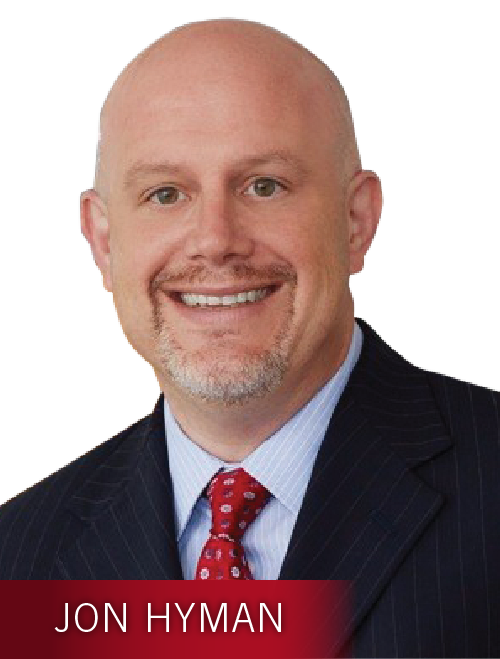
Jon Hyman The Practical Employer

” ‘E’s not pinin’! ‘E’s passed on! This parrot is no more! He has ceased to be! ‘E’s expired and gone to meet ‘is maker! ‘E’s a stiff! Bereft of life, ‘e rests in peace! If you hadn’t nailed ‘im to the perch ‘e’d be pushing up the daisies! ‘Is metabolic processes are now ‘istory! ‘E’s off the twig! ‘E’s kicked the bucket, ‘e’s shuffled off ‘is mortal coil, run down the curtain and joined the bleedin’ choir invisible!! THIS IS AN EX-PARROT!!”

In all seriousness, it sucks to lose a pet.

But, does it qualify an employee for FMLA leave?

According to the court in Buck v. Mercury Marine (E.D. Wisc. 12/22/17), the answer is a qualified “no.”

The employee, Joseph Buck, worked as a machinist for Mercury Marine. He also had a dog, which, on May 26, 2014, he had to put to sleep. That day he called his supervisor and asked for a vacation day (which was granted) because of how upset he was.

The next day, Buck called again and explained that he had not slept since the loss of his dog and would not be able to work. Mercury Marine considered that absence unexcused.

That same day, he sought treatment at the ER and was diagnosed with “situational insomnia,” which a nurse documented in a note that Buck presented to his employer. Despite the note, the absence, and all others over the next three months, were considered unexcused.

Ultimately, Mercury Marine terminated Buck for accumulated unexcused absences, and he filed suit under the FMLA.

The district court dismissed Buck’s FMLA claim, concluding that while inability to sleep caused by the death of a pet could potentially constitute an FMLA-covered “serious health condition,” Buck had failed to show that his condition met that definition.
A serious health condition entitling an employee to FMLA leave means an illness, injury, impairment, or physical or mental condition that involves inpatient care or continuing treatment by a health care provider.
  • Inpatient care means an overnight stay in a hospital, hospice, or residential medical care facility.
  • Continuing treatment means a period of incapacity of more than three consecutive, full calendar days, and any subsequent treatment or period of incapacity relating to the same condition.
The court concluded that because Buck’s treatment met neither prong of the definition of a “serious health condition,” the FMLA did not cover his absences:

The record contains no evidence that the plaintiff sought, or obtained, medical attention for the insomnia, other than his one visit to Nurse Baseley—no prescriptions, no treatment reports, nothing…. The nurse’s letter does not categorize the insomnia as chronic, or say whether she expected it to continue. There is no evidence to support the plaintiff’s statement that he had been suffering from intermittent, shift-related insomnia for months.

This is not to say that an employee can never qualify for FMLA leave following the death of a pet. It just means than an employee’s resulting mental condition must otherwise meet the FMLA’s definition of a “serious health condition.”
One more thing. If an employee is that broken up about losing a beloved pet, do what Mercury Marine did in this case, and grant the employee a day to recover. You’ll be a better employer for it.
Jon Hyman is a partner at Meyers, Roman, Friedberg & Lewis in Cleveland. Comment below or email editors@workforce.com. Follow Hyman’s blog at Workforce.com/PracticalEmployer.
Posted on February 14, 2018June 29, 2023

Retirement Account or Bank Account? Employees Cash Out 401(k)s in Record Numbers

The Bureau of Labor Statistics reports that today’s mobile workforce is changing jobs nearly a dozen times.

For 35- to 44-year-olds, a little over a third take jobs that last less than a year. It doesn’t allow for a lot of time to sock away money in a 401(k) account and as a result, many workers are cashing out what little they have.

It’s a serious problem because too often people don’t realize the whopping penalties or the consequences they face when wiping out retirement savings, said Spencer Williams, president and CEO of financial consulting group Retirement Clearinghouse.

“We need to stop the cash-out syndrome,” Williams said.

It doesn’t seem like companies should care whether a worker leaving a job decides to cash out the money they saved in a 401(k) plan, but studies have shown that people who don’t have enough saved for retirement wind up staying on the job longer and are more stressed about their finances, said Keith Overly, executive director for the state of Ohio Deferred Compensation plan.

Williams added that employers should be asking new hires whether they have a 401(k) from their old job and should try to help with the paperwork that goes into doing the transfer.

“We are all better off if there is not that kind of leakage,” Overly said. “Having a healthy [retirement balance] can be one of the most important benefits for an employee and an employer.”

About 14.8 million, or 22 percent, of active and contributing defined-contribution participants will change jobs each year, according to research from the Employee Benefit Research Institute. Of those job changers, Retirement Clearinghouse reports about 41 percent of these people will cash out of their 401(k).

“Someone with a $15,000 balance doesn’t want to do the work,” to roll the balance over to another retirement savings account, Williams said.

It was important for people to realize the problem, so to bring awareness, Retirement Clearinghouse created the National Retirement Savings Cash Out Clock. It is similar to the national debt clock that ticks away in New York City, but this one is online and focuses on year-to-date cash out and leakage rates from 401(k)s. By the end of 2017, it is expected to hit $68 billion.

If a worker decides to cash out, employers are required to keep 20 percent of the full amount to pay income tax. If the worker is under 59 ½ years old, they pay an extra 10 percent withdrawal penalty as well. According to American Century Investments Cash Out Calculator, a 29-year-old cashing out a $25,000 account would walk away with $18,000. Had they kept it in a 401(k) returning about 7 percent a year on investments, the calculator shows that money would grow to $285,599 at age 65.

“This can be a big problem for people,” Overly said. Retirement plans “aren’t supposed to be used like bank accounts.”

Surprisingly, only 37 percent of cash outs were for economic emergencies, according to a 2015 survey by Boston Research Technologies. Williams added that often people cash out simply because it was the easier route for the person at the time.

“The best choices are not always the easiest choices,” he said.

Overly said participants in his plan need to talk to management when cashing out. That provides an opportunity to make sure the person is aware of what they are doing.

“In some cases there may be some valid reasons, but your retirement plan should be your last resort,” Overly said.

Williams suggested companies should make it easier for new employees to roll over accounts from their old job to their new one. Retirement Clearinghouse is working with the Labor Department to make 401(k) plans automatically portable to a new employer. This way, 401(k) accounts would automatically follow a worker to a new job and get rolled into that company’s plan.

For the most part, rollovers are allowed today, but the process isn’t automatic or easy. In addition, it normally requires a good bit of paperwork for the participant, Williams said.

“By law, it is portable but in practice, people are left to do this on their own. This has lead to a severe amount of cash outs,” Williams said. “We’re never going to stop all of this, but implementing a program to help employees bring the money with them should help.”

Patty Kujawa is a writer in the Milwaukee area. Comment below or email editors@workforce.com.

Posts navigation

Previous page Page 1 … Page 15 Page 16 Page 17 … Page 63 Next page


Webinars


White Papers


  • Topics

    • Benefits
    • Compensation
    • HR Administration
    • Legal
    • Recruitment
    • Staffing Management
    • Training
    • Technology
    • Workplace Culture
  • Resources

    • Subscribe
    • Current Issue
    • Email Sign Up
    • Contribute
    • Research
    • Awards
    • White Papers
  • Events

    • Upcoming Events
    • Webinars
    • Spotlight Webinars
    • Speakers Bureau
    • Custom Events
  • Follow Us

    • LinkedIn
    • Twitter
    • Facebook
    • YouTube
    • RSS
  • Advertise

    • Editorial Calendar
    • Media Kit
    • Contact a Strategy Consultant
    • Vendor Directory
  • About Us

    • Our Company
    • Our Team
    • Press
    • Contact Us
    • Privacy Policy
    • Terms Of Use
Proudly powered by WordPress