Skip to content

Workforce

Category: Benefits

Posted on July 6, 2017June 29, 2023

With Benefits, It’s Good to Get Back to the Basics

When faced with increasing employee health care cost, budgetary pressures and pending renewal deadlines, it is all too common for employers to make reactionary decisions about their employee benefits program.

Given the integral role that benefits programs play in attracting and retaining top talent and their position as one of a company’s largest expenses, does it make sense that benefit program decisions are often short-term fixes that don’t align with a company’s strategic initiatives and employee brand?

Employers that invest time in advance to take a thoughtful, strategic approach to benefit planning reap the value of having a framework upon which to base future decisions, a program that is integrated with overall business objectives, and clear metrics to evaluate progress and success. In addition, by creating goals and guiding principles, they enable their benefits consultant to more successfully suggest new approaches that are tailored to the company’s specific needs and will better align with corporate goals in the long term.

Best practices of employee benefit strategic planning include:

  1. Assess the current state of the benefit plan, major challenges and the rationale behind existing offerings. Employers often have benefit offerings in place that are vestiges from decisions made years ago that are no longer relevant to the current environment and employee population. Organizations should evaluate their plans with fresh eyes to assess whether the current offerings are still relevant. If not, consider what changes could be made to align the plans with employee needs and company goals. Benchmark data is invaluable during this process to help the organization understand how its offerings compare to others in the same industry, region or talent market.
  2. Define the company’s reasons for offering benefits. Employers offer benefits for a variety of reasons, including the attraction and retention of talent, ensuring that employees have access to health care and robust benefit offerings, and complying with regulatory requirements. A company that offers benefits to establish itself as an employer of choice in a competitive labor market should structure its benefit offering differently than one that offers benefits only to meet mandatory regulatory requirements.
  3. Create a 3- to 5-year strategic plan for benefits that aligns with the overall corporate strategy. Benefits are an increasingly large budgetary consideration, so benefit program decisions should not be made in a vacuum by a few individuals that are not connected to the organization’s financial planning. Because benefit costs often impact the entire organization’s financial and strategic goals, company leadership and key decision-makers should actively participate in the planning process.
  4. Establish benefit plan guiding principles upon which the organization will base future decisions. Does the organization desire to be an industry leader in offering a robust benefit plan? Are there set metrics about what percentage of benefits the employer wants to pay for an employee’s benefits or those of their family members? Does the company believe in offering a variety of plans to provide employee choice? By establishing clear guidelines as part of a thoughtful strategic process, future plan decisions are much more likely to align with company goals and have the support of company leadership.
  5. Establish a one-year action plan that moves the organization along the path to achieve forward-looking long-term goals. Rather than making ad hoc decisions, create an action plan and calendar that establishes objectives and actions that align with the longer-term business goals. For example, if the company intends to introduce a high-deductible health plan in two years, the company can create their employee communication and education plan for that offering.
  6. Define success metrics and celebrate successes through the year. Without appropriate procedures in place, it is easy to get caught up in daily responsibilities and concerns at the expense of driving toward desired long-term results. By establishing evaluation criteria for the benefit plan and reviewing progress at several pre-determined times throughout the year, a team is more likely to achieve goals and also to feel a sense of accomplishment and satisfaction for reaching those milestones. As the benefit program meets and exceeds goals, take the opportunity to celebrate those successes to keep the team motivated toward long-term objectives.
  7. Repeat the strategic planning process each year. A strategic plan should be a living outline that evolves with the organization. In future years, the plan should be revisited and updated to recognize progress toward goals and set new objectives, as appropriate.

Suzannah Gill is a benefits strategy consultant at employee benefits insurance brokerage and consulting firm Epic. Rosemary Hughes is a senior consultant and principal at Epic. Comment below or email editors@workforce.com. Follow Workforce on Twitter at @workforcenews.

Posted on July 5, 2017June 29, 2023

Smart Lockers Open Options for Workplace Wellness and Safety

Hull & Knarr’s workout room provides a bright atmosphere to go along with its work culture. Photo courtesy Bob Ferrell

Employees at Hull & Knarr have no excuses to not pedal around on a bike. The Indianapolis-based financial services firm has opened the door to new wellness and team-building initiatives for its employees in an eco-friendly and accessible manner.

A brightly lit orange locker room with company-owned bikes, showers and personal lockers with bike equipment and accessories line the workout room for the firm’s workers to use at their leisure. Commuting to work and rides during lunch are the most common times the equipment is used, said Brad Ferrell, director at Hull & Knarr.

“Anything we can do to remove reasons not to participate [in biking] — we really try to remove all those obstacles,” Ferrell said.

Of the company’s 13 employees, Ferrell said five or six use the bikes daily. He said having all of the biking equipment easily accessible has created happier and healthier workers, which in turn has positively affected the workplace.

“We are creating a culture where people want to be a part of something, but it also gives them a cause and something to root for,” said Ferrell, who tries to bike at least twice a week. “It creates teamwork outside of the office.”

Hull & Knarr use IM lockers for personal bike and workout equipment. Photo courtesy Brad Ferrell

In the three years Hull & Knarr has used the smart lockers — which can track employee use and well-being by how many times lockers are opened and offer data for rewards and incentives — they have evolved to become more user-friendly and personal for anyone looking to balance work and wellness. While these locker trends are not new to corporate wellness, they are beginning to reshape workplace culture to give employees a healthy dose of activity and social engagement with others in their office and the larger community.

Much of this has stemmed from IVM Inc., the creators of the lockers and one of Hull & Knarr’s clients. The lockers can be used numerous ways — from IT help, snacks and medical supplies to fire extinguishers, according to IVM President Mike Pitts, who has seen the product’s growth since the company was founded in 1991.

IVM produces not only smart lockers but smart vending machines too, which thrive among big tech companies such as Hewlett-Packard, Intel and Facebook, and are made to improve accessibility of needed items in the workplace. By scanning an employee badge, those looking for headphones, a temporary computer or a new keyboard can get them immediately without using cash or coins.

Facebook, whose headquarter offices in Menlo Park, California, use IVM’s vending machines to sell bike parts to employees and promote corporate wellness. The machines replace the need for a campus repair shop and promote cycling across the board, giving employees instant gratification through IVM’s technology, Pitts affirmed.

Facebook’s office headquarters sell bike parts to employees and promote corporate wellness.

The newest tool to the vending machine community are the fire extinguishers from WESCO Distribution, a longtime IVM customer. The company is getting ready to roll out the fire extinguisher application with a major electric utility. WESCO places IVM’s vending machines and lockers in utility and nuclear plants to distribute safety tools such as goggles, safety suits and gloves for employees to grab before starting their shift.

“That all came about from this culture of watching out for employees,” Pitts said of the upcoming deal. “[It’s] not just giving them the tools they need to do their job but the things that make their jobs safer and better to this far extreme of even the well-being of their employees.”

This kind of technology use in the workplace brings up the question of future technological assistance and how smart lockers are influencing the workplace. Pitts said he does not foresee any negatives as technology will positively affect productivity, accessibility and job security and will not eliminate jobs — similar to the continued growth of robotic technology.

“What you are going to see over the coming years is that these vending systems are going to be prevalent throughout all industries,” he said. “They are going to be used for so many different things that it staggers the imagination.”

Ariel Parrella-Aureli is a Workforce intern. Comment below or email editors@workforce.com.

Posted on June 30, 2017June 29, 2023

The Convergence of Health and Wealth

Financial Wellness, unemployment

Let’s talk about money. Every time I read an article or internet think-piece about how people are stressed about money, I have to actively stop the incoming eye roll. Of course people are stressed about money. Is that a surprise?

Financial Wellness
“You can’t just assume that everyone who doesn’t save isn’t educated, is making the wrong decision and is a mess. That’s very much not the case,” said Nathan Voris, managing director of business strategy at Schwab Retirement Plan Services.

CNN recently reported that half of Americans are spending their whole paycheck; they have no financial cushion. And although individual spending habits contribute to this to some degree, much more of this problem could be associated with the bigger picture. “People are spending a shockingly large amount of income on housing. They have to pay for transportation to get to a job. These costs are going up while their wages stay the same,” said Jennifer Tescher, president and CEO of Center for Financial Services Innovation, according to a CNN article. CFSI is the organization that released this study. Also a factor: irregular income, a problem that won’t go away as the gig economy becomes bigger.

Keeping this in mind, it’s no wonder that so many people aren’t contributing the maximum to health savings accounts and retirement funds. Does raising the HSA contribution ceiling or auto-enrollment/auto-escalation solve that problem? I recently heard that people should be contributing 20 percent to their 401(k) or Roth IRA, which is laughable even for people who don’t spend all of their paycheck. I can contribute 20 percent now because I’m saving money, paying off student loans and living with my parents, but for any self-supporting person out there with expenses for rent, food, utilities, child care, eldercare and health care, is that even possible? And is it possible to do that while also contributing a maximum amount to an HSA?

OK, end of rant. For all of these structural elements in place, of course at least some of these money management problems fall on the individual. And from the company’s point of view, of course individuals need to learn how to be responsible for their own finances. In my experience, money management isn’t something that’s taught in a formal/academic setting; people learn that from role models like their parents or don’t really think about it at all. It’s a positive thing to give people those tools once they enter the workforce.

That’s why I was very interested to stumble upon a New York Times article that highlighted a company with a unique perk: fiscal health days. A paid day off to go over your finances and strategize.

What a fantastic idea. The two people mentioned in the article used their day off in different ways. One man found out his wife had a tumor that would take $100,000 worth of surgery to treat. The two of them used this day to go over their finances and figure out how they would pay for it. According to the article, the man made the decision to change his health insurance to be better protected, attended classes about financial health and learned how to communicate with his wife about money, which helped them sort through everything effectively.

Another man highlighted in this article didn’t use the day for his own financial health. He visited his father and aunt at their retirement community and helped go over their finances. They were all able to have this important conversation about living expenses and insurance.

Nathan Voris high resolution headshot
Nathan Voris, managing director of business strategy at Schwab Retirement Plan Services 

For more information on financial health strategies, I recently spoke with Nathan Voris, managing director of business strategy at Schwab Retirement Plan Services about financial health tips. Schwab recently released a survey of 300 executives that found that more and more, companies are considering financial wellness programs as a core part of a compensation package.

A few highlights of this conversation: Financial wellness has moved from something “fringe” to mainstream the past two years, said Voris. “It went very quickly from a concept to an expectation,” he added. “You don’t see that quick movement in the 401(k) world very often.”

He also mentioned the “convergence of health and wealth,” which I think is a really spot-on way to articulate how companies are treating fiscal stress as part of total well-being. It’s basically just another way to say “holistic well-being” or one of the other buzz phrases out there, but it’s solid. And it’s relatively new, in the context of the employer space and what companies are doing.

On the topic of employee engagement and usage of these solutions, engagement can be as low as 3 percent and as high as 40 percent, Voris said. It depends on the population, partly. Also, it depends on what you’re communicating about the plan. At Schwab, they tend to be data-driven and evidence-based, added Voris. They dig into the data, figure out the specific pain points of an individual and design things around those issues rather than have a “canned wellness strategy.”

This “personalization” approach isn’t anything new, but worth mentioning considering the stark differences between people’s individual financial situations.

I also asked him how companies can deal with different types of employees, like those who are simply bad with money versus those who are not in a financially secure situation because of some unavoidable, unexpected high cost things (like a major surgery, for example).

“What life stage you’re in has a lot of different factors,” said Voris. “You can’t just assume that everyone who doesn’t save isn’t educated, is making the wrong decision and is a mess. That’s very much not the case.” Again, his company tries to tackle that through data-driven solutions.

The message he tries to drive home for people not in a financially secure position is that small things do matter, even if it doesn’t seem like they do. “Don’t try to boil the ocean,” he said. “Scratch one little thing off the list at a time. Over time, over a few years, those little things turn into big things. That’s how we approach it, recognizing that everyone is a little bit different.”

Voris’ final piece of advice? “We need to stop the guilt trip,” he said. “This picture of a handsome, gray-haired man leaning up against the Corvette and looking out into the ocean … the reality is that’s not real for a lot of people. We need to teach people how to retire with dignity and own their situation.”

That’s a good trend we’re seeing in financial wellness, he added. The solutions are becoming more well-rounded to address the needs of people of different financial situations.

Andie Burjek is a Workforce associate editor. Comment below or email editors@workforce.com. Follow Workforce on Twitter at @workforcenews.

Posted on June 26, 2017August 3, 2023

2017 Game Changer: David Holden

David Holden, Director, HR technology, benefits & administration, Crowley Maritime Jacksonville, Florida
David Holden, director of HR technology, benefits and administration at Crowley Maritime, in Jacksonville, Florida

Being tasked with heading HR technology, benefits or administration for a company of 5,000 people would be a full-time job for most anybody.

Apparently David Holden isn’t just anybody, though. Holden, 39, is responsible for all three disciplines — HR tech, benefits and employee programs — as well as compensation.

His estimable workload hasn’t gone unnoticed, either. Holden and his team have been recognized for a number of awards both regionally and nationally, including the National Best and Brightest Award in Wellness in 2016.

Holden has implemented onsite virtual health kiosks — think telemedicine — a “live well” employee well-being program and he has placed a heavy emphasis on financial wellness for his employees.

With a push for employee advocacy, Holden is adding something else to his already full plate: challenging the status quo.

Workforce Game Changer 2017 Logo[To read about our other 2017 Game Changers, click here. ]

Posted on June 22, 2017June 19, 2018

By the Numbers: Pets at Work

Workforce By the Numbers Video: Pet-friendly Workplaces

Forget the pet store. Unleash your beast at work. Learn how many employers permit pets at the office and more.

[See info-graphic here: “Pet Friendly Workplaces”]

Posted on June 20, 2017June 29, 2023

To Encourage Health, You Just Need a Little Nudge

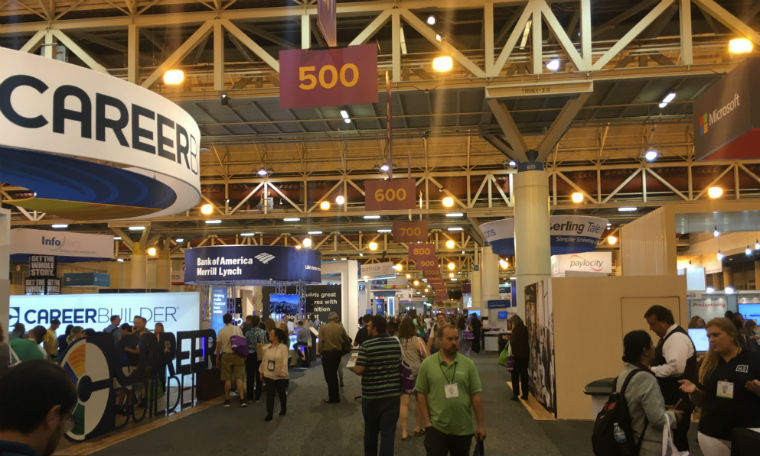
SHRM New Orleans 2017 Exposition Hall

Another day at the Society for Human Resource Management’s 2017 conference in New Orleans. Day 2 brought me a lot of opportunities to speak to HR professionals about everything from the skills gap to benefits strategy to financial wellness. Tropical Storm #Cindy is also coming in, so potentially we’ll all be stuck together for a much, much longer time. We’ll see!

These are some of the ideas I’ve come across day 2:

Financial Wellness Over 20 Years: I spoke with Jeff Tulloch, vice president of MetLife’s PlanSmart program. MetLife has been developing this financial wellness platform over the past 20 years, and just in the past three years, they’ve seen a large spike in interest in this area, Tulloch said. What’s caused this spike, he added, is that employees are stressed and employers have realized that stress is a drain for everyone.

What companies have been doing well with financial wellness is education, he said, but there are two more important areas that we’ll need to see moving forward: motivation and access. By motivation, he meant that HR practitioners could “be more courageous endorsers of what they offer and help their employees take the next steps.”

By access, he meant a wide range of access points for information and advice, not only digital. There’s also human interaction, like an on-site financial adviser or a call center someone can access during open enrollment.

“When we get those three things, education, motivation and access, we see that people are in the position to act,” said Tulloch.

A Little Nudge: Lazlo Bock, former senior vice president of people operations at Google/Alphabet gave a speech that, although not about health/wellness, did offer one tidbit of advice on wellness. He called it “nudging.” The idea behind it is that a small change in the work environment can make a larger impact and that businesses can nudge employees in the right direction. The trick is to not get too into micro-managing. You can’t remove employee choice, but you can lightly nudge them to make a choice that’s better for them.

Bock gave an example of an office based in New York. It offered healthy (nuts, fruit, etc.) and unhealthy snacks (M&M’s), all in opaque containers. The company made a small change in presentation and began putting the unhealthy snacks in yellow containers. The result was that employees consumed a significantly smaller number of calories in the following weeks. They were less likely to dig into the M&M’s in the differentiated, yellow containers than the opaque ones. The choice was still there, but perhaps they began thinking about their choice more when the healthy and unhealthy options looked different.

I don’t know if this same result would happen to any company who uses this exact opaque container/ yellow container model, but the idea behind it is solid.

New Legislation: Lisa Horn, director of congressional affairs and leader of SHRM’s Workplace Flexibility Initiative, spoke about a new work-flex bill being introduced to Congress. They worked with U.S. Rep. Mimi Walters, R-California, to craft it.

The bill is still being changed and tweaked, so I won’t go into specifics. Here’s the gist, though. It’s a workplace flexibility bill that does something about both paid leave and flexibility in the workplace. Currently, there is nothing on a national level addressing these, but many states and cities have their own individual rules, which causes problems for national companies with a presence in multiple cities or states.

In this bill, if an employer voluntarily chooses to adopt these standards, they will be deemed to have satisfied their state and local mandates. The idea behind the bill, Horn added, is that it would be more generous for employees than the state/local mandates.

I’ll be interested to see what happens with this and how far it gets. Also, what those TBD details are like how many days of paid leave an employee would get.

SHRM hopes to officially introduce it after Congress’ July 4 recess.

“HR is Like Golf”: I found this entertaining and something that honestly could apply to any job. This is what one man said when he was asked what he does when things get hard in HR. You can take 99 bad shots and one good shot, he said, and it’s that one good one that keeps you coming back to play golf.

Moving Forward from a Bad Rep: In one session, a woman said the hardest part of HR is overcoming a bad reputation, like with the bad press HR got in the Uber sexual harassment fiasco. She added that as an HR practitioner, every new organization she works at is an opportunity to tell a new HR story and change what HR looks like. Then the employees who work there will have a different impression and HR and carry that with them where they go next. “I can only control what my HR world looks like and what my people experience,” she said, mentioning the importance of starting small, focusing on your own organization and letting other proactive HR people do the same at their own company.

Related Content: SHRM 2017 Conference Kicks Off in New Orleans

Related Content: An Understandable Understated Farewell from SHRM’s CEO Hank Jackson

Related Content: Benefits Are a Large, Important Part of Total Compensation

Andie Burjek is a Workforce associate editor. Comment below or email editors@workforce.com. Follow Workforce on Twitter at @workforcenews.

Posted on June 19, 2017June 29, 2023

Benefits Are a Large, Important Part of Total Compensation 

The view of New Orleans from the SHRM conference.

The 2017 Society for Human Resource Management conference is in New Orleans this year, which I love. I got to stay with my sister and her 60-pound pit bull for a couple of days before entering Conference-land. We went on long walks in the heat, took a yoga class and ate some good food. We spent one Friday evening at a small Irish pub, where none of these non-HR professionals knew much about HR at all — but it still came up in conversation.

This is going to be really obvious, but benefits truly impact people’s lives, even if people don’t regularly think about HR. One person I talked to that night is using his unlimited PTO to take a motorcycle trip across the country. Another person got to leave work early that afternoon and have some Abita beers/frozen Irish coffees with us because of a policy at her office; take shorter lunch breaks throughout the week and you can leave early Friday. We didn’t mean to have this conversation about workplace benefits, but there it was.

This first night of SHRM’s conference, the HR association released its 2017 “Employee Benefits” survey, which cemented this feeling that benefits really do make up a large part of the employee value proposition.

A couple of statistics stuck out to me at first: one-third of surveyed organizations have increased their benefits offerings in the past year in an effort to be an employer of choice and attract the best people. Not surprising, of course. What interested me was that the value of benefits accounted for, on average, about 30 percent of an employee’s total compensation (30 percent in private industry; 37 percent in state and local government).

This was relevant because of an article I read about how employees shouldn’t just negotiate for a higher salary. Negotiating for alternative forms of compensation like benefits is just as important. This article pointed out areas like flex time, transportation and student loan repayment, which an employee can ask for if, for example, the company is not in the financial situation to offer a raise.

Wellness was a benefit that saw a large increase in the survey. A quarter of these companies have increased their wellness benefits, and three-quarters said their wellness program was “somewhat to very effective on reducing health care costs.”

I’ve seen statistics like this a lot, and they disagree greatly with other stats that say wellness programs don’t save money at all. There are very logical arguments on both sides of this wellness coin. From what I can tell, employee wellness programs aren’t going anywhere, whether they notably reduce employers’ and employees’ health care costs or not. What they do is help give people resources to make healthy changes in their lives.

Interestingly, in the wellness space, fewer employers offer smoking cessation programs than before. The person presenting this information, SHRM Vice President of Research Shonna Waters, did mention that “sitting is the new standing” line we’ve been hearing about so much. While smoking cessation programs are in the decline in the employer space, sit-stand desks are spiking upward, from 13 percent in 2013 to 44 percent in 2017.

My take on this? Since the “Mad Men” era 50 years ago, smoking’s prevalence in, well, everywhere has declined. People are also much more educated on the health risks of smoking. No one can pretend it’s harmless anymore.

In an employer wellness program, wouldn’t it be more valuable to focus on a problem that’s less understood and more prevalent in 2017? Even though people still smoke, other harmful habits are growing in prevalence. Those problems deserve a little attention, too, and many people could use the educational opportunity.

Three more days of the conference and so many more benefits related sessions to go! I’ll be sharing my takeaways from sessions on this Workforce blog and at my twitter handle @andie_burjek. Any questions in the benefits/wellness space, comment or tweet at me and I’ll scope out the answer in this room of an estimated 15k HR professionals.

Andie Burjek is a Workforce associate editor. Comment below or email editors@workforce.com. Follow Workforce on Twitter at @workforcenews.

Posted on May 24, 2017June 29, 2023

Sector Report: Voluntary Benefits Have You Covered

Companies that want to add value to their benefits offering without spending a lot of money are using voluntary benefits to fill the gaps. The idea behind voluntary benefits is that employees pick and choose from a variety of additional benefits packages, and cover the cost themselves.

It’s a growing area of the benefits sector for a number of reasons, said Amy Hollis, national leader of voluntary benefits for Willis Towers Watson. One key driver is the desire to attract millennial workers.

“Companies need to add value beyond salary and traditional benefits,” she said.

That’s lead to a variety of new voluntary benefits options, including identity theft protection, health club memberships and student loan repayment programs, to compliment the more traditional vision and dental insurance, critical care coverage and life insurance that appeal to older generations.

Companies are also using these plans to help all employees balance the risk of rising health care costs, said Nelson Griswold, vice president of the Voluntary Benefits Association and president of Bottom Line Solutions in Nashville, Tennessee.

“Employees are facing high out-of-pocket costs that can cause them to make poor health care decisions,” he said. They may delay early interventions to avoid paying deductibles only to end up in the emergency room, requiring more extensive care and additional time off work. Voluntary benefits give employees a safety net to cover these costs and prevent small health care concerns from turning into crises

Hot List of Voluntary Benefits Providers 2017, WorkforceTraditionally, employees have covered the cost of these benefits themselves. Though recently, some companies are paying for some of these offerings as a way to balance their health insurance program costs. For example, a company may choose an insurance plan that has a higher deductible but lower premium, then add critical illness or other medical plans to fill the financial gap, Griswold said. “They are creating an umbrella of coverage options to balance the odds for their employees.”

Hollis has also seen many tech companies pick up the tab for identify theft benefits, as they view this as a risk to themselves as well as their people. “It’s as much about protecting the brand and the employee,” she said.

Ask What They Need

Voluntary benefits options can be appealing for companies that want to cater to the needs of their employees, however they shouldn’t go overboard, said Rob Shestack, chairman and CEO of the Voluntary Benefits Association in Philadelphia.

“You have to look at the demographics of your employee population, including age, gender and salary,” he said. “If the average employee is earning less than $25,000, their benefits choices will be very different from those earning six-figures.”

Many companies want to offer multiple package options to accommodate these different demographics, though he urges them to limit choices to a few targeted plans. Otherwise they risk making decisions overwhelming for users.

“Assemble a top list of benefits, than narrow it down and get employee feedback,” he advised. Companies can also look to carriers for help in manging enrollment and participation. Most carriers in this $7 billion industry are expanding their online capabilities and streamlining enrollment to accommodate product offerings from multiple carriers.

Once a program is selected, benefits managers need to actively promote it and provide employees with the training and support tools to make the best choices. Shestack said an Aflac study showed Americans lose up to $750 a year by making poor benefits choices, because they don’t spend enough time analyzing their options.

“It is not enough to offer passive support programs,” he said. He argued that every employee should have to go through a short training program on how to make the right benefits decisions. “It may not cause everyone to make different choices, but for the people who do, it can be a real financial benefit.”

Sarah Fister Gale is a writer based in the Chicago area. Comment below or email editors@workforce.com. Follow Workforce on Twitter at @workforcenews.


Posted on May 23, 2017June 29, 2023

Sector Report: EAPs are Valuable but Underused

Employee assistance programs have been proven to deliver real business benefits. When companies provide resources for employees to help them deal with stress, substance abuse, family conflict and other personal issues, it improves their workplace performance and productivity. One 2008 study showed EAPs delivered a $6.47 return on investment for every $1 spent.

Despite this clear value proposition, companies rarely take full advantage of these offerings, and in many cases, employees don’t even know they exist. According to Chestnut Global Partners’ 2016 EAP trends report, utilization rates in North America were less than 7 percent.

“EAP offerings have historically been underutilized for a lot of reasons,” said LuAnn Heinen, lead expert on EAPs for the National Business Group on Health, a Washington, D.C.-based nonprofit organization focused on national health policy issues. Managers rarely refer employees to the appropriate programs, and even if employees are aware of the offerings, there is often a stigma attached to using them. “There are a lot of missed opportunities with EAPs,” she said.

Low utilization rates continue despite the fact that EAP offerings have matured over the years, from simple support for substance abuse, to robust portfolios of mental health offerings designed to help employees deal with depression, reduce stress and address anxiety at work and at home.

Stress Is Good for Business 

Among those who are using EAP services, the CGP report showed an increase in the number of crisis counseling sessions, which they attribute to ongoing organizational changes, economic stress and a general trend by employers to move toward high deductible medical plans, which can have an unintended cost of driving more employees with high-risk conditions to the EAP.

P Providers, 2017, Workforce“The rise in stress and anxiety among employees is something companies need to pay attention to,” said Todd Donaldson, director of training and consultation services for CGP. “Offering employees access to these kinds of services is important to maintaining a healthy and productive workforce.”

NBGH has seen companies seeking mental health and emotional well-being services as part of their EAP offering in recent years. Heinen noted that some of the largest companies are bringing in their own in-house clinicians, and providing 24/7 online access to psychological health professionals to support the mental health of their employees. “There is a lot of interest in these types of programs.”

EAPs are also more directly linked to traditional health care plans now than in the past, said Lucy Henry, vice president of stakeholder relations for First Sun EAP in Columbia, South Carolina. “Many larger EAPs are now embedded with health insurance, along with long term disability, life insurance and other ancillary plans,” she said.

In some cases, health insurance companies may include free EAP programs, including a limited number of counseling sessions and crisis management tools as a value added program.

At the same time, employees are finding support on their own, particularly via mental health apps like Spire, Happify and Whil. Roughly a third of all consumers have at least one mobile health application on their mobile device, and this number is expected to keep growing, according to the CGP report. However, there are no studies showing whether these apps have an impact on behavior or performance. “Apps are a nice add-on, but they don’t begin to address what EAPs can do,” Heinen said.

Benchmarking and ROI 

Demonstrating positive outcomes of EAP offerings is something providers are paying closer attention to in order to reinforce the value proposition of these services, Donaldson said. To tackle this challenge, benefits leaders and EAP providers need to do a better job communicating the availability and value of EAP services to employees, and overcoming stigmas related to employees’ seeking help for mental health disorders. They also need to provide training and career coaching for managers about when and how to refer employees to these services.

EAP providers can further overcome this challenge by doing more benchmarking and showing the impact of their services. “Frequency of use isn’t a measure of quality,” Donaldson said. If vendors can link the impact of their services to productivity and reduced absence it can help them demonstrate the financial benefits of investing in these services. That includes tracking the outcomes of phone counseling services and employer sponsored mHealth apps.

“You have to determine whether the tools actually lead to behavior change or improved health,” he said.

He also encourages companies to align EAP services with organizational goals, and for company leaders to openly support use of these programs. “It’s not enough to offer the benefit. Employees need to see buy-in from local stakeholders for it to become part of the cultural norm.”

Sarah Fister Gale is a writer based in the Chicago area. Comment below or email editors@workforce.com. Follow Workforce on Twitter at @workforcenews.

Posted on May 16, 2017June 29, 2023

The Power of Collective Influence, the Cost of Misdiagnosis and More

Andie Burjek, Working Well blog

I recently attended the Midwest Business Group on Health’s 37th annual conference, where they hit the nail on many employer-sponsored benefits related topics.

I was prepared to be very “eye-rolly” about the “employers as superheroes” theme, but, to be honest, I dug it. It meant a lot of corny jokes (who doesn’t appreciate a solid corny joke?) and it meant the speakers, people with impressive careers in the employee benefits space, often identified themselves as a superhero before talking about the heavy stuff.

(My answer: Buffy the Vampire Slayer. She had a stake named Mr. Pointy. She talked like a valley girl. She dusted a lot of vampires. See, it’s fun.)

Here are some of the major takeaways I got from various speakers:

Health Care: Yes, employer-sponsored health care was a priority topic. Needless to say, there is a lot of uncertainty around the GOP health care bill. It doesn’t help that there will be more than one in the future. Although the revived and reconsidered American Health Care Act narrowly passed the House, the Senate is a whole other story. The AHCA is not popular, and the Senate is creating their own health care legislation.

A few panelists and speakers had different things to say about health care. I appreciated the point of view of health care entrepreneur/medical economist JD Kleinke, who made jokes, shared vacation photos and somehow made a session about health care funny. A few things that I found valuable:

  • On consumer-driven health plans: No matter what you do with benefits design, it won’t change the basic fact that people are not rational consumers for any product. And when it comes to feeling better and getting healthy, that doesn’t change. He gave a silly example of people paying twice as much for a brand of cereal that wasn’t very different from the generic brand at all, but people still paid for it. Use the same logic with health care annnnnd … can consumers of health care really be rational consumers if they assume the most expensive option is the best option for them, or for one of their loved ones?
  • He does not expect the AHCA to go through, for a few reasons. One is that half of Americans have pre-existing conditions, he noted. Many Trump voters and Republicans believe that preexisting conditions should be covered (which the AHCA doesn’t do well, many have argued). If their constituents don’t want this, then the legislators voting on the bill probably won’t vote for it.
  • His level of nonchalance about this was noteworthy to me because for employers, the uncertainty around health care is one major stress. How do you make a long-term plan when you don’t know what the health care landscape will look like in 5 years? So, hearing a medical economist speak like this in a way that was not anxious or uncertain was refreshing.

Pharmacy Spend: Cheryl Larson, vice president of the MBGH, and a panel of experts also had a discussion about the relationship between employers and pharmacy benefits managers. PBMs have been in the news a lot recently: A few weeks ago, Anthem broke up with Express Scripts, arguing over $15 billion. This week, Express Scripts announced a deal with drug price transparency company GoodRx to reduce drug prices for the uninsured. Also, states like California and New York are beginning to consider and push forward PBM transparency laws.

This topic was especially interesting for me, as I’m writing on it for the next issue of Workforce. A lot of people have had differing ideas for why prescription drug costs are increasing at such an alarming rate. No matter who’s doing the finger pointing or who’s being pointed at, the key question remains: How do companies contain pharmacy drug spend?

More to come about this from me later for Workforce, but for the time being … what’s been a common theme in this conference and in interviews with various people is the need for collective action, and for employers to work together and share ideas to push for change that will benefit all employers.

Other Noted Takeaways (Thoughts? Comment Below)

  • Consumer-driven health plans won’t lead to major change in health care in the big picture. If we’re just changing how and who pays for care, does it really make a difference?
  • Misdiagnosis is a major cost driver for employer health care costs. Sally Welborn, senior vice president, global benefits, Walmart Stores Inc., noted that inappropriate care (care that should not be delivered) accounts for 30 percent of the GDP spent on health care (which is 18 percent, by the way). “The worst dollar spent is the dollar spent on care that does not need to be delivered,” said Welborn. A solution Walmart uses is centers of excellence.
  • Vision and dental should not be considered side benefits. “We focus so much on medical, we forget about the other two that are integral to the health of the individual,” said one panelist.
  • Obesity is a complicated but necessary issue to deal with in the workplace. As body mass index rises, so do health care costs, presentee-ism and absenteeism costs, and workers’ comp costs. “Telling people with obesity to eat less and move more is like telling someone with depression to cheer up,” said presenter Gabriel Smolarz, quoting Dr. Ayra Sharma, a leading obesity specialist in Canada. This attitude shows lack of understanding of the disease. He also noted that a 5 to 10 percent decrease in body weight can make a significant impact on employees’ health and employers’ cost. What can employers do? I don’t have the answer now, but suggestions are welcome.

Andie Burjek is a Workforce associate editor. Comment below, or email at aburjek@humancapitalmedia.com. Follow Workforce on Twitter at @workforcenews.

Posts navigation

Previous page Page 1 … Page 19 Page 20 Page 21 … Page 63 Next page


Webinars


White Papers


  • Topics

    • Benefits
    • Compensation
    • HR Administration
    • Legal
    • Recruitment
    • Staffing Management
    • Training
    • Technology
    • Workplace Culture
  • Resources

    • Subscribe
    • Current Issue
    • Email Sign Up
    • Contribute
    • Research
    • Awards
    • White Papers
  • Events

    • Upcoming Events
    • Webinars
    • Spotlight Webinars
    • Speakers Bureau
    • Custom Events
  • Follow Us

    • LinkedIn
    • Twitter
    • Facebook
    • YouTube
    • RSS
  • Advertise

    • Editorial Calendar
    • Media Kit
    • Contact a Strategy Consultant
    • Vendor Directory
  • About Us

    • Our Company
    • Our Team
    • Press
    • Contact Us
    • Privacy Policy
    • Terms Of Use
Proudly powered by WordPress