Skip to content

Workforce

Category: HR Administration

Posted on March 12, 2020July 24, 2024

HR People Moves: Summer 2020

human resources, people moves, promotion

Carla Dawson 

Carla Dawson HR people movesEquity derivatives clearing organization OCC named Carla Dawson as senior vice president and chief human resources officer. She reports to CEO John Davidson. Dawson previously was first vice president, talent management, and was responsible for partnering with leaders across OCC to develop and implement comprehensive talent management and development strategies to support OCC’s business strategy. This included performance management, employee engagement, training and organization development, and change management. Before joining OCC in 2017, Dawson served for nearly 20 years in a series of roles at Driehaus Capital Management LLC, including as managing director, human resources, where she was responsible for developing and executing a human resources strategy in support of the firm’s overall business plan and strategic direction. Her efforts were focused in the areas of talent management, employee relations, communications, organizational development, compensation and benefits, recruitment and regulatory compliance. Previously, Dawson worked for two executive search firms — Heidrick & Struggles and Korn Ferry — as well as the financial services firm of Abaco De Bolsa. Dawson received a bachelor’s degree in industrial relations from Universidad Anahuac in Mexico, and a master’s degree in organizational development from the Quinlan School of Business at Loyola University in Chicago. 

Caroline Stockdale

Caroline Stockdale, people moves, HRU.S.-headquartered First Solar Inc. named Caroline Stockdale to lead human resources and communications, overseeing a global workforce of 6,500 employees. She replaces Chris Bueter, who is retiring. Stockdale has more than 20 years of operating experience in finance, human resources, business leadership and process excellence, ranging from large global companies to entrepreneurial startups. She most recently served as the CEO for First Perform, a provider of human resources services for a wide variety of customers from the Fortune 100 to cyber startups. She served as chief human resources officer for Medtronic and Warner Music Group among others, and as the senior human resources leader in global divisions of American Express and General Electric. She is also a member of several advisory groups including the Forbes Human Resources Council.

Carla Yudhishthu

HR risk-management company ThinkHR and Mammoth named Carla Yudhishthu as vice president of people operations. Yudhishthu brings more than 20 years of experience in human resources and talent acquisition to the role, where she will drive organizational and leadership development around the companies’ people strategy. Yudhishthu previously was head of people and talent for BCG Platinion. She has also held leadership positions at Mars, W.L. Gore and Associates, Guidant Corp., and Arthur Andersen. 

Traunza Adams

Traunza Adams, people moves, HRHealth care technology company OODA Health named Traunza Adams as vice president of people. Adams previously served as chief people officer for Ginger, a provider of on-demand behavioral health coaching, therapy and psychiatry. Prior to Ginger, Adams led people operations at AppDynamics, an application performance management company. She has also held key human resources roles at UniversityNow, Salesforce.com, IBM and other companies. She holds a bachelor’s degree in French and sociology from Stanford University.

Ken Stelzer

Ken Stelzer, people moves, HRMobile commerce optimization platform Button named Ken Stelzer as chief financial officer. Stelzer will build a strategic finance function at Button to accelerate revenue and profit growth. He brings nearly 20 years of experience in finance and operations at both public and private companies. Most recently, he was the chief financial officer of Zocdoc. Before that he served as CFO of Bankrate and Integreon. He has significant expertise in corporate finance, executing growth initiatives and implementing operational efficiencies to drive profitability. He’s also overseen M&A transactions valued at more than $6 billion and helped raise more than $4 billion in capital through debt and equity offerings.

Stephanie Mardell 

Stephanie Mardell, people moves, HRButton also named Stephanie Mardell as chief people officer. Mardell will continue evolving Button into a place of admirable talent. She was previously vice president of people at Button. As the company’s 14th employee, she built its people team from scratch through her meticulous, data-driven approach to people operations, garnering Button recognition as one of the best places to work year over year by Fortune, Entrepreneur and Crain’s. Before joining Button, Mardell spent more than a decade scaling teams during periods of significant growth while establishing operational best practices such as compensation and recognition programs, management training and development, and diversity and inclusion initiatives at Square, Airtime and Isaacson Miller.

Tracy Flynn 

HR technology company Eightfold.ai named Tracy Flynn as head of human resources. Flynn joins Eightfold.ai as an experienced global human resources veteran, having spent nine years at Visa as a member of the HR leadership team in roles including global head of talent acquisition, vice president of diversity recruiting, and vice president of executive recruiting. Flynn will now oversee all aspects of global people operations at Eightfold.ai. Flynn is a graduate of the University of California, Berkeley.

Celia Poon 

Celia Poon, people moves, HREightfold.ai also named Celia Poon as chief financial officer. A seasoned finance executive with experience in both public and private fast-growing companies in Silicon Valley, Poon joins Eightfold.ai following a year in which the company opened two new international offices and reached over $55 million in total funding. Poon will lead all financial operations with a focus on building out financial functions. Poon brings broad finance leadership experience to Eightfold.ai, having served as chief financial officer at both Wag Labs Inc. and Highfive. Prior to her roles as CFO, Poon served as VP of finance at Twitter for four years as well as VP of corporate finance at Zynga, and VP of corporate finance and treasury at Yahoo. Poon graduated with an economics degree from the University of California, Los Angeles, and holds MBA degree from the Walter A. Haas School of Business at the University of California, Berkeley. 

Gunnar Kiene 

Gunnar Kiene, people moves, HRRecruitment marketing company Symphony Talent named Gunnar Kiene as chief creative officer for its U.S. operations. Kiene will be responsible for helping to set the creative vision for the organization and will oversee innovation, engagement and the creative direction for its clients. He will also lead Symphony Talent’s overall product experience. Kiene joins Symphony Talent with more than 20 years of experience in design and advertising. Kiene was executive creative director at Havas where he reinforced design thinking while leading a multidisciplinary team across design, UX and copy. Kiene also led the New York creative department at SapientRazorfish where he worked on accounts such as MasterCard, Lufthansa, Target and Verizon. Kiene began his career with agencies R/GA and AtmosphereBBDO.

Also Read: Symphony Talent Debuts New Composition With Acquisition of SmashFly

Posted on March 2, 2020June 29, 2023

‘Most relevant and topical HR thinker’ Jack Welch dies

Jack Welch leadership

As I search the online archives of Workforce.com for “Jack Welch” in the wake of his death today at age 84, I have come across literally seven pages worth of stories (about 20 stories on each page) that reference the business titan and former head of General Electric.

That’s not surprising, given his strong connection to championing the cause of human resources. In 2009, Welch, who in 2000 was named “Manager of the Century” by Fortune, was the opening keynote speaker at the annual Society for Human Resource Management conference in New Orleans. Before the conference opened, my former boss here at Workforce, John Hollon, summarized Jack Welch’s influence on the HR profession in a blog post.

To recognize Welch’s passing today, I wanted to share a portion of John’s thoughts on Jack Welch from 2009. 

Here’s a question you may want to ponder: How important is Sunday’s SHRM conference general session speaker, former General Electric CEO Jack Welch

Answer: He’s probably the most relevant and topical HR thinker to address the conference in at least the last five years — maybe the most relevant one ever.

Here’s just one example, from the BusinessWeek column he writes along with his wife, Suzy Welch: “HR should be every company’s ‘killer app.’ What could possibly be more important than who gets hired, developed, promoted, or moved out the door? Business is a game, and as with all games, the team that puts the best people on the field and gets them playing together wins. It’s that simple.”

Or this, also from a recent BusinessWeek column: “Look, we’ve written before about HR and the game-changing role we believe it can — and should — play as the engine of an organization’s hiring, appraisal, and development processes. We’ve asserted that too many companies relegate HR to the mundane busy-work of newsletters, picnics, and benefits, and we’ve made the case that every CEO should elevate his head of HR to the same stature as the CFO. HR matters enormously in good times. It defines you in the bad. … If there was ever a time to underscore the importance of HR, it has arrived.”

A 2005 “Last Word” column in Workforce Management put it this way, and it’s still true today: “In Jack Welch’s world, HR is not only a key part of the business, but HR people in the organization need to have special qualities to help the managers throughout the organization build leaders and careers.”

Some might disagree with this assessment, because Welch is also known for creating the infamous 20-70-10 employee assessment plan (known by its critics as “rank and yank”), where the top 20 percent of GE’s workforce each year got big raises, while the bottom 10 percent were shown the door.

In fact, Welch was frequently critical of human resources, according to former General Electric HR chief Bill Conaty.

But as critical as he can be, Welch also appreciates what HR means to a high-performing organization. Welch has said that HR leaders should not be “kingmakers or cops, but big-leaguers, men and women with real stature and credibility.”

He will undoubtedly have a message on Sunday that SHRM conference attendees really need to hear.

Posted on February 20, 2020June 29, 2023

Tax compliance a key consideration for remote work policies

tax compliance

There was a time when a sick child or inclement weather meant staying home and actually not working. 

The prevalence of full-time remote work arrangements is on the rise. Companies are competing fiercely for top talent and looking for ways to differentiate themselves from competitors. tax compliance

One way to do this is through flexible work policies. Moreover, by allowing employees to work remotely, companies can cast a wider net for talent that is not restricted by the geographic boundaries of their offices. 

For companies that decide that it is a business imperative to offer flexibility, it is also important that they find a way to do so that is compliant. One compliance challenge for companies and employees is how, when, and where to withhold state taxes for their employees. When addressed proactively, this challenge can be managed in a way that is simple for the company and painless for the employee. 

Let’s follow the example of an employee who has worked for a company for 10 years in Atlanta but needs to move to Columbia, South Carolina, indefinitely to help a sick family member. The employee’s company doesn’t have an office in South Carolina but agrees to let her work from home. They ask if she can spend a few days each month in Atlanta to stay connected to her team and she agrees. 

States will primarily assess tax on income earned within that state; this can include employees who have an office in that state, employees who work from a home located in that state, or even employees who travel into a state for business trips. This means that the employee will owe tax in South Carolina where she is living and working, and also in Georgia where she is traveling for work. 

Since remote workers are typically subject to taxation in the state where they are physically working, employers need to understand not just who their employees are and where their main office is, but also where they are actually working day by day. The place they are working is generally where the company will need to withhold taxes. 

This is generally true except for some states with unique rules (for example, New York). A key step for the employer is to make sure their payroll system considers that she is working remotely, which may also require the company to register for payroll in her new state.  

Such employees who pay tax in multiple states can generally reduce taxes paid to their home state by the amount paid to other states (unless you live in one of the nine states that doesn’t tax employment income at all). Even though this particular employee will pay taxes to Georgia because of her business trips there, she can reduce the total tax she pays to South Carolina so that she isn’t double taxed.

There are also reciprocal agreements between certain states; think of these as a negotiation between two states where both say, “We won’t tax your people, if you don’t tax ours.”

These agreements generally occur between neighboring states, such as Ohio and Indiana. An Ohio resident who travels into Indiana every day for work will not owe tax to Indiana. Unfortunately for our Georgia employee, South Carolina and Georgia do not have a reciprocal agreement.

The challenging part for her employer will be identifying how much time she is spending in Georgia and determining what portion of her wages are related to Georgia workdays and should be taxed in Georgia. If she has a set schedule (such as one week in Georgia/three weeks in South Carolina) they can program this allocation into her payroll. If her travel is more sporadic, the company will need to find other ways to monitor where and when she is working. 

Her employer can achieve this by leveraging expense data and travel booking records to keep track of where she, and the rest of their employees, are triggering a tax liability. This challenge may increase if she responds to the flexibility offered by her employer and instead decides to work remotely from a friend’s home in Virginia for the week.

So how will this employee actually avoid double taxation in South Carolina? Her employer will reduce some of the South Carolina taxes withheld from her paycheck and withhold Georgia taxes instead. 

Her employer will issue her Form W-2 at the end of the year and report a portion of her wages to Georgia and a portion to South Carolina. Finally, the employee will file her tax returns in both states and claim a credit in South Carolina.  

Keeping all of this in mind, is the challenge of the payroll reporting and multiple state tax filings a worthwhile option for employers? Do the benefits of flexible work arrangements outweigh the administrative complexities? Potentially. But proactive, automated solutions are key. 

Companies that address this issue proactively can put policies in place that articulate upfront how employees will be impacted by remote work arrangements. They can also automate much of the tracking and monitoring of employee travel for payroll reporting requirements. Many companies accomplish these activities without requiring additional HR or payroll headcount, resulting in a positive outcome for both the employer and the employee who can benefit from flexibility. 

Posted on February 4, 2020June 29, 2023

The evolving role of a chief people officer

chief people officer McDonald's

Late last year McDonald’s Corp. Chief People Officer David Fairhurst left the fast-food giant just one day following Chief Executive Officer Steve Easterbrook’s termination after violating company policy by having a consensual relationship with an employee. chief people officer McDonald's

The sudden departures caused a major shift in the McDonald’s C-suite, leaving new Chief People Officer Mason Smoot to deal with the fallout. When that kind of responsibility falls to the chief people officer, what should they do?

Eugenie Fanning, vice president of people at commercial real estate company SquareFoot, looks at the chief people officer’s overall role in the workplace before diving into the nitty gritty. According to Fanning, a chief people officer owns the strategy and execution in bringing and retaining top talent to the workplace. 

“They must be able to see the business from the perspective of each employee — both new hires and veteran leaders — and to represent all of those views when coaching senior leadership on communication, management and planning,” Fanning said in an email interview. “This all feeds into the maintenance and care of culture, which everyone contributes to in their own way.”

In recent years, there has been some rebranding around human resources, Fanning said. HR is now often labeled as “people” with the emphasis being more focused on employee engagement rather than paperwork and bureaucracy. “CPOs are emerging as stakeholders in the overall long-term success of companies,” Fanning said. “The evolution of this role is a long time coming. While it may crop up more in growing companies looking to standardize processes, it’s a growing trend everywhere.”

chief people officer
Eugenie Fanning

While CPOs generally tend to operate behind the scenes, they play an important role in coaching and directing the behavior of those within the organization. If a scandal does occur, the counsel of the CPO decides what should be said and done going forward while also focusing on how well employees will receive the message. 

Also read: Tesla’s CHRO pick points to a new era

“With the appointment of a CPO, the organization has brought on someone they believe embodies their culture, vision and values and who can reinforce those values at all times,” Fanning said. “Whatever the message is, it should represent the views of the company and its leadership.”

Fanning also emphasized how vital it is that the chief people officer be secure in their morals and messaging when put in such a situation. 

“There is no black and white answer in many situations and never a set process that guarantees to work all the time,” Fanning said. “You need to be able to analyze what’s happening, detect its impact on the company and employees and help manage the best course of action to rectify the situation in a timely manner.” 

Fanning suggests three basic best practices for chief people officers to keep in mind if they ever find themselves or the organization in a scandal:

  • Don’t panic. Employees look to the CPO to know how they should feel and react to the situation and will emulate their behavior.
  • Understand the repercussions. Look at the situation from all perspectives and make sure to have the vision to see what could happen in the coming weeks.
  • Earn a seat at the table. Once the company is back on solid footing, the CPO can emerge as a reliable voice of skepticism. 

The chief people officer is seen as a partner to everyone in the company. Whether there is a scandal, they are there to help guide internal and external communication and to maintain a support system for all employees. 

“The CPO is someone you’d turn to as a key stakeholder to ensure that the messaging communicated matches the company’s values,” Fanning said. 

Posted on January 10, 2020June 29, 2023

Managing People in the Growing Cannabis Industry

Angie Demchenko, chief people officer in the cannabis industry

Angie Demchenko has an eye for business and a mind for people, and this mindset is immediately reflected in the environment of her new employer, Cresco Labs. The office, a chic, bright space in Chicago’s trendy River North neighborhood, is abuzz with conversation and collaboration.

Angie Demchenko
Angie Demchenko is the chief people officer for cannabis maker and retailer Cresco labs in Chicago. Photos by Jeff Millies.

It feels focused and fresh, teeming with ideas. And given that Cresco is a major player nationwide in the cannabis industry, it’s something of a novelty to work for a budding business.

Demchenko started her career in the cannabis industry as Cresco Labs’ first chief people officer in July 2019. She got her start in human resources right out of college in Toronto at consultancy giant Accenture before moving to Jones Lang LaSalle, a commercial real estate firm in Chicago, and most recently working with shopping center management company Starwood Retail Partners.

Attending the University of Western Ontario in London, Ontario, Canada, initially piqued Demchenko’s interest in people management where she attained a business degree with a focus in human resources and a double major in sociology. 

“I don’t think I really understood how much I enjoyed the people side of it until my sophomore year of college,” she said. “I was really interested in how to connect the dots between macro and micro social themes. That decision carried me through my first several years of work, and I’m really glad I have that people-minded background as well as the true core business sense.”

The challenge of working with a smaller company in an industry that is still in its growing stages appealed to Demchenko, who is among a handful of executives in the cannabis industry with the title of chief people officer.

“I went smaller and smaller in terms of the organizational structure I was a part of. I wanted to learn the connectivity of everything that goes into HR and how it works with the business,” she said.

Demchenko said that her experience at larger organizations enabled her to learn about the intersections of people and business in every aspect of an organization.

“At larger organizations, you have centers of excellence that you specialize in,” she said. “I wanted to make sure that I was really kind of deep in each of the areas and able to understand how to add real value to a company in the sort of head position.”

Her position at Cresco Labs has presented its own new set of challenges. Cresco Labs is one of the largest vertically integrated multistate cannabis companies in the United States. Cresco is what some in the industry call “seed to store,” meaning that Cresco controls every aspect of the production from cultivation and manufacturing to product packaging to retail, distribution and sales.

According to a Cresco spokesperson, more than 1,000 people are currently employed at the company across the country. Cresco operates 23 production facilities and 22 dispensaries in 11 states. And the nuances of the cannabis industry, which is still considered illegal on the federal level, is something that Demchenko is continuing to navigate.

Also read: Pot Industry Cultivates New Branch of HR

“Everything is state-regulated, so the complexity of the business is something that has been frustrating at times,” she said. “But [it’s] also exciting in terms of, ‘How do we problem solve?’ ‘What do we need to do to make sure we’re overcoming some of this?’ ”

Seeking solutions and problem solving are a part of Cresco’s core values, Demchenko said. “I understand why now, because the industry is really sort of riddled with opportunity and challenges and you have to sometimes think a little more creatively.”

Addressing Drug Use at Work

As Cresco’s HR leader, Demchenko is responsible for policies including drug use in the workplace. Like most organizations, these are policies that must be adhered to.

“Our goal is to provide a safe and drug-free work environment for our clients and employees, and our policies mirror the drug use policies you would see at major companies in any other industry,” Demchenko said. “Because of their personal connection to the industry, we have many certified medical cannabis patients that are employees and their cannabis use is treated the same as any prescription medication would be in the workplace.”

As more states legalize recreational or medicinal cannabis — 11 states have legalized recreational marijuana use while 33 states have legalized medical marijuana — some parties are expressing workplace safety or health concerns from cannabis use. As an HR leader in the cannabis industry, Demchenko is helping to identify use versus abuse.

“As a leading cannabis company, appropriate cannabis use is a topic that extends far beyond the workplace,” she said. “We advocate for everyone, whether a long-time consumer or someone experiencing cannabis use for the first time, to educate themselves on the products available, proper consumption and appropriate dosage for their personal use.”

Finding lending institutions willing to fund the industry and other service providers that can accommodate a company like Cresco can present obstacles, but Demchenko views these as opportunities to educate people about the cannabis industry.

“Some of the larger providers have been hesitant in the past in working with cannabis companies,” Demchenko said. “One of the things that’s still a challenge but really exciting for me is getting to educate these companies on what the cannabis business is really all about — from a medical and recreational standpoint — [and to] see them change their minds about who they’ll do business with.”

Educational Leaders

Being at the forefront of the industry and having the opportunity to serve as an educator in this way has also been a benefit to Cresco’s growth.

“We have had a number of situations where — even a few years ago where we were still a single-state company — where conferences wouldn’t take the call or let us on a panel,” Demchenko said. “We were almost an afterthought whereas now we’re such an industry leader that they’re calling us. They want Cresco on the panel and want to understand what we’re saying from a business standpoint.”

Angie Demchenko, chief people officer in the cannabis industry
Angie Demchenko

Going forward, Demchenko plans on prioritizing recruitment, retention and building an increasingly inclusive and diverse workplace. Cresco is also launching its first national retail brand, Sunnyside, in November, which will be shops “designed to help broaden the spectrum of wellness to include cannabis. Bright, welcoming and convenient, each Sunnyside will serve as a hub for health and wellness for both new and existing cannabis consumers,” as described on Cresco’s website.

The expansion creates a welcome challenge to Demchenko and her burgeoning human resources team.

“We’re growing at such a rapid rate, so I really want to make sure that we’re bringing in the best talent,” she said. “And as you can imagine, there isn’t a lot of true industry experience, so we have an interesting opportunity to bring in the best minds from things that are well aligned with what we’re doing.”

The recruiting team, which is comprised of eight recruiters and two management and vice president roles, hires for its dispensaries, manufacturing and processing, cultivation, and corporate offices, and looks to industries that typically have translatable skills ranging from retail and consumer packaged goods to technology and health care.

Recruiting and Diversity

Some of the many job listings on Cresco’s website include more industry-specific positions with quirky titles such as “cultivation agent” and “edibles packaging specialist” as well as more traditional general business positions as “staff accountant” and “brand manager.” Building a network of employees with a dynamic background of experience is one of Demchenko’s visions for Cresco’s future.

Demchenko has also been working on what she described as a sort of “diversity and inclusion committee” that will include individuals from different backgrounds in each department to oversee and facilitate representation at Cresco.

The committee will be responsible for expanding the level of diversity and inclusion as it pertains to many aspects of a person’s identity beyond race or gender, such as veteran status or disabilities, Demchenko said.

“Ultimately it’s about increasing representation,” she said. “Making sure we’ve got the representation that matches our consumers and our patients and doing what we can to retain the right talent.”

Another facet of the kind of work Demchenko will be overseeing at Cresco is their social equity and education initiative, or SEED, which works with regulators in different states on pushing forward expungement platforms for those affected by the war on drugs.

“We work very closely with regulators in every state to make sure that we’re setting the bar really high in terms of what we’re going to be doing in diversity and inclusion, how we hire, how we get involved in communities, all of that,” Demchenko said. “Learning about all of that has been really eye opening.”

The SEED program, according to a Cresco press release from May 2019, “is the cannabis industry’s first national social equity initiative promoting inclusion, expungement, equality, access and community engagement.”

Seeking Social Justice

Realizing the potential for social good at Cresco and expanding on it is one of Demchenko’s focus points as chief people officer.

“The industry is so much bigger than just the patients or recreational users,” she said. “There’s so much to it in terms of social justice, the war on drugs, all of that. It’s not just a consumer packaged goods company. It’s really about doing greater good for the communities that we serve.”

Additionally, she said she is focusing on training and building their executive team to adjust to the ins and outs of an emerging industry.

“With our CEO and president and a number of our leaders, we’re helping them make that transition from a small employee operation to [an organization] of over 2,000 people,” she said. “We talk a lot about scalability and finding ways of empowering our leaders and holding them accountable, which has been a big focus for me.”

Her past experiences inform her hands-on, dynamic approach to human resources and leadership that continues to grow alongside Cresco.

“Angie has an impressive track record of managing the human resources functions of dynamic, high-growth companies,” said Charlie Bachtell, Cresco’s CEO and co-founder. “Her experience in building best-in-class HR strategies and operations will be valuable in helping Cresco maintain our strong workplace culture and our focus on our core values and mission as we continue to scale.”

Bachtell also said that Demchenko’s skills in working with people paired with her experiences in a dynamic business world made her an ideal candidate for the position.

“We believe that Angie is exceptionally well suited to help us achieve our goal of attracting the best talent in the cannabis industry and empowering them with the tools and knowledge to deliver exceptional performance,” he said.

As Cresco’s first chief people officer, Demchenko is intent on bringing a level of enthusiasm, drive and fresh perspective to the cannabis industry.

“The sky is kind of the limit for us, I would say, being part of a new industry,” she said. “This role of chief people officer is kind of new — I’m taking the lessons of what I have learned in other industries and bringing it to this. Having a voice and putting my stamp on what HR can look like in this profession is what is important.”

Posted on November 12, 2019June 29, 2023

McDonald’s Chief People Officer Resigns After CEO Fired for Violating Company Policy

chief people officer McDonald's

https://workforce.com/news/the-evolving-role-of-a-chief-people-officerFollowing the early November announcement that McDonald’s Chief Executive Officer Steve Easterbrook was fired after admitting to violating company policy by having a consensual relationship with an employee, Chief People Officer David Fairhurst resigned a day later.

While a company spokesman said Easterbrook’s firing and Fairhurst’s resignation are unrelated, experts contend that with such a drastic and sudden leadership change, it’s not uncommon for major shifts to occur in the C-suite.

“When the CEO leaves the company, it is very common for it to have a cascading effect. In some cases, other executives leave because they did not get the CEO job and therefore felt passed over. In other cases, they are not aligned with the new CEO and leave to pursue new opportunities,” said Dave Ramos, chief executive officer of consultancy Shiftpoints Inc., in an email. “Every executive will now have to switch their personal loyalty to Chris Kempczinski, their new CEO, or consider departing. Some of the senior executives may struggle to make this switch.”

In order to rebuild trust, Ramos said Kempczinski and the executive team must “address these issues in a humble, transparent and credible way.” The fast-food giant also stated in a press release that the “leadership transition is unrelated to the company’s operational or financial performance.”

Chicago-based McDonald’s leadership shake-up also serves as an example of how the #MeToo movement put a spotlight on the behavior of those who are in a powerful position in the workplace. Ramos said that “Easterbrook’s firing should be a red alert warning to any other executives who are violating McDonald’s no-dating policy.”

Rebecca Thornley-Gibson, a partner at law firm DMH Stallard, said that because of the amount of time colleagues spend together, it is common for personal relationships to occur. “Most of the time this won’t create issues and employers won’t interfere with the relationship,” Gibson said. “However, where there is a relationship that involves one of the individuals holding the balance of power in the workplace relationship, then conflict issues are more likely to arise.”

Gibson also said that when a relationship involves a party who is responsible for the other’s evaluations, pay reviews or promotion opportunities, then there is danger of favoritism and perceived bias. A subordinate may also feel as though they can’t say no to sexual advances from their superiors, which creates a risk of sexual harassment claims.

Relationships within the workplace aren’t illegal, but some companies implement non-fraternization policies to prevent allegations of favoritism or lawsuits stemming from unwanted advances or sexual harassment. If the situation does occur, experts say that it is best to notify a human resources director.

“Stopping relationships is not likely to be practical for employers but putting in place steps to minimize any fallout from the relationship should be considered,” said Gibson. “This will involve having in place, and communicating workplace policies on conduct at work, equality and diversity policies with a clear zero tolerance toward sexual harassment and also requiring employees to declare relationships which are likely to result in a potential conflict.”

Fairhurst had worked alongside Easterbrook for McDonald’s in the United Kingdom and was promoted to chief people officer soon after Easterbrook became CEO in 2015. No other details were provided as to why Fairhurst decided to step down when he did.

According to a Bloomberg article, Senior Vice President Mason Smoot was named as interim chief people officer.

Fairhurst announced his departure with a farewell post on LinkedIn that said although he was sad to be leaving, it was time for him to move on to his next career challenge.

Posted on November 6, 2019February 18, 2022

Human Capital Disclosure May Soon Be Mandated By the SEC

Earlier this year I wrote about the first-ever ISO standards for human capital reporting, which were published in December.

These called for the voluntary public disclosure of measures for both large organizations and small/medium-sized organizations. While some European and Asian governments are likely to adopt the ISO recommendations as law, the United States Congress was never likely to follow suit, so it appeared that adoption in the U.S. would be voluntary and slow.

The U.S. Securities and Exchange Commission just published proposed rulemaking, which, if implemented, will bring human capital disclosure to U.S publicly traded companies much sooner than anyone imagined. This is a game changer for our profession and a VERY BIG DEAL!

On August 8 the SEC proposed to fundamentally change the way publicly traded companies report. Under the current rules, the SEC specifies 12 items that must be included in the narrative description that accompanies financial statements. Companies have to address all that apply to them. For example, these items include a discussion of the principle products and services offered, new products and segments, sources and availability of raw materials, whether the business is seasonal, competitive conditions and the current backlog of firm orders. The last required item is the number of employees, which is the only human capital measure currently required for disclosure.

The SEC proposes to move away from an explicit list of required items and instead adopt a principles-based approach where each company must discuss whatever is material with the understanding that the list of topics will differ by industry and company. (In financial reporting, material means any information that would be important to an investor in deciding whether to buy or sell a security.) The SEC does, however, share a nonexclusive list of items that it believes will apply to most companies. This list includes five items from the current list of 12 and two new items: human capital and compliance with government regulations. (The other five items are revenue-generating activities, development efforts for new products, resources material to the business, any business subject to renegotiation or cancellation, and seasonality.)

Also read: Human Resources Gets Its ISO Approval 

Furthermore, simply disclosing the number of employees will not satisfy the need for human capital disclosure.

In their own words, “Item 101(c) (1) (xii) [the current rules] dates back to a time when companies relied significantly on plant, property, and equipment to drive value. At that time, a prescriptive requirement to disclose the number of employees may have been an effective means to elicit information material to an investment decision. Today, intangible assets represent an essential resource for many companies. Because human capital may represent an important resource and driver of performance for certain companies, and as part of our efforts to modernize disclosure, we propose to amend Item 101 (c) to refocus registrant’s human capital resources disclosures. Specifically, we propose replacing the current requirement to disclose the number of employees with a requirement to disclose a description of the registrant’s human capital resources, including in such description any human capital measures or objectives that management focuses on in managing the business.” (Page 48 of the proposed rule Modernization of Regulation S-K Items 101, 103 and 105.)

Did you just feel the earth shifting below your feet? You should have. The importance of this proposed rule for our profession simply cannot be overstated. Many in the profession have worked years to increase the visibility and use of human capital measures. The time finally may have come for it in the U.S.

While it is true that the SEC will not prescribe specific human capital measures, it does provide some examples, including measures for attraction, development and retention of personnel. The test for disclosure, however, is clear: materiality. Can you imagine any CEO or CFO telling analysts, the public and their own employees that people are not a material contributor to the company’s success, especially after saying for years that people are the company’s greatest asset? I don’t think so. So, if this rulemaking is finalized, human capital disclosure is coming and coming soon.

Most companies will rely on their heads of HR as well as accounting for guidance on what to include in their narrative on human capital. If for no other reason than risk mitigation, these leaders in turn will look to the human capital profession for guidance. And they will find ISO 30414:2018, the human capital reporting standards published in December 2018. These standards recommend the external reporting of 23 measures for large companies and 10 for small/medium. These measures will be a natural starting point as companies decide what to discuss, so if you don’t yet have a copy, get one, and be prepared to proactively help your organization be a leader in human capital reporting.

The proposed SEC rule is available here. The rule is 116 pages, but the section on human capital is under section IIB7, pages 44-54.

This story originally appeared in Workforce‘s sister publication, Chief Learning Officer.

Posted on October 28, 2019June 29, 2023

Introducing 2019’s Optimas Awards Winners

Let’s leave the 2010s with a bang.

Now in its 29th year, the Workforce Optimas Awards celebrate HR’s success at solving some of the biggest business challenges of our time. Each year, the Optimas Awards are given by Workforce to recognize human resources and workforce management initiatives that achieve business results for the organization.

Clemson University’s talent acquisition team blended high-tech and recruiting by using virtual reality alongside its campaign to build a national pool of candidates. The Panda Restaurant Group Inc. sought to strengthen its leadership pipeline through a new training program that caters to the different ways in which employees learn.

The Columbus Zoo and Aquarium, our Gold winner for Partnership, worked with the Ohio Board of Education in a recruiting and mentoring program with a noble goal: making high school students workplace-ready. Not only does this aid young people looking for real-world experience, but it also aids the state in shaping young professionals who are well prepared when they enter the workforce.

After winning two awards in Managing Change and Vision in 2018 and one award for Recruiting in 2016, Lawrence Livermore National Laboratory has finally brought home the General Excellence award for its Student Poster Symposium. The fierce competition for STEM talent meant that the national security laboratory is constantly looking for new ways to provide opportunities for and create relationships with high-level tech talent. This past year the organization took its annual student symposium to the next level.


Congratulations to all our 2019 Optimas Award winners!

General Excellence Winner

Lawrence Livermore National Laboratory

Benefits

Gold: O.C. Tanner
Silver: HVFCU
Bronze: Cumberland (Wisconsin) School District

Business Impact

Gold: Mercer Consulting (India) Pvt Ltd
Silver: Turner

Corporate Citizenship

Gold: Ultimate Software
Silver: Tata Consultancy Services

Global Outlook

Gold: Valmont Industries Inc.
Silver: Turner 
Bronze: Philanthropy U 

Innovation

Gold: Teachers College, Columbia University
Silver: Riverside Healthcare
Bronze: DailyPay

Managing Change

Gold: LaSalle Network
Silver: Tata Consultancy Services

Partnership

Gold: Columbus Zoo and Aquarium
Silver: DPI Specialty Foods

Recruiting

Gold: Clemson University – Human Resources (Talent Acquisition)
Silver: Interim HealthCare
Bronze: CDW

Training 

Gold: Panda Restaurant Group Inc. 
Silver: AbbVie
Bronze: Tata Consultancy Services (Emerge)

Vision

Gold: Turner 
Silver: Sagicor Group Jamaica Ltd.


Posted on September 11, 2019June 29, 2023

When Alcohol Is Involved, the ADA Distinguishes Between ‘Having a Disability’ and ‘Disability-related Misconduct’

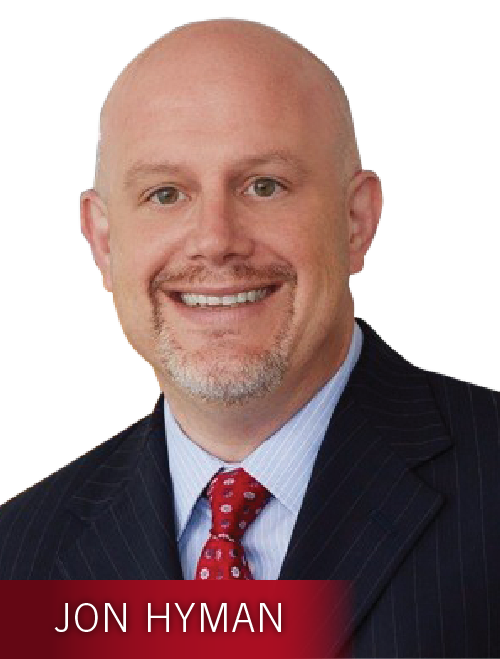
Jon Hyman The Practical Employer

Alcoholism is an ADA-protected disability.

Yet the ADA does not require that employers accommodate alcoholics by permitting them to drink, or otherwise be intoxicated, on the job.

Case in point? Dennis v. Fitzsimmons (D. Col. 9/5/19).

Jared Dennis was employed as a deputy in the Summit County, Colorado, Sheriff’s Office. He’s also an alcoholic. While on administrative suspension following his wife’s allegation of domestic violence, Dennis got drunk at home the night before his criminal arraignment. The following morning, he failed his intake breathalyzer. Thereafter, the Sheriff’s Office terminated him for, among other rules violations, conduct unbecoming of an officer and being impaired while on duty.

Dennis sued his former employer for disability discrimination, claiming that it fired him because of a protected disability — his alcoholism.
The court disagreed, and dismissed Dennis’s lawsuit.

It is generally recognized that alcoholism can constitute a disability entitling the employee to protection under the ADA…. The more difficult question is whether Deputy Dennis has come forward with evidence that his termination resulted from his disability, rather than his conduct.…[W]hen the disability at issue is alcoholism, the ADA … draw[s] a distinction between “having a disability” and “disability-caused misconduct.”

It is undisputed that the SCSO based its decision to terminate Deputy Dennis’ on the fact that he reported for his arraignment in an intoxicated state. Thus, there is no dispute that SCSO’s decision arose from his unsatisfactory conduct on the morning of July 28, not from his abstract status as an alcoholic. As noted, the ADA … do[es] not extend protection to actions of alcohol-influenced misconduct, even if the employee’s alcohol use is related to the disability of alcoholism. Accordingly, Deputy Dennis has not come forward with evidence that indicates that his termination was based on his status as a disabled person (as opposed to his conduct).

Addiction is a protected disability. But it does not mean you have to permit its use to accommodate the disability. Under the influence at work does not equal a disability, ever.
Posted on August 29, 2019June 29, 2023

No, FMLA Does Not Grant You License to Threaten Your Co-workers

Jon Hyman The Practical Employer

After being harassed by co-workers, Paul Ellis took to Facebook to air his grievances publicly.

Among his comments was one that could be perceived as a threat violence: “he’s gonna have an accident on the dock.” When another employee brought a printout of the post to their employer, FedEx, an investigation began. During that investigation Ellis admitted that one could perceive that comment as a threat. As a result, FedEx fired him.

Prior to his termination, Ellis frequently took leave under the FMLA to receive treatments for his chronic back pain and to take care of his sick mother. He alleged that FedEx retaliated against him for his use of FMLA leave by terminating him.

The 3rd Circuit Court of Appeals disagreed.

Ellis cannot demonstrate a causal link between his FMLA leave and his termination. He consistently used FMLA leave for two years without issue. Each time he called out sick, his supervisors covered his shifts, and each year that he applied for recertification, FedEx approved. It also actively accommodated FMLA leave for 42 employees between May 2013 and May 2017 at the Delanco service center.

Instead, FedEx terminated Ellis because it concluded he violated the company’s prohibition on workplace violence. He admitted to his supervisors that his Facebook message could be perceived as threatening, and he was fired shortly after the investigation concluded.

Many employees who engage in protected activity (such as taking FMLA leave) mis-perceive that their jobs are bulletproof. Nothing is further from the truth.
Yes, employers need to be diligent when firing an employee who has engaged in some form of protected activity. But, if you would fire the employee absent the protected activity, and have consistently done so with others under similar circumstances, why give an employee a free pass?

Posts navigation

Previous page Page 1 … Page 4 Page 5 Page 6 … Page 45 Next page


Webinars


White Papers


  • Topics

    • Benefits
    • Compensation
    • HR Administration
    • Legal
    • Recruitment
    • Staffing Management
    • Training
    • Technology
    • Workplace Culture
  • Resources

    • Subscribe
    • Current Issue
    • Email Sign Up
    • Contribute
    • Research
    • Awards
    • White Papers
  • Events

    • Upcoming Events
    • Webinars
    • Spotlight Webinars
    • Speakers Bureau
    • Custom Events
  • Follow Us

    • LinkedIn
    • Twitter
    • Facebook
    • YouTube
    • RSS
  • Advertise

    • Editorial Calendar
    • Media Kit
    • Contact a Strategy Consultant
    • Vendor Directory
  • About Us

    • Our Company
    • Our Team
    • Press
    • Contact Us
    • Privacy Policy
    • Terms Of Use
Proudly powered by WordPress