Skip to content

Workforce

Category: Workplace Culture

Posted on February 24, 2016June 19, 2018

Hiring a White Guy as Your Diversity Leader

If there’s anything that gets people riled up, it’s race. That’s why the recent move by Twitter to hire a white guy, Jeffrey Siminoff, as the company’s new diversity leader is so interesting — and explosive.

First up, the question of whether your diversity chief needs to hail from a protected class gets the juices flowing in a way few topics can. Most of us believe that the best candidate for any job should be selected, right?

Not so fast, my friends. It’s America — and that means you’re in a country with decades of baggage related to hiring practices, corporations that look like country clubs and distrust from all sides.

Need proof? Tell your average white male over 35 in America that Twitter should have hired a person of color as its diversity chief and wait for the fireworks.

Most white people served by HR professionals think of affirmative action when they hear the word diversity. Most organizations are full of white people and have a greater business need for diversity. Those two facts are key when determining whether a white person can lead diversity efforts at your company.

Let’s take two well-known organizations — the NFL and Facebook — and dig into their initiatives to increase diversity to understand why optics matter.

The NFL has the Rooney Rule. It mandates that any football team in the league filling a head coaching position must interview at least one minority candidate. Named after the Pittsburgh Steelers’ owner Dan Rooney, chairman of the league’s diversity committee, the rule was created in the hopes of increasing the number of minority head coaches in the league.

Your managers hear diversity and think race. And that’s exactly why your diversity leader should not be white but progressive in his or her definition of diversity.

Facebook borrowed this concept in 2015 and implemented a policy of having at least one minority candidate interview for open positions as well. Sounds like affirmative action, right? It’s not; it’s more about the realities of selection bias and forcing hiring managers to surprise themselves.

On many occasions, hiring managers have a candidate in mind that they want to plug into a job. When this happens, they’re usually so set on the decision that they think any other interviews (even internal candidates) may be a waste of time.

The tough part about that is that your company still has a process, and the hiring manager needs to put forth a little more effort. If you’re like the NFL and Facebook, you might plug in a diversity candidate and mandate an interview even if the hiring manager objects.

Your hiring manager doesn’t want to do it, and he or she is bitching about it. You’re faced with the classic Catch-22. You either force the process and risk looking like a bureaucrat, or you let hiring managers do their thing without interviewing a diverse candidate, which is undoubtedly bad for the long-term diversity of your workforce as well as your goal of hiring the best talent.

I’m a moderate Republican and, as you’ve probably noticed, white. You might think I would vote to allow the hiring manager to skip the diverse candidate interviews with that profile, right?

But I wouldn’t, and here’s why. I’ve learned that for every 10 interviews you make hiring managers do against their will, they are going to get two to three pleasant surprises. That means they’re impressed enough by the candidate in question that they’ll change their mind and offer them the job, or they’ll put the memory on reserve and as a result hire them for a future role.

Both outcomes don’t happen unless you force the hiring manager to conduct the diverse interview. And the surprise can help change attitudes and mindsets in your company.

Can a white guy lead your diversity practice? My take is you need a nonwhite person as your diversity leader, but that person has to be worldly enough to expand the definition of diversity at your company as soon as he or she walks in the door. The person can’t be what the majority expects.

You and I know that diversity transcends race. But that’s because we’re classically trained. Your managers hear diversity and think race. And that’s exactly why your diversity leader should not be white but progressive in his or her definition of diversity.

There’s no surprise in a nonwhite person being named as your diversity leader. It’s what happens next that is key. If your nonwhite diversity leader presents a broader context/business case for diversity that transcends race and backs it up with action, he or she has a greater chance for success.

White people can do a good job as diversity officers at your company. Nonwhite people can do it better — as long as they make diversity about more than race.

It’s all about surprising the narrow-minded people in your organization.

Posted on December 20, 2015June 19, 2018

The Big Lie of Hiring for Cultural Fit

You know the drill. You did the work sourcing great candidates, selling them on the opportunity at your company with the mission, the vision — the whole deal. You took the time to set up a live interview with the hiring manager.

Then the post-interview feedback came back: They didn’t like the candidate. You did the reasonable thing and asked why, at which point you got this gem from the hiring manager:

“I just didn’t think she was a fit.”

Your first reaction is to yell. Then you recover and ask them why the candidate wasn’t a fit, at which point the glittering generalities start flying related to your company’s culture and the candidate’s perceived fit with that culture — from the hiring manager’s perspective, of course. 

To defend yourself and your team from this excuse for not hiring the right candidate, it’s important to get your arms around the concept of 'fit' and prevent hiring managers from using 'fit' as a utility tool to discard candidates with reckless abandon.

Everyone thinks fit for culture is important. But when you start talking about “fit,” too many times it’s code for the following: You have to be (young/look good/have gone to my school/have energy/seem like me) to work here.

To defend yourself and your team from this excuse for not hiring the right candidate, it’s important to get your arms around the concept of “fit” and prevent hiring managers from using “fit” as a utility tool to discard candidates with reckless abandon. 

Let’s start with “cultural fit.” Some companies try to define their culture by corporate values. Others try to describe what new employees will experience on their first day after joining the company.

It’s hard to capture the essence of your culture by the presence of a pingpong table or a barista. It’s even harder to accurately capture your culture via words that could be featured in a “Successories” poster in your hallway. 

That’s because many of the company values you’ve identified are hard to measure. A better way to measure cultural fit in your organization is to ask the following question: “What do all high performers in our company— across all positions — have in common?”

In organizational design circles, the answer to this simple question creates a common language called “potential factors,” which are similar to competencies, but are the same across all jobs in your company. They show what it really takes to be successful amid the chaos in your company; they’re the same for every job in your workplace.

Do this and do it well, and you’ll have a single set of competencies to guide your conversations on “cultural fit.”

Of course, managers are a crafty bunch. Some who are likely to decline candidates for “fit” don’t always point to your company’s culture as the reason. Sometimes they question the candidate’s willingness to do the work in question with the following gem:

“He wasn’t a fit. He’s not going to be satisfied with this job. I think he’ll be bored.”

What’s the solution to that? Most of us are believers in the behavioral interview, but if I had only five minutes with a candidate, I’d ask them the following two questions, both of which help you address fit when it comes to potential job satisfaction:

“Tell me when you have been most satisfied in your career” and “Tell me when you have been least satisfied in your career.”

Assuming you like the background and experiences of the candidate and are confident they can do the job, you really need to evaluate only if your company, the specific opportunity and the candidate are a fit for each other. These questions help you determine that.

Once you get that, you’ll have what you need. Say the candidate likes a lot of structure, but all you can provide is that circus you call a company? Move on. If the candidate likes to play pingpong for four hours a day, but your CEO walks around evaluating if people are working hard enough by how unhappy they look? Probably not going to work out.

Ask motivational fit questions this way (and train your managers to do the same), and you’ll move away from generalities related to potential candidate satisfaction.

We get it. You never want to hear “He just wasn’t a fit” again. To arrive at that happy place, you’ve got to do some organizational design work associated with cultural and motivational fit, train your managers, and then have a set candidate breakdown process designed to force hiring managers away from the generalities.

Stop holding the bag when it comes to great candidates and their “fit.” Do the work, and you’ll end up with a more diverse workforce capable of helping your company reach its potential.

Posted on December 20, 2015June 19, 2018

A Great Place to Work Takes a Great ‘Community’

When Chuck Robbins took over as CEO, Cisco Systems hosted a series of huge events, including a concert at Levi’s Stadium.
Photo courtesy of Cisco Systems Inc.

When technology giant Cisco Systems Inc. promoted Chuck Robbins to the CEO post in May 2015, the move wasn’t a quiet celebration confined to the C-suite.

No. The global company of some 70,000 employees came together and partied.

The data-networking specialist held what it called “Cisco Rocks” events around the world. These began with a July 27 concert for 30,000 employees and their guests at Levi’s Stadium, the state-of-the-art home of the San Francisco 49ers football team. The event honored former CEO and current chairman John Chambers, and included performances from pop star Christina Aguilera and country star Keith Urban.

Then, over the next four days, Cisco threw 46 more parties in locations ranging from Foxboro, Massachusetts, to Bangalore, India, to Beijing — each featuring music, food and drink, games and live entertainment.
Fifty thousand people celebrated together at their local sites.

Here’s what one employee said after the Cisco Rocks Santa Clara event: “Seeing Christina perform was obviouslygreat, but just hanging out with colleagues in a venue like this has been amazing!”

It might seem Pollyannaish to think employees want a festive, inclusive sense of camaraderie — similar to the CiscoRocks events — more than they want individual benefits. And to be sure, employees care about their paychecks, personalized professional development plans and unique, customized perks. But these sorts of solo rewards were not as critical as social workplace features in a study of 507,392 employees at the 25 Best Multinational Workplaces by the Great Place to Work Institute. (Editor’s note: Ed Frauenheim is a former Workforce senior editor and currently works for the institute.) 

An analysis of employee survey responses across 47 countries found that people at Great Place’s 25 World’s Best list— including Cisco — cherish the ways their companies act as “communities.” Companies the world over would do well to focus on this driver of workplace greatness as well as on the trusting relationships that are the foundation of a strong culture. That’s not just for the benefit of employees but also for the business benefits that come from a high-trust workplace. A growing mound of evidence from Great Place to Work and other experts shows that a great culture pays off in areas ranging from higher revenue to lower turnover to better stock market performance to superb customer service.

Broader Trends Related to Community

Our study examined which of the Great Place to Work Trust Index survey statements best predicted employees’ response to the overall statement, “Taking everything into account, I would say this is a great place to work.” (There are 58 statements in all.) Six of the top 15 drivers of workplace greatness at the World’s Best indicate a fun, egalitarian community is key to what makes the world’s top employers great.

Top 10 Workplace
Greatness Drivers 

Great Place to Work conducted a statistical analysis to determine the strongest drivers of overall workplace greatness at the World’s Best Multinational Workplaces. That is, Great Place examined which of its Trust Index survey statements (there are 58 in total) best predicted employees’ response to the overall statement, “Taking everything into account, I would say this is a great place to work.”

1.  want to work here for a long time.

2. This is a fun place to work.

3. I am given the resources and equipment to do my job.

4. People look forward to coming to work here.

5. I am treated as a full member here regardless of my position.

6. Management does a good job of assigning and coordinating people.

7. You can count on people to cooperate.

8. his is a physically safe place to work.

9. nagement shows appreciation for good work and extra effort.

10.anagement trusts people to do a good job without watching over their shoulders.

—Ed Frauenheim


The notion that a sense of community drives workplace greatness at the World’s Best makes sense in light of a number of social and economic trends affecting the global landscape. One of these is the millennial generation’s highly social character. Consider this finding from a 2013 global study of the younger generation by consulting firm PricewaterhouseCoopers, the University of Southern California and the London Business School: “Millennials place a high priority on workplace culture and desire a work environment that emphasizes teamwork and a sense of community.”

The kind of community linked to a great workplace at the World’s Best is a fundamentally fair one— one that’s inclusive to people of all ages. This feature fits the way the millennial generation can feel unfairly maligned as well as the way older employees can fear they will be discriminated against even as they want or need to remain in the workforce.

The way increasing amounts of work are done collaboratively also helps explain the importance of camaraderie and community among the World’s Best. When people know and enjoy their colleagues, joint projects tend to be done with greater ease and satisfaction.

A word about a “fun” workplace. While we called out Cisco’s series of global celebrations as an example of a playful company culture, it would be simplistic to think that holding lots of parties makes a workplace fun. When people experience their culture as fun, “fun” activities typically are the tip of an iceberg made up of positive relationships and healthy workplace practices.

A fun culture is fun because people have the time and space to take a break at work, senior leaders participate in the activities and model the way, and people are generally positive about the future of the organization and not worried about losing their jobs. There may be friendly sports competitions among internal groups or team lunches at local restaurants. Employees also may have chances to contribute new ideas or participate in innovation contests. In sum, the culture of the workplace values people and relationships.

Consider Cisco, which has cut jobs in recent years. But the Cisco Rocks events of the past year came in the context of a company that has adopted flexible work arrangements, that is offering mindfulness programs at work to boost employee well-being and that is increasing skills training for staffers.

At the same time, Cisco has continued to stay on the cutting edge — with Boston Consulting Group recently naming the company the 14th most innovative company in the world. And 86 percent of employees in the 12 countries in which Great Place recognizedCisco as a Great Workplace say that “people care about each other here.”

“They say good people are valued,” one Ciscoemployee in the United Kingdom told Great Place. “I feel like a treasure at Cisco!”

How to Build a Great Global Culture
(Hint: It doesn’t have to break the bank.)

Based on Great Place to Work research into the drivers of workplace greatness at the World’s Best Multinational Workplaces, here are several actions to take … and avoid. The good news is that building a great global culture doesn’t have to cost a lot.

Do: Cultivate community. Great Place research suggests global organizations should seek to foster a festive, inclusive, welcoming, collaborative and familylike workplace. The message is that employees thrive when their team is friendly, fair and fun.

Do not: Lose sight of the group by focusing too much on the individual. Organizations that only pay attention to individual benefits or rewards — especially those that pit employees against each other — actually may fail to bring out the best in individuals.

Do: Set clear strategies and organize teams smartly. Employees want to see that leaders have a vision and plans to achieve it. They also care about effective use of talent.

Do not: Micromanage. Providing a measure of autonomyis vital to motivating employees.

Do: Get the basics right. Make safe work conditions and proper equipment a priority.

Do not: Chain employees to work. People want to work hard, but they need to be able to take breaks without fearing for their jobs.

—Ed Frauenheim

In this kind of highly personal, high-performance climate, the kind of companywide, global celebration seen in the Cisco Rocks event becomes the cherry on top of a sundae of workplace fun. It reinforces and caps off an enjoyable culture made up of many positive elements.

Workplace bonds also may be important at the World’s Best in part because of the atomization of society in many parts of the globe. In other words, a sense of community at work may be of growing value to people as traditional family and community ties fray.

Economic ties at many companies also are disintegrating. Organizations throughout the globe have been dismantling traditional employer-employee relationships in favor of temporary contractor arrangements. The shift to what is sometimes called the “gig economy” is driven largely by a desire to cut costs and increase agility.

But there are questions about whether it is wise for companies to distance themselves from their labor force, including their extended, contingent workforce. And research indicates that social cohesiveness among co-workers boosts employee happiness and effectiveness. Adam Grant, management professor at the University of Pennsylvania and author of “Give and Take: Why Helping Others Drives Our Success,” noted in a recent New York Times article that research shows that groups of friends outperform groups of acquaintances in both decision-making and effort tasks.

“When friends work together, they’re more trusting and committed to one another’s success,” Grant wrote. “That means they share more information and spend more time helping — and as long as they don’t hold back on constructive criticism out of politeness, they make better choices and get more done.”

As this comment suggests, company communities that are friendly, fair and fun not only fuel employee perceptions that their workplace is great, but also foster better business results.

Take No. 1-ranked Google Inc. The tech giant has topped Great Place’s global list for three straight years, and ranked as the No. 1 desirable employer for engineering and business students globally in a recent study by consulting firm Universum Global. Google enjoys the fourth-highest market capitalization in the world, and the nearly 20-year-old company continues to enjoy soaring sales. Google reported 2014 revenue of $66 billion, up 19 percent year over year.

Google is not alone. Company after company on the list of 25 is at or near the top of their industries, from top-ranked Google to professional services giant EY to hospitality companies Marriott International Inc., Hyatt Hotels Corp. and AccorHotels, to retailer H&M.

Collectively, the 2015 World’s Best already are changing the world. They are the vanguard of a more hopeful economic era defined by great workplaces for all.

Consider the reaction of another Cisco employee to its Cisco Rocks event in San Jose: “Beyond EPIC @cisco day today. #NewCEO & new day for an amazing place to work! Thanks for the fun!”

In other words, party on.

Ed Frauenheim is director of research and content at research and consulting firm Great Place to Work. To comment email editors@workforce.com. Follow Workforce on Twitter at @workforcenews.


Posted on December 14, 2015January 13, 2020

Re-engaging With William Kahn 25 Years After He Coined Term Employee Engagement

employee engagement

Photo courtesy of Adobe Stock.

Today it’s not uncommon to see article after article about the ubiquitous term employee engagement, such as: “This percentage of employees are disengaged,” a study finds; “How do I keep my employees engaged?” one article asks; and “How does engagement affect overall business?” another wonders.

Although a popular talking point now, the term “employee engagement” is relatively new. Professor William Kahn of Boston University coined “engagement” in terms of the workforce setting 25 years ago in his 1990 paper, “Psychological Conditions of Personal Engagement and Disengagement at Work.”

Workforce caught up with Kahn via email to discuss the genesis of the term, its evolution over the past 25 years and what leaders can do to re-engage the disengaged.

Workforce: Before you first used the word ‘engagement’ in the business setting, how did you identify the problem of employees being disengaged?

William Kahn: The presenting issues revolved around employees’ lack of motivation and involvement. People were often doing only what needed to be done, as defined and directed by others, and their work had very little of their own personal selves, very little of what they thought and felt ought to happen as they went about their work. Managers did not really understand the problems, which they thought had to do with employees not being the right fit for the job or not being rewarded enough for their work.

WF: What was the ‘aha’ moment when you hit on engagement as a business case? Why did you use that word, that terminology?

Kahn: There was no particular ‘aha’ moment. It was simply the accumulation of noticing, studying and writing about employees who were unfulfilled at work, and why that might be. I used ‘engagement’ and ‘disengagement’ because those words evoke very clearly the movements that people make toward and away from their work, other people and the roles that they had. Engagement is a word that suggests betrothal — the decision to commit to a role, an identity and a relationship that offers fulfillment.

WF: Why was it an issue then?

Kahn: Leaders of organizations had very little understanding of modern concepts of empowerment, and believed that motivating others was mostly a matter of hiring the right people and giving them the right incentives. The engagement concept was developed based on the premise that individuals can make real choices about how much of their real, personal selves they would reveal and express in their work. That premise was radically different than the operating assumptions of the time.

WF: Has employee engagement evolved or is it still rooted in the same problems as 25 years ago?

Kahn: The problems are much the same, although there is more sophistication about how they appear and are dealt with. The problems of giving people voice over what they do and how they do it, of ensuring that people find their work intrinsically meaningful, and enabling them to craft their roles still exist, as managers wish to exert control over others when they are made anxious by the demands to produce and perform.

WF: What’s your one key way to improve engagement?

Kahn: Approach employees as true partners, involving them in continuous dialogues and processes about how to design and alter their roles, tasks and working relationships — which means that leaders need to make it safe enough for employees to speak openly of their experiences at work.

Posted on October 20, 2015June 19, 2018

The Other Side of the Coin on the Appropriate Response to Harassment

Last week I discussed the importance of a timely and effective remedial response by an employer to an employee’s harassment complaint. Today, I examine the other side of the coin — what happens when an employer does not take proactive steps to eliminate harassment from the workplace.

The allegations of sexual harassment in Ellis v. Jungle Jim’s Market (Ohio Ct. App. 10/13/15) [pdf] are pretty egregious. Among the worst were Dana Ellis’s supervisor unzipping his pants and asking her to take a look, telling her he wanted to “bend [her] over and BF” her, sticking out his tongue and simulating licking her, and asking her what positions she likes to have sex in, if she likes oral sex, and if she swallows.

While those allegations are bad, the company’s response was even worse. When Ellis’s co-workers complained to the store manager, Cathy Dick (really her name),about the harassment, she merely provided the supervisor a warning and kept the employees working together.

With all that, however, the employer still could have prevailed in the case because the employer did not take a tangible employment action against Ellis. All it had to prove was (a) that it exercised reasonable care to prevent and correct promptly any sexually harassing behavior, and (b) that the plaintiff employee unreasonably failed to take advantage of any preventive or corrective opportunities provided by the employer or to avoid harm otherwise.

On prong “a”, this employer failed miserably, not only in the after-the-fact remediation of the harassment, but also in the before-the-fact preventative measures:

Although Jungle Jim’s had a sexual harassment policy in place at the time Ellis began her employment, there is an issue of fact as to whether Jungle Jim’s actively implemented the policy or trained its employees and supervisors on the policy. Evidence was introduced that when Ellis received the policy in October 2012, the policy was not up-to-date as it advised Ellis to report sexual harassment complaints to “Norma Sarosy,” who, according to Dick, had died in February 2012. Ellis was not provided with a revised copy of the policy informing her that Dick now chaired the committee responsible for investigating sexual harassment complaints. Dick also testified that prior to Ellis filing the present lawsuit, Jungle Jim’s did not provide any sort of training to its employees regarding harassment or discrimination, although she did speak with some managers about the issues in an effort to train them. Dick explained that although she had been placed in charge of training managers and investigating complaints about sexual harassment, she had not received any formal training or attended any seminars on the issue. Rather, her knowledge on the issue came from reading “two or three” books about harassment and discrimination over the last one to seven years.

In other words, no training equals big problems for an employer.

What does this case teach out about our anti-harassment programs? Merely having a policy is not enough.

If you do not train your supervisors, managers, and others in how to response to workplace harassment, you will have a difficult time avoiding liability when things go wrong. Anti-harassment training should be part of your onboarding process for all employees. It does not have to be a deep-dive on every nook and cranny of U.S. workplace harassment law for each hire (although that would be best).

At a minimum, however, you should have someone knowledgeable about harassment and your policy against it sit down with each new hire, explain your anti-harassment policy, and offer the opportunity to answer any questions. That, plus comprehensive annual harassment training for all employees, should mitigate against a court finding that you failed to actively implement your policy or train your employees and supervisors on it — a finding that could prove fatal to your defense.

Posted on October 2, 2015July 24, 2018

Take Bias Out of Processes, Not People, NeuroLeadership Institute’s David Rock Says

Bias is a big issue for companies — and people in general. It affects everything from hiring to purchasing decisions and everything in between. The fact is, whether we like it or not, we’re all biased. We can’t help it. It’s prewired in our brains and makes us who we are.

So what can companies do about it? If you think you can take bias out of people, you’re wrong, says David Rock, the director of the NeuroLeadership Institute, a global research organization focusing on cognitive research. Instead, he says, to limit bias, organizations need to addresses their decision-making processes. In other words, don’t even give the brain an opportunity to make an unconscious biased decision.

I had the opportunity to discuss bias with Rock (at right in the screen grab below) following his presentation at  CEB’s ReimagineHR: Building the HR Function of the Future conference in Chicago on Oct. 1. Here is an edited transcript of our conversation. I might be am biased, but I thought it was a fascinating conversation.

Whatever Works: So I’m biased, you’re biased, we’re all biased, so are we fighting a losing battle to try and get rid of bias?

David Rock: We’re all incredibly biased, and incredibly biased all the time. That’s actually a good thing in some ways. You need bias to get through your shopping routine. If you have to make a fresh decision about every single purchase, you’d never get home. So generally bias is not a problem. The trouble is for key decisions like who you should hire or which business to buy or which vendor to use, these kinds of things, going off unconscious biases can have some quite large consequences. So mitigating bias all the time is impossible and a bad idea. What we need to do though is significantly reduce the bias so that we make just basically better decisions that are not just automatic. In key decisions like the hiring, investment, etc.

WW: So where does bias come from? It’s sounds like some sort of defense mechanism?

Rock: It’s a complex story, but essentially we don’t have a lot of cognitive resources for mapping the world moment to moment in the brain, so we have to use heuristics and rules and pre-learned principles in order to make sense of the world. A baby comes out and everything’s just noise, so we don’t have a lot of cognitive resources for making fresh decisions and seeing things new. We’re built to use existing patterns basically, and that plays out in nudging us one way that we’ve always gone as an example of one of the biases.

To read my interview with CEB's HR practice leader, Brian Kropp, please click here.

WW: Talk about what companies can actually do if they’re concerned about bias. And should they be very concerned about bias?

Rock: The thing is bias actually is a big issue. It’s having organizations that are not as diverse as they could be, not as inclusive as they could be, and that’s a significant issue in itself. Additionally to that, poor investment decisions, poor purchasing decisions. Often these have very serious consequences in many organizations. So it is a real problem. The thing is it’s one of these very quirky problems where going at it the way that might seem obvious doesn’t really work. Most problems with people, workforce problems, you can sort of educate people a bit and create some change. Bias is one of those problems where it’s not really an awareness or motivation problem; it’s actually a perception problem. More education doesn’t really do much. You’ve basically got to reduce the chance of bias rather than rely on people to try to be less biased.

WW: How do you do that?

Rock: We talk about take the bias out of the process rather than the person. The very best way you can take bias out is to look at a process, work out the kind of bias that could happen and literally take out the possibility of it happening. A common example that’s sort of well-known is the orchestra that does blind auditions. Play this song behind a screen. We don’t know their age, their gender, anything. And you choose the best person, the best sound. And it ends up you hire completely differently when you do that. It’s removing the chance of bias, taking that human element out and just going with what really makes someone perform well.

WW: So the TV show ‘The Voice’ is doing something right?

Rock: <Laughs> That’s right. They are actually reducing bias. You’re not going to trick them with your smile or something else.

WW: You talk about the different types of bias out there, and there’s one you call ‘distance bias.’ There’s been a trend in the workforce with allowing people to work remotely. By doing that, are they introducing a bias that they’re not aware of?

Rock: Yea. Absolutely. So distance bias is one of the five big categories of bias that are driving our behavior all the time. We organized all the different biases — there’s more like 100 — into five categories based on how the brain creates these biases. And distance is one. Essentially it’s your brain saying, ‘Things that are closer to you are more valuable.’ Pay more attention to something closer to you physically or in time. And we don’t know that’s happening. And what can happen if an employee is working distantly is that you don’t pay as much attention literally to their ideas, to their work, the out-of-sight, out-of-mind principle ends up sort of actually being a little bit true compared to the person that might be in the office. It’s an unconscious bias that can work against the person that’s remote.

Posted on September 21, 2015June 29, 2023

Stuck in the Middle

illustration by Anna Jo Beck

Being a midlevel manager is tough.

As someone who reports to senior leadership and manages at least one or often two layers, of junior staff, midlevel managers typically don’t play a part in setting the organizational vision or strategies. Yet, they have the responsibility of guiding others in support of that vision.The Argument logo

Midlevel managers must be able to lead their team effectively while also managing up at the same time. They must master leadership on multiple fronts: communicating, coaching and working with their own staff as well as getting the right amount of support and direction from their own leader — all while keeping up with their peers.

To complicate matters, midlevel managers often work with multiple generations in technical jobs in which they personally have no expertise. Finally, by the time many folks get to midlevel management, they have small children, cranky teenagers and aging parents — or an exhausting combination of all — to care for in their supposed leisure time at home.

Many midlevel managers are so focused on daily tasks that they overlook the importance of developing relationships.

Recognizing and working with the subtleties of managing up, developing and nurturing relationships with peers, and leading others requires tenacity and focus. In fact, according to a study conducted by leadership development consultancy Zenger Folkman, the bulk of the most disengaged workers are midlevel managers. And why wouldn’t they be? Middle management is often a thankless marathon endurance event that never seems to end.

Connection Matters

Many midlevel managers tend to focus exclusively on their boss and direct reports. After all, isn’t that hard enough? Yes it is — but if you work in this zone, go the distance and broaden your reach. Learn about and connect with those outside your bubble.

The complexity involved in getting things done in any organization requires a massive amount of attention. There are processes and systems, and then there is the well-worn elephant path — the way things get done unofficially. There are the roles and responsibilities on the organizational chart, and then there are the people you have to go to for special favors to make something actually happen. To understand the sanctioned and the underground rules, you must have a grasp of the whole — often very big — picture.

The best way to do this is to first spend some time with the organizational chart and make absolutely certain that you know exactly who each person is, what their goals and agendas are, and to what extent that person is able to help— or hinder — you in accomplishing your goals. For example, if there is a turf war going on that involves your boss, you need to be aware of it.

If someone other than your boss has the knowledge or power to help you achieve your goals in addition to your boss, you need to develop that relationship. If there is someone whom you admire and whose career you would like to emulate, ask that person to mentor you.

Many midlevel managers are so focused on daily tasks that they overlook the importance of developing relationships with their peers in the organization. These are the people who can choose to help you in a pinch — or not. You don’t need to be everyone’s best friend, but you do need to get to know them and understand what is important to them, and look for small things you can do to make their lives easier. You never know who may be asked to rate you on a 360-degree feedback assessment or who may be on the senior leadership team with you someday.

Author and behavioral researcher Keith Ferrazzi wrote a book in 2014 titled “Never Eat Alone.” The title pretty much says it all. Midlevel managers who get the most done and keep growing their career know people. If you aren’t sure how to get better at it, the book outlines step-by-step instructions that even the most introverted among us can implement. Start slow if you need to, but start.

Finally, midlevel managers are only as successful as their people — so staying connected with each and every direct report is absolutely critical. The best way to do this is to have regular one-on-one meetings with each of them. No time? Almost everyone says that initially. But even 15 minutes every other week can make the difference. The staff member drives theagenda — questions, updates, specific requests for direction or support — so be sure each person takes the time to prepare in advance so that their precious time is used wisely.

Efficiency Counts

Most midlevel managers feel there are simply not enough hours in the day. The reward for doing great work is — you guessed it — more work. Any process or system you can implement to keep yourself organized and on top of things is going to count now more than ever.

Basic time management skills are available to anyone with access to the Internet. One favorite tool to help midlevel managers prioritize tasks is the Eisenhower Matrix, popularized by author Stephen Covey as the Time Management Matrix. The idea is to categorize each of your activities or tasks into one of these buckets:

  • Important and urgent (do right away).
  • Important but not urgent, like relationship-building (plan and schedule).
  • Not important but urgent, like interruptions (these should be delegated or eliminated).
  • Not important and not urgent (usually wasted time possibly at least one regular meeting you attend).

Spending 15 minutes to plan your goals and tasks every day has never been more important. If you tend to focus on what’s most important and delegate the rest, that’s good; if you don’t, now is the time to start.

Next, require your direct reports to be as efficient as you are and keep you carefully informed by having them prepare a 5-15 report for you each week. A 5-15 report — invented by Yvon Chouinard, founder of Patagonia — is a weekly report staff members generate for their managers that should take no more than 15 minutes to create and no more than five minutes to read. It is a succinct listing of all accomplishments, challenges and opportunities, along with a brief preview of plans for the upcoming week. The 5-15 is an efficient way for each employee to keep managers updated and for whole teams to stay informed without having to spend precious meeting time. 

While we are talking about managing the efficiency of your direct reports, one of the real dangers of being a midlevel manager is becoming too attached to your employees and overidentifying with their points of view.

Caring about your people is an admirable and essential quality of a leader, but it can cloud your judgment when it’s necessary to be the bad guy. When enforcing compliance or managing change, you might default to going easy on your people, especially if you don’t agree with the strategy or the new process. This can be the kiss of death.

All senior leaders know when their managers have succumbed to caring more about being liked than actually managing the results.

Of course this can be a very tricky polarity to manage. Having a real connection with each team member is important, but think twice if you find yourself spending more time arguing for your people’s benefit than holding them accountable.

Caring Begins With You

Many midlevel managers take care of people at home, race to work, and then race back home again. Those with the longest days are the ones who are caring for both children and aging parents.

One midlevel manager said that he “wipes noses all day” — at home and at work. It is exhausting to be surrounded by need 24/7. Most midlevel managers put their needs and health last on their list of priorities — and then end up in their mid-40s wondering how things got so out of whack.

It’s up to you to make sure your quality of life doesn’t get lost in the shuffle. How do you stay the course without sacrificing your mental and physical health? Make extreme self care your absolute No. 1 priority. Here’s how:

  • Decide on one or two things you are going to do that are just for you. Maybe it is exercise or a hobby of some sort. Commit to it and get support from everyone around you.
  • Use your commute time to listen to audio books or have a regular chat with your best friend.
  • Request a stand-up desk at work so you aren’t sitting so much, and schedule your one-on-ones as walking meetings.
  • Be sure to use all of your vacation days — even if you don’t think your people can get along without you.

Take care of yourself careerwise as well. Folkman’s research reveals that many midlevel managers feel unheard, undervalued and stuck. It is true that the better you are at your job as a midlevel managers, the more obscure you become.

You can’t let this happen. To stay visible to the organization at large, search around for opportunities to get involved outside of your regular task cycle: write posts for the company blog or get on an event planning committee. At first it may feel like just another task, but if there’s a chance to do something fun and interesting and get out of your cube, seize it. It’s a great way to meet people in the organization, feel like more than a cogwheel and make yourself known.

Another challenge for midlevel managers is to stay on their boss’ radar. Make sure your supervisor understands what you’re getting done and how you’re making their life easier. If you don’t have regular one on ones, prepare your own 5-15 where you highlight your accomplishments in an email and send it to your boss each week.

Try not to make a lot of changes at once. People often fail to achieve goals if they have too many of them. Take one of the ideas that resonates with you and that you think will give you the biggest return on investment of time and brain share, and start with that.

Making the Most of the Middle

Remember that the tenure in the middle can be a long one; in fact, many managers stay there for the entire latter part of their careers. Gritting your teeth and trying to wait it out might not work very well. So settle in for the long haul, breathe deep and pace yourself.

It’s easy to forget how important the middle can be, especially if you’re in it — but the midlevel manager is the peanut butter and the jelly of the sandwich.

If you are one of these heroes, you need to build your network, manage your time effectively, and take extraordinarily good care of yourself. And if you are the leader of one or more of these people, study the same three areas and find ways you can help your hardworking midlevel managers take care of themselves, manage their time and continue to grow and develop.

Madeleine Homan-Blanchard is a co-founder of Blanchard Coaching Services. Comment below or email editors@workforce.com. Follow Workforce on Twitter at @workforcenews.
 

Posted on July 26, 2015June 19, 2018

Health and Safety Go Together Like …

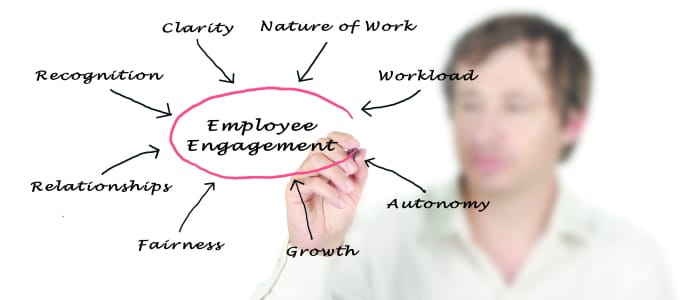
When it comes to employee health, disease management and prevention get most of the attention. But occupational safety should be an integral part of any wellness strategy, according to experts who developed guidance to help employers integrate their health and safety programs.
 
“Employers do safety in one area of their company and other health-related initiatives in another portion of the company,” said Dr. Ron Loeppke, past president of the American College of Occupational and Environmental Medicine and a co-author of the guidance, which can be accessed on the college’s website. “Increasingly, there is an acknowledgment of the need to integrate the strategies of health and safety. The health of workers impacts work, and we know that work impacts the health of workers, so there needs to be a more holistic approach.”
 
In May, the college and UL — a safety certification firm based in Northbrook, Illinois — published an employer’s guide that includes a measurement tool to evaluate the effectiveness of corporate health and safety programs. The Integrated Health and Safety index examines the economic, environmental and social effect of those programs, similar to the Dow Jones Sustainability Index, which tracks the financial performance of green companies.
 
The index evaluates leadership, disability management, corporate social responsibility and health and productivity programs, according to the guide, which was developed by Loeppke and a number of workplace health and safety experts. Numerical values are assigned to a variety of measures including the number of workers’ compensation claims, absenteeism and accident rates to the number of participants in biometric screenings and the number who complete annual health-risk assessments.
 
“It’s about integrating and aligning, incentives and goals,” said Todd Hohn, UL’s global director of workplace health and safety. “Traditionally, employee health would report into HR and safety would report into operations. That would negatively impact their ability to work together because they are funded by different parts of the organization.”
 
The guidance recommends that health and safety leaders evaluate their current programs before developing an integrated strategy, and then create a system for collecting data and monitoring programs as the new strategy is rolled out.
Posted on June 22, 2015July 30, 2018

Meet the Aggregator Killer

If you’re in talent acquisition or recruiting, the past decade has been a whirlwind of change.

The traditional job posting as we know it had its dominance stripped away. Rather than ask you to pay for a job posting, aggregator site Indeed took a different path. It aggregated most every job in the world, and then capitalized on the fact that more and more candidates looked for a job via a simple Google search.

The result? You don’t pay for a job posting; you pay to have your job moved up as high as possible in the search results on Indeed.com.

Welcome to the wonderful world of your company’s jobs being aggregated — and monetized.

You probably know Indeed, but you might not know the other aggregators, and that’s where the problems start.

To be fair, other changes have rocked your world in the recruitment marketing space. LinkedIn became the Death Star of recruiting databases. Glassdoor has emerged as a leader in company reputation and rating. CareerBuilder has done a solid job of responding to all trends by creating a meaningful, balanced portfolio of services for recruiters.

But regardless of the core strengths of each of these companies, there’s one thing that ties them together: They all have an eye on aggregating as many jobs as possible. Aggregated jobs combined with search engine optimization expertise equals traffic, which ultimately equals revenue.

I define a job aggregator to be any company that scrapes your jobs with or without permission and makes them part of their service or product offering.

You probably know Indeed, but you might not know the other aggregators, and that’s where the problems start.

Want a million-dollar product idea in HR? I’ve got one for you: the Aggregator Killer. What does it do? The Aggregator Killer makes sure the jobs that you close on your career site actually drop off all the aggregators that are out there (especially the bad ones). 

The need for the Aggregator Killer is based on some basic marketplace realities that are killing your employment brand. Let’s take a run through these realities.

Reality No. 1: While Indeed is the gold standard of job aggregation, its success has spawned lots of competitors in that space, most with substandard tech and discipline. If anything defines America, it’s that a good idea based on technology can be copied and deployed quickly with a minimal commitment to customer service.

Reality No. 2: You probably didn’t even notice there was an aggregation issue until LinkedIn created its “economic graph” and basically started scraping every job known to man.

LinkedIn announced in 2014 that it would offer hundreds of thousands of jobs aggregated from the career sites and applicant tracking systems of U.S. employers that don’t prohibit it. The reality is that in addition to your career site, LinkedIn also relies on a network of aggregators below the Indeed quality line to round up as many jobs as possible.

LinkedIn by itself is high quality. But as part of its economic graph, it basically started “aggregating the aggregators.” What could go wrong?

Reality No. 3: As a result of all the bad Indeed imitators and LinkedIn scraping those imitators, it’s now really hard to ensure that after you “unpost” a job (hopefully you filled it), that job actually goes away across the Internet within a reasonable time frame.

Turns out that aggregators below the Indeed and LinkedIn quality line are really good at aggregating jobs; they’re just bad at de-aggregating them.

So you filled a job and took it off your career site. Congrats! But people keep seeing that job because of the size and scale of the aggregation industry and the fact that bad actors didn’t pull the position down. As a result, candidates are going to experience a variety of unsatisfactory things (too numerous to mention here) when they express interest in a job that’s closed (but looks open!) in your company.

You can’t blame the aggregation industry for chasing Indeed with hundreds of “me too” products.

But you can hate them for being less than systematic when it comes to getting your jobs off the grid after you close or unpost in any way.

So here’s how my Aggregator Killer is going to work. Through a rare cocktail of technology and recent, underemployed law school graduates, we’re going to guarantee your closed jobs will come off all the boards.

Cost? Just $5 a job. Sounds expensive, right?

Sure it does. Until you get embarrassed in a million different ways by not being able to take that job down. Wait until your CEO gets a nasty note that you can’t even unpost jobs that were recently filled.

Just $5 a job; and you have to sign up all your jobs. It’s a bargain, people. Unless your organization’s reputation and brand are like a lot of these aggregators: bargain basement.

Posted on April 29, 2015June 19, 2018

How Do We Solve a Managerial Behavior Issue?

Dear Personality Clash:

I understand the desire to be gentle, but what is your motive? Are you afraid of being fired? Is it to avoid having the leader quit? Is trying to be gentle coming from a fear of the unknown reaction this leader might present with a more candid and direct approach? Or is your desire to be gentle an indication of a general distaste for conflict or a lack of the necessary skills to address conflict?

It would be very simple for me to advise you to document the observed effects of this leader’s behavior, and then give him or her clear feedback and discuss the paths that are available and required (the good, the bad and the ugly). That won’t work out because there are two bigger issues that I recommend you address as part of that HR consulting step. I’ll touch on both here.

The first issue is to address the questions I posed above about your motives. I’ll briefly address each question here.

If you are trying to avoid getting fired, a consultant and/or coach must place the needs of the client above their own self-preservation. How you do that successfully might be more a combination of skill and art.

If you are trying to avoid having the leader resign, this leader’s “witch hunt” issue may be the tip of the iceberg and a resignation may be just what the organization needs. I have found however those most low-skilled leaders that are politically motivated tend to recognize their own issues when confronted properly. The job they have is better than the alternative, so giving direct feedback generally doesn’t result in their self-destruction. Just keep in mind, no matter how we see it, this leader seriously lacks leadership skills. Those skills must be developed for the person to be successful.

If you are concerned about how the leader will react to candid, direct and transparent feedback, having the facts and being articulate and resolute when you address the issue will help to mitigate a poor reaction. Keep in mind, an extremely poor reaction will simply confirm that the person’s leadership skills are lacking. A great leader is proactive about their own weaknesses, looking to address them before they become an issue.

And for my last question posed, if you lack experience and skill in conflict management, perhaps you need to delegate the issue up the chain in HR. If the problem leader is a person in HR, or even worse, the chief human resources officer of the organization, you need to evaluate your role and what this person expects from you. You might ask him or her if they want your honest and transparent feedback. The answer will be, “Yes, of course.” Before giving your feedback, ask, “As the leader of this organization, what are your goals?” You can then position the issue as one getting in the way of those goals. This leads me to the second issue to address.

The second issue to address is something I call role awareness and acumen. This leader appears to lack a clear understanding of their role’s key accountabilities. I’m guessing they don’t include conducting effective witch hunts as part of a tactical self-preservation strategy. This leader’s acumen is also suspect of being weak. I use the term acumen to refer to “the ability to see self, others, tasks and roles, systems and self-direction with clarity and proper bias.” Ineffective or poor Leaders with poor acumen tend to create distraction and conflict. 

With all of that said, the leader may be at wits end trying to create change in the organization and has emotionally spiraled out of control because of an inability to understand where the issue is and why there is so much resistance. Addressing the matter by keeping an open mind about what is going on is critical. Be prepared to support the leader by gaining a better understanding of the root cause. This is where an effective outside coach can be very effective.

SOURCE: Carl Nielson, The Nielson Group, Dallas, Texas.

Posts navigation

Previous page Page 1 … Page 25 Page 26 Page 27 … Page 53 Next page


Webinars


White Papers


  • Topics

    • Benefits
    • Compensation
    • HR Administration
    • Legal
    • Recruitment
    • Staffing Management
    • Training
    • Technology
    • Workplace Culture
  • Resources

    • Subscribe
    • Current Issue
    • Email Sign Up
    • Contribute
    • Research
    • Awards
    • White Papers
  • Events

    • Upcoming Events
    • Webinars
    • Spotlight Webinars
    • Speakers Bureau
    • Custom Events
  • Follow Us

    • LinkedIn
    • Twitter
    • Facebook
    • YouTube
    • RSS
  • Advertise

    • Editorial Calendar
    • Media Kit
    • Contact a Strategy Consultant
    • Vendor Directory
  • About Us

    • Our Company
    • Our Team
    • Press
    • Contact Us
    • Privacy Policy
    • Terms Of Use
Proudly powered by WordPress