
Skip to content

Workforce

Category: Workplace Culture

Posted on April 23, 2015July 31, 2018

Dr. Garth Graham: Prescription for Better Minority Health

Dr. Garth Graham is president of the Aetna Foundation.

Dr. Garth Graham was born in Jamaica and raised in the United States by immigrant parents who stressed education and achievement. So it’s not surprising that one of his heroes is former secretary of state Colin Powell, who was raised in the Bronx by Jamaican immigrants with similar aims.

“A lot of Caribbean people could identify with hisstory,” said Graham, a cardiologist and president of the Aetna Foundation, which was established in 1972 as the philanthropic arm of health insurance giant Aetna Inc. “His parents pushed him toward education, and then the military helped bring out his capabilities. It was like me with education, and then medicine, and public health bringing out my passions.”

For Graham, 39, eliminating health disparities between racial and ethnic minorities and the general population has been his mission since he was a medical resident in Boston where he launched a program to study the obstacles that African-American men face when it comes to diet and exercise.

That was in 2001, the same year that Aetna made the issue a top priority. Aetna became the first major health insurance company to collect race and ethnicity data from its members, according to Dr. Wayne Rawlins, the national medical director of racial and ethnic equality initiatives at Aetna.

Addressing Inequality

More than a decade later, the insurance company and the Aetna Foundation have become leaders in addressing health inequalities, funding national and regional programs that focus on healthy lifestyles, health care equity, integrated health care delivery, and diversifying the health care profession. And Graham has emerged as a leading national advocate.

It’s a role that he first embraced at age 29 when he became one of the youngest people to lead a U.S. public health service agency as deputy assistant secretary for minority health at the U.S. Department of Health and Human Services. Graham, who served from 2004 to 2011, helped to develop the Obama administration’s first federal action plan to eliminate inequities in the health care system.

Graham’s move to Aetna brings together two leading forces in the effort to eliminate health disparities, Rawlins said.

 “Garth brings a significant skill set with his work in HHS, and he’s a recognized leader on this issue nationally,” he said. “We all share a deep passion for addressing and eliminating health disparities.”

Using data collected from its members who volunteer to participate, Aetna Inc. has developed culturally appropriate health programs that focus on breast health, hypertension and asthma. As of 2013, 6 million members — 35 percent of Aetna’s membership — have shared race, ethnicity and language data, according to Rawlins.

The information is used to identify gaps in care and health outcomes and hasresulted in a number of initiatives to address disparities, including community-based programs that increase access to fresh fruits and vegetables through urban farming, provide prenatal care for at-risk mothers, and use technology in a culturally appropriate way to improve health outcomes. Aetna also provides cultural competency training to its clinical staff.

At-a-Glance

Name: Dr. Garth Graham, M.D.

Title: President, Aetna Foundation         

Hometown: Miami

Education:Medical degree from Yale School of Medicine, a master’s in public health from Yale School of Public Health; bachelor of science in biology from Florida International University in Miami

Mentor: Sybil Graham (My mother)

Favorite quote:  “Speak your truth quietly and clearly and listen to others”

Something you can’t part with: Pictures of my wife and babies

“You often hear that eliminating health disparities is a social justice issue or quality of care issue, but it’s also a business issue,” Rawlins said. “The National Business Group on Health found that members of minority groups often receive lower quality of care and that will negatively affect the quality of care and the quality of life of those employees and their dependents.”

The National Business Group on Health offers tools to help employers address the problem, like an interactive online program to help them estimate the economic impact of health disparities on their workforce. The tool uses insurance data to calculate medical costs and lost workdays for a variety of health conditions, according to the NBGH website. The Washington D.C.-based coalition also offers “An Employer’s Guide to ReducingRacial & Ethnic Disparities in the Workplace” to help employers develop a strategy.

According to the Centers for Disease Control and Prevention, death rates from heart disease are 40 percent higher for African-Americans than for white people, and African-American women have higher death rates from breast cancer. And among people under age 20, American Indians have the highest prevalence of Type 2 diabetes, according to the CDC. Also, Latinos are almost twice as likely to die from diabetes, and Vietnamese-American women have a higher cervical cancer rate than any ethnic group in the country.

The underlying reasons for these differences are complex and include socioeconomic, cultural and environmental factors, Graham said.

“There are social and cultural dynamics at play that can affect your ability to have a place to exercise or to access healthier foods, for example,” he said. “If someone lives in a community that suffers from segregation, that will have a greater impact on their health outcomes than just their racial background.”

Understanding these factors is the key to developing public health programs that are culturally and socially relevant to the communities they serve, Graham said. One such initiative is Text 4 Wellness, which uses text messaging in churches to encourage African-Americans to make healthier voices. According to the nonprofit Pew Research Center, African-Americans and Latinos are more likely than the general population to use cellphones to access the Internet.

The program, which was developed by the Institute for eHealth Equity in Cleveland, was launched in April 2014 with a $100,000 grant from the Aetna Foundation. The grant is part of a $1.2 million initiative that the Aetna Foundation is giving to 23 organizations in 13 states to design digital health technology, including mobile health.

“We know that church for many African-American communities is a haven where people get trusted information, so we thought, ‘What if we were able to use technology to deliver some of those healthy messages?’ ” Graham said. “African-Americans and Hispanics use cellphones at a higher rate than the general population and are more likely to use mobile technology to access health information than the general population.”

At age 29, Dr. Garth Graham became one of the youngest people to lead a U.S. public health service agency as deputy assistant secretary for minority health at the U.S. Department of Health and Human Services.

Participating pastors ask their congregations to text the word “healthy” to receive a series of weekly health, wellness and fitness messages, said Silas Buchanan, CEO of the Institute for eHealth Equity. Other messages include information tailored to specific churches and communities, like local classes and farmer’s markets. The nine-month pilot program is underway in Columbus, Ohio, Dallas and Atlanta.

“It’s through leveraging the trusted position of the pastor that gives our programs stickiness,” he said.

For Buchanan, eliminating health disparities is more than just a professional mission; it is also a personal one. His father died of a heart attack at age 69, leaving his three adult children to struggle understanding why. Gathering information they needed to determine his best treatment options was difficult, he said.

“We felt helpless,” he said. “While doing research on my dad’s particular condition, I found information saying that people of color die of heart disease at a greater rate than the white population. I thought that maybe my dad didn’t get the care he should’ve gotten. I had no inkling that there was a difference in care for black and brown people until my dad passed.”

He’s still haunted by the thought that his father perhaps could have lived longer if his family had understood more about his disease and perhaps made different choices.

“I got hit in the face with the thought that maybe my dad’s life could have been extended had we known more intelligent questions to ask, if we could have been in control of his medical information so that we could get a second opinion,” he said. “If I knew disparities existed and I could have talked with his providers about it.”

Tech Launch

To help educate providers about health disparities, the foundation is launching several initiatives that use technology to teach them about the socio-economic obstacles that their patients may be facing.

“When I prescribe something as a clinician, there may be other factors that affect that patient’s ability to follow through with that prescription, like transportation issues and other kinds of social dynamics. What if that physician had that information at the point of care? Technology can empower health systems and providers to understand more about their patients by helping them integrate and information about the patient outside of health care,” Graham said.

Raising the awareness level of providers, policymakers, employers and the public is critical because health disparities are not only morally unacceptable, but also costly for everyone, Graham said.

He pointed to a 2014 Johns Hopkins study showing that African-American and Latino men cost the economy more than $450 billion over a four-year period because of health disparities compared with the reference groups used in the study. Lower worker productivity contributed $28 billion in excess costs and premature death accounted for $408 billion, the study showed.

“If you have a segment of the population that is getting sicker and sicker, that drives costs for everyone across the board,” he said. “All Americans like to believe we’ve created a system of equitable access for health care, and most people believe that it’s not a good thing for disparities to exist. So there is the business case but there is also the moral case to be made.”

There’s much employers can do to help eliminate these disparities, Graham said, like creating culturally targeted prevention and wellness information and tracking health outcomes for those groups.

“There is a strong business case to made,” he said. “If you have a segment of the population that is getting sicker and sicker that drives costs for everyone across the board.”
Posted on April 22, 2015October 18, 2024

Unconscious Bias Training Is Anti-Racism Training

WF_WebSite_BlogHeaders-12Unconscious bias training is in. It’s neat; it incorporates lots of cool new science. It’s sexy; it incorporates lots of cool images and eye opening exercises. It’s trendy; all the cool kids are doing it. And it’s safe; no one talks about racism.

That’s where the legitimate criticism comes in. As with other “in” diversity topics of the past, some raise concern that unconscious bias training won’t make a difference. It’s another fad that doesn’t address real issues or lead to meaningful change. Straight white men will go to these workshops, learn everyone’s biased (“See! It’s not just me; they’re biased too!”), learn it’s unconscious (“See! It’s not my fault; it’s unconscious!”) and change nothing.

I agree that there is this potential, as well as the danger of seeing little-to-no return on investment for the millions of dollars spent on such training. This degrades the reputation of diversity and inclusion as nice-to-have window dressing instead of the results-driven, value-add, must-have that it is — or should be.

There’s another possibility: use unconscious bias training to shift inequitable power dynamics along lines of race and other identity differences. This requires courage, clarity, leadership and the inclusion of the following seven elements:

1. Always make the business and results case for diversity and inclusion up front.This provides essential context and increases training participant interest and buy in. Research by scholars like Scott E. Page, James Surowiecki and Nancy Adler have shown the superior results created by diverse groups compared with individuals and nondiverse groups, but only if there is inclusion and effective management of diversity.

2. Encourage curiosity and critical thinking about common collective biases. The research on implicit, or unconscious, bias shows clear tendencies. Biases aren’t random or equally distributed among groups. Overwhelmingly, more people hold more negative unconscious biases about people of color; women; lesbian, gay, bisexual and transgender people; and people with disabilities than they do about white people, men, straight and “able bodied” folks. Also, being a member of a group doesn’t inoculate someone against carrying negative unconscious bias toward their own group. Many African Americans carry negative unconscious biases toward African Americans, women toward women, and so on.

  • This is about racism. Racism is not individual acts of meanness toward someone who looks different — that’s prejudice. Racism is about ways we collectively assign value, make assumptions and distribute resources inequitably along racial lines defined by physical traits. This process is driven by unconscious biases — databases in our reptilian brain that come from centuries of inherited messages about members of other racial groups as well as current messages our brains capture from our environment and catalog outside our awareness. If left unconscious and unchecked, these biases express in our decisions and behavior, which have disproportionately negative effects on people of color. The word “racism” need never be uttered to facilitate curiosity and awareness of this important feature of unconscious bias.

3. Address the inequitable effect of negative and positive biases on members of different groups. Anyone can find themselves on the receiving end of meanness or prejudice. But not everyone finds themselves getting the short end of the unconscious bias (racism) stick. Our unconscious biases and the resulting behaviors don’t affect others equitably. The multiple positive biases toward whites serve them way more than any positive biases toward people of color. The multiple negative biases toward people of color harm them way more than the few negative biases toward white people.

  • Try this for yourself: Make lists for each of those four categories. Notice how easy or difficult that was for each, and how long each list is. Notice how much or how little the qualities on each of those lists affect the material quality of life for the majority in that category.
  • This is also about racism. Left unconscious and unchecked, our negative unconscious biases have disproportionately negative impacts on people of color. The word “racism” need not be stated to make this important point. This discussion may take place during exploration of “insider-outsider” groups, which form along all aspects of human difference.

4. Allow participants to feel some degree of unease. Guilt is healthy, but shame is not. Guilt — highlighting a gap between a person’s intent and impact, between their values and behavior — can be a powerful motivator for change. It’s powerful and generative as long as they stay out of shame — feeling like a bad or wrong person for having the gap.

5. Focus on behavior, not thoughts.It’s not effective to tell people to constantly monitor their minds for biased thoughts, or imply this is the way to go. Such a message increases anxiety, guilt and a sense of powerlessness that doesn’t lead to creativity or more effective behavior. It’s also neither possible nor effective to focus on thought policing — it’s exhausting, and there are always mental processes operating outside our awareness. Instead, focus training participants on noticing their thoughts (with humor, curiosity and compassion), then disrupting their behavior by slowing down and choosing actions more deliberately. Unconscious bias only harms others or gets in the way of results when it translates into an action that has an inequitable or ineffective outcome — thoughts alone are relatively harmless.

6. Encourage responsibility and commitment to concrete actions.Learning about unconscious bias does not, and should not, let people off the hook — especially those who benefit more from positive biases and are harmed less by negative ones. Any unconscious bias training should include a discussion of the handful of research-based methods to reduce unconscious biases — total elimination of unconscious bias is neither possible nor desirable) and mitigate their undesirable effects. Training should also help participants identify specific effective behaviors and commit to implementation.

7. Follow up. Follow up. Follow up.Behavior change doesn’t come automatically after a workshop. Change is challenging and requires focused attention, opportunity and time to form and practice new habits, a culture that supports and reinforces the change, and accountability.

Racism — both our past history and current reality — shows up in our deep, collective unconscious biases. Overwhelmingly, these unconscious biases enhance white people and diminish people of color. They then express in our decisions and behaviors, reinforcing them in our brains. Disrupting such actions and putting systems in place to correct for our biases — without getting caught up in shame, guilt or silence — will, over time, allow for more diversity, inclusion and equity in the world and workplaces.

As diversity, inclusion and equity increase, our collective brain database about who belongs where and who has worth will shift. This will reduce our brains’ tendency to make snap decisions about other humans based on limited data that is inaccurate and inequitable.

Posted on March 25, 2015June 19, 2018

Are We All Really Just Unconscious?

We all make quick decisions, sometimes unaware that we’ve even made them. But unless we’re part of the walking dead, the majority of our actions include conscious thoughts on issues like what type of careers we’ll pursue, who will be our friends and where we’ll live.

The same is true in our daily work lives where the combination of our non-thinking and purposeful choices affects the quality of what we do and the impact that our decisions have on others. To build inclusive workplaces, both must be given proper attention. Ultimately, though, it’s how we act, rather than why we act, that matters most and where leaders should be focusing their attention.  

Right now, many organizations are giving special consideration to the role that our unconscious thought processes, or biases, have on workplace decisions. These decisions range from hiring among slates of candidates to how individuals are perceived and treated due to characteristics such as their race, gender, ethnicity, age and religion.

The premise is that blatant actions of discrimination, harassment, and exclusion are largely behind us and that we now need to be focusing on subtle, unconscious processes at work. Consequently, organizations are giving laser-focus to ferreting out the pernicious split-second reflexive actions that can boost or stall careers.

It’s critical that these biases be addressed. But we’re deluding ourselves if we believe that the world of the conscious has been cured of bias and that the majority of employment harms are arising from reflexive non-thinking actions, real though they are. But today, this is often how organizations perceive their workplaces.

Within a four-day span this month, the Justice Department released its Ferguson, Missouri Police Department reportcompiling intentional and outrageous acts of disparate treatment and impact, and a shocking video of a University of Oklahoma fraternity chant hit the news. Admittedly they are the most extreme stories from our recent news, though other outrageous situations are frequently reported.

These stories are significant beyond their own facts. What happens in our communities and universities is part of our national patchwork of cultures and is often mirrored in our workplaces, only with different actors and fact patterns. In our offices, plants, and field locations, blatantly improper actions – words and deeds, whether aired publicly or privately − still occur.

Some may be illegal and are challenged. Incredibly offensive stories hit the legal reports every day. Other actions may be just as severe but occur behind closed doors, may not be challenged, or lead to settlements and confidentiality agreements. What’s also overlooked is that subtle actions can be, and often are, the product of conscious thoughts whose intent is carefully concealed from the general public.

Intent is important; it determines whether an action is innocent, negligent, malicious, or purposeful. In our workplaces, it’s used to assess responsibility for actions that cause individual harm and business damage. The focus, however, should be on avoiding behaviors that can harm our workplaces.

As we try to improve the quality of our decisions and actions in our workplaces, irrespective of whether they occur consciously or unconsciously, let’s continue to emphasize standards of conduct that prevent problems across a wide range of situations – from hiring and promotion decisions to social interactions.           

Posted on March 23, 2015July 31, 2018

Return From Rehab: Dealing with Demons and Deadlines

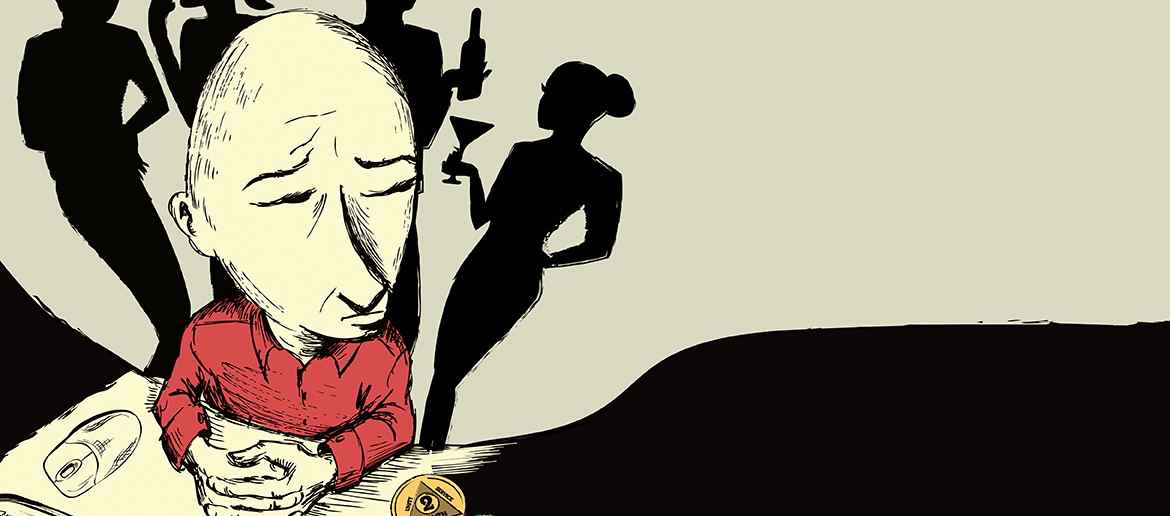
Dr. Julie Colby’s colleague found her unconscious on a table at a Massachusetts hospital in July 2004. The anesthesiologist had self-administered fentanyl — one of the same drugs she used on patients to ease post-surgery pain — which she had been doing until she became addicted to the powerful opioid.

Colby lost her medical license but won a court case in 2013 that expanded rights for workers coming out of substance addiction rehabilitation. In Colby v. Union Security Insurance Co., the 1st Circuit Court of Appeals in Boston declared that employees who had been in rehabilitation were eligible for long-term disability if they felt their place of employment contributed to their addiction. In Colby’s case, administering fentanyl as an anesthesiologist had led her to self-medicate and become dependent on the narcotic, the court ruled.

Most drug and alcohol addictions can’t be legally blamed on the workplace. That means many employees coming out of rehabilitation will return to work once their program ends. Though crucial for an employee on the road to recovery, going back into the workplace can also be a stressful, difficult process.

“It’s a whole lifestyle change,” said Sally Littell, manager of Back on Track, a Cranberry Township, Pennsylvania-based employee assistance program. “Imagine yourself changing friends, the relationship with your family, where you hang out — it’s everything.”

More than 40 million, or 16 percent of Americans age 12 or older, meet the clinical criteria of having a substance addiction to alcohol, nicotine or other drugs, according to a 2012 report from the National Center on Addiction and Substance Abuse at Columbia University titled “Addiction Medicine: Closing the Gap Between Science and Practice.” However, only 1 in 10 of those addicted to alcohol or non-nicotine drugs receives any kind of treatment.

But the few who do enter rehab also have to deal with the reality of returning from it. Amid the lifestyle changes, the workplace can be among the few stable environments that carry over from before treatment. The human resources department can be a post-rehab employee’s best resource. Being that ally means understanding an employee’s needs, compliance with legalities and developing a cooperative workforce.

You Have the Right to Remain Employed

Workers returning from a substance-abuse program are often unaware of their rights, said Dr. David Sack, president and CEO of Elements Behavioral Health at California’s Promises Treatment Centers. He said HR should educate returning workers on the Americans with Disabilities Act, which covers substance abuse, and what it means for their job security.

Most state and federal laws require employees to be fit for duty before returning to work. As long as their doctors declare them ready for release, they can come back without being questioned by their managers as to where and why they were gone. Employers are also required to comply with any special limitations a health care provider deems necessary for recovery, such as time off for doctor appointments and introductory limits on work hours.

The time to discuss these rights comes hand-in-hand with another post-rehab procedure: a return-to-work meeting. It might sound inviting, but Littell said it can actually be intimidating for everyone involved.

“The HR people are probably as nervous about it as the patient because it’s not something they do all the time,” she said. “Put on a different lens. Pretend the person across the table from you is coming back from a heart attack.”

Composing a Return-to-Work Agreement

Rather than use a cookie-cutter list of restrictions,human resources representatives have to collaborate with an employee and the employee’s health care provider or rehab center to tailor a return-to-work agreement that focuses on the worker’s post-rehabilitation. JonathanSegal, a partner with law firm Duane Morris, said these are pivotal questions to ask when composing the agreement:

1. Are there any restrictions that apply when the employee returns to work?

2. Do you recommend the employee continues treatment? If yes, how long?

3. Do you recommend we monitor the employee’s treatment? If yes, how long?

4. Do you recommend there be periodic testing? If yes, how often and how long?

5. Do you recommend the person should be required to refrain from any use of alcohol or drugs, even off-duty?

—Kate Everson

Littell said this change in mindset makes it easier to ask questions like “How are you?” “What can we do to make this more comfortable for you?” and “What accommodations do you need us to make?” A free-flowing conversation is pivotal to drawing up a return-to-work agreement, which outlines the rules and parameters that have to be followed by an employee coming back to the office. 

Jonathan Segal, a partner with law firm Duane Morris, said the key is to make sure the return-to-work agreement is individualized and set up primarily by the rehab center. These would outline continued treatment plans, whether an employee will be subject to periodic testing and any restrictions regarding that employee’s return to work, such as how much time the person is allowed to be on the job.

It might also include requirements to refrain from any use of drugs or alcohol, both on-and off-duty — an area of the law that gets complicated, Segal said. The U.S. Equal Employment Opportunity Commission wrote an informal opinion letter in August 2014 saying that restricting a recovering alcoholic worker from drinking subjects that employee to a higher standard than the person’s nonalcoholic peers.

“There is at least one case out there that arguably supports it, but, on the other hand, it seems to ignore the reality that the individual is in a different situation,” Segal said. “To say that someone who is recovering from alcoholism isn’t prohibited from drinking, and then you allow that person to return to work and operate on someone, or operate a forklift, may result in deaths.”

Any employee who comes to work impaired can make a serious mistake that costs the company money or potentially employees’ lives, but someone who has gone through treatment runs the risk of a relapse, he said. Return-to-work agreements act not only as an incentive for employees not to relapse but also a way for companies to discipline workers if they do come to work impaired despite having gone through treatment.

Employees whose addictions have already caused problems on the job might come back on a last-chance agreement, which often requires a lawyer’s services, Segal said. These contracts state that employees have to follow the work rules and perform the essential functions of their position, and another problem related to an employee’s addiction will be met with discipline, which could include termination.

As punitive as such a contract sounds, Littell said it can help an employee continue recovering. People coming out of substance-abuse treatment need every reason they could possibly have not to start using again, and the salary, health benefits and personal dignity that come from a job are three more reasons to maintain sobriety, she said.

The law also comes into play to regulate communication, a difficult task when determining who is privy to the details of an employee’s leave.

“It depends on the culture,” said Lisa Orndorff, manager of employee relations and engagement for the Society for Human Resource Management. “At some places, everyone in the hierarchy wants to know all the ins and outs because they don’t know there are certain restrictions on what they can and need to know. You get to do a little HR lesson with them at that point.”

There are only two things supervisors need to know, Orndorff said: that an employee is out on Family and Medical Leave Act leave and the worker’s anticipated return date. 

Orndorff said SHRM’s policy lets a post-rehabilitation employee know which managers are aware of the worker’s absence under FMLA, which helps calm fears of who knows and how much they know. 

If employees don’t want to share where they’ve been — something they’re not obligated to divulge — HR can help them craft the wording so that their explanation is comfortable for them but doesn’t invite more questions.

“It helps them think through how to answer the question when it comes up, because it will come up,” Sack said. “Maybe they say something like, ‘I don’t want to talk about it, but I’m grateful to be back at work.’ Sometimes you just choose deflection and gratitude, and it’s very hard for other people to take issue with that.”

Managing the Rumor Mill

Confidentiality is legally required, but shrouding a worker’s absence in silence triggers speculation from co-workers, which can turn to suspicion.

“The rumor mill gets started early, and it doesn’t take much to fan that fire,” Orndorff said. It’s up to HR to take the necessary steps to keep human nature from getting in the way of a returning employees’ reintegration into the workplace, she said.

Orndorff has worked with managers at midsize companies to help them stay in tune with what’s being said and felt around the office regarding an employee on leave or newly returned. Supervisors are the ones maintaining communication with employees before, during and after a worker comes back from rehab, and HR can help with that.

Of course, rumors can start up even before an employee leaves for rehab, let alone when that person returns, Orndorff said. Peers are perceptive of each other, and performance issues or behavior based on addiction can raise flags within a department even before a manager notices. The flags won’t be lowered while an employee is gone either.

“Help managers take responsibility for the situation,” she said. “This is not one of those things where if you ignore it, it will go away. Keep an open line of communication.”

But sometimes the best defense comes before there’s even a post-rehab return.

“Most workplaces don’t want to acknowledge that these are issues,” Sack said. “Addictions are the uncle in the attic — they don’t want to acknowledge them because they’re afraid they’ll invite them somehow.”

Instead, HR has the opportunity to spearhead initiatives that teach employees about addictions, regardless of whether there’s an actual case of it at work. He said negative reactions against people who are out for rehab stem from the social prejudice that addiction is a controllable personality flaw rather than an illness.

Sack said hanging these perceptions of addiction starts with education, particularly teaching that addictions are medical disorders with genetic triggers and are treatable.

Online training systems are available that aim to help supervisors become more knowledgeable on substance abuse and ADA rules, Sack said. Focusing on the facts behind addiction can halt rumors and make the work environment a more welcoming place for someone after rehab, he said. Organizations can also include it in their employee handbooks.

Putting the rumor mill and legalities to rest can allow employees to focus more on their contribution to the organization. People battling addiction need little victories as well as big ones to keep them on the road to recovery, Littell said.

But this doesn’t mean treating employees as fragile beings at risk of cracking at a moment’s notice. Tip-toeing around returning employees actually hampers their reintroduction to the workplace. Sack recommended that HR work with management to break the ice by bringing an absent employee up to date on what that person’s missed while gone and educating the worker on any procedural changes that might have occurred.

Eliminating these obstacles from the beginning gets employees in step with their peers, which can improve the morale of a department that’s been one worker short for an extended amount of time — something that can be critical depending on an organization’s culture and interdepartmental relationships, Orndorff said.

If a person is doing good work, they begin to regain confidence, Sack said. If post-rehabilitation employees aren’t performing up to speed, HR can encourage managers to give feedback with the angle of getting them on track faster. It helps the employee know where they stand and keeps supervisors from getting frustrated.

“An HR manager can be very helpful in educating and helping supervisors to make an appropriate plan,” Sack said. “So many problems can be prevented when a supervisor meets with an employee to give feedback. What that does is it ensures an employee that they’re on the right track, that a supervisor cares about them, that their work is respected. And that’s really important.”

Posted on March 23, 2015June 29, 2023

The Dawn of the Great Workplace Era

Much that we hear about the workplace these days is gloomy.

“Why You Hate Work” read the headline of a 2014 New York Times article about the way many employees toil to the point of exhaustion at jobs with little appreciation or meaning but plenty of distractions. Also last year, The Conference Board reported that — for the eighth straight year — less than half of U.S. workers were satisfied with their jobs. And Gallup Inc.’s “2013 State of the Global Workplace” report showed that just 13 percent of employees were engaged at work.

But quietly, amid all the overcast news, a sunnier story is taking shape. A variety of forces are pushing the work world in a better direction. These factors include the rise of balance-minded, meaning-seeking millennials, increased transparency into organizations, and mounting evidence that high-trust cultures lead to better business results. Thanks to these and other positive trends, we’re at the beginning of what my organization, the Great Place to Work Institute, calls the Great Workplace Era. In it, all people can expect to work for an organization where they trust their leaders, enjoy their colleagues and take pride in what they do.

The Great Workplace Era is in keeping with the rise of business sustainability, the emergence of the “purpose economy” and the attention to reciprocity’s role in success — captured by Adam Grant’s best-selling book “Give and Take.” What’s more, signs of this new era’s dawning can be found in many sectors of the economy. Even the hardheaded finance sector is finding a heart, in part because blending head and heart pays off.

Reader Reaction

What area of workforce management is most in need of a reboot and why?

@SelvanMurugan_:
Top management not committing to internal workforce development.

@InjuredFed:
#WorkersComp every dollar spent on benefits is a failure of safety and training programs. Most claims I see are preventable.

Katja Dehn:
The biggest challenge is the fear and lack of digitization.


Join the discussion at tinyurl.com/rebootworkforce or follow us on Twitter @Workforcenews.

Former Citigroup Inc. executive Sallie Krawcheck is now calling on Wall Street to embrace workplace diversity, noting that women are more client-focused. “The financial industry, despite its bad reputation, can do a lot of good in the world. But it has defined itself about money and not about meaning at all,” she said in a recent issue of Fast Company. That issue of the magazine focused on the power of mission-driven companies, and being a great workplace is central to such visionary firms as Google Inc., St. Jude Children’s Research Hospital and Whole Foods Market Inc. 

With companies like these at the vanguard, the Great Workplace Era is taking shape. This happier age, it should be noted, has a hard edge: low-road employers who fail to build a healthy workplace culture will find it increasingly hard to stay in business. But the overall arc is encouraging. Increasingly, workplaces will make the world better by making people’s lives better.

Names and Numbers

To be sure, there are countervailing forces to the Great Workplace Era. Shortsighted investors can oust leaders who push too hard to invest in their people. Economic slowdowns can make it hard to retain the long-term vision that’s needed to build a great workplace. Political and religious conflicts around the world can destroy workplaces and diminish trust in societies overall.

But we see the positive trends outweighing the negatives. And we’re not the only ones with a hopeful assessment. Prominent business leaders at companies such as Daimler Financial Services,  Microsoft Corp. and NetApp agree that a Great Workplace Era is at hand. Among them is Microsoft CEO Satya Nadella. “More than ever before, today’s top talent is not just looking for great work, they’re looking to create a great life and a better world — and their work is part of how they achieve that,” Nadella told us.

Our own data at the Great Place to Work Institute backs up what Nadella and others observe. Our research shows that the best workplaces around the world are getting better. That is, levels of trust, camaraderie and pride are increasing at the best workplaces. In a solid majority of the 50 or so countries where we operate, we see rising scores on the Trust Index, our 58-question employee survey tool that measures the extent to which employees trust their leaders, take pride in their job and enjoy their colleagues. In addition to improvements within countries, we have documented increased improvements at the companies that make up Great Place to Work’s annual World’s Best Multinational Workplaceslist. See “Global Trust” chart, p. 34.

Seven Reasons Trust, Pride and Camaraderie Are on the Rise

We see a combination of factors behind improvements at the best workplaces around the globe:

1. Awareness:There is increased awareness among company leaders globally of the importance of a great, high-trust workplace culture. Trust is top of mind for today’s executives worldwide, according to a 2013 PricewaterhouseCoopers report, which surveyed 1,330 CEOs in 68 countries.

This awareness is taking root in India, among other places. It can be seen in an emerging approach to management that some scholars have called the “India Way.” That “way” includes investing in talent and building a stirring culture, along with creating a strong sense of public mission and national purpose.

2. Evidence:Evidence is mounting that great workplaces lead to better business results. For example, a paper published last year by the European Corporate Governance Institute studied data from 14 countries and concluded that higher levels of employee satisfaction corresponded to stock market outperformance in countries with high levels of labor market flexibility, such as the United States and the United Kingdom.

That research is part of a growing body of evidence that better workplaces produce better results, including improved financial outcomes and increased employee retention. For example, publicly traded companies on the U.S. Best Companies to Work For list have nearly doubled the performance of the stock market overall from 1997 to 2013. And a 2013 report from research and consulting firm Interaction Associates found that “companies adept at practices that reinforce strong leadership, trust and collaboration enjoy better financial performance.”

3. Millennials: The millennial generation is demanding better workplaces. Around the world, the cohort of people in their mid-30s and younger is pushing employers to pay more attention to work-life harmony and social responsibility. A 2013 study from employer branding company Universum found that the top career goal for U.S. undergraduates is work-life balance, followed by job security and then “to feel that I am serving a greater good.”

4. Well-being: The emergence of a “well-being” movement is nudging organizations to improve their cultures. Levels of stress have risen at organizations globally as companies have asked employees to do more with less, and the growing use of mobile devices has led employees to feel pressure to be “always on.” Stanford University professor Jeffrey Pfeffer has estimated that there are more than 120,000 excess deaths annually in the U.S. alone because of unhealthy work environments, which include features such as little control over one’s work, conflicts between work and family, and job insecurity.

Partly in response to stressful work climates, people have placed more value on physical and mental well-being. Great workplaces around the world are embracing this trend. Among the three Trust Index scores that have risen most among the World’s Best Multinational Workplaces is this statement: “People are encouraged to balance their work life and their personal life.”

5. Momentum:Once an organization develops a positive workplace culture, that culture tends to continue getting better. This positive, upward spiral owes both to management and employees. Managers make improvements to the work environment based on measurements of their culture. And employees of great workplaces take increased ownership of their cultures. They participate to advance the organization and feel greater appreciation for their work setting.

6. Innovation:Innovation has come to be the lifeblood for many businesses, especially those operating in global, competitive markets. And innovation success depends crucially on high levels of trust, pride and camaraderie in an organization. Individual employees are more likely to risk sharing novel ideas in a climate in which they feel a measure of security and are proud of what they do. In addition, collaboration, which is increasingly central to effective innovation efforts, is fueled by friendships among co-workers.

Workforce editor Rick Bell talks to global PR firm Weber Shandwick’s CEO Andy Polansky about his company’s new study, “The CEO Reputation Premium.”

7. Transparency:Technologies such as social media and mobile, personal devices that can easily record images and audio are providing unprecedented transparency into organizations. So is the pressure put on organizations to disclose information related to labor relations and environmental impact. The result is that the sunlight of transparency is exposing and punishing less-than-great organizations and rewarding good ones. The best workplaces around the globe are adapting to and taking advantage of this trend. Another of the three Trust Index scores that have risen most among the World’s Best Multinational Workplaces is this statement: “Management keeps me informed about important issues and changes.”

The Great Workplace Era

The factors above aren’t just pushing the best workplaces to get better — they are affecting all companies. That’s why we believe we are at the beginning of the Great Workplace Era, which represents a more harmonious relationship between shareholders and stakeholders, between managers and employees. But this concept is not just a feel-good dream. It is a hardheaded reality.

Three Keys to a Great Workplace

1. Trust

Trust is developed over time as employees experience leadership through a manager who:

  • Promotes two-way communication.
  • Demonstrates competency.
  • Maintains a clear vision.
  • Matches actions to words.
  • Treats employees with respect and fairness.

2. Pride

In order for employees to feel proud of their work, they must:

  • Believe that the work they do is meaningful.
  • Feel they are making a difference in their organization.
  • Take pleasure in team accomplishments.
  • Believe their organization positively affects their community.

3. Camaraderie

Employees need to feel a real connection with co-workers.
This is accomplished when they can:

  • Be themselves.
  • Experience a sense of fun.
  • Engage with friendly co-workers.
  • Experience a sense of community or family.

—Ed Frauenheim

Companies that embrace the Great Workplace Era will be the ones with the greatest trust in their cultures. These organizations will not only be doing the right thing by employees but also positioning themselves to win in the marketplace. They will see higher engagement scores, which have been linked to better business outcomes. They will see a variety of business benefits, ranging from recruiting advantages to more effective innovation to higher revenue to better stock performance.

We hear lots of excuses for why an organization can’t become a great workplace,but our research suggests that these common objections can be overcome. 

Among the key first steps in the journey to greatness is for leaders to commit themselves to being trustworthy: to living up to their word, to treating staffers with respect and to being even-handed with people. By demonstrating credibility, respect and fairness, leaders will do right by their employees, managers and shareholders — and get on the right side of history.

Another CEO who sees the Great Workplace Era on the horizon is Terri Kelly of W.L. Gore & Associates, the maker of Gore-Tex fabric and many other high-tech products. “Our founders explicitly believed that our company was created to make the world a better place, not only by building great products that enhance lives, but by building an organization that makes our associates’ lives and communities better,” she said.

Plenty of organizations are not great workplaces, but we are confident the workplace weather is changing; powerful forces are propelling all companies to become better workplaces.

Ed Frauenheim, a former Workforce senior editor, is the director of global research and content at the Great Place to Work Institute. Comment below or email editors@workforce.com. Follow Workforce on Twitter at @workforcenews.

Posted on March 4, 2015June 19, 2018

What to Do When OSHA Comes Knocking

News broke over the weekend of a fatality at a local manufacturing plant. Undoubtedly, the Occupation Safefty and Health Administration was on the scene to unravel what happened.

Injuries or fatalities aren't the only reasons OSHA might arrive at your door. It might have received a complaint from a current or former employee. It might a random investigation. You might be part of a targeted industry. Or, it could be a follow-up from a prior investigation.

Regardless, when OSHA arrives, whatever the reason, your personnel needs to know that the first call should be to your employment lawyer. Unless the investigator has a search warrant or subpoena, he or she has no right to enter your business, no matter what he or she says to bully through your door.

OSHA is not your friend. It is not there to give you an atta-boy on workplace safety. It is there to find violations and levy fines to make money for OSHA. This is not cynicism; this is fact. And once it is through your door, everything becomes fair game, no matter the reason for the investigation.

OSHA's fines range from a maximum of $7,000 for each serious violation, and a maximum of $70,000 for each willful or repeat violation. Trust me, these numbers add up quickly.

What is OSHA looking for? Here is the agency's Top 10 list, right from its website:

  1. Fall Protection
  2. Hazard Communication
  3. Scaffolding
  4. Respiratory Protection
  5. Lockout/Tagout
  6. Powered Industrial Trucks
  7. Electrical – Wiring Methods
  8. Ladders in Construction
  9. Machine Guarding
  10. Electrical – General Requirements

If you are fortunate enough not to have OSHA in your facility, use the time to conduct a top-to-bottom safety audit. Call a workplace safety expert. Call an employment lawyer. Call someone knowledgable in this area to tell you what needs to be fixed before OSHA does it for you. And, if (when?) OSHA shows up at your door, call your employment lawyer to handle the investigation, mitigate the disruption, and, as best as possible, limit damage.

Posted on January 27, 2015July 31, 2018

Women in Management: Ceiling Is Believing

Female managers’ long march to corporate America’s corner offices has led to a record 26 female CEOs at Fortune 500 companies.

Danielle Weinblatt’s experience as a CEO, however, shows how much further women have to go to attain parity with men in the executive suite.

Weinblatt, 31, dropped out of Harvard Business School three years ago to start a human resources tech company called Take the Interview. Since then, she’s raised $6 million in venture financing, and was named a 2014 Workforce Game Changer. Yet when she attended an investor’s annual meeting last November, she was mistaken for an executive assistant. “One limited partner asked me where the name tags were,” Weinblatt said. Another wanted to know when refreshments would be served. “Stuff like that happens all the time.”

Closing the Gap

At Hyatt Hotels Corp., makeup mirrors matter. So do robes, menus and gift shop items sold in the company’s 573 properties worldwide.

Women account for more than 80 percent of overall travel decisions, so the $4.2 billion Chicago-based hotelier is paying closer attention to amenities they prefer, down to the type of makeup mirrors in guest bathrooms.

For help, Hyatt is turning to its female employees, who make up half its 95,000-person workforce. Hyatt isn’t merely relying on female employees’ feedback. The company is embarking on a multiyear mission to give women parity with men at all levels, including upper management.

Some changes have already taken place. In 2014, Hyatt added a second woman to its 12-member board. The company also is assigning more women to executive posts at regional offices in parts of the world like Asia, where male executives are still the norm.

Hyatt plans to spend the next two years making changes to help propel more women into upper management. To prepare, the company is reviewing hiring and other personnel management practices, and partnering with outside consultants to review things like flex-time and family leave policies, according to company executives.

Hyatt is also expanding a Women@Hyatt employee program. Since it started in 2012, the internal networking group has grown to 27 chapters, which host speakers and give women the opportunity “to connect with women in more senior roles,” said Nikki Massey, Hyatt’s director of learning and development.

In late 2014, Hyatt hired veteran diversity and inclusion specialist Tyronne Stoudemire to help more women move from middle management to top positions. Stoudemire declined to share what percentage of women hold executive positions at the hospitality giant today. However, at Mercer he consulted on a similar initiative at Kimberly-Clark Corp., which saw the number of women in director roles or above increase from 19 percent to 26 in four years. “I don’t think it’ll take us four years to get there,” he said.

—Michelle V. Rafter

Women have worked alongside men in increasing numbers since the feminist movement of the 1960s and 1970s and today account for more than 40 percent of the workforce worldwide. Some studies have shown that companies with more gender parity in top management roles do better financially.

As Weinblatt’s experience shows, however, old attitudes toward who should run companies continue to plague women with aspiration of making it to upper management. The glass ceiling that stopped women from ascending to top management jobs at the same pace as men for so long is sporting some enormous cracks. But it’s still there, held in place by attitudes as well as stagnant hiring practices and lack of effective efforts inside institutions to change the status quo.

The rise of CEOs such as Mary Barra at General Motors Co., Marissa Mayer at Yahoo Inc., Ginni Rometty at IBM Corp. and Indra Nooyi at PepsiCo Inc. proves the corner office isn’t the old boys club it once was.

Neither are corporate boards. For the first time, more than half of 4,000 corporations worldwide reported boards with 10 percent or more female members, according to an October report by Reuters.

In government, the 114th Congress seated 104 women, including a record 84 in the House of Representatives. Hillary Rodham Clinton is being mentioned as a potential front-runner in the 2016 presidential elections. In 2014, President Barack Obama tapped women to head the U.S. Postal Service and U.S.  Technology Office.

Some companies are rebuilding their workforces to be more gender diverse, including promoting more women into middle- and upper-management positions — in some cases to appeal to their largely female customer base and improve financial results.

Kimberly-Clark Corp., for example, remade its workforceto more closely resemble its predominately female customers, and as a result, increased the number ofinternal promotions of women to director level or above from 19 percent in 2009 to 44 percent in 2013. A globalinitiative that McDonald’s Corp. launched in 2006 to help women rise through the fast-food chain’s ranks saw the number of female general managers in the United States jump from 13 percent to 38 in four years. In fall 2014, Hyatt Hotels Corp. hired veteran diversity and inclusion specialist Tyronne Stoudemire to spearhead the hospitality giant’s efforts to help women in the management pipeline overcome obstacles that have kept more of them from reaching hotel general manager and other top positions (See “Closing the Gap,” page 48).

“We’re at a tipping point now in the workplace in general,” said Stoudemire, previously a diversity and inclusion consultant at Mercer. “You have more women in the workplace. They’re holding more degrees than any other demographic. Women anchor the community. So if we’re making a difference with diversity and inclusion, it will be with women across the board.”

Inequalities Linger

For all the progress that’s been made, male CEOs and board members still vastly outnumber women. The disconnect exists even in traditionally female-dominated fields. In human resources, for example, close to 7 in 10 rank-and-file HR roles are filled by women, according to HR industry surveys. By comparison, “some paltry percentage” of chief human resources officers in the large employer category are female, according to China Gorman, CEO of Great Place to Work Institute and former chief operating officer of the Society for Human Resource Management.

Helping Women Get Ahead


According to Mercer’s first-ever corporate gender diversity survey — “When Women Thrive, Businesses Thrive,” released in November 2014 — womenare better able to rise through the ranks and earn closer to what their male counterparts make when companies do the following:

• Take an enterprisewide approach to supporting female talent rather than relying on discrete programs or initiatives, which may actually slow down progress.

•Get company leaders activelyinvolved in diversity programs.

• Actively manage pay equity vs. making a passive commitment.

• Give women and men direct profit and loss responsibilities.

• Go beyond implementing traditional leave and flexibility programs to offer more proactive career management, such as coaching.

• Create health and retirement programs that cater to women’s unique needs.

• Recognize the different strengths of female and male managers as equallyimportant to success.

Source: Mercer

“There are some really powerful and fantastic female CHROs all over the world whose organizations are doing some extraordinary things,” Gorman said. “And there aren’t enough of them.”

Top male executives continue to earn more. A dispute over pay inequity was reportedly one of several reasons that led to Jill Abramson’s exit as executive editor ofThe New York Times in the spring of 2014. Sony Pictures Entertainment confidential personnel data leaked by hackers in December revealed that of 17 company executives withannual salaries of more than $1 million, only one was a woman: co-chair Amy Pascal, head of Sony’s movie business.

Because the conversation has gone on so long and some progress has been made, it’s easy to think the imbalance has disappeared. “But of course it hasn’t,” said Davia Temin, a reputation and crisis management consultant and adviser to nearly 20 male and female CEOs. “When you look at statistics and see the numbers at the highest levels of corporations, although they’ve improved, they’re not that improved,” Temin said. “While we are making more strides with corporate boards, we’re not making that many strides in the executive ranks or operational teams.”

A Mercer gender diversity survey published in late 2014 bears that out. Despite being 41 percent of the global workforce, women account for only 19 percent of executives, 26 percent of senior managers and 36 percent of managers, according to the report. To reach those conclusions, Mercer looked at workforce data from more than 1.7 million employees in 28 countries, including more than 680,000 women.

The numbers are slightly better at U.S. companies identified as the country’s best workplaces. At companies on Great Place to Work’s 100 Best Companies lists from 2011 to 2014, women made up 31 percent of executives and senior managers, and 45 percent of managers and supervisors.

Making Diversity Part of the Culture

Unless companies substantially change their diversity efforts, the number of women in executive roles at North American companies overall is expected to stay relatively flat over the next decade, inching to 26 percent in 2024 from 24 percent today, according to Mercer.

Senior leaders continue to be most comfortable hiring direct reports who look like them, and because most CEOs are still white males, that method of hiring perpetuates the demographic’s hold on top positions, Gorman said. The dynamic should change as baby boomer-era executives age out of the C-suite and are replaced by Gen X and millennial CEOs who grew up in a world that puts a higher  value on diversity. “There will still be a bias toward hiring people they’re comfortable with, but it won’t be people who look just like them,” she said.

Some organizations aren’t waiting for the next generation to make changes. Companies such as Kimberly-Clark Corp. and McDonald’s Corp. that have placed more women in top executive positions have woven diversity into their corporate culture, said Julie Nugent, a vice president at Catalyst Inc., a consulting firm that studies women in management. “If diversity and inclusion are a business imperative, that’s critical, and allows companies to make progress.”

Companies where women have made big strides toward getting into upper-level management have visible buy-in from senior executives, talent management programs that recruit and promote high-value female candidates and employees, strong mentor programs and “robust” succession planning, Nugent said.

In addition to those types of programs, Kimberly-Clark also sends promising female — and male — managers on three- to six-month international assignments, the type of posts that Nugent said help middle managers rise to the next level.

As a result of the strategy, Kimberly-Clark’s promotions of women to director-level or higher positions rose from 19 percent to 26 in the four years ending in 2013. The improvement led Nugent’s organization to give the consumer goods-maker its annual Catalyst prize in 2014 for expanding management opportunities for women.

The motivation to bring more women into executive positions isn’t altruistic — it’s about the bottom line.

“We knew to win the marketplace and achieve the business results our shareholders deserve, we needed to transform the organization,” said Sue Dodsworth, Kimberly-Clark’s chief diversity officer, in a company video about the initiative, called “Unleash Your Power: Strengthening the Business With Women Leaders.”

Kimberly-Clark and other companies that cultivate a more diverse workforce have lower employee turnover as well as stronger financial results, according to Great Place to Work’s data on top workplaces. Publicly traded companies on Great Place to Work’s annual 100 Best Companies  list consistently outperform major stock indices by a factor of two, according to the consulting firm. Top companies also typically have as much as 65 percent less voluntary turnover than their competitors, which saves on recruiting and training costs, according to the firm.

Diversity programs aimed at closing the management gender gap won’t work, though, if they’re viewed as remedial, said Temin, founder of New York-based Temin and Co. “The level of women who come through a program has to be high,” she said. “If it’s seen as remedial, it doesn’t get respect. If it’s seen as a high-potential training program, it does get that respect.”

READER REACTION

Is there still a glass ceiling in 2015 or is it a thing of the past?


@CindyLauEvans:
Still there but w/cracks.

@PaySavvy:
It depends what industry you work in. But for the most part, we think it has become a thing of the past.

Jenise Fuson:
Yes, glass ceilings still exist — although it seems to be more “in force” in certain industries.

What do you think? Join the discussion at tinyurl.com/HRglassceiling or follow us on Twitter @Workforcenews.

Some industries have better track records of promoting women into top positions than others. At health care companies on Great Place to Work’s 2014 list of top large workplaces, women account for 74 percent of the workforce, 70 percent of managers and supervisors, and 43 percent of executives or senior managers. Health care organizations faced with a dearth of available outside talent have had to look inside their own organizations for management candidates, which could explain the higher than average percentage of women in top roles, Gorman said.

Professional services firms, including accounting and financial services companies, are also advancing more women into management roles. Women at professional services firms on Great Place to Work’s large workplaces list make up 47 percent of all employees, 49 percent of managers and supervisors and 39 percent of executives or senior managers. “That’s not accidental; it’s very intentional,” Gorman said. “It’s both creating a culture where we give everyone opportunity and creating special programs to help underserved parts of their population.”

Tech’s Problem With Women

While many industries are figuring out how to add women in middle- and upper-management roles, the tech field is struggling. Women at all levels, including executives, are more likely to leave tech-intensive industries for a variety of reasons, including lack of role models, said Catalyst’s Nugent. According to Catalyst’s research, a disproportionate percentage — 73 percent — of women say they feel like an outsider in the tech space, she said. “It can make it more challenging in some ways to even want to stay in the field,” she said.

Because so many startups are tech-related,it shouldn’t be a surprise thatfemale-run businesses account for a fraction of venture-based businesses. From 2011 to 2013, only 2.7 percent of 6,517 companies that received venture capital financing had a female CEO, according to a 2014 Babson College report on women entrepreneurs.

Small wonder Take the Interview’s Weinblatt was mistaken for a secretary. Weinblatt brushes it off, though, and agrees that the millennial generation she’s part of is more accepting of meritocracy and diversity than older generations, something she says will help more female founders and CEOs.

On top of that, younger women executives have role models such as Lean In movement leader and Facebook Inc. Chief Operating Officer Sheryl Sandberg and Yahoo’s Mayer to look up to, Weinblatt says. “Women are being more assertive,” she said.

Posted on January 26, 2015June 19, 2018

How Do We Engage Different Age Groups?

Dear One Size Doesn't Fit,

Ah, the old generational debate! Engaging a multigenerational workforce may seem like organizing a big family reunion and wondering, “How are we going to make sure both granddad and junior enjoy the party — their tastes are so different!”

But this is the world of work, not a holiday shindig. Gen Y, Gen X and the baby boomers are not three layers in an emulsion — touching yet clearly distinct. They blend, and more than you would expect.

Your first step is to ask yourself, “Well, what is ‘engagement’ anyway?” It is important that your definition balances and aligns the needs of individuals with what the organization is trying to archive. At BlessingWhite, we define engagement as the intersection of maximum satisfaction (the individual is meeting his or her work-life goals) and maximum contribution (the individual contributes strongly to the outcomes the organization expects).

We have spent four decades studying this dynamic. No matter the age of an employee, the top two drivers of engagement tend to be:

Contribution:

  • Greater clarity about what the organization needs me to do — and why
  • Regular, specific feedback about how I am doing
  • Development opportunities and training

Satisfaction:

  • More opportunities to do what I do best
  • Career development opportunities and training
  • More flexible job conditions

Now, do we see differences in these drivers between generations? Sure we do. But looking at this data over 40 years tells us that it is less related to the generational divide, and more related to one’s life-stage. For example, when considering their next role: Millennials place relatively more importance on financial rewards — they are young, need disposable income and are just working their way up the pay grade. Generation X places relatively more importance on work-life balance — they have young families and/or elderly parents, and have been burning the midnight oil juggling responsibilities. Baby boomers put a bit more emphasis on meaningful work — they need to feel that what they invest their time into makes a difference to others.

While these aggregate statements make sense, we find more exceptions to this rule than normality. If you coach and engage workers based on generational stereotypes, you will probably go wrong more than half the time.

Our recommendation to appeal to each generation is:

  • Revisit your definition of engagement because engagement is an individualized equation. Treat individuals as such, not as generational stereotypes.
  • Make sure managers are equipped to hold individual engagement conversations to better understand what makes each team member tick. Then, work together to align individual interests, skills and career goals to what the team has to accomplish.
  • Emphasize that individuals have an important role to play — engagement is not something the company does to the employees.
  • Acknowledge and address the issue of trust in your culture.
  • Place focus on the issue of career – this is where future job fit comes in and is a top driver of engagement.
  • Appropriately recognize strong performance.

SOURCE: Fraser Marlow, BlessingWhite Inc., Skillman, New Jersey.

Posted on January 23, 2015July 31, 2018

White People and Political Correctness

The first thing I want you to know is that this page has nothing to do with what you might expect to find based on the title.

It’s obvious that white people should think twice before commenting on a lot of things because it puts you in a no-win situation. Don’t get me wrong; I’m not suggesting that being white is a burden, but I am suggesting that as a white person, you might have something to add to the dialogue on race. But based on the audience, your personal delivery skills and a million other factors, it might go horribly wrong.

So most balanced white people do the smart thing. They shut up, especially at work. 

Because this is a column about work, it makes sense to talk about it here.

The white people with the most interesting things to say in any situation involving race are the ones who shut up. Think about it: The bigots generally are the ones who are the most vocal and disruptive. The white folks who generally are wrestling with it all and really trying to get to the right place on any item involving race? You won’t hear from them.

Here’s another reason smart white people are conditioned to shut up on any item involving race: There’s a whole group of politically correct white people who love to evaluate anything you say and — you guessed it — criticize you for being insensitive at best, racist at worst.

Need an example? I recently used the word “kemosabe” in a blog post. 

Now, my use of kemosabe wasn’t guided by any background in Native American history or a love for the “Lone Ranger” series. It was driven by the way I’ve heard references to the way the always goofy Matthew McConaughey talks (alright, alright, alright).

But as you might expect, I got comments on the post that basically said I was being racist by using the term. Although a definitive meaning is elusive, subsequent research on the word “kemosabe” indicated it might mean “friend” or “trusty scout” or even “one who is white.”

Sorry about calling you white. My bad.

Further research into the commenter to my blog indicated she is a self-proclaimed expert on diversity and, yes, while she has not completed a self-ID form, whiter thanpost-rehab Courtney Love at a legal hearing. She felt compelled to wag the finger at me for my use of a word she tied to the Native American culture without doing the research.

The point? The more the politically correct segment of Americans chooses to wag the finger and call reasonable people insensitive or racist rather than engage in meaningful conversation, the more the majority — white people — avoids dialogue on all these topics.

Look around your workplace and it’s everywhere. People of different races refusing to discuss current events because they’re not sure of the ground rules.  Fewer conversations among reasonable people lead to feelings that certain individuals are aloof or worse.

That lack of communication spills over into quality of work. Conversations about news and world events are just practice for the conversations that really matter — the ones that are work-related and determine whether your company succeeds or fails.

If I wasn’t willing to share my feelings with you on what’s going on in the news, why would I risk giving you feedback on your communication style witha customer?

I wouldn’t. Trust is built by discussing things outside of our comfort zones and finding commonality where we thought none existed.

Finally, if you really dig into your company’s communication style, you’ll find that your manager’s ability to drive performance is hamstrung by the same phenomenon. Is a tough conversation needed to give a direct report the chance to succeed? Most managers will pass on that. Too risky.  

We think we’re doing the right thing by forcing political correctness in corporate America. We’re actually doing theexact opposite, lowering the probability that employees and managers alike give feedback that drives performance, engagement and a general sense of team.

That’s bad for America, and it’s bad for your workplace. 

Kris Dunn, the chief human resources officer at Kinetix, is a Workforce contributing editor. To comment, email editors@workforce.com.

Posted on January 9, 2015June 19, 2018

Team Management: Seahawks vs. Ducks?

I know that the NFL’s Seattle Seahawks and the University of Oregon’s Ducks will never, ever, ever face each other on the football field.

Pros vs. college. Gerald Ford was still our president the last time you saw that. The Pittsburgh Steelers, not surprisingly, trounced a collection of college all-stars, 24-0, in the long-defunct Chicago Charities College All-Star Game.

But the Wall Street Journal had an intriguing pro-vs.-college matchup on the back page of its Jan. 8 Personal Journal section. The pair of stories – one on the Seahawks, the other on my team, the Fighting Ducks — analyzed the style of coaching and how players for both teams interact with each other. The first piece — headlined “Why the Seahawks Like Confrontation” was mirrored by “… And the Oregon Ducks Prefer to Avoid It.”

But both teams have playoff games coming up. The Seahawks are home against the Carolina Panthers in the divisional playoffs while the Ducks and the Ohio State Buckeyes tangle for college’s national championship. And, it’s likely you’ll hear a lot about their styles.

The defending champion Seahawks are a deeply emotional team. As the story notes, “This is perhaps the most emotionally healthy locker room in the NFL.” Why?

As safety Kam Chancellor is quoted: “We are a bunch of alpha males who see each other every day, when there is adversity, whoever sees a mistake, they say something about it.”

That level of honesty and communication among players helped the team through some rough patches during the season and has them flying high — they’re Seahawks, after all — and primed to win it all again.

The Ducks are flying high, too, and primed to win their first-ever national championship. But Oregon coaches, as the story says, don’t believe in yelling at players to motivate them.

“Rather than scream at a player over a dropped pass or a key penalty, Oregon coaches rarely react with anything more than an arm around the shoulder and some gentle words of encouragement,” the story notes.

The Ducks also employ a sort-of horizontal management style among coaches and players. Sure, they’re headed by Mark Helfrich, offensive coordinator Scott Frost and defensive coordinator Don Pellum, but, as the story says, “Instead of a chain of command with the head coach at the top, Oregon’s coaches, players and administrators are viewed as equals and collaborators. ‘Every single member of this team is seen as a leader in their own way,’ said center Hroniss Grasu.”

There’s also the whole philosophy of communicating with the millennial generation — and you could argue that some of these players belong to Generation Z, depending on your Gen Y time line. As many workplaces grapple with how to connect with its younger workers, the Ducks’ coaches have discovered that discipline and screaming aren’t synonymous with one another on the football field.

Though led by the always rah-rah “win forever” head coach Pete Carroll, it’s the Seahawks players, led by Chancellor and cornerback Richard Sherman among others, who largely police and discipline themselves.

Contrasting styles of personnel management coming from the Great Northwest. I’ve got the pizza place on speed dial; I’m not going anywhere until they’re over.

Posts navigation

Previous page Page 1 … Page 26 Page 27 Page 28 … Page 53 Next page


Webinars


White Papers


  • Topics

    • Benefits
    • Compensation
    • HR Administration
    • Legal
    • Recruitment
    • Staffing Management
    • Training
    • Technology
    • Workplace Culture
  • Resources

    • Subscribe
    • Current Issue
    • Email Sign Up
    • Contribute
    • Research
    • Awards
    • White Papers
  • Events

    • Upcoming Events
    • Webinars
    • Spotlight Webinars
    • Speakers Bureau
    • Custom Events
  • Follow Us

    • LinkedIn
    • Twitter
    • Facebook
    • YouTube
    • RSS
  • Advertise

    • Editorial Calendar
    • Media Kit
    • Contact a Strategy Consultant
    • Vendor Directory
  • About Us

    • Our Company
    • Our Team
    • Press
    • Contact Us
    • Privacy Policy
    • Terms Of Use
Proudly powered by WordPress