
Skip to content

Workforce

Category: Workplace Culture

Posted on February 9, 2014June 20, 2018

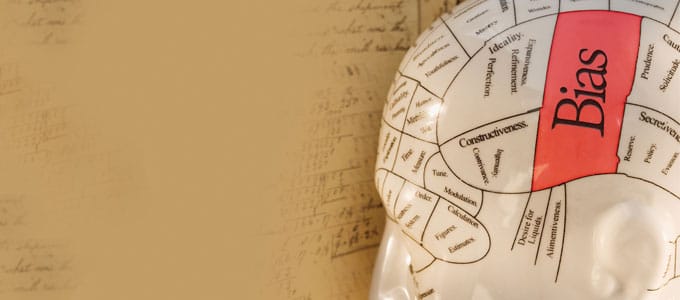
You, Biased? No, It’s Your Brain

Walk into the buff-brick building in New York’s Greenwich Village, ride an elevator to the seventh floor and you’ll enter a neuroscience lab, where scientists study brain processes linked to biases.

Past a waiting area are two rooms: one filled with caps studded with electrodes and black faux leather chairs facing computer monitors, the other with devices to monitor physiological responses.

Inside these two rooms, David Amodio has spent the past eight years at New York University using electroencephalograms, or EEGs, functional magnetic resonance imaging, or fMRI, and other tests tracking brain functions and searching for clues to curb discrimination.

Research by Amodio and a cadre of other scientists during the past decade points to a troubling fact: Eliminating bias is far more difficult than once thought.

“Bias is a real problem,” said David Rock, director of the NeuroLeadership Institute, an international research association not affiliated with NYU. “It’s much bigger than we realized, and educating people doesn’t seem to do very much.”

‘We’re all fairly equally exposed to these pervasive messages about who is most fit to do science. Those stereotypes are very robust. When we imagine a scientist, we imagine a man.’

— Corinne Moss-Racusin, assistant professor of psychology, Skidmore College

Modern bias isn’t the domain of a few bad apples driven by animosity or hate, experts say. It plagues everyone and infects behavior without people consciously knowing it. As science has shed light on automatic biases, employers have introduced training methods to raise awareness of unconscious attitudes and ways to mitigate them.

“In terms of trying to get under the surface — kind of like popping open the hood of your car to see how it actually works — neuroscience has been able to shed light on more specific mechanisms,” Amodio said. “While many people are interested in developing interventions to reduce bias, in order to do that, it’s critical that people understand the underlying processes that give way to bias.”

Unconscious Bias

Since the 1980s, numerous studies have shown that people can act in biased ways despite explicitly believing that prejudice and discrimination are wrong. This dichotomy comes from what social psychologists call implicit — unconscious — biases, the result of pervasive messages that perpetuate stereotypes.

Implicit bias likely is a reason why progress has been slow across sectors and institutions, said Corinne Moss-Racusin, an assistant professor of psychology at Skidmore College in Saratoga Springs, New York.

For example, corporate boards in America remain overwhelmingly the bastions of men, and fewer than 6 percent of executives are people of color.

“When we look at the numbers of women and people of color who are represented in all sorts of institutions — from our academic institutions to the political forum to the corporate workplace — diversity has increased,” Moss-Racusin said. “But it has increased very slowly. And there are still some stark disparities in areas where we have not been able to make the sort of improvements we might have thought would be possible.”

What implicit bias suggests: Racism, sexism and homophobia come from people who are not racist, sexist or homophobic.

A 2012 study explored the hiring decisions of biology, chemistry and physics faculty members — professions that pride themselves on objectivity. They were given applications identical in every way except for the applicant’s sex. The professors favored the male job applicant “John” over the female job applicant “Jennifer.” They rated him as more competent, offered him more mentoring and selected a higher starting salary for John. 

Young and old, male and female faculty members reached similar conclusions.

“We’re all fairly equally exposed to these pervasive messages about who is most fit to do science,” says Moss-Racusin, who led the research. “Those stereotypes are very robust. When we imagine a scientist, we imagine a man.”

The concept of implicit bias hit the mainstream in 1998 when an unconscious-bias assessment went online. Since then, more than 6 million people have taken the Implicit Association Test, the result of a collaboration among psychologists at Harvard University, the University of Virginia and the University of Washington.

Its goal: to create awareness about unconscious biases in self-professed egalitarians.

The test gauges unconscious prejudice by measuring the speed of making associations. For example, the test can measure how quickly someone pairs a white face with a positive term and then compare it with how quickly that person pairs a black face with a positive term.

Now neuroscience proves that people weren’t falsely claiming to believe in equality. Instead, neuroimaging shows that decision-making automatically triggers specific regions of the brain responsible for unconscious processing, including those measured by the Implicit Association Test.

Insights about which regions are activated could help scientists understand how biased associations are learned and how to counter them.

The amygdala, an almond-shaped set of neurons deep in the temporal lobe, has emerged as a key region in bias research. It is the part of the brain that reacts to fear and threat. Scientists have found a correlation between amygdala activity and implicit racial bias.

The amygdala isn’t the only part of the brain involved in unconscious bias.

Amodio and his colleagues also have found implicit stereotyping associated with the left temporal and frontal lobes. The left temporal lobe is important for storing general information about people and objects, and Amodio said this seems to be an important place for social stereotypes. The medial frontal cortex is important for forming impressions of others, empathy and various forms of reasoning.

And a 2012 study by Columbia University psychologists G. Elliott Wimmer and Daphna Shohamy found that the hippocampus, which forms links between memories such as dates and facts, also subconsciously steers people toward choosing one option over another.

The implications of widespread automatic biases have begun to change diversity programs within corporate America.

At Chubb Corp., it began with a few phone calls. The property and casualty insurer, which has earned praise for its inclusive culture, began receiving calls from managers. They had completed training about microinequities, the small messages that discount talented employees who are perceived as different.

They said, “ ‘You haven’t dealt with the elephant in the room,’ ” recalled Sabrina McCoy, assistant vice president and diversity manager.

The “elephant” was bias. They wondered if unconscious bias could explain why some people weren’t as far along in their careers as expected, McCoy said.

They turned to Mahzarin Banaji, a social psychologist at Harvard University who uses fMRIs to study social attitudes and beliefs and is one of the creators of the Implicit Association Test. Banaji spoke to Chubb’s senior leaders, and explained unconscious bias from a scientific point of view.

“It takes the judgment off the table,” McCoy said.

The executives found it so valuable that they had all U.S. managers learn core concepts and go through scenarios such as avoiding unconscious bias when reviewing résumés, said Trevor Gandy, Chubb’s senior vice president and chief diversity officer. The company hopes to cascade training to all employees in the coming year.

For now, Chubb considers the metrics to be how many people have been introduced to the idea of unconscious bias with the expectation that they apply their awareness.

“We know that providing the training and awareness is certainly the first strong step for us,” Gandy said.

Banaji said her goal is to educate people about basic forms of bias that may hinder their judgment.

“I regard awareness to be a singularly important experience because the problem lies in the lack of awareness,” Banaji said in an email.  “When good people discover their blind spots, they are inherently motivated to wish to change. I try to make use of that motive to do good and take it one step further — to ask about the extent to which people are willing to doubt their own intuitions.”

PricewaterhouseCoopers also turned to Harvard’s Banaji. The accounting and professional-services firm hopes to accelerate the diversity of its leadership, said Jennifer Allyn, the firm’s managing director of diversity.

Banaji spoke to the top 100 partners of the firm and challenged them to think about some unconscious assumptions made when they say “so and so is not ready yet,” Allyn said.

“It’s something common that people say,” Allyn said. “It’s also a real phenomenon. An individual might not be ready for a particular role.”

‘Mind Bugs’

Before There Was Bird Brain, There Was Lizard Brain

The term “lizard brain” has become pop-culture shorthand for unconscious habits and other instincts that once served humans well, but today may cause problems in the workplace.

“It’s a pop term,” said David Rock, director of the NeuroLeadership Institute.

And it’s popping up in blogs, books and TED talk videos.

The “lizard brain” can cause problems in the workplace, said Terence Burnham, a business professor at Chapman University and author of the book “Mean Markets and Lizard Brains.”

Take email. Humans have good instincts for working face-to-face, Burnham said. But much of business relies on email. There is no reason to believe that a person will know instinctively how to deal with email. People need to create systems to succeed.

The lizard brain also may let people get fooled by others who they see only a few times, Burnham said. In ancestral settings, people knew everything about everyone else. Mistaken assumptions based on initial interactions became corrected over time. But in the business world, mistaken assumptions can lead to long-lasting commitments. The lizard brain wasn’t designed for slick salesmen rewarded for posturing and burnishing the right image, he said.

Despite books devoted to taming the lizard brain, the phrase itself rests on a fallacy.

Dr. Paul D. MacLean, a researcher at Yale Medical School in the 1950s, developed a theory that the brain has three layers: the limbic, the neocortex and the reptilian complexes.The reptilian complex includes the basal ganglia, which plays a key role in forming habits.

MacLean and other scientists of his era thought that the forebrains of reptiles consisted mostly of basal ganglia, a notion later found to be false. In fact, the reptile complex predates reptiles — with some parts traced back to jawless fish.

Some contemporary authors even use “lizard brain” to refer to fear controlled by the amygdala, which isn’t even part of the reptilian complex. It’s in the limbic.

But the term lives on, and it represents the misguided instincts of humans.

“Your lizard brain is here to stay,” wrote marketing guru Seth Godin on his blog, “and your job is to figure out how to quiet it and ignore it.”

—Todd Henneman

They considered “mind bugs,” as Banaji calls them, such as the prototype bias, occupation-specific stereotypes for particular job functions.

After Banaji’s three-hour session, one senior leader told Allyn that he had prided himself on being able to sum up someone in five minutes.

“That’s my talent as a leader,” the partner told Allyn. “After this session, I’m not going to say that anymore because the things that I’m basing that immediate impression on are all subjective and all open to bias.”

Another partner began printing the list of her entire team before selecting someone for a special assignment, as a way to safeguard against picking someone who may be top of mind simply because that person is similar to her or works nearby.

Tony Greenwald, however, is skeptical if training can eradicate implicit biases.

Greenwald, co-author with Banaji of the 2013 book “Blindspot: Hidden Biases of Good People,” said training can be useful in making executives aware of ways in which they or their organizations might be discriminating, even with no intent to discriminate.

“Blinding” strategies — hiding information such as a candidate’s gender — work well, as do evidence-based guidelines for making judgments, he said.

But he cautions that Project Implicit, the collaboration behind the Implicit Association Test and of which he is part, can’t claim yet to have “satisfactory validated evidence of efficacy” in producing change.

Andrés Tapia, a senior partner in Korn Ferry’s leadership and talent consulting division, said unconscious bias lacks good answers for how to reverse it.

Tapia suggests a three-step approach: Learn about unconscious bias, build skills around cultural dexterity, and then use these insights to create a “third culture,” which draws upon the strengths of people’s cultural differences.

“Awareness and the ‘a-ha!’ moment can happen in 60 seconds,” Tapia said. “The work of building the skills to mitigate that is a lot more heavy lifting, but that’s where the payoff is.”

Neuroscience continues to provide clues.

The NeuroLeadership Institute has spent the past 12 months looking at how to mitigate bias by categorizing them neurologically, said Rock, the institute’s CEO.

Some biases result from cognitive laziness: accepting the easiest answer, he said. Picking someone for a team because you frequently work with that person would be an example of cognitive laziness. Rock said he believes that rewarding people for identifying errors in their thinking will motivate them to avoid these biases.

Rock has developed a three-part strategy: accept that individuals and systems are intrinsically biased, label the type of bias likely to happen, and develop a plan to mitigate it. He still is identifying the categories of biases, but he hopes to test the three-part strategy in companies during 2014.

It may be tough to unlearn unconscious biases, said Amodio, an associate professor of psychology and neuroscience. His research into the amygdala suggests that part of implicit bias involves classical fear conditioning, a process in which something neutral elicits fear because we have learned to associate it with something bad.

“That suggests that implicit prejudices are learned quickly and they may be indelible,” Amodio said. “They may be impossible to completely unlearn.”

It may be more effective to find ways to help people override their implicit prejudices rather than try to undo those automatic biases, he said.

Amodio’s research has found that the brain is well-equipped for controlling unwanted biases — if the person detects their presence.

The anterior cingulate cortex, which plays an important role in cognitive control, can detect the activation of implicit attitudes. This region appears to detect conflicts between a person’s overarching goal — such as being egalitarian — and automatic behaviors that conflict with it — such as prejudiced thoughts or intentions.

The anterior cingulate then signals the dorsolateral frontal cortex, which is involved in making moral decisions, creating the possibility of overriding implicit biases.

“So although biases are sometimes difficult to detect and override,” Amodio said, “they are by no means inevitable or uncontrollable.”

Todd Henneman is a writer based in Los Angeles. Comment below or email editors@workforce.com. Follow Workforce on Twitter at @workforcenews.

Posted on January 24, 2014August 1, 2018

The Workplace Ethics of Class-Segregated Bathrooms: The Results

Two weeks ago I posed this question: Is it acceptable for a company to prohibit warehouse workers from using office bathrooms?

The results? By a margin of two to one, my readers expressed that it is not acceptable for a business to segregate its restrooms by class of workers.

This issue is not one of management rights versus worker rights. Or one of employer versus employee. Instead, this issue is about setting the correct tone for your workplace to send the right message to your employees. Do you want to be a workplace of harmony and teamwork, or secularism and division? Do you want everyone to work towards a common goal, or fight amongst themselves based on their perceived station?

Yes, there are certain situations in which separate restrooms will be necessary (safety and cleanliness come to mind). But, telling certain employees, for no good reason, that certain bathrooms are off limits plants seeds of disharmony and segregation that will not help your business achieve its best. Openness and inclusion breed teamwork and dedication. You want your employees to perceive management as part of the team, not as feudal overlords. Your policies should reflect this goal.

As for me, I’m off to use my golden key to use our executive washroom. Enjoy your day.

Jon Hyman is a partner in the Labor & Employment group of Kohrman Jackson & Krantz. Comment below or email editors@workforce.com.  For more information, contact Hyman at (216) 736-7226 or jth@kjk.com. Follow Hyman on Twitter at @jonhyman.

Posted on January 13, 2014June 20, 2018

Context Matters: Cursing as Religious Harassment

The year was 1985. I was 12-years-old and spent the summer at overnight camp. When you spend 8 weeks alone in the woods with a dozen other 12-year-old boys, you curse, a lot. After 8 weeks of “f-this” and “f-that,” it shouldn’t have surprised my parents when, at the dinner table on my first night home from camp, seeking seasoning for my meal, I asked my mom to “pass the f***king salt.” Needless to say, they were very surprised, and very unamused.

I thought of this story after reading Griffin v. City of Portland (D. Ore. 10/25/13), a case in which an employee of deeply religious convictions claimed religious harassment based, in part, on her co-workers’ repeated taking of the Lord’s name in vain.

The court concluded that a line exists between the use of general profanity in the workplace and the use of profanity directed at the plaintiff because of her religion:

The record suggests that Parks and Recreation employees at the Mt. Tabor yard frequently used profanity out on the yard and in the office. Suggestions in the record that profanity was used even when Ms. Griffin was not present indicate that much of it was not motivated by her religious beliefs. As I interpret the guiding precedent, even the category of profanity that uses “God” or “Jesus Christ” as part of a curse does not necessarily trigger the “because of” standard. If the speaker used the terms out of habit, perhaps without even thinking of their religious connotations, and not because of Ms. Griffin’s beliefs, then such language would not satisfy the “because of” standard and could not be used to support the claim.

With language, context matters. For example, it was okay to use salty language to ask for the salt at summer camp; at the dinner table with my parents, not so much. Similarly, Griffin’s employer will skate on her harassment claim if she cannot prove that her co-workers cursed “because of” her religion.

Nevertheless, employers should take seriously all harassment complaints in the workplace. If an employee complains about profanity, don’t ignore the complaint. Most cases of workplace profanity won’t turn into a lawsuit. Nevertheless, when it rears its head, use it as a tool to educate your employees appropriate versus inappropriate language, the value of context when choosing words, and the importance of being tolerant and considerate around all employees.

Jon Hyman is a partner in the Labor & Employment group of Kohrman Jackson & Krantz. Comment below or email editors@workforce.com.  For more information, contact Hyman at (216) 736-7226 or jth@kjk.com. Follow Hyman on Twitter at @jonhyman.

Posted on January 10, 2014June 20, 2018

The Ethics of Class-Segregated Bathrooms

True story. I just learned of a company (not a client) that maintains two sets of bathrooms — one for its “office” employees and one for its “warehouse” employees — and never the twain shall meet. The company forbids the warehouse workers from using the office restrooms. I’m not sure if the converse is also true, but given the air of snootiness that would lead to such a policy in the first place, I doubt management would grace the warehouse restroom with its presence.

Do I need to tell you that you are sending the wrong message to your workers if you have class-segregated bathroom? Or, am I off-base?

Readers, what do you think?

Jon Hyman is a partner in the Labor & Employment group of Kohrman Jackson & Krantz. Comment below or email editors@workforce.com.  For more information, contact Hyman at (216) 736-7226 or jth@kjk.com. Follow Hyman on Twitter at @jonhyman.

Posted on January 10, 2014July 24, 2018

Frank Thomas Elected to Cooperstown as a ‘Misunderstood’ Star

Frank Thomas, aka “The Big Hurt,” was elected to baseball’s Hall of Fame on Jan. 8, 2014. Photo courtesy of Wikimedia Commons.

Sometimes the stars align; other times scrutiny of the stars is misaligned.

On Sept. 30, 1990, I sat in the right-field bleachers at Comiskey Park in Chicago as the White Sox took on the Seattle Mariners in what was the last game played at the old park.

It was a solid season for my team, the surprising White Sox. The Sox had gone from one of the worst teams in baseball in the late ’80s to a contending ballclub seemingly overnight. But by that sunny Sunday in Chicago, the division had already been decided; the powerhouse Oakland A’s were going to the playoffs instead of the White Sox. Still, you could feel bigger and better things were in store for the up-and-coming South Siders.

One of the big reasons for the turnaround was the emergence of a young star first baseman, Frank Thomas. I remember Thomas getting a single in the eighth inning of that game and it being the last hit for a White Sox player in the ballpark (a quick check of Baseball-Reference.com confirmed my recollection). I remember thinking to myself at the time that it felt appropriate that Thomas should get the last hit for the Sox at “Old” Comiskey because it felt like he would help put an end to past futility for a franchise that hadn’t won a World Series since 1917.

And Thomas, or “The Big Hurt” as he was known, didn’t disappoint. By the time he retired in 2008, the two-time MVP joined an elite club of only four players in Major League history with at least a .300 batting average, 500 home runs, 1,500 RBIs and 1,500 walks. So it was no shock to me that Thomas was voted into the Hall of Fame this week on his first year of eligibility along with pitchers Greg Maddux and Tom Glavine.

As a big-name baseball player, it’s not surprising Thomas received his fair share of criticism and scrutiny over his career. One of his managers called Thomas out for not running a shuttle drill in spring training and then for refusing to pinch hit during the season, but it turned out a huge, painful bone spur in his foot was the reason he chose not to participate — not selfishness.

We often argue for the little guy to get recognized in this blog, but let’s not forget that star players shouldn’t have to face curveballs that others don’t just because they put up big numbers.

Sure Thomas said and did some things over his career that I’m sure he regrets, like a public dispute he had with then-Sox General Manager Kenny Williams. The rhubarb occurred after the Sox decided not to bring Thomas back to the team in 2006 after the Big Hurt’s big hurt caused him to watch the Sox win the 2005 World Series from the sidelines. But as the Chicago Tribune’s Teddy Greenstein said, “Normally when an athlete calls himself ‘misunderstood,’ that’s code for being a jerk. Thomas, legitimately, was misunderstood.”

In many organizations, superstars are handled with kid gloves, but in others top workers can become punching bags, too. Perhaps the scrutiny is justified if the people are just looking to help themselves instead of the team. But what if those stars are really team players who get treated differently just because of petty jealousy or a sense that there’s a sense of entitlement?

We often argue for the little guy to get recognized in this blog, but let’s not forget that star players shouldn’t have to face curveballs that others don’t just because they put up big numbers.

I’m happy for Frank Thomas and to have had the opportunity to follow his career. He was truly a star that didn’t get his proper due at the time, especially in the steroid era, but that’s another story — as is the time in high school when my brother almost accidentally rammed into the Big Hurt’s convertible.

James Tehrani is Workforce’s assistant managing editor. Comment below or email editors@workforce.com. Follow Tehrani on Twitter at @WorkforceJames and like his blog on Facebook at “Whatever Works” blog.

Posted on January 7, 2014June 29, 2023

Four Steps to Achieve Inclusiveness

WF_WebSite_BlogHeaders-12The new year is an ideal time to reflect on past triumphs and tribulations, and set the course for the days and months to come. Thoughtful attention to language is a critical way we create reality and set the stage for D&I success (see this post on the term “cultural competence.”)  One way to do this is to turn the “I” of “inclusion” into “inclusiveness.” To some, inclusiveness may sound the same as inclusion, but inclusiveness offers a subtle one-degree shift from old ways of thinking and better orients your compass toward the wildly successful results that D&I offers.

Inclusion, while a necessary counterpart to diversity, is a noun. It implies a static state, a reachable endpoint. It suggests something that can be easily measured and recognized. It’s a diversity 1.0 concept that might be achieved through what I call the Skittles approach: ensuring we have a colorful mix — gathering some of those (color, race, gender, age, type, etc.), and a couple of those, and a few of those. Colorful mix equals done! However, diverse mixes don’t achieve superior results by themselves — in fact, the mix without effective communication and positive relationships gets us more of what we don’t want in organizations, and less of what we do (see Scott E. Page’s work).

Inclusiveness is also a noun, but its root — inclusive — is an adjective that describes a state of being. Inclusiveness implies a dynamic, changing state that’s a moving target. It’s a diversity 2.0 (or 3.0) concept in that achieving inclusiveness requires ongoing attention, monitoring and dialogue. It’s never completely done. Its measurement requires creativity and flexibility.

How would you measure and achieve inclusiveness? First, get super clear on your D&I goals. This helps prepare your organization for the journey. D&I is not just about the mix but about leveraging the mix and making it work effectively to generate more brilliance and excellence. That brilliance and excellence should yield measurable results the organization cares about. Quantifying the impact of D&I on those measurable results should be the goal.

Second, determine what’s getting in the way of employees and leaders doing their best work, bringing their full selves to work, and enthusiastically contributing their brilliance and excellence. Is it substandard onboarding and training? Is it a lack of accountability and integrity? Oppressive or unfair policies or practices? Ineffective leadership behaviors? Poorly managed stress or ineffective communication? A little of each? What is at the heart of these gaps?

Third, identify what’s already working. Organizations can unintentionally damage or destroy what’s working well while attempting to solve problems. Identify what’s working and keep doing those things!

Fourth, act, with measurable milestones and a system of accountability to ensure goals are reached on time. Also, remain flexible and creative. Since inclusiveness is a shifting state of being, the challenges, opportunities, strengths, demographics and market are moving targets that require constant monitoring and nimble responses.

Arguably, one could follow the same four steps and obtain similar results while calling it inclusion, but if your goal is inclusiveness — a shifting state of being where diverse people bring their brilliance and excellence to work and generate results beyond your wildest dreams — why not call it that?

Posted on January 7, 2014June 20, 2018

What’s a Succession Plan for an Aging Workforce?

Dear Not Getting Any Younger:

For the first time in U.S. history, four generations are working together side by side.  Many companies in the US have employees and managers in every age category from millennials (18-30+), Gen X (age 33-45+) and boomers (age 50-60+) to traditionalists (age 65-75+). The values, interests, skills, experiences and attitudes among these broadly diverse age groups create challenges for teams and managers. Internal competition, real or imagined, between younger workers building careers and older workers attempting to retain theirs is exacerbated by a tough economy in which “retirement” often is not financially feasible. With the explosion of medical, cosmetic and fitness resources, age truly is just a number, not necessarily an indicator of physical or mental impairments typically associated with aging.  Legally, age-discrimination complaints continue to be on the rise, along with disability charges often related to health issues. 

Boomers and traditionalists contribute proven expertise and decades of experience millennials and some Gen Xers don’t yet have. Companies have real concerns about the knowledge and leadership gaps they face with boomer and traditionalistturnover particularly where older workers hold positions of power, authority and strong customer relationships. 

Below are 10 actions to take or consider as you approach this important and challenging work.

·       Remove the age factor from your thinkingand any internal messages. Focus solely on the talent you need (knowledge, skills, experience) and performance criteria you require (competencies, behaviors, values) today and in the future. 

·       Refresh job descriptions and create performance profiles that include defined competencies and behaviors required for success… today.

·       Engage all employees and managers in“success planning” – creating work plans and development goals that support individual work-related interests and ambitions.

·       Engage managers and employees in supportive career discussions to understand the needs and motivations of older and younger workers at your company. Create transition strategies based on what you learn.  

·       Make succession planning a requirement for all managers, executives and key contributors. This process will identify your internal “bench strength” and will force discussions about sustainability and pro-active workforce planning. 

·       Introduce legacy-building, a concept that respects the contributions of long-term employees and engages creative thinking about what they leave behind.

·       Create affinity groups (employee resource groups) for all generational groups. Leverage the diverse perspectives of these groups for business objectives, particularly marketing and/or customer experience.

·       Identify roles for workers (any age) who may want to reduce their schedules and hours and still contribute.

·       Integrate collaboration and knowledge transfer as a fundamental requirement of every job, at every level.  

·       Develop internal mentoring and coaching rolesthat team older and younger workers in activities for knowledge sharing, collaboration and relationship building.

These actions will strengthen the engagement of all workers, provide insight for workforce strategies and may change the way you think about and value your “aging workforce”.

SOURCE:Patricia Duarte, founder and principal consultant, Decision Insight, Inc., Boston, Massachusetts, Dec. 16, 2013

Posted on January 6, 2014August 3, 2023

Why Yale Had to Learn to Share

Yale University embraced shared services out of necessity.

The Ivy League school of 5,500 students in New Haven, Connecticut, has moved most administrative human resources tasks to a newly created unit, known as Yale Shared Services. Paring costs is critical at Yale, whose endowment was hit hard during the U.S. recession. Yale launched its shared services center in 2010 by consolidating similar HR functions of three different departments: information technology, the provost office, and science and engineering.

The 75-employee division has expanded its scope to manage common business transactions for many of Yale’s academic and other departments. Tasks handled by Yale Shared Services include payroll, accounts payable, vendor compliance, expense and financial management, and credit card reconciliation. “Our goal is to keep administrative costs for departments as low as possible so they can redirect resources to the university’s mission: teaching and research,” said Ronn Kolbash, the assistant vice president of Yale Shared Services.

Yale is a recent example of how organizations are migrating to a shared-services approach, enabling low-value tactical tasks to be separated from higher-value strategic functions. Mounting global business pressures are prompting more organizations to explore the idea. More than 1 in 3 respondents (36 percent) plan to adopt shared services for at least part of their HR function by the end of 2014, according to a survey of 1,025 global organizations by Towers Watson & Co.  

Yale’s shared-services unit includes all employees from the consolidated departments. Still, Kolbash acknowledges there was some “pushback” initially from employees, some of whom imagined the worst.

“We realized pretty early on that moving to a shared-services model requires strong change management,” Kolbash said. “Once people realized they were still going to have a job after the move, it made the transition a lot easier.”

HR’s Share of Responsibility
Kevin Martin, chief research and marketing officer at the Seattle-based Institute for Corporate Productivity Inc., or i4cp, talked to Workforce about how a shared-services model could enable human resources to provide strategic business advice.

Workforce: I4cp’s 2012 HR Trends notes how ‘HR professionals need to think and act as performance advisors to the business.’ How does a shared-services strategy help HR to fulfill this consultative role?
Kevin Martin: Effective HR business partners couple financial and business acumen with a burning curiosity to uncover and address the obstacles that threaten to impede organizational performance. This enables them to develop and enable the line-of-business leaders to be more effective managers of talent, which has a direct impact on market performance. Shifting administrative and tactical tasks enables HR business partners to focus on more impactful initiatives, such as providing insights on talent gaps for critical roles as well as attrition risk among high-potential candidates.

WF: Explain the distinction between outsourcing, self-service and shared services. How are they similar? How can organizations understand the difference?
Martin: These are all means to deliver HR services as well as deliver benefits to the business. Organizations should assess which model best fits their business strategy, culture and operating model. Outsourcing and shared services certainly can coexist as part of an HR service delivery strategy, but one is typically not an enabler of the other.

On the other hand, employee and manager self-service is increasingly a component of a shared-services model, in which both parties have direct access to information, data or programs without being required to first go through an intermediary. For example, a company may use shared services for benefits administration to consolidate and standardize processes, deliver cost savings, and create greater consistency in how benefits policies and programs are administered. This would free up HR to apply its time to other activities.

WF: What about the best metrics to use with respect to these shared-services functions? Should they be focused on cost primarily? Customer service scores (with internal surveys to measure it)? Both?
Martin: Both. Cost management, cost containment is key, but the savings can be wiped out if employees are disengaged due to a poor experience with service delivery. That can have a much larger negative impact than any potential savings. Some metrics to consider include: adherence to service-level agreements; the percentage of employees satisfied with HR service delivery; the number of HR transactions handled; time to resolution for HR service inquiries; cost effectiveness of HR service delivery; and cost avoidance.

—Garry Kranz

Yale isn’t out of the woods yet. In November, school administrators announced that an unspecified number of administrative jobs are likely to be eliminated sometime after 2015 in an effort to cope with a $39 million budget deficit, according to a report published in the Yale Daily News. That’s on top of about 250 jobs slashed in the immediate aftermath of the recession.

Misfires Hinder Adoption
Developing a shared service for the purpose of saving money alone results in lots of disruption, stress and lack of local control, said Josh Bersin, president and CEO of Bersin by Deloitte, an Oakland, California-based consulting company.

“You have to be careful to rationalize the transactional things first — and make sure that your shared-services team has a strong culture of customer support and service, not just low-cost transaction processing,” Bersin said.

Yale isn’t alone among U.S. universities adopting a framework for shared services. The University of Michigan last year announced an ambitious plan to deliver a select number of finance and human-services activities through an on-campus shared-services center.

“The aim is modernize university business processes, reorganize delivery structures and use technology to improve service to students, faculty and staff through the shared-services model,” Rowan Miranda, the associate vice president for finance and formerly the program’s architect, told Workforce last October.

But Michigan’s program, originally slated to launch in 2014, remains in flux. In December, following a firestorm of protest from faculty, Miranda was replaced. The university also had to alter its projected annual savings from $17 million to between $5 million and $6 million. University of Michigan officials did not respond to requests for follow-up interviews.

The fallout at Michigan illustrates what can happen when the process isn’t carefully managed.

Organizations will encounter resistance if they don’t solicit input from the people most affected by the upheaval, said Kevin Oakes, CEO at the Institute for Corporate Productivity Inc., or i4cp, which is based in Seattle. 

'Our research shows that getting middle managers involved in the development and design — and most important, the execution — of HR initiatives is going to be critical to organizations striving for high performance.'
—Kevin Oakes, CEO at the Institute for Corporate Productivity Inc.

It’s an issue HR executives need to begin tackling now, since two-thirds of organizations expect to centralize administrative functions in dedicated shared-services units within five years, according to i4cp’s 2012 Future of HR survey, based on responses of 454 business and senior HR leaders.

“Our research shows that getting middle managers involved in the development and design — and most important, the execution — of HR initiatives is going to be critical to organizations striving for high performance,” Oakes said.

Tactical Now, Strategic Later?
In its study, Towers Watson said most organizations making the move (74 percent) are aiming to improve operational efficiency. Fifty-three percent want quality improvements, 37 percent eye cost savings and 34 percent are changing business strategy. Similarly, 29 percent say the change is impelled by global corporate initiatives.

The study also found that organizations are spending money on technology in their quest to restructure how HR delivers services. More than half (53 percent) said investments in HR technology in 2013 would at least match 2012 levels. More than one-quarter (27 percent) expect to “increase or significantly increase” their HR tech spending.

One in five organizations said they will have up to 20 percent more money to spend on HR technologies. About 8 percent are expecting an even fatter budget.
“HR technology spending tends to be a bellwether of an organization that is going through some form of transformation,” said Mike DiClaudio, the global leader of Towers Watson’s HR service-delivery practice.

At the same time, DiClaudio said outsourcing contracts are coming up for renewal, prompting organizations to look into “disruptive technologies” such as software-as-a-service, or SaaS, platforms for talent management, compensation planning and other HR services.

“From a systems perspective, organizations almost uniformly are looking at software as a service for some function. SaaS is the new operating model for HR technologies,” DiClaudio said.

Although the shared-services concept is hardly new — call centers are a common example of shared services that have been around for decades — the advent of “big data” is fueling increased interest.

High-performing companies realize the importance of distributing talent management roles to functional HR teams within individual business units, said Bersin, who relates a recent conversation he had with an executive of a multinational corporation. As it geared up for recruiting 35,000 new employees, senior executives realized the organization lacked consistent processes and insight into how many existing employees were promotable to the new jobs.

“The real key is to set up an HR shared-services model that is global yet flexible. It has to work for employees in the U.S. as well as employees in Outer Mongolia,” Bersin said.

For now, so-called “early adopters” are content to play defense, moving tedious administration to dedicated service centers in hopes of reaping long-term cost savings or to standardize their HR processes. Kolbash at Yale said his shared-services team is getting set to reveal the full results of its first customer-satisfaction survey and will use it to make adjustments accordingly. “The early results of our survey [indicate] that transparency and partnership are paramount in creating a foundation of trust,” Kolbash said.  

Meantime, more departments at Yale are inquiring about the services. Although using shared services is not mandated, all university departments and schools have fully offloaded accounts payable, payroll and vendor compliance to Kolbash’s unit. It also manages expenses for 40 percent of the school and financial management for 55 percent. “If a department can move work to us and free up resources for its mission, then, by every measure, our shared services will be a success,” he said.

Garry Kranz is a Workforce contributing editor. Comment below or email editors@workforce.com. Follow Workforce on Twitter at @workforcenews.
Posted on December 17, 2013August 1, 2018

The Right Duration for a Job Rotation

Dear Time Sensitive,

A job rotation is a short- to medium-term job assignment with dual goals of getting important work done while developing an employee’s capabilities. The most common and impactful of all job rotations are “development rotations,” which in addition to the obvious development component can also have goals for increasing the exposure of for high-potential individuals. This helps you boost retention and better assessing their leadership or promotional capabilities.

Start by avoiding these common time-related development rotation errors

There are several common errors to avoid when setting the duration of an employee’s job rotation. They include:

·       Sticking to a fixed length for a rotation. A fixed time option may seem desirable because it makes business, succession and career planning easier. However, a fixed time can actually be a mistake because predicting in advance how long it will take an individual to complete their goals during the rotation is extremely difficult. As a result, the best approach is to start by setting “a range of time” for the rotation.

·       Having a rotation that is too short. If the job rotation is too short, all of the key learning and experience goals and objectives may not be met. Not allowing enough time to develop each skill may result in the organization inadvertently setting up this “under skilled” employee for failure in their next assignment.

·       Having a rotation that is too long. The firm risks frustrating the rotated employee if they begin to feel “abandoned” because nothing appears to be planned for them at the end of a long rotation.

·       Focusing on the time rather than the objectives – rather than dwelling on whether artificial time deadlines are met, a more strategic approach is to stay focused on whether the goals of the rotation are being met. Goal completion should be the primary determinant of when rotation should end.

There are action steps in the process for determining the appropriate length of a job rotation.Unfortunately, there is no universally recognized standard length for development rotations. However there are several steps that you should consider including in a rotation length determination process:

1.     Start with benchmark duration numbers – review recent rotation successes and failures to set minimum and maximum times for typical rotations. As a general rule, I have found that most development rotations at the same facility now last between six and 18 months.

2.     Realize that most rotations are now shorter – in a fast-moving world, most corporate development rotations are now “accelerated”: which means that while in the past a development job rotation could last up to three years, 18 months is now becoming more of a norm.

3.     Consider what will happen after the rotation – if the rotated employee is to be placed in another follow-up rotation or in a new permanent job, the times when that next placement can possibly start should influence the ending time of this rotation.

4.     Consult the employee – is critical that you give the rotated employee input into both the goals and the duration of the rotation. Before accepting a rotation, be aware that most employees will want to be made aware of the range of possible options that could happen to them after the rotation is completed.

5.     A bailout option is essential – in a complex business world, you should start by assuming that the initial rotation plan will probably need to be modified. Therefore the rotation plan should include a midpoint reassessment and an abandonment option if the rotation is not meeting its goals.

6.     Consider a flexible “avocado” time plan – if there is a lot of uncertainty involved in a particular rotation, a superior approach is to use “an avocado approach”. Under this hybrid approach, an initial fixed time period for the rotation (the hard nut) is set in concrete (usually 50 percent of the assumed needed length). But after that fixed component is nearing completion, the length of the remaining time period (the soft flesh) is negotiated between the parties, based on the results achieved so far.

 SOURCE: Dr. John Sullivan, San Francisco State University, December 16, 2013

Posted on December 17, 2013June 20, 2018

How Do You Stress Accountability Among Employees Without Sounding Threatening?

Dear Performance:

How does one take a supposed cultural value “off the wall” and into the work that’s happening every day? It turns out that it just takes down-to-earth application of accountability for the concept to become real. In the modern workplace, accountability is mostly about doing what you say you will do, by a given deadline, and in a high-quality, error-free fashion. The rest is more difficult, but crucial: If there is failure to complete work on time and in support of others, what happens?

First, do your employee onboarding and orientation materials include a detailed discussion of the concept and how it applies in the organization? It may sound trite, but getting the word in use is a big part of getting behind the concept. In addition, be sure to provide examples of the benefits that accrue when coming through with quality work – with contrasting stories of the pitfalls of not taking responsibility for one’s actions. This may provide for an initial emphasis on accountability.

Project management and planning processes are all about accountability. These systems – even in their most rudimentary state – must be taken seriously if they are to aid in the timely completion of work. Do they need to have greater reach (and documentation) in more projects and systems? In addition, when customers are involved, accountability involves a host of potential dilemmas. Emphasizing these opportunities (such as only making promises one can keep) in service guidelines, instructions, and training materials further brings the concept to reality.

But the most important impact of the concept of accountability is in the emphasis placed on it by leaders, from first-line supervisors to executives. As in every organizational culture, accountability matters, but only to the extent that leaders also mean what they say, emphasize timely and accurate completion of work, and respect colleagues. Do your managers have the skills and motivation to encourage accountability in their units, teams, or departments? If not, the term “accountability” is destined to remain in your list of corporate values, but not in the hearts and minds of your associates.

Mark C. Healy, Rocket-Hire LLC, New Orleans, December 16, 2013.

Posts navigation

Previous page Page 1 … Page 30 Page 31 Page 32 … Page 53 Next page


Webinars


White Papers


  • Topics

    • Benefits
    • Compensation
    • HR Administration
    • Legal
    • Recruitment
    • Staffing Management
    • Training
    • Technology
    • Workplace Culture
  • Resources

    • Subscribe
    • Current Issue
    • Email Sign Up
    • Contribute
    • Research
    • Awards
    • White Papers
  • Events

    • Upcoming Events
    • Webinars
    • Spotlight Webinars
    • Speakers Bureau
    • Custom Events
  • Follow Us

    • LinkedIn
    • Twitter
    • Facebook
    • YouTube
    • RSS
  • Advertise

    • Editorial Calendar
    • Media Kit
    • Contact a Strategy Consultant
    • Vendor Directory
  • About Us

    • Our Company
    • Our Team
    • Press
    • Contact Us
    • Privacy Policy
    • Terms Of Use
Proudly powered by WordPress