Skip to content

Workforce

Author: Andie Burjek

Posted on April 8, 2020June 29, 2023

Maneuvering the complicated intersection of data privacy, health and technology

health data privacy; privacy laws; data protection

People share their experiences with depression on Twitter to show support for the mental health community. They join private Facebook groups to discuss similar health issues, without realizing that a “private” online group does not actually offer privacy protections. Companies encourage employees to be open about their health in an effort to create a “culture of health.” And employees join “HIPAA-compliant” wellness programs without realizing that the health data they log in various apps may not be protected by any law if the program is voluntary. 

When the Health Insurance Portability and Accountability Act was enacted in 1996, today’s vast digital space didn’t exist. Even if organizations comply with HIPAA, the Genetic Information Nondiscrimination Act and other laws that protect health-related data, that doesn’t necessarily mean the data is protected in many contexts. There are gaps that have yet to be legally addressed. Meanwhile, employees increasingly share health information on digital health apps or online.

Also read: Fingerprint scanners risky amid coronavirus pandemic — it’s a touchy subject

A vast amount of employee data is not legally protected. As collectors of employee data, employers should be aware of the health data privacy landscape and the concerns employees may have.

“As much as it pains me to say, [data privacy] is probably nobody’s top priority,” said data privacy attorney Joseph Jerome. “It only becomes their priority when something goes wrong or they get concerned or they hear something in the news.”

Employers in the U.S. and internationally have increasingly more data privacy regulations to pay attention to — as laws like the General Data Protection Regulation in the European Union and the California Consumer Privacy Act and Illinois Biometric Privacy Act in the U.S. move the data privacy legal environment forward. In this constantly changing world, there’s information that can help organizations navigate this complicated intersection more intelligently. 

Also read: How much do you know about your health data privacy?

Privacy Law Limitations

There is a lack of understanding of what HIPAA protections apply where, when and to what data, Jerome said. At its core, HIPAA was enacted to facilitate the portability and interoperability of health care records, not for any greater data privacy reason. “We act like this is a health data privacy law, but no. It’s designed to govern data in hospital systems,” he said.

what is health data?Employers want to learn increasingly more data about their employees, he said. They have the opportunity to do so through commercial apps that capture wellness and fitness data. “These are things that people perceive as health data, but they’re not covered by HIPAA, and they were never designed to be covered by HIPAA,” he said.  

HIPAA — and therefore what data is considered health information — is limited to covered entities like hospital systems and doctors’ offices. For example, within a health system, a patient’s email address is considered health information under HIPAA, but outside the health system, an email address is not considered health information and does not get HIPAA protection.

HIPAA also doesn’t apply to anonymized data —  the data remaining after being stripped of personally identifiable information from data sets, so that the people whom the data describe remain anonymous.

Further, anonymous data is fair game, legally. “There is no regulation of ‘anonymized’ data. It can be sold to anyone and used for any purpose.The theory is that once the data has been scrubbed, it cannot be used to identify an individual and is therefore safe for sale, analysis and use,” noted “Re-Identification of ‘Anonymized’ Data,” a 2017 Georgetown Law Technology Review article.

A concern here is that anonymous data can be easily re-identified, and it’s tough to hold bad actors accountable for doing so, Jerome said. Further, it’s hard to do anything about it once the data is already identified and public information. Unfortunately, there are realistically not enough reinforcement resources, he added.  

“That’s a real problem right now, not just in health care or employment context, but you’ve got this giant ecosystem where a lot of companies are sharing information and they’re all saying they’re good actors, they’re all saying they’re not re-identifying information, they’re all saying they’re not even using personal information,” he said. “But there’s data leakage all over the place. People are recombining profiles, and it’s very hard to attribute where the information originally came from.”

According to the Georgetown Law Technology Review article, the re-identification of anonymous data can lead to sensitive or embarrassing health information being linked to one’s employer, spouse or community. “Without regulation of re-identified anonymized data, employers, neighbors, and blackmailers have an unprecedented window into an individual’s most private information,” the article said. One of the privacy concerns some people have about their health data is that it could eventually be used against them and that they could suffer real-world implications like the loss of job opportunities, the denial of insurance or higher premiums for insurance. 

Also read: Do Employers Have a Duty to Protect Employees’ Personal Information?

Wellness Program Gaps 

The idea behind employee wellness programs is supposed to be a win-win, said Anya Prince, associate professor of law and member of the University of Iowa Genetics Cluster. Employees get healthier, and employers get lower health care costs and a more productive workforce. 

But wellness programs are often not effective at changing employee health, she said. 

“If the premise is we’re doing this to benefit employees [but] there’s not actually evidence that it’s benefiting employees, the question then becomes why are [wellness programs] continuing to happen?” she said. “The evidence shows that what they’re doing is shifting health care costs back on to employees in various ways. That’s where the concern comes in.” 

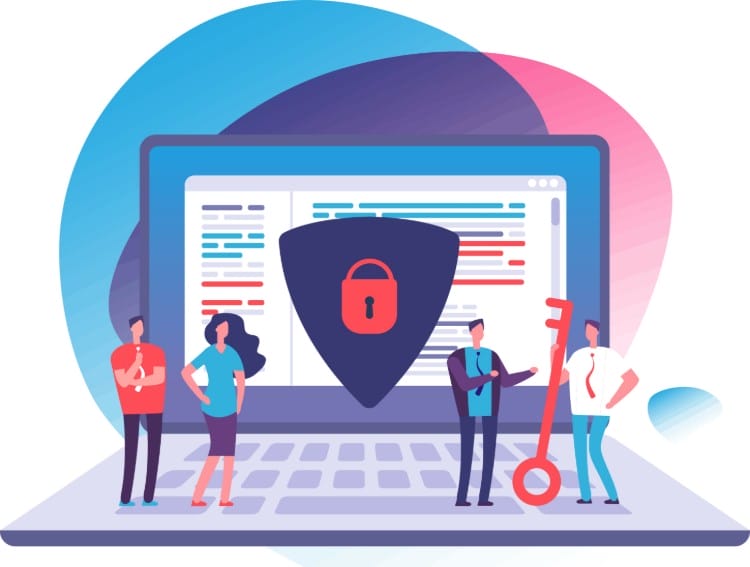
Digital health apps on employees’ phones play a part in many workplace wellness programs. But even though third-party health apps are common on people’s phones, the privacy landscape behind these apps is murky at best. 

Prince cited Lori Andrews, professor of law at the University of Chicago and director of Illinois Tech’s Institute for Science, Law and Technology. Andrews has conducted work on the types of data that medical apps collect from users, including employees in workplace wellness programs.

“Some of the medical apps are just completely bogus and don’t give you anything helpful back,” Prince said about the general health data privacy environment. “But they are collecting data on you, not just health information but geolocation and other data that’s worth money.” 
health data privacy; privacy laws; data protectionAnother trend in wellness programs is employers offering employees consumer-directed genetic tests to help them understand what medical issues they may be predisposed to and what preventative measures they can take to combat them. According to the Society for Human Resource Management, 18 percent of employers provided a health-related genetic testing benefit in 2018, up from 12 percent in 2016.

Many studies have shown that people are not aware of  the Genetic Information Nondiscrimination Act or what privacy protections they have through the law, Prince said. “GINA is quite protective in employment in the sense that employers are not allowed to use genetic information to discriminate, so they can’t make hiring, firing, promotion, wage, any decisions based on genetic information,” she said, adding that genetic information includes family medical history, genetic test results and more.

Still, she said, there are some exceptions with GINA, including private employers with fewer than 15 employees and any employee in a voluntary wellness program. 

There is currently a legal debate on whether wellness programs are voluntary or if employees feel coerced to join them, Prince said. Some wellness programs are participatory —  meaning that employees don’t need to hit a certain health outcome target to earn the incentive — but others are health contingent. Employees need to lose some amount of weight or accomplish another target measurement to get the financial benefits of the wellness program.

These programs are more participatory currently, she said. But if programs that collect genetic information become  health contingent, that could bring up ethical issues and become more invasive. 

“If you think of [Breast Cancer gene] testing, which is a predisposition to breast and ovarian cancer, one of the preventive measures right now is to prophylactically remove your breast and ovaries. My dystopian future is the employer saying, ‘Have you finished having kids yet? Get on that, so that you can remove your ovaries,’” she said.  

This discussion begs the question of who is ultimately the best actor to push people toward better behaviors and health outcomes, she said. Society has to ask if employment is the best place to do this. 

“In a way the answer is yes because we’ve created a system where health insurance and employment are so intertwined, but maybe employment isn’t the right space to be encouraging people to make the right health choices,” she said. “Maybe that should be a public health system or your primary care physician or researchers.” 

The Pentagon has advised service members not to engage in 23andMe genetic tests, said Glenn Cohen, professor of law at Harvard Law School, and faculty director of the Petrie-Flom Center for Health Law Policy, Biotechnology and Bioethics. 

There’s a major national security reason for this, he said, but part of the reasoning also has to do with protecting service members’ privacy. The military is exempted from GINA, which is the law which prohibiting genetic discrimination by employers. 

Also read: The Ethics of Artificial Intelligence in the Workplace

Consent, Transparency and Communication 

Employers could communicate with employees better, Jerome said. Privacy is more than just legal compliance, which may include a disclaimer in the company handbook or on the employees’ computers that inform them “All this can be tracked and monitored.” This can help set up the expectation for employees that they should have no expectation of privacy in anything they do at work. 

While most employers have done their legal duty, they’ve yet to have a conversation with employees about what they’re actually doing with this data, Jerome said. 

Also read: Are You Part of the Cybersecurity Solution … Or Part of the Problem?

“I get that those conversations can be difficult and uncomfortable and frankly might get employees riled up, but I think that’s probably a good thing in the end,” he said. 

Employers — who sit on large troves of employee health data — may have the legal right to share data, but that doesn’t mean employees and other parties won’t criticize them, said Cohen. “They have to be worried a little bit about how it’s going to play as a PR matter and, in an industry where they’re competing for talent, how employees feel about [it],” he said. 

When Ascension Health partnered with Google for the “Project Nightingale” initiative late last year — allowing the tech company access to the detailed personal health information of millions of Americans — it received a lot of backlash. It could be dangerous for an organization like Google, which already has so much of people’s personal data, to get access to people’s health records as well, critics argued. Supporters said it was perfectly legal.

“My recommendation in general is even if you legally have the right to share the data, you may want to think about creating some internal governance mechanisms that have employees involved in trying to decide what gets shared or not,” Cohen said. 

Practically, this could mean that the organization charters a committee that includes employers, employees and subject matter experts who can explain both the uses and the risks of adopting a certain solution, he said.

This could be a valuable decision for employers because better decisions get made and it’s better for the employer’s reputation, he said. When people find out a company has sold its employees data, it could look bad if there hasn’t been employee input in the decision. 

For most organizations dealing with health data and other personal data, their reputation is based on how they treat that data, said Ed Oleksiak, senior vice president at insurance brokerage Holmes Murphy. A data breach or misuse of data would be bad press, so the company would be incentivized to protect that data and ensure it’s used properly

When there is a health data mishap, there are a couple ways that organizations can address that breach of trust, he said. Organizations can provide impacted employees some kind of identity theft protection that will help them mitigate any harm. Further, the company is required to address whatever has resulted in the breach and do whatever it can to make sure it can’t happen again in the future. 

“Whether it’s the employer’s health plan, a hospital system, or a technology provider, everybody’s reputation is contingent on successfully mitigating that,” Oleksiak said. “You just have to start over again, and try to fill that cup of trust back up.” 

Oleksiak also suggested that employers follow a key tenet of only getting and storing the minimum necessary data. Even though people involved with employee health plans most likely want to use patient data for the right reasons, people who can hack into these systems can access everything, including more unnecessary data. 

Ultimately, this is an issue of balance. According to the aforementioned Georgetown Law Technology Review “Re-Identification of ‘Anonymized’ Data,” “data utility and individual privacy are on opposite ends of the spectrum. The more scrubbed the data is, the less useful it is.” 

Still, there are positive things companies can do with this data, Oleksiak said. No matter what privacy rules and regulations are put in place, a bad actor is going to find a way to do something that’s for their own benefit.

“Hopefully we write rules that go after people that abused their position or access to data, but still allow everybody else that’s doing it for the right reasons to get the job done,” he said.


Posted on March 31, 2020October 18, 2024

Communicate mental health resources to employees during the COVID-19 outbreak

mental health, resources, health care, etc.

COVID-19 clearly has severe and potentially deadly physical symptoms. But that doesn’t mean mental health is something that can be sidelined for now.

Parents with children they must homeschool are feeling the stress of working, teaching and having little to no free time to take care of themselves. People who have certain mental illnesses may find themselves especially vulnerable in times of social or physical distancing. 

mental health, resources, health care, etc.

And employees on the front lines like health care workers, delivery people and grocery store employees may find themselves stressed due to the nature of their jobs and having a greater risk of interacting with people who have COVID-19. 

“With the workplace a defining part of many individuals’ lives, managing employee morale and mental health, as well as providing resources and support to help them cope, is understandably top of mind with employers,” said Brad Hammock, co-chair of employment law firm Littler Mendelson’s Workplace Safety & Health Practice Group and a leader of the firm’s COVID-19 Task Force, in a press release. 

While businesses must manage many other legal and operational issues, progressive employers are also focusing on resources and means of support to help employees cope, according according to a recent report from Littler. 

According to the Centers for Disease Control and Prevention, people who may respond more strongly to the stress of the COVID-19 crisis include those are especially vulnerable to the virus (older people and those with chronic diseases), children and teens, people with mental health or substance abuse issues and caregivers and health care providers who are helping others deal with health issues. 

The CDC provides ways to cope with mental health issues — including taking breaks from watching the news, making time to unwind and connecting with loved ones. But the workplace has a role as well. 

Also read: Mental health in low-wage workers

HR plays a central role in tempering employees’ feelings of anxiety, according to Human Resource Executive. “Remind employees that every single person in the organization, including the CEO, is facing unprecedented upheaval, fear and uncertainty — and that the only way to get through this is by pulling together and supporting each other like never before,” the article advised. 

Further, while employee assistance programs have generally been underutilized, now is an ideal time to communicate the usefulness of EAPs to employees, according to HRE. EAPs address personal and professional challenges that employees may face, including financial problems, substance abuse issues, grief, family issues and stress. These areas of one’s life are also areas that could be greatly impacted by the COVID-19 outbreak, the article noted. 

Nonprofit news organization Marketplace suggests that employers offer and communicate the availability of telehealth mental health care. It also noted that accessible, affordable care is important. For example, Starbucks is offering all U.S.-based employees and their family members with access to 20 free therapy sessions starting April 6. These sessions are available through video appointments as well as in-person appointments.

Also read: The Mental Health Parity Challenge

The Canadian Mental Health Association advises that employers communicate in a reassuring manner. “Know that work will likely be impacted — work will slow down, necessary travel may be canceled. Reassure staff that expectations will shift accordingly, and that’s OK. The company will get through this.” 

Organizations can also refer employees to reports indicating that most people who become infected with the virus will recover, the Canadian Mental Health Association  noted. They can also emphasize with employees that they know this is a stressful time and that it’s OK to feel anxious. 

Also read:

  • “Taking Care of Your Mental Health in the Face of Uncertainty” (American Foundation for Suicide Prevention)
  • “Mental Health And COVID-19 – Information And Resources” (Mental Health America)
  • “Mental health and psychosocial considerations during the COVID-19 outbreak” (World Health Organization)
  • “Interim Guidance for Businesses and Employers to Plan and Respond to Coronavirus Disease” (CDC)
  • “Coronavirus and isolation: supporting yourself and your colleagues” (Mental Health at Work)
  • “How to tackle mental health in the workplace as a manager and colleague” (UCL School of Management)

For Workforce.com users there are features on our platform available to keep communication lines open during this difficult time. Engage your staff, schedule according to operational changes, manage leave, clock in and out remotely, and communicate changes through custom events, among other things.

Posted on March 31, 2020June 29, 2023

Onsite health clinics present unique challenges for employers during a pandemic

virtual care, health care systems, onsite clinics

In normal times, accessing health care on the property of an employer is a convenience. However, during the COVID-19 pandemic, such access may stoke safety and hygiene concerns. Patients are supposed to avoid getting medical care unless it’s necessary in order to avoid coming into contact with the virus, and even accessing shared surfaces like biometric time clocks can put employees at risk.

According to Mercer, 17 percent of U.S. employers with at least 500 employees offer primary care through onsite or near-site clinics. During the COVID-19 outbreak in which people must social distance, employers may come across unique challenges with their onsite clinics and need to strategically rethink how to manage them

Mercer’s Worksite Clinic Consulting practice created a guide to manage employer-sponsored clinics during the pandemic. 

The guide focuses on best practices to mitigate risk for employees and patients, respond to staffing limitations, identify supply chain barriers and “optimize the interest of public health.” The top six steps are:

  1. Review and update existing plans.
  2. Don’t make staff or patients sick.
  3. Protect staff and patients by implementing new ways of working.
  4. Prepare for absenteeism of staff.
  5. Communicate, communicate, communicate.
  6. Review and address any contractual requirements.
  7. Regulatory considerations.

Just like larger health care systems, all employer health clinics and health workers must be prepared to evaluate and manage risks related to COVID-19. Proper infection-control equipment is a must, and clinic workers must know how to “safely isolate, transport and quarantine potential patients.” 

virtual care, health care systems, onsite clinics

Reducing the number of people requiring face-to-face examinations is necessary and can be accomplished via telehealth phone calls or video appointments.

Clinic staff members may get sick or need to take time off to care for a sick family member. Preparing for staff absenteeism doesn’t necessarily mean employees can’t work just because they can’t visit the clinic. Organizations can “repurpose clinical staff confined to their homes to be part of a virtual care team,” the guide stated. “This team can work together remotely to triage and serve patients via telephone or video visits to forestall the need for an in-person visit.”

Organizations can also support older staff members or those with health conditions by providing them virtual assignments only. 

Meanwhile, communication is a key factor in all these steps. Employers should plan to communicate with their staff at least once a day regarding the status of COVID-19 in their community and within their organization, according to the guide. What’s especially important to communicate is how the company is dealing with various issues and challenges brought on by the outbreak. 

Also read: During COVID-19 outbreak, utilize internal communications in your company crisis plan

Some communications best practices for employer clinics include:

  • Establish an emergency response command task force — all departments represented, reporting to the C-suite.
  • Establish a clinical response team, physician led — a team of clinicians who can track Centers for Disease Control and Prevention and World Health Organization information and summarize and distribute it to employees. 
  • Communicate with the employee population regularly via a patient app. 
  • Post information on the intranet and include information for appointment scheduling, the nurse call hot line and telehealth. 
  • Educate employees on slowing the number of patients to not overwhelm the health care system.    
  • Track lessons learned for post-pandemic response debriefing and process improvement. 

COVID-19 is rapidly changing how businesses operate. We recognize that organizations need an extra helping hand right now. So we’re offering our GPS clock in tool for free to new sign-ups over the coming months. Sign up today and our Workforce Success team will provide a personal, online walkthrough of our platform to help you get started. It can be fully deployed in 1-2 days.

Posted on March 26, 2020

Coronavirus Update 3-26-2020: A Q&A and the DOL’s FFCRA notice

employment law, labor law, overtime records

Yesterday I held my first Zoominar. (Is this an actual word, or did I just make it up?) I opened up my Zoom room for the first 100 people to join and ask any coronavirus-related employment law questions they wanted. I shared #MyQuarantineHaiku (see below), saw some familiar faces, met some new old friends, and answered dozens of questions.

If you weren’t able to join or couldn’t get in, you can watch it here:

Also yesterday, during my Zoominar, the DOL published its required Employee Rights poster for the Families First Coronavirus Response Act. You must post it alongside your other employment law posters no later than April 1, and email it to those employees that are currently working remotely. But you might want to brush up on your PDF editing skills before you do so, because the DOL’s model poster has a big ol’ typo. In describing the paid leave entitlement for employees taking time off to care for children, the DOL lists the maximum dollar cap as $12,000 instead of $10,000. A big mistake, and one we will assume the DOL will fix soon. (Thanks to Eric Meyer for pointing this out to me.) You can also bring it to the DOL’s attention on one of its FFCRA twitter chats, or on the online forum it is hosting.

Two more things. First, I will be hosting another Zoominar this coming Monday, March 30, from 1 – 2 pm. And this time I won’t be caught off guard by the questions about how my daughter’s band, Fake ID, is weathering the coronavirus storm. In fact, she’s promised to join and perform a song for everyone. You’ll be able to access the Zoominar here.

Finally, #MyQuarantineHaiku.

Day-time pajamas
I don’t have hair to pull out
Night-time pajamas

Be well and stay safe. I’ll see everyone tomorrow.

Posted on March 25, 2020April 11, 2023

The impact of COVID-19 on hourly and low-wage workers

shift scheduling for hourly restaurant workers, shift swap

One thing COVID-19 has done in the United States is put a spotlight on how a pandemic impacts lower wage hourly workers versus salaried, higher-earning employees. 

With a limited number of coronavirus tests currently available, many wealthy Americans, celebrities and politicians have been able to get tested for COVID-19 and get results quickly while cutting less affluent people in line. While insurers have waived the copay to get tested for the virus, patients still have to pay for treatment, which could result in thousands of dollars of medical bills. As Time noted, one uninsured patient owed $34,927.43 for her treatment. 

“While most people infected with COVID-19 will not need to be hospitalized and can recover at home, according to the World Health Organization, those who do need to go to the ICU can likely expect big bills, regardless of what insurance they have,” the article stated. “As the U.S. government works on another stimulus package, future relief is likely to help ease some economic problems caused by the coronavirus pandemic, but gaps remain.”

Amid the COVID-19 outbreak, workers who need paid sick days the most have the least, wrote Elise Gould, senior economist at the Economic Policy Institute, in an EPI article. Only 30 percent of the lowest-paid workers — many of whom are hourly workers in the service industry — have the ability to earn paid sick days, and these are the workers who typically have contact with the public.

These workers also typically are the ones who can’t work from home. According to the U.S. Bureau of Labor Statistics, among 25 percent of full-time workers who earn the least, only 9.2 percent have the option to work from home compared to the 61.5 percent of employees who earn the most. 

Also read: The role of businesses in addressing public health outbreaks 

Some companies have been positive in their response to COVID-19.  Microsoft decided to continue to pay all its hourly service providers their regular pay while the company has reduced service needs. Walmart also announced that workers would receive up to two weeks pay should they be quarantined or test positive for the virus. 

According to a Willis Towers Watson survey of 805 companies polled the week of March 16, 72 percent of employers will continue to pay hourly workers who test positive for coronavirus. Similarly, 54 percent will also pay hourly employees who have cold or flu-like symptoms and choose to stay home. Less promising, only 36 percent will continue paying hourly workers when they stay home because they don’t have child care.

Meanwhile, other companies have decided that mass layoffs are necessary so its out-of-work employees can collect unemployment benefits and return to their old job “when this extraordinary episode ends.”

Unemployment benefits may be helpful. But while a common occurrence in the face of the COVID-19 pandemic is more people getting laid off, more than 50 percent of employees get health coverage through work. Former employees have to worry about regular finances like rent and food while also figuring out what to do once they’ve lost their employer-provided health insurance. 

Laid-off employees can sign up for Affordable Care Act coverage, but they need to avoid common, easy mistakes, according to the USC-Brookings Schaeffer Initiative for Health Policy, which provides laid-off employees guidance to find a new insurance plan. For example, short-term insurance coverage can be misleading for consumers, the report noted. This type of health plan may not cover costly services like hospital visits and often doesn’t protect people with pre-existing conditions.

In light of the unique issues facing low-wage and hourly workers, there are certain best practices companies can consider. According to Gallup, these best practices include:

  • Approving additional budget for supplies or additional paid time off.
  • Granting paid time off for symptomatic employees, employees who must care for family members who are diagnosed with COVID-19, and/or employees with diagnosed cases of COVID-19.
  • Permitting unlimited unpaid time off without penalty.
  • Paying for time spent under quarantine.
  • Communicating employer-sponsored insurance and other relevant benefits.
  • Making revisions to employee compensation and benefits policies.

COVID-19 is rapidly changing how businesses operate. We recognize that organizations need an extra helping hand right now. So we’re offering our platform for free to new sign-ups over the coming months. Sign up today and our Workforce Success team will gladly provide a personal, online walkthrough of our platform to help you get started.

Posted on March 22, 2020June 29, 2023

Treasury, IRS and Labor announce plan to implement Coronavirus-related paid leave for workers and tax credits for businesses

employee compensation

COVID-19 is rapidly changing how businesses operate. We recognize that organizations need an extra helping hand right now. So we’re offering our GPS clock in tool for free to new sign-ups over the coming months. Sign up today and our Workforce Success team will provide a personal, online walkthrough of our platform to help you get started. It can be fully deployed in 1-2 days.

The Department of Treasury, the Department of Labor, and the IRS announced impending regulations that will help covered businesses navigate the paid family and sick leave provisions of the Families First Coronavirus Response Act, including available tax credits, the small employer exemption, and a 30-day non-enforcement grace period.

Refresher: What Leave Does the Act Provide?

employee compensationThe Act provides that eligible employees of covered employees can receive:

1. Up to 80 hours of paid sick leave at 100 percent of the employee’s regular rate pay where the employee is unable to work because the employee is quarantined, and/or experiencing COVID-19 symptoms, and seeking a medical diagnosis, capped per employee at $511 per day and $5,110 in total;

2. Up to 80 hours of paid sick leave at two-thirds of the employee’s regular rate of pay where the employee is unable to work because of a need to care for an individual subject to quarantine, to care for a child whose school is closed or child care provider is unavailable for reasons related to COVID-19, and/or the employee is experiencing substantially similar conditions as specified by the U.S. Department of Health and Human Services, capped per employee at $200 per day and $2,000 in total; and

3. Up to an additional ten weeks of expanded paid family and medical leave at two-thirds of the employee’s regular rate of pay when the employee is unable to work because of a need to care for a child whose school is closed, or child care provider is unavailable for reasons related to COVID-19, capped per employee at $200 per day and $2,000 in total.

Paid Leave Tax Credits
The Act makes available the following tax credits to help employers pay for this paid sick and family leave:
1. For an employee who is unable to work because of Coronavirus quarantine or self-quarantine, or has Coronavirus symptoms and is seeking a medical diagnosis, eligible employers may receive a tax credit up to $511 per day and $5,110 in the aggregate, for a total of 10 days.

2. For an employee who is caring for someone with Coronavirus, or is caring for a child because the child’s school or child care facility is closed, or the child care provider is unavailable due to the Coronavirus, eligible employers may claim a tax credit for two-thirds of the employee’s regular rate of pay, up to $200 per day and $2,000 in the aggregate, for up to 10 days.

3. In addition to the sick leave credit, for an employee who is unable to work because of a need to care for a child whose school or child care facility is closed or whose child care provider is unavailable due to the Coronavirus, eligible employers may receive a refundable child care leave credit. This credit is equal to two-thirds of the employee’s regular rate of pay, capped at $200 per day or $10,000 in the aggregate, for up to 10 weeks.

4. Eligible employers are entitled to an additional tax credit determined based on costs to maintain health insurance coverage for eligible employees during the leave period.

Eligible employers who pay qualifying sick or child care leave will be able to retain an amount of the federal income taxes, the employee share of Social Security and Medicare taxes, and the employer share of Social Security and Medicare taxes equal to the amount of qualifying sick and child care leave that they paid, instead of depositing them with the IRS.

If there are not sufficient payroll taxes to cover the cost of qualified sick and child care leave paid, employers will be able file a request with the IRS for an accelerated payment. The IRS expects to process these requests in two weeks or less, with further guidance on this issue coming in the next two weeks.

Examples
1. An eligible employer pays $5,000 in sick leave and is otherwise required to deposit $8,000 in payroll taxes, including employee withholdings. The employer is entitled to use up to $5,000 of the $8,000 of taxes it was going to deposit for making qualified leave payments. The employer would only be required to deposit the remaining $3,000 with the IRS on its next regular deposit date.
2. An eligible employer pays $10,000 in sick leave and is required to deposit $8,000 in payroll taxes. The employer could use the entire $8,000 of taxes to make qualified leave payments and file a request for an accelerated credit for the remaining $2,000.

Small Business Exemption

Businesses with less than 50 employees will be eligible for an exemption from the leave requirements relating to school closings or child care unavailability, provided that the employer can show that compliance would jeopardize the ability of the business to continue. The DOL will be providing emergency guidance establishing simple and clear criteria defining the circumstances that will meet the criteria of jeopardy to the viability of an employer’s business as a going concern.

Non-Enforcement Period

The DOL will be issuing a temporary non-enforcement policy. Under the policy, the DOL will not enforce the Act until May 2, 2020 (30 days after its effective date), against employers that have acted reasonably and in good faith to comply.

I continue to monitor these issues in real-time and will be posting updates here as warranted. If you have any questions, feel free to contact me directly.

Posted on March 18, 2020March 19, 2020

An adequate public health workforce is necessary for public health emergencies

health care, employee health

COVID-19 is rapidly changing how businesses operate. We recognize that organizations need an extra helping hand right now. So we’re offering our GPS clock in tool for free to new sign-ups over the coming months. Sign up today and our Workforce Success team will provide a personal, online walkthrough of our platform to help you get started. It can be fully deployed in 1-2 days.

Health care workers have a vital role in caring for patients with coronavirus. But they’re also at risk themselves.

They’re in a tough situation because an outbreak among health care professionals and those who work at health care facilities not only impacts an organization’s finances, but it can also cascade into a larger health care crisis, according to a guide prepared by law firm Seyfarth, “Coronavirus Preparation for Health Care Facilities and Workers.” While providers have obligations to their patients, they also have responsibilities to their employees to keep them safe. 

These issues are true for both private and public health professionals, but the public workforce in particular has unique challenges. It has been chronically underfunded, especially since the Great Recession of 2008, said Rivka Liss-Levinson, director of research at the Center for State and Local Government Excellence. 

While health care workers are doing the best they can to control and contain the coronavirus outbreak, there’s a limit to what people can do with limited funding, she said. Meanwhile, these employees are highly educated and have jobs that require specialized skills and credentialing, so health care systems facing a shortage due to an outbreak have trouble replacing them. 

“To successfully tackle today’s greatest public health challenges, a workforce of sufficient size and with the appropriate skill sets is needed. This requires allocating adequate funding,” she wrote in her blog, “We Shouldn’t Wait for a Crisis like Coronavirus to Fund Public Health.” 

Turnover may be a concern for their employers. The public sector workforce is mostly mission-driven, and they know they won’t be paid as much as they would in the private sector. They want to make a difference in their community, Liss-Levinson said. Still, they also want to be compensated fairly.  

She cited a study from de Beaumont Foundation and Association of State and Territorial Health Officials which found that 47 percent of this workforce plan to leave their jobs in the next five years. While some of this (22 percent) is due to retirement, 25 percent of employees said they wanted to leave for new positions.  

Meanwhile, available public health care plays a big role in rural areas, which may face unique challenges in that they have fewer resources and harder-to-access care compared to urban areas. It’s important for people to access care in these communities, whether it’s for a pandemic or something more common. 

“We have a tendency to really put a spotlight on public health when there are emergencies like this but we need to be adequately finding public health at all times. When you are underfunded, you are then not able to deal with an emergency,” Liss-Levinsom said. “We need to be aware of the role the public health workforce plays every day in protecting us, not just when there’s something like coronavirus.”


Posted on March 18, 2020June 29, 2023

The role of businesses in addressing the COVID-19 pandemic

COVID-19, coronavirus, public health crisis

Workplace policies, benefits and culture can have a big impact on public health.

The basics of what employers can do to address the coronavirus is to allow employees to work from home and make sure they can access and afford the health care they need, said Elise Gould, senior economist at the Economic Policy Institute. 

COVID-19, coronavirus, public health crisisWhile many employers may be concerned about their bottom line and the loss of productivity, the reality is that loss will be even greater if employees come in sick, potentially with the coronavirus, Gould said. Passing this virus onto coworkers and the public is not good for the bottom line. 

Some research about the flu shows that employees having more sick days is linked to reduced contagion, she said. With the coronavirus, “it’s time to do that. It’s not even a big, bold thing to think about, giving people paid sick days when they’re sick. It is a smart move,” she said. 

Currently, even people with paid sick days don’t have enough days to recover from coronavirus, Gould said in her EPI blog “Amid COVID-19 outbreak, the workers who need paid sick days the most have the least.” 

“The United States is unprepared for the COVID-19 pandemic given that many workers throughout the economy will have financial difficulty in following the CDC’s recommendations to stay home and seek medical care if they think they’ve become infected,” she wrote. “Millions of U.S. workers and their families don’t have access to health insurance, and only 30 percent of the lowest paid workers have the ability to earn paid sick days — workers who typically have lots of contact with the public and aren’t able to work from home.”

Many are calling for national paid sick leave, but the future of the Families First Coronavirus Response Act is still uncertain. 

“We know that national paid sick time is realistic in the sense that many industrialized countries provide for it,” said said Janie Schulman, partner in global law firm Morrison & Foerster’s  Employment + Labor group. However, “mandatory paid benefits in the U.S. have been and continue to be a politically divisive issue.”

Offer: COVID-19 is rapidly changing how businesses operate. We recognize that organizations need an extra helping hand right now. So we’re offering our GPS clock in tool for free to new sign-ups over the coming months. Sign up today and our Workforce Success team will provide a personal, online walkthrough of our platform to help you get started. It can be fully deployed in 1-2 days.

Also, in the U.S., there is always a question as to which matters are reserved to the states and which may be legislated at a federal level, she said. While the federal government has yet to enact a paid sick leave law, several states and some cities have done so in recent years. 

“It remains to be seen whether the COVID-19 outbreak will create a paradigm shift at the federal level,” Schulman said. 

With employees staying home, one key issue that organizations have to deal with now is employee absenteeism, said Roberta J. Witty, research vice president at Gartner, Risk and Security Management Programs. They have to understand what their mission-critical business services are and determine how to staff them if they have a high-absenteeism rate. This may be done through cross-training, moving work from one location to another or other kinds or workload balancing. 

“For those business services where a face-to-face interaction is required, you might have to shut down some of those services due to best practices regarding controlling infection between people as outlined by the CDC,” Witty said. “Also, there may be a hard decision to be made – what is the minimum percentage of your volume you can support with a degraded workforce, and then shut down if you go below that level.” 

Businesses, like individuals, must cooperate in our generally accepted social contract that requires each of us to do our part in trying to limit the spread of disease for the overall public good, Schulman said. 

“[We have already seen businesses around the country step up and do more than they are legally required to do,” Schulman said  “Many of the steps we have seen businesses take in the past few weeks are not mandated by law, but rather demonstrate the proactive efforts of businesses to limit the spread of the coronavirus (COVID-19) to protect their employees and the public.” 

These steps include encouraging remote work, cancelling large public events, offering extra paid sick leave and limiting visitors coming to company premises, she said. 

Many of these tough calls will undoubtedly hurt businesses’ bottom line and affect productivity, revenue, profits, and stock price and may interfere with relationships with customers and vendors, she said.  In many of these cases, companies are weighing the costs of these short-term sacrifices against the potential long-term harm that would occur if they did not take these steps.

One effective best practice some companies are following is creating a pandemic team or crisis management team, said Tracy Billows, chair of law firm Seyfarth’s Chicago office Labor & Employment department. Team members —  which include individuals from many departments including HR, legal, health and safety, security, operations and finance — work together to create a holistic strategy. 

A pandemic team should also include the COO or CEO to give the team the leadership needed to and to ensure the committee is acting consistently with the company’s culture, policies and expectations, Billows said. 

Even companies with crisis management plans in place already may have a need for a committee. 

“I’ve worked with employers who have had pandemic plans and emergency response plans for years and, to be frank, they’re all updating them for this. The old rules are out the door. This is new. This is different. This is not the same thing we’ve dealt with before,” Billows said. 

Companies should be responsive to any Centers for Disease Control and Prevention updates as well as local or state public health guideline updates, she said. 

“It’s important that employers show that they are staying up-to-date on the latest and update their policies and protocols accordingly,” she said. “It can feel like you need a dedicated team just to do that, but those who are doing so are being successful at it.”

To learn more about the recent legislation around COVID-19 and what it means to your organization, register for our free webinar, What HR Needs to Know about Coronavirus.

Posted on March 18, 2020April 11, 2023

During COVID-19 outbreak, utilize internal communications in your company crisis plan

employee communication

Internal communication is a vital part of crisis management, whether it is a pandemic like COVID-19, a natural disaster or a workplace shooting. 

As the people and organizations worldwide deal with the implications of the coronavirus, it is vital for people to communicate accurate information about the virus, check what they’re retweeting and make sure not to spread disinformation. Businesses have a similar responsibility, but on top of that, their communication must be strategic. It should be part of any crisis management plan. 

Employees will be getting information about the coronavirus from somewhere, and coworkers will realistically discuss the company’s response to the pandemic among one another, whether their response is appreciative or critical. 

Whatever standard message a business publicly announces during a crisis, if employees have issues with how the crisis is being handled, it doesn’t matter if the media paints the company in a good light. There still may be low employee morale and high levels of frustration internally. 

Despite the immediate importance of communication, many organizations have yet to create a strategy.  According to a report from Gallagher’s Benefits and HR Consulting Division, 61 percent of organizations have developed a communication strategy related to COVID-19, with 82 percent of health care having a strategy compared to 49 percent of non-health care organizations.

In another survey of 300 communications senior leaders, the Institute for Public Relations found that 44 of respondents said their crisis communications plan did not specifically address an infectious disease outbreak. Ten percent of respondents did not have crisis communication plans at all.

There are some basics that employees should understand about coronavirus symptoms and the course of the illness, which should be an integral part of a communication campaign. 

First, COVID-19 is not airborne. It’s passed by droplets. That means when someone who is infected coughs into their hands and touches a surface, someone else can catch it by touching that surface and then touching their face. As strange as it may seem, that’s good news. It means that if people wash their hands frequently with regular soap — especially after you may have touched surfaces that a lot of other people touch, like doorknobs, the keypad for clocking into work or shaking hands — they’re much less likely to be infected.  

Second, some people have compared COVID-19 symptoms to the flu, but that’s not completely accurate. The two most common symptoms are fever and a dry cough. People with COVID-19 rarely have a sniffle. They also aren’t likely to be nauseous. What they are likely to have is bad upper respiratory problems. They tend to develop a severe cough that makes it hard for them to breathe, which is what is making COVID-19 dangerous.  

Finally, it’s also true that for most younger workers, the symptoms are milder and people who have it may only think they have a cold. However, older employees or anyone with a compromised immune system are much more likely to have serious symptoms that require medical assistance. The medical assistance that is often required is intubation and the use of a ventilator. 

The reason why COVID-19 is such a big deal right now is because the number of people who require medical assistance is overwhelming the medical system in the places where the number of cases has grown, like Italy. The medical system has been overwhelmed even in places that have a consistent ratio of doctors and hospital beds to people (Italy’s is better than the United States’, for example). There are only so many beds in the hospitals and only so many ventilators. 

That’s why there has been a push to slow down transmission through actions like social distancing and remote working, because if it is slowed enough, it won’t overwhelm the health care system. The mission is to flatten the curve and buy time for the health care system to adequately care for those who fall ill.

If someone has been exposed, they are likely to have symptoms within five days of exposure and can also be a carrier for up to 14 days, even if they’re asymptomatic. This is why quarantine periods are generally 14 days long. 

According to recent guidance from consultancy Deloitte, the most important players in your communications plan are front-line managers. Employees expect accurate, authoritative and transparent information. “Trying to conceal risk can potentially create more,” the report stated. Leaders should outline communication plans and make sure that managers know what to expect and understand and define their role. 

Further, companies need to prepare plans for site disruption and reactivation. “In the event an entity has to close its doors for non-critical workers for a period, determine a communications plan about how you’ll communicate with all workers, including contractors and vendor partners,” according to the Deloitte guidance. “Have a clear playbook for how to initiate a closure and how to reroute operations and employees to other locations within your network. Moreover, finalize a checklist to determine when employees can return to work once the all clear is given.”

Employees are bound to talk about the coronavirus outbreak on social media, and there are certain steps a business can take to temper this, according to Deloitte. One solution is to provide employees an internal communications channel through which they can express their issues about what they’re seeing within the organization. It’s a smart business move to “ensure direct communication as much as possible as an alternative to social media,” the report stated.

For Workforce.com users there are features on our platform available to keep communication lines open during this difficult time. Chat with your staff, schedule according to operational changes, manage leave, clock in and out remotely, and communicate changes through custom events, among other things.

COVID-19 is rapidly changing how businesses operate. We recognize that organizations need an extra helping hand right now. So we’re offering our platform for free to new sign-ups over the coming months. Sign up today and our Workforce Success team will gladly provide a personal, online walkthrough of our platform to help you get started.


Posted on March 17, 2020June 29, 2023

An important collaboration: CHROs and legal confront crisis management

employment law

There has been exponential growth in the field of crisis management over the last several years. Crises are understood to have the long-term potential to change the way an organization operates, sometimes threatening its survival or fundamentally changing its stakeholder relationships.

Also read: How Business Leaders Should Respond During Crises

Crisis management, accordingly, helps organizations survive these events. Gone are the days when crises were limited to emergencies and disasters that left a physical impact on an organization. Now included are so-called “soft crises” that may not result in physical damage but nonetheless have a lasting impact on a company’s brand, reputation and employee morale. Here are ways that the chief human resources officer and legal counsel work together to see crises to successful ends.

Crises are typically unplanned, are hard to manage and unpredictable. Experienced leaders, including CHROs, know they will happen, but the who, what, where, why and when are normally unknown. Consider how your organization would deal with these events (all based on real crises):

1. Your chief executive officer, who has overseen a period of marked profitability, is caught in a consensual relationship with an employee that reports to her. Your company has a policy that prohibits such relationships.

2. In the wake of a New York Times story about your company paying millions of dollars in exit packages to male executives accused of sexual harassment, thousands of your employees around the world walk off the job in protest.

3. Two of your employees who are responsible for preparing fast food upload a video on social media showing one of them doing vile things to the food in one of your kitchens. 

employment law
Legal counsel is a vital crisis management partner for HR.

Events like these pressure-test an employer’s crisis management readiness. They pose serious risks, such as loss of consumer, retailer and investor confidence; government fines and sanctions; recalls, litigation and claims; loss of employee morale and focus; and in some cases, high turnover. The value of crisis management is to minimize these and other negative outcomes. The end goal is business sustainability. 

Also read: A Leader’s Guide to Effective Communication Under Pressure

Managed effectively, crises require leadership teams to do several things carefully and with deliberate speed:

1. Detect that the incident has reached crisis status, determine its severity, and communicate quickly and transparently with stakeholders, both external and internal.

2. Investigate the matter thoroughly to understand the cause, disclosure obligations, and other responsibilities the organization may have.

3. Take steps to contain the damage from the crisis and prevent its immediate recurrence;

4. Start the process of business recovery.

5. Learn how to prevent the next crisis of this type — stakeholders may forgive the company’s first crisis but they rarely forgive the second of a similar nature.

So, what roles should CHROs play in this process? During the detection and initial response phase, if a crisis is by nature an HR issue, CHROs should work closely with the company’s counsel. Together, they will understand how a problem impacts internal stakeholders, know the policies that are intended to address the problem and be the most familiar with how those policies have been enforced enterprise-wide. Hopefully, they will have helped establish and refine the HR component of the company’s crisis management plan, including identifying triggers that turn an incident into a real crisis, giving the company a helpful head-start when the crisis hits. 

Also read: Repairing the Downed Lines of Workplace Communications

Even if the issue is not an HR problem, CHROs are needed to provide an initial response to employees, as they will know the most effective ways to reach hundreds or thousands of employees at or near the same time.  

For crises that are triggered by events like a government subpoena or pre-dawn raid, preparation is key. Working with company counsel, CHROs will know what can and cannot be ethically communicated to employees in the initial response phase. 

For example, while companies can never tell employees to refrain from speaking with the government, they should always inform employees about their rights if the government approaches them for a voluntary interview.  Understanding the difference between the two is important.      

During the investigation phase, if the crisis is primarily an HR issue, the CHRO should work with the company’s crisis management team leader (often the CEO or COO) and its counsel to quickly understand the problem — how it happened, who is responsible, and whether any company protocols or controls were bypassed. If the problem is the result of the actions of one employee or a small group of employees, the CHRO and legal team must assess supervisor and managerial responsibility — did they know about the employee’s actions, did they profit from them, and, if they didn’t know about them, should they have known?

In the containment and damage control phase, CHROs will play a pivotal role in deciding employee corrective actions and working on extended internal communications with employees.  When the crisis is especially severe, CHROs are also central in retaining talent and helping employees who are facing hardships because their jobs are impacted. This phase may require CHROs to work with the company’s legal team to manage employee litigation and respond to regulator scrutiny.  

During business recovery, many employees may experience a range of emotions, including fear, shock, panic, anger, hopelessness and trauma. They will need help getting back on their feet and CHROs have an important role in helping them get there. CHROs can facilitate internal discussions addressing employee sentiment, creating safe spaces where employees can openly express their feelings and still go back to remaining productive employees. In this phase, CHROs will also serve as stewards over needed cultural improvements.   

Lastly, in the learning phase, CHROs should play a leading role in determining how to prevent similar HR crises in the future. Here, a deeper root cause analysis is important. How did the problem happen, did the controls work as the company intended, and if not, why not?

Even if the crisis was not an HR problem, CHROs should still lead the assessment of how to mitigate the effects of future crises on the company’s employees.


Posts navigation

Previous page Page 1 … Page 9 Page 10 Page 11 … Page 38 Next page


Webinars


White Papers


  • Topics

    • Benefits
    • Compensation
    • HR Administration
    • Legal
    • Recruitment
    • Staffing Management
    • Training
    • Technology
    • Workplace Culture
  • Resources

    • Subscribe
    • Current Issue
    • Email Sign Up
    • Contribute
    • Research
    • Awards
    • White Papers
  • Events

    • Upcoming Events
    • Webinars
    • Spotlight Webinars
    • Speakers Bureau
    • Custom Events
  • Follow Us

    • LinkedIn
    • Twitter
    • Facebook
    • YouTube
    • RSS
  • Advertise

    • Editorial Calendar
    • Media Kit
    • Contact a Strategy Consultant
    • Vendor Directory
  • About Us

    • Our Company
    • Our Team
    • Press
    • Contact Us
    • Privacy Policy
    • Terms Of Use
Proudly powered by WordPress