Skip to content

Workforce

Author: Andie Burjek

Posted on March 16, 2020June 29, 2023

Answering the 6 most common questions about the Families First Coronavirus Response Act

COVID-19, coronavirus, public health crisis

In the past 48 hours, I’ve received a lot of emails and other correspondence asking questions about the Families First Coronavirus Response Act. Most of them fall into one of six categories.

1. I am a small business, and if I have to pay family and sick leave for my employees, I’ll go out of business. What am I supposed to do?

2. I work for a [large employer]. They don’t provide any paid time off. What am I supposed to do if I get sick, or a family member gets sick?

3. How does the interaction between the FFCRA’s paid family leave and paid sick leave work?

4. I understand the tax relief provision, but I operate a non-profit that doesn’t pay any taxes. What relief is there for us?

5. What about self-employed people? What relief is there for us?

6. If a business is forced to close because of COVID-19, what relief is there for its employees who lose their jobs, either temporarily or permanently?

Let me try to answer each as best as I can, understanding that there are no clear answers to any of this, and these issues are difficult and quickly developing and changing.
1. Small Businesses

COVID-19, coronavirus, public health crisisThere is no doubt that paid family and sick leave will impose a huge burden on the smallest of employers, especially since the only financial relief in the bill, the 100% tax credit for sick leave wages paid, is not a dollar-for-dollar match and only offers deferred relief.There is one provision in the bill, however, that may offer some help in the most extreme of circumstances.

The Secretary of Labor shall have the authority to issue regulations to exempt small businesses with fewer than 50 employees from the requirements of section 102(a)(1)(F) when the imposition of such requirements would jeopardize the viability of the business as a going concern.

This means that if the Secretary of Labor takes this up, he could issue regulations that would permit the smallest of businesses (under 50 employees) to claim an exemption if paid leave “would jeopardize the viability of the business as a going concern.”

Also note that under the same provisions, the Secretary of Labor could also pass regulations “to exclude certain health care providers and emergency responders,” meaning that these vital employees might not receive any paid FMLA or paid sick leave.

Stay tuned to see if this happens once this bill passes.

Finally, late last night, the Treasury Secretary announced that employers will be able to use cash deposited with the IRS to pay sick-leave wages, and for businesses without sufficient taxes from which to draw, the Treasury would make advances available.

2. Employees of Large Employers.

One of the most curious of the decisions this bill makes is to exempt employers with 500 or more employees. Here’s the editorial board of The New York Times, taking this decision to task.

Paying sick workers to stay at home is both good policy and good politics. Why not pass a bill that required all employers to provide paid sick leave and then force Republicans to explain their objections to the public?

The bill does require some employers to provide full-time workers with up to 10 days of paid leave. But the requirement does not apply to the nation’s largest employers — companies with 500 or more workers, who together employ roughly 54 percent of all workers.

All I can say is stay tuned. This coverage choice could be altered by the Senate when they take up this bill early this week, or it could be fixed by an entirely different piece of legislation. Or it can remain as-is, making the policy decision that large employers should offer these benefits without a government mandate. As the op-ed points out, according to federal statistics approximately 86 percent of employees at big companies already receive get some kind of paid sick leave. What I’d like to hear from Congress is why this 500-employee line was drawn? Was it a policy choice, the result of big-business lobbying, or with the knowledge that other legislation is on the way to close this loophole?

3. Paid FMLA vs. Paid Sick Leave.

There is a lot of uncertainly as to how the FFCRA’s paid-leave provisions interact with each other, but here’s my best read. The paid sick leave provision provides 80 hours of paid sick leave for full-time employees (or pro-rata for part-time employees) for COVID-19-related absences. The paid FMLA provision provides paid leave at two-thirds of an employee’s regular rate of pay for the number of hours the employee otherwise would have worked for the duration of a COVID-19-related FMLA leave, but the first 14 days of such leave can be unpaid. I’d expect most to substitute and run concurrently the paid sick leave during the initial unpaid portion of FMLA. Thus, the first 10 days of a COVID-19 leave will be paid at 100 percent of the employee’s regular rate as paid sick leave, and the remaining 10 weeks will be paid a two-thirds of an employee’s regular rate as paid FMLA. When an employer drafts or revises FMLA and paid sick leave policies, it should account for this overlap. Finally, please don’t forget about paid sick leave laws in your state or locality, which also might have something to add on this issue.

4. Non-profits.

I actually have some good news to share here. The tax credit offered by the FFCRA is against social security taxes, which, unless I misunderstand (and I’m not a tax lawyer), non-profits still pay on their employees. So, the tax credit provision will still off non-profit employers some future relief.

5. The self-employed.

This is, perhaps, the biggest issue. While the number varies wildly, there are anywhere between 50 million and 75 million gig workers. That’s a whole lot of self-employed people that this bill does not touch. What are they supposed to do? How are they supposed to earn if the economy shuts down? I wish I had the answer, but I have no idea. It’s a huge gap and huge problem, and absent specific government relief, these people are really going to be struggling, probably for a long time. That said, the tax-relief provisions also seem to apply to the self-employed. So that’s something.

6. Closures.

If a company is forced to shut its doors because of COVID-19, the Worker Adjustment and Retraining Notification (WARN) Act might apply if your business is large enough. It applies to employers with 100 or more employees. It mandates 60 days’ advance written notice (or if no notice is given or can be given, 60 days’ pay in lieu of such notice) before a “plant closing” or “mass layoff.” Please note, though, that a mass layoff does not occur, and therefore WARN does not apply, if the layoff is expected to be for less than six months. Because most expect this crisis to subside in less than six months, WARN likely will not apply to coronavirus-related layoffs. It will still apply to a plant closure if your business is large enough to meet the 100-employee threshold.

Also, keep in mind that some states have their own mini-WARN laws (California, Illinois, Maryland, New Jersey, New York, Tennessee, and Wisconsin, for example) that provide greater coverage. Ohio does not.

Finally, state unemployment compensation is available to employees who suffer coronavirus-related job losses. Ohio, for example, Governor DeWine is issuing an executive order so that unemployment insurance immediately covers workers who are displaced, even temporarily, by coronavirus, which will include a waiver any waiting periods to qualify and of the requirement that an individual seek work to collect benefits.

These issues are quickly evolving. I’m doing my best to stay on top of them and get everyone information as quickly as I can. Stay tuned. It’s going to a difficult time for everyone between now and when this crisis ends.

If your business needs FMLA or sick leave policies drafted, reviewed, or revised for anticipated FFCRA compliance, please let me know.

Also read: COVID-19 the role of businesses in a public health crisis? 

Posted on March 9, 2020October 18, 2024

The ethical use of AI on low-wage workers

warehouse workers, hourly employees

The impact of technology has not been equal among different segments of employees. 

The introduction of automation and artificial intelligence-enabled labor management systems raises significant questions about workers’ rights and safety, according to the “AI Now 2019 Report,” which explores the social implications of AI technologies. AI Now is a nonprofit that works with stakeholders such as academic researchers, policymakers and impacted communities to understand and address issues raised by the introduction of AI.

While the use of these systems puts more power and control in the hands of the company, it also harms mainly low-wage workers, who are disproportionately people of color, according to the report. These systems don’t work for employees when they set unrealistic productivity goals that can lead to injury or psychological stress and when they impose “unpredictable algorithmic wage cuts” on gig workers that undermine their financial stability, for example. 

Also read: Should there be a code of ethics in technology? 

warehouse workers, hourly employees
Hourly workers such as warehouse workers may be adversely impacted by AI-enabled workforce management systems.

Lower-wage workers stand to lose the most with the rise of automation while white-collar workers are generally unaffected, the report noted. It cited a McKinsey & Co. study that concluded “labor automation will further exacerbate the racial wealth gap in the U.S. absent any interventions.” 

Unions have been the traditional way for workers to contest harmful practices, but many employees don’t have access to union membership and many fear retaliation if they bring up their concerns. Still, the report noted, tech companies like Amazon and others are using many tactics to prevent unions from forming in their workforce. For example, whistleblowers have disclosed the fact that in a time of employee unrest, Google hired a consulting firm “known for its anti-union work.” 

It’s critical to get the perspective of hourly workers on how technology is playing into their lives, said Annelies M. Goger, a David M. Rubenstein Fellow in the Brookings Institute. Her research focuses on workforce development policy, the future of work and inclusive economic development. She was not talking about unions specifically in her interview with Workforce, but she did stress the importance of respecting and addressing employees’ concerns.

There are certain aspects of how technology is used in their jobs that hourly workers may appreciate, but they also have concerns or frustrations about issues like the influx of automated checkout lines and lack of consistency in scheduling, she said. 

“There’s a range of people who really want to embrace technology, but they want to make sure that workers have a voice at the table and that they have a way to provide feedback,” she said. 

These employees may also have concerns when management changes at their company, Goger said. 

As restructuring takes place new management might not take into account the needs of hourly workers, and these employees end up having less input on the quality of their jobs. 

Also read: Ensuring equity in the digital age

“Food, retail and grocery workers have witnessed rapid change in recent years, especially in the front end of their stores. Most feel they lack voices in these changes and feel pessimistic about the future for humans in their stores,” according to “Worker Voices: Technology and the Future for Workers,” a November 2019 paper by Molly Kinder and Amanda Lehnhart. Kinder is a David M. Rubenstein Fellow at the Brookings Institution’s Metropolitan Policy Program and a nonresident Senior Fellow at New America. Lenhart is the deputy director of the Better Life Lab at New America. 

“Worker Voices” also noted that low-wage workers’ low pay and economic insecurity is a barrier to them preparing for jobs that aren’t as impacted by new technology. An excerpt:

“While technological change is not the direct cause of workers’ precarity, it can add insult to injury. Automation and the adoption of new workplace technologies can exacerbate financial insecurity when jobs change, wages or hours are suppressed, or when workers are displaced altogether. Economic insecurity also limits workers’ resilience to technology changes by undermining their ability to weather a job transition, pay for training or schooling, and move into better paying—and less automatable—work. If workers cannot afford to make ends meet today, they will be ill-equipped to prepare for tomorrow. Raising income, reducing inequality and improving the economic security of workers is key to enabling a better future of work for those at greatest risk of change.”

Skill development is on some people’s minds. Chris Havrilla, leader of the HR technology practice for Bersin, Deloitte Consulting LLP, said that one application of AI could be to go through data and find potential new roles for people, in terms of talent mobility. From there, organizations can think about what employees need to accomplish and possibly help them develop the skills they need to get there. 

“I’m seeing some interesting things around, ‘We don’t want to lose people who already know how to work within our organization. How do we help them find other roles that might be applicable to them?’” she said. 

Posted on March 9, 2020June 29, 2023

FMLA obligations during the coronavirus outbreak

COVID-19, coronavirus, public health crisis

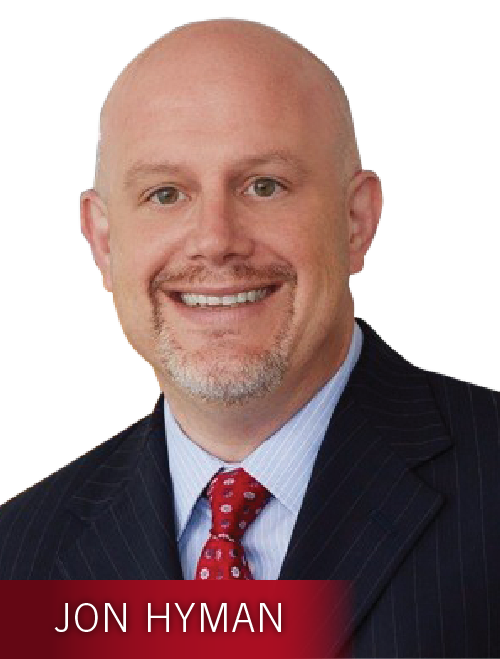
Jon Hymam, The Practical Employer employment law blog

COVID-19 is rapidly changing how businesses operate. We recognize that organizations need an extra helping hand right now. So we’re offering our platform for free to new sign-ups over the coming months. Sign up today and our Workforce Success team will gladly provide a personal, online walkthrough of our platform to help you get started.

Among other qualifying reasons, the FMLA allows an eligible employee to take 12 weeks of annual unpaid leave to care for a family member with a serious health condition. Family member, however, does not mean any family member. It only applies to an employee’s spouse, son, daughter, or parent.

The FMLA’s definition of “son or daughter” not only includes a biological or adopted child, but also a child of a person standing “in loco parentis” (one who has day-to-day responsibility for caring for a child without a biological or legal relationship to that child).

Suppose, however, an employee’s family member contracts COVID-19. Is that employee entitled to FMLA leave to care for that family member’s minor children during the period of incapacity? According to Brede v. Apple Computer (N.D. Ohio 1/23/2020), the answer is “no.”

Brede, a full-time member of Apple’s Genius Team at one of its Apple Stores, claimed that Apple fired him because he sought FMLA leave as in loco parentis to care for his niece and nephew because of his sister’s serious health condition. According to the court, Brede’s leave was not FMLA-covered.

The flaw in Brede’s FMLA claims on both theories is that … his requested leave to care for those children was not FMLA-qualifying. Brede does not allege that any of the minor children (who would be considered his daughter and sons under in loco parentis) are experiencing a “serious health condition” that requires his care. It is Brede’s sister that has the serious health condition. Even if Brede’s care of the children could be seen, by extension, as care for his sick sister (and Brede cites no legal authority for that proposition), the FMLA does not entitle an employee to take leave to care for a sibling with a serious health condition.

The Brede court got this issue 100% legally correct. Because the FMLA does not provide leave to care for siblings, it also does not provide leave to care for an ill sibling’s children.

In this time international medical crisis, however, let’s not lose sight of the fact that the FMLA is a floor, not a ceiling. Just because the law doesn’t require you to grant a leave of absence to an employee to care for the children of an ill sibling doesn’t mean that you can’t choose to offer such leave. As COVID-19 cases spread, employers are going to have to be nimble and flexible in their responses. The hypothetical spun from the Brede case is but one example of this necessary flexibility.
Also read: Is coronavirus the thing that will finally make paid sick leave a national reality?
Also read: COVID-19 and the role of businesses in a public health crisis
Posted on March 5, 2020July 24, 2024

The in-demand potential of a data-driven CHRO

data analytics, data privacy

Are you leveraging predictive analytics to reduce turnover? Using hiring data to improve recruiting? Monitoring internal social media comments to measure employee sentiment or identify diversity issues?

If not, you are missing opportunities to become your CEO’s most valuable advisor.

Executives are finally recognizing that the ability to hire, retain and mobilize top talent is the key to their business success. And they are turning to their CHROs for advice, guidance and data to chart their course forward.

“HR leaders who adopt AI tools for recruiting, engagement and reorganization are reaping the benefits of these trends,” said Ben Eubanks, principal for Lighthouse Research in Huntsville, Alabama, and author of “Artificial Intelligence for HR.” “They can absolutely gain credibility and add value for the CEO and every business unit.”

But to become that indispensable business advisor, CHROs have to know how to capture and analyze people analytics, then link those insights to business decisions. And not all of them are ready to deliver. 

Also read: AI is coming — and HR is not prepared

The power of data

When companies figure out how to leverage human capital analytics, they experience measurable business benefits that go well beyond improved engagement scores. Visier’s “The Age of People Analytics” report found organizations with mature people analytics processes generate 56 percent higher profit margins than those with less advanced capabilities. They also found that these organizations are more likely to link people analytics to improved business outcomes and labor cost savings. 

This shouldn’t be a surprise. People analytics has been a hot topic in HR forums for the last few years. KPMG’s “Future of HR 2019” report found 80 percent of these leaders believe HR can provide more value through analytics. 

However, just as many studies show that most HR leaders are still struggling to join the ranks of mature analytics users. PwC’s 2019 Saratoga benchmark report found 55 percent of companies failed their analysis of “good people data”, and another 41 percent were only “partway there.” They also found that lack of leadership around deploying people analytics severely limits how quickly companies can leverage this data for better business outcomes.

Also read: Are more companies in tapping HR executives for board seat? 

This combination of high interest in HR analytics and low maturity among HR leaders can either be viewed as a risk or an opportunity, Eubanks said. “Companies need HR leaders who can be on top of human capital analytics,” he said. “It’s an opportunity to become a real partner to the business.”

How to get started

Historically, human resources has not had a lot of experience in using data and analytics in decision-making, said Dan Staley, global HR technology leader for PwC US. “Finance has always been viewed as more data-driven, but HR has to realize that it is sitting on a treasure trove of data,” he said. Companies constantly capture information about hiring, demographics, salaries, performance, turnover, diversity and other stats that offer powerful insights into the behavior and ability of the workforce, he said. The trick is figuring out how to access that data and ask the right questions to uncover actionable results.

Staley encouraged HR leaders to start by talking to the CEO and business unit leaders about what business obstacles they face and how they can use human capital data to overcome them. 

Then look at what internal and external data sets you already have access to and what questions it can answer, Eubanks said. For example, combining internal salary data with industry benchmark reports can allow a company to determine whether it is offering competitive compensation packages and where they can afford to make more targeted offers to high-demand candidates. “It’s no longer just your opinion,” Eubanks said. “The data can justify the decision.”

And when HR leaders have data-driven results, they need to communicate in business terms that are relevant to board members. “Don’t just report on reductions in turnover or absenteeism or time-to-hire,” Staley said. “Talk about the impact those metrics have on the business.”

CHROs who embrace human capital analytics and who can communicate the value of linking that data to business strategy can become indispensable to their C-suite. 

Also read: AI’s growing role in human resources

“HR leaders have the most influence when it comes to workforce decisions,” said Michael Moon, people analytics leader for ADP in North Attenborough, Massachusetts. They already have experience with hiring and performance management. By integrating data into these decisions, it replaces gut instinct with with evidence based decision-making, and makes it possible to pinpoint what is happening with the workforce and why, she said. “Once analytics are part of the way things are done, it becomes easy to measure the impact on ROI.”

Posted on March 5, 2020June 29, 2023

Not every mistake amounts to actionable employment discrimination

employment law, labor law, overtime records

Mistakes happen. Including in the context of employment decisions. But not every mistake amounts to actionable employment discrimination. That’s the lesson of this case, where Robyn Smith’s employer fired her after it wrongly concluded that she had been stealing from one of the company’s clients.

So starts the 6th Circuit’s opinion in Smith v. Towne Properties Asset Management Co.

The Practical Employer, employment law blogRobyn Smith worked as a community manager for apartment complexes. As part of her compensation, she lived rent-free on site.

Several years into her employment, Smith developed pseudotumor cerebri — a condition caused by spinal fluid pressure on the brain — the symptoms of which include migraines, blurred vision, vertigo, and short-term memory loss. She took several leaves of absence under the FMLA, all without incident.

Thereafter, a co-worker complained to management that Smith had been embezzling money by coding her gas and electric bills to vacant apartments. Following an investigation, Towne Properties fired her.

As it turned out, prior ownership had permitted Smith to have free utilities, a fact that no one had bothered to disclose to new ownership. Even after discovering its mistake, however, the company refused to reconsider its termination decision.

The appellate court concluded that the district court had properly dismissed Smith’s discrimination lawsuit. Why? Because, even though the employer’s reason for firing her turned out to be incorrect, it had an honest belief about it when it reached its decision.

To win on her claim, Smith must show (among other things) that Towne’s explanation for firing her was pretext for disability discrimination. In other words, that the neutral explanation is simply cover for a discriminatory motive. Smith can’t show a trialworthy dispute about pretext if Towne honestly believed that she was misappropriating utilities even if that belief turned out to be mistaken.

The court relied on the company’s investigation, including interviews of witnesses and review of documents, to conclude that “Towne made an informed decision based on specific facts.”

The “honest belief rule” is one of the most effective shields available to employers in discrimination cases. As long as the employer has an “honest belief” in its proffered nondiscriminatory reason for discharging an employee, the employee cannot establish that the reason was pretextual simply because, in reality, it is incorrect.

Yet, if you want to be able to argue that your honest belief justifies your decision, you must be able to support your claim. Contemporaneously-made documentation, coupled with corroborating evidence developed in a thorough investigation, is best. Courts are loath to second-guess employers’ business judgment, but will not hesitate if it appears an employer slacked in its investigatory responsibilities. Smith v. Towne Properties Asset Management is a good roadmap for employers to follow in claiming the protections of this rule, in the event a decision later turns out to be mistaken.

Posted on March 4, 2020June 29, 2023

Don’t encourage obsessive health behavior in your employees

stress, anxiety at work

There’s a difference between forming a healthy habit and developing an obsession. Sometimes I wonder if individuals or corporate wellness marketers realize this difference. 

Helping employees sleep better is a lifestyle change workplace wellness has taken on, but simply strapping on a sleep-tracker might not be your best bet to catch more ZZZs. In fact, for some people it may actually make their sleep worse. The New York Times looked into this phenomenon in July 2019 in the story “The Sad Truth About Sleep-Tracking Devices and Apps.” 

Personal tech columnist Brian X. Chen tracked his sleep using an Apple Watch and some software downloaded on his phone. He shared his own experience in this column and backed it up with research from Rush University Medical College and Northwestern University’s Feinberg School of Medicine.

“In their study, the researchers warned that sleep-tracking tech could provide inaccurate data and worsen insomnia by making people obsessed with achieving perfect slumber, a condition they called orthosomnia,” Chen wrote. Health apps don’t necessarily make people healthier, and this was just the latest research to show that. 

addressing behavioral health workplace
For some people, trying to “hack” their sleep, health or productivity can lead to stress or anxiety.

The story wasn’t completely negative and did also share some potential positives of certain sleep-trackers. While some users get in the habit of waking up in the middle of the night and obsessively checking their sleep patterns, others do say that using these apps genuinely helped them.

Still, this measured, balanced perspective was a valuable, realistic look at the potential behind this technology versus excessively optimistic marketing copy. The bottom line for users of sleep tech was this: “Sleep-tracking apps and devices can be useful for getting a broad look at your sleep, but people should resist drawing conclusions about their sleep health.” 

Just as there’s a name for people obsessed with getting perfect sleep, there’s also an eating disorder in which people are so obsessed with being healthy, that it makes them unhealthy. It’s called orthorexia, and it’s something we see in the wellness influencer community. What I wonder is if we also see it in the workplace wellness community. 

Also read: Eating disorders belong in your workplace behavioral health strategy

Psycom.net notes some of the problems it causes, including malnutrition, heart conditions and social isolation. “Orthorexia nervosa can easily go unnoticed because it does not seem unusual to be ‘obsessed’ with healthy eating during a time when researchers, health professionals, food marketers, and media seem to constantly change the definition of a healthy diet,” according to the site. 

I don’t believe this is out of the realm for employers because of how often organizations try to push wellness programs and the “culture of health” on employees, even the healthy ones who manage their health on their own terms. Not everyone needs to join a workplace program. It’s not necessary for people to do to be good at their job.

Also, for employers who have weight-loss programs at your company, it couldn’t hurt to ask yourself how employees are losing weight. Are they doing it in a healthy way or are they adopting an unhealthy string of diets? 

Finally, I’ll mention one more workplace obsession tangentially related to health: productivity. Think about the culture that exists in many organizations in which employees are always trying to do more in a better, faster way, looking for ways to “hack” their productivity and accomplish the most possible. Ultimately, they can’t hit this impossible goal, which can cause stress or anxiety. 

This is according to a thought-provoking LinkedIn post last month, and I completely agree. It referenced an article from “The Age” entitled “Why productivity hacks mostly don’t live up to their promise,” which dug into the “success industry” and how it ultimately can’t really make us feel successful. In the end, it makes us feel inadequate and distracted. 

The article quoted Vice Media’s Head of Innovation Mark Adams, who has a TED talk about the “cult” of extreme productivity. As you realize there are always more hacks and you can always do more, it creates a sense of chronic anxiety, he said. 

“It’s time to take a breath and accept that it is another trap,” he said. “This whole billion-dollar success industry … it doesn’t work.” 

I also enjoyed this quote from psychologist Marny Lishman: 

“The wellness industry has a lot to answer for – it’s pushing us to be busier, better and constantly dangling the pressure to reach our potential in front of us — when often the answer to wellness resides right inside of us in the enjoyment of the moment… A little chaos, a little adversity, mistakes and failures – all of these help guide us throughout life. We are missing out on these if we are life hacking everything.”

My message to employers based on all this is, rather than constantly trying to push your employees to be better, faster, stronger and healthier, think about the culture you’re creating. Do you have realistic expectations for how productive or health-conscious your employees should be? Or do you expect employees to be like machines that can be constantly upgraded with no impact on their well-being? 

Posted on March 4, 2020June 29, 2023

What employers need to know about coronavirus and the workplace

COVID-19, coronavirus, public health crisis

The United States Center for Disease Control and Prevention has been closely monitoring the spread of coronavirus,  a respiratory illness first detected in Wuhan, China. Now that the coronavirus has taken a deadly turn in the United States, many employers are looking for guidance as to how they may protect employees while continuing to adhere to their legal obligations in the workplace. 

Here are some suggestions that employers may take to protect themselves and their employees. 

COVID-19, coronavirus, public health crisisAllow employees to work from home as a precaution

In January, the CDC confirmed that the virus may be spread through person-to-person contact. In light of this information and the understanding that the incubation period is between two and 14 days, employers should consider allowing employees concerned about possible exposure to work from home, to the extent practicable. 

If remote work is not possible, employers could alternatively consider providing paid leave during that incubation period.

Consider alternatives to business trips

At the time of this publication, the CDC has issued a level 3 health travel notice — recommending that individuals avoid all unnecessary travel to China, Iran, South Korea and Italy. For those employers with employees traveling to any of these areas for business purposes, consider whether postponing or moving the location of the trip is a suitable alternative. Other options may include telephone and/or video conferencing. 

Similarly, if an employee expresses concern about business travel to other affected areas, employers should consider reasonable alternatives, mindful of OSHA’s requirement that employers provide “a place of employment which are free from recognized hazards that are causing or likely to cause death or serious physical harm to . . . employees.”  

Assess risk on a case-by-case basis

With regard to those employees showing what could be early-stage coronavirus symptoms — which are similar to that of a cold — there is a risk of overreaction and business disruption if employers take a one-size-fits-all approach, requiring all employees with those types of symptoms to stay home. 

Instead, employers should assess risk on a case-by-case basis and encourage employees to seek and follow professional medical advice in a manner consistent with the employer’s usual sick leave policies.  

Similarly, employers should broach the topic of employees’ symptoms carefully as state and federal anti-discrimination laws limit medical inquiries by employers if doing so may reveal an employee’s disability. In light of these limitations, we recommend employers do what they can to ensure a healthy, safe working environment by encouraging any employees showing symptoms of the coronavirus to follow public health guidance and professional medical advice and by reminding employees about applicable human resources policies and procedures.  

Also read: Can an employer require an employee with a serious health condition to take FMLA leave?

Take care to avoid discriminatory behavior or actions

An employer must be mindful of all its legal obligations, balancing the requirement to ensure a healthy and safe working environment with its concurrent obligation to maintain a working environment that is free from unlawful discrimination.  For example, an employer should seek to avoid any stereotyping behavior by employees, such as inquiries related to the coronavirus that can be linked to an employee’s national origin. Such inquiries could result in claims of unlawful discrimination.  

Also read: COVID-19 and the role of businesses in a public health crisis

As another example, if an employee discloses their diagnosis with the virus, employers should work with them to determine what steps to take to prevent the spread to other employees in the workplace, as well as to enable the employee to recover and return to work.  Options may include a remote work arrangement, paid or unpaid sick leave or another form of leave of absence.

Importantly, employers should ensure supervisors are trained to avoid overreaction and are informed about the applicable laws that restrict inquiries into the health status of employees. They should also be trained on the importance of adhering to company anti-discrimination policies (including avoiding stereotyping based on race, ethnicity, and national origin).  

Communicate regularly 

By regularly communicating with employees as to current policies and procedures for managing the virus, employers will be best equipped to balance their legal obligations. If, in accordance with CDC or local health official guidance, an employer decides that any employee showing symptoms of the virus will be encouraged to stay home until they are fever free, this should be communicated to all employees uniformly. 

If an employee approaches management with specific questions, the employer should proceed with caution and avoid asking questions that may lead to the disclosure of an employee’s disability.  Instead, the employer should focus on the employee’s job duties and what adjustments, if any, can be made to enable the employee to perform those duties.

Balance safety and legal compliance

Employers cannot prioritize OSHA health and safety requirements over state and federal privacy and anti-discrimination laws. The threat of the virus does not excuse the employer from its other legal obligations, and claims are bound to arise if an employer lets one of its responsibilities slip.

Please note that the above information is based upon what is presently known about the coronavirus. This is an ongoing issue and employers should remain informed of further updates from the CDC and other local public health officials.  

Posted on March 4, 2020June 29, 2023

What “Sexy Vixen Vinyl” teaches us about porn at work

fox news, porn at work

If you’re Fox News reporter Brit Hume, you have a lot of explaining to do. Yesterday, the venerable journalist carelessly tweeted out his internet exploration of “Sexy Vixen Vinyl.”

fox news, porn at work

Some would say Hume made an innocent mistake. Trying to share a story on updated election odds, he tweeted a photo of his screen forgetting about his list of open tabs. I’d say that the fact that he was looking at “Sexy Vixen Vinyl” at work eliminates any innocence in this mistake. That website simply has no place in the workplace, period.

That said, I can guarantee that Brit Hume is not the first employee in history to surf over to “Sexy Vixen Vinyl” on a work computer. This is as good a time as any, therefore, to review your “workplace pornography” policy. While you might not have this policy per se, you should have an “internet use” policy, which should address each of the following—

1. What does your internet-use policy say, does it include prohibitions against pornography, and does it sufficiently and clearly explain that violations will result in discipline, up to and including termination?

2. Do you block websites that might include adult material, or do you trust employees to their own devices? Keep in mind that if you opt for the latter, many adult websites are rife with malware, viruses, and other things that you likely don’t want on work equipment. Also keep in mind that if you opt for the former, you may need to provide for work-related exceptions (like an employment lawyer researching a case, and I speak from experience).

3. If you are overly concerned that your workplace is rife with porn, you could opt for a porn audit, examining all of your technology assets for inappropriate material.

4. Once you become aware of any pornography in the workplace, your obligation as an employer kicks in to promptly investigate and implement reasonable corrective action. Failure to act could subject you to a nasty and expensive sexual harassment lawsuit.

5. Finally, if your investigation leads you to believe that the pornography involves illegal activity (e.g., children), immediately stop and call your lawyer, as this is a serious issue that needs serious treatment.

Also read: What you can learn from the law firm partner suspended for watching porn at work

Also read: Could your company be liable for child-porn viewing?

Posted on March 3, 2020June 29, 2023

Can an employer require an employee with a serious health condition to take FMLA leave?

COVID-19, coronavirus, public health crisis

Yesterday, in response to my post about coronavirus and paid sick leave, a commenter on LinkedIn asked whether an employer can force a sick employee to take FMLA leave.

The answer is a qualified “yes.”

Conventional FMLA wisdom had always been that if an eligible employee gave notice of a need for an FMLA-qualifying leave, the employer was required to designate the time off as FMLA. That wisdom changed, however, with the 9th Circuit’s 2014 decision in Escriba v. Foster Poultry Farms. Escriba held that the FMLA permits an employee to decline to take FMLA leave, even when the need is for an FMLA-qualified reason. No other circuit has followed Escriba (although the Northern District of Ohio did in 2015). Last year the Department of Labor published an opinion letter [pdf] that expressly rejected Escriba, restating the historically prevailing view that an employer cannot delay designating qualifying leave as FMLA leave, even if an employee asks it to do so.

COVID-19, coronavirus, public health crisisPractically speaking, the denial of an FMLA-qualifying leave as FMLA-designed leave might be a no-harm/no-foul, as long as the employee does not lose any other rights in the process. If the employer permits the employee to take the leave as unpaid, restores the employee to the same or substantially similar job at the end of the unpaid leave, otherwise treats the employee as if they were on an FMLA leave, and does not retaliate against the employee, a refusal to designate qualifying leave as FMLA leave should not cause any legal issues. It’s no different than having a leave policy more generous than what the FMLA requires … it just grants extra leave on the front end instead of the back end.

Also read: COVID-19 and the role of businesses in a public health crisis

Posted on February 28, 2020June 29, 2023

What is workforce management? Different departments have different ideas

time clock, workforce management, scheduling, time and attendance

The term “workforce management” may be a common term around the office, but that doesn’t mean it’s well understood.

A major challenge is that IT, HR, Finance and Business Operations —  the departments that each have control over some aspect of workforce management —  think about it differently. There is not a consistent definition among professionals in these groups, said Lisa Disselkamp, a managing director in Deloitte Consulting’s Human Capital Practice.

While workforce management used to be a more simple term — mostly encompassing payroll, timesheets and scheduling — now it encompasses a broader array of duties including recruiting, onboarding, training, technology and more, she said. Some of these duties are owned by HR, while others are owned by IT, finance or operations.

Now, workforce management is a business function with many stakeholders, and this can cause confusion or disorder among these departments, Disselkamp said. 

Meanwhile, workforce management has also shifted from purely transactional to strategic, she said. When she talked to clients 5 to 10 years ago, conversations revolved around issues like, ‘‘I have to fix my timekeeping because payroll is not right or there are errors.”

workforce management, scheduling, time and attendance

“You were trying to fix broken processes,” she said. “Today the difference is the outcome. The outcome is ‘I’m spending too much on labor and workforce management. I need processes and I need to hold people accountable to the results the business is interested in.’ The transaction is just how I get the result,” she said. Essentially, workforce management now hinges on owning specific business outcomes versus owning processes.

Conflicts of ownership

Disselkamp explained how different departments may look at workforce management: HR looks at it from hire-to-retire and the HR functions in between like onboarding, training and scheduling. IT thinks about the platforms used to enable workforce management and think about questions like “Am I delivering good technology? Is the system performing properly? Am I assigning people access to the system?”  Finance deals with costs and funding. And business operations thinks about the day-to-day tasks and how to allocate work. 

Also read: Workforce management takes time and effort 

Different departments can share a set of metrics to show how they’re performing rather than relying on different numbers, Disselkamp said. Shared metrics helps unify departments under the same workforce management goal.

For example, grocery stores are famous for bad schedules, she said. From the workforce management perspective, some grocery stores just don’t honor that social contract with employees who need predictability and good schedules to plan their life around.

Management can ask themselves the question, “Can I translate good schedules into financial outcomes?” Disselkamp said. And the answer is yes. This provides the HR and finance departments to work together toward a common goal, combining scheduling and finances. They can connect data like schedule scores versus turnover, which has the potential to make the case for better schedules because turnover costs a company a good amount of money. 

Juggling 4 types of employees

Not only does workforce management mean different things to departments, but it also means different things for hourly/shift workers, salaried workers and contingent workers, Disselkamp said. Front line managers may struggle when they manage all three types. Their definition of workforce management might be how they, on a day-to-day basis, allocate the work that must be accomplished and by which type of worker. Does the company have the right systems in place to manage all three employee subsets? How do you allocate shifts and adjust workloads for types of workers for whom you have different legal obligations?

Further, the rise of nonhuman labor through automation, artificial intelligence and robots complicates workforce management more, Disselkamp said. Sometimes bots need system access just like human users do,  and so they need their own individual “identity” to enter a system and do certain work. In situations like this, Disselkamp said, a front line manager essentially must manage four types of workers — robots included. 

“I think it’s a fascinating issue, and we don’t have the leading practices yet,” Disselkamp said. 

Potential solutions for modern workforce management 

While labor has traditionally be thought about from a supply-and-demand perspective, now the interesting thing about workforce management is the trend of looking at it more from the perspective of the employee experience, Disselkamp said. Employees need to work a certain number of hours a week and know their schedule ahead of time so that they can plan the rest of their life around it. 

A principal called “schedule equilibrium” — an employee-focused way to score workforce management from an employee’s perspective —  can help with that, Disselkamp said. There are three main ideas behind schedule equilibrium: predictability, stability and adequacy of hours.

In workforce management today, companies need to honor the social contract with employees and contractors and create good schedules, she said. 

“A schedule is like a purchase order for your labor, and timesheet is like an invoice. So if we think about workers like we do suppliers, we want to develop good relationships with them. And that means we have a business relationship with them where we are providing work and income and workers are providing us with their labor and availability. People want to be empowered to say when I work, how much I work [and] what I earn,” she said.

Another leading practice in workforce management is developing a workforce management office, or WMO, she said. A WMO is a department that sits high enough in the organization to have executive-level availability, and they’re in charge of tasks like what the organization’s best practices for workforce management are, what enabling technology there needs to be and which staff members will take on specific duties or responsibilities. Further, the WMO department is held accountable to certain metrics and performance outcomes, like any other department. 

“Staff it with people who specialize in workforce management. That’s their job. It’s not part of their job,, it’s not something they do as part of a committee — it is their full-time day job,” she said. 

Further, this could help organizations whose operations, IT, HR and Finance departments are not on the same page about workforce management. 

“[It’s] being managed by all kinds of people and we don’t know what good looks like. We don’t have standards, and it’s hard to come together and agree on what should happen first and where we should spend money to improve workforce management,” Disselkamp said. 

Also, a trend that has emerged in the past five to 10 years is the position of Director of Workforce Management, she said. 

Daniel Smitley, director of workforce management and analytics at World Travel Holdings, has worked with the organization for five years but became its first director of workforce management only three years ago. Prior to that, the highest person in the organization with “workforce management” in their title was a manager. 

Smitley’s team is responsible for scheduling call center agents and forecasting calls, he said. They also manage agents’ time off and any reporting associated with that, and their team is directly invested in the finances behind the schedules. 

Similar to Disselkamp’s “schedule equilibrium” solution, employee experience is a consideration for World Travel Holdings’ workforce management team when it creates schedules, Smitley said. The call center environment can be rigid, and he wants it to be more relaxed for these employees. Depending on the season, there are about 700 call center employees, most of whom are hourly, he added. 

“Work-life balance is my passion, and as the director of workforce management, I make sure that’s a key lens that my team looks through,” he said.  “We’ve always cared about our agent experience, and we’ve continued to progress toward giving them more autonomy and empowerment to create their own schedules.”

Posts navigation

Previous page Page 1 … Page 10 Page 11 Page 12 … Page 38 Next page


Webinars


White Papers


  • Topics

    • Benefits
    • Compensation
    • HR Administration
    • Legal
    • Recruitment
    • Staffing Management
    • Training
    • Technology
    • Workplace Culture
  • Resources

    • Subscribe
    • Current Issue
    • Email Sign Up
    • Contribute
    • Research
    • Awards
    • White Papers
  • Events

    • Upcoming Events
    • Webinars
    • Spotlight Webinars
    • Speakers Bureau
    • Custom Events
  • Follow Us

    • LinkedIn
    • Twitter
    • Facebook
    • YouTube
    • RSS
  • Advertise

    • Editorial Calendar
    • Media Kit
    • Contact a Strategy Consultant
    • Vendor Directory
  • About Us

    • Our Company
    • Our Team
    • Press
    • Contact Us
    • Privacy Policy
    • Terms Of Use
Proudly powered by WordPress