Skip to content

Workforce

Category: Technology

Posted on November 14, 2017June 29, 2023

Curtailing Workplace Harassment … with a Robot?

artificial intelligence
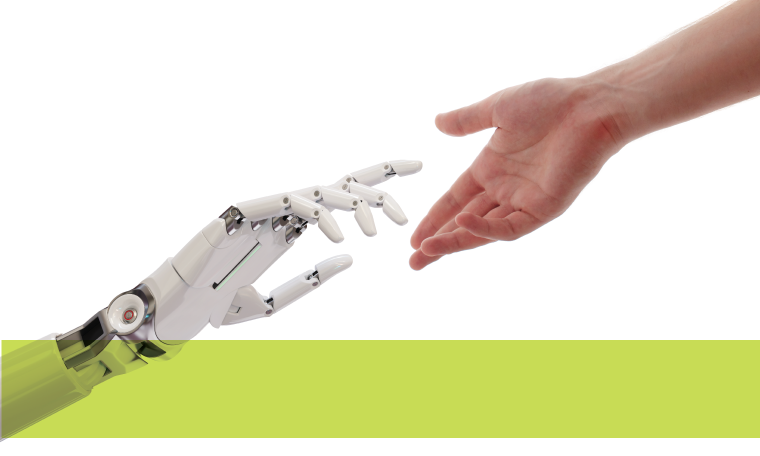
Some experts say AI could be a key tool in the future to help catch inappropriate behavior in the workplace.

The skills that robots have in the workplace are increasing rapidly from building cars to working factory lines to transcribing lengthy documents.

But catching sexual harassment in the workplace? It offers some intrigue to legal experts.

And considering sexual assault allegations in corporate America continue to occur with startling regularity, those experts say artificial intelligence could be a key tool in the future to help catch inappropriate behavior in the workplace. They quickly add, however, that such technology must work in tandem with HR professionals who can monitor and understand the data.

Silicon Valley is looking at ways to change the culture that is enabling sexual harassment and poor treatment of women in the workplace. California employment and entertainment litigation lawyer Eve Wagner, a founding partner of Sauer & Wagner LLP, a boutique law firm in Los Angeles, wrote in an op-ed on Law360.com that women have been empowered by publicly telling their stories.

She notes this cultural shift being seen around the issue is good, but told Workforce in a separate interview that there has been “a resurgence” of allegations. Although companies are considering artificial intelligence, or AI, to solve the problem, there are several factors to look at before it can work successfully, she said.

“A lot of companies now are implementing [AI] monitoring software,” Wagner said, adding that the reasons could be numerous — checking an employees’ job satisfaction, productivity, behavioral issues and potential harassment and retaliation. “It’s a newer trend and has not been tested out nationally to see the scope because obviously this infringes on people’s feelings of privacy.”

It’s a hurdle that attorneys and employers must be most aware of, one that changes depending on each state’s privacy laws. In California, Wagner said the privacy laws are stricter and state mandates are in place to bar employers from getting employees’ social-media passwords and GPS locations without consent.

Theoretically, the Electronic Communications Privacy Act of 1986, which prevents the government from monitoring electronic communications of individuals and businesses without consent, could protect employees, but Wagner said that once employees sign employee handbooks, they generally give consent to employer monitoring. Although most workplaces don’t actively check employee communications, she said just knowing that companies have the option is an unsettling feeling for the employee.

“It can create a stressful, demoralizing environment, even if it turns out that it’s not legally an invasion of privacy,” Wagner said.

AI also brings into question the data it could uncover and what HR needs to do about it. Sheryl Simmons, chief human resources officer at Maestro Health, said the data AI uses to potentially find inappropriate behavior must be balanced with a person’s work. More importantly, she said companies must have best practices and analysis in place for how to use the data before relying on it. Determining its relevance and if its findings should be pursued is how it can help the HR field in a more efficient way, without throwing massive amounts of data to sort through.

“Smarter should always mean more strategic, and that is where AI is going to free up resources,” Simmons said, adding that she sees AI being helpful not only for catching sexual harassment but also in recruiting, benefits, onboarding and management.

AI expert and principal analyst Ray Wang is passionate about technological tools and how people use them. As the founder and chairman of Silicon Valley-based Constellation Research Inc., Wang works with companies to make technology better assist their business strategy and future success. He said AI’s aid in the workplace will show trends on communication and office culture comfort by recording data through technology’s natural language processing engines, which examine sentences and analyzes them for different types of patterns.

“As people start to pick up these patterns, you are learning culturally what are acceptable situations,” Wang said. “We are seeing these tools emerge as a way to help folks figure out what are normal types of communications.”

Wang said AI will yield false positive results at times, so the goal is to improve the precision of those false positives by looking at the patterns the data brings in and knowing when to use automation versus manual intervention. He is confident AI will be a major tool for compliance and regulatory requirements and will be a rising trend culturally and corporately.

Silicon Valley’s recent bouts with sexual assault allegations have tainted the tech hub’s image, and Wang said the area is being scrutinized because of it. Despite this, he sees many tech companies using AI tools to catch inappropriate behaviors that would otherwise go unnoticed.

“There are definitely abuses happening but there is a witch hunt going on in the Valley at the same time,” Wang said.

AI use will only grow in the workplace and outside of it, and attorneys agree that HR will need to be prepared on how to handle the data. Marko J. Mrkonich, an employment law attorney with Littler Mendelson in Minneapolis, said it is too soon to see case laws based on AI catching sexual harassment in the workplace.

Wagner added that such cases could make their way to federal courts, but both lawyers said the data does not necessarily catch physical harassment if it is only looking at electronic interaction in the office.

“Realistically, right now the most prevalent use of analytics is still in the recruiting and selection processes than it is in the workforce management process,” Mrkonich said. “There are all sorts of areas where data analytics have the potential to help drive better behavior and better decision-making.”

Ariel Parrella-Aureli is a former Workforce intern. Comment below or email editors@workforce.com.
Posted on November 9, 2017June 29, 2023

The Automation of HR: Take Us to Your CHRO

Back in 2014 the Associated Press started using automation software to write quarterly corporate-earnings reports.

This software, known as Wordsmith, is able to produce 3,000 such stories every quarter, which, according to the AP, is a tenfold increase from what its writers and editors were able to produce in the same time period.

By employing automation software to churn out corporate earnings stories, AP journalists are able to dedicate more time on reporting and breaking news. Journalism may not be the only traditionally white-collar field to be affected by automation if software expert predictions are correct.

Automation software — as well as artificial intelligence and machine learning — is on the brink of becoming ubiquitous in offices around the world, taking the repetitive, transactional work out of many traditional white-collar jobs, including many manual functions of human resources roles.

In short, jobs once thought to be immune from automation are likely to be transformed by it within the next 10 years. As automation software begins to creep into more businesses, the role of HR is set for a major transformation. In fact, the Society for Human Resource Management labeled automated HR one of its “Nine HR Tech Trends for 2017.”

“I think there are two ways to think about the implications for HR: How does the department operate, and how does the HR function report to the rest of the enterprise?” said Michael Chui, partner at McKinsey Global Institute, a global management consulting firm.

According to Carolyn Broderick, a member of SHRM’s HR Tech Expertise Panel, HR departments have their work cut out for them when it comes to workforce automation.

Please also read: Coming to Grips With the Effects of an Automated Nation on Workplaces

“I believe HR has a role for planning in the future. Jobs will have to be redesigned. Certain jobs are going to be enriched if mundane tasks are going to be automated,” said Broderick, who is senior HRIS analyst at Mount Sinai Health System in New York. “HR has to consider how humans and machines will work together.”

The Wave of Automation

Automated labor often leads to dystopian thoughts of a future where humans in the workforce are rendered obsolete by robots. However, the automation of tasks is nothing new for the American workforce, even in traditionally white-collar sectors. Spell checkers, Excel formulas and out-of-office replies are simple examples of automation already in use that make office jobs easier.

Most occupations have the potential for some automation, and it’s estimated that about half of all the activities people are paid to do in the world’s workforce could potentially be automated by existing technologies, according to a recent report from McKinsey.

“What this says to us is that there is a wide-ranging scope of automation technology, which, over time, will affect every role,” Chui said. “Not just workers who earn lower wages, but MBAs, JDs or MDs. We find the potential for automated work in many occupations.”

The difference between automation already in use and the automation revolution many experts predict is that new advances in artificial intelligence and machine learning are able to automate tasks that were thought to be too difficult for a machine to do accurately.

In other words, it was more efficient, quicker — and ultimately cheaper — for a human being to do them.

“I can automate a lot of things like email, for example,” said Jason Hite, founder and chief people strategist at Daoine Centric, a Virginia-based HR consultancy. “It’s just a ping and an echo. But the difference between automation and artificial intelligence and machine learning is that an email is now read by an AI algorithm. The email you get back is now responding to you with an answer to the question you asked. You’re getting a tailored response.”

Speed and efficiency have always been among the main drivers behind automation in the workforce, as it allows for increased productivity. The same holds true for the current economic climate.

“Automation of activities can enable businesses to improve performance by reducing errors and improving quality and speed, and in some cases achieving outcomes that go beyond human capabilities. Automation also contributes to productivity, as it has done historically,” the McKinsey report states.

It’s possible that automation programs could displace highly skilled jobs in the distant future. But in the near future, the jobs most susceptible to automation are those in manufacturing, accommodation and food service, retail trade and some middle-skill jobs. These jobs share certain commonalities such as physical activities in highly structured and predictable environments, as well as the collection and processing of data.

“There are certain jobs involving data prep or data entry that will be affected. People spend an awful amount time scrubbing data,” Broderick said. “With automation taking over that process, folks can spend more time analyzing data and writing about it. There are already programs that can do that.”

When it comes to HR, Hite said there will be opportunities to automate many transactional tasks and noted that some forward-thinking companies have already started to do so. As an example, he pointed to companies using smart devices to help keep track of employees on leave.

“There are a number of companies that have already integrated with Amazon Echo. As a manager, you can ask it, ‘How many people are on leave today?’ ” said Hite, a 2016 Workforce Game Changer. “There’s no need to call HR about that anymore.”

Experts predict the adoption of automation technology will push HR in new directions, drastically transforming the department’s role within organizations, especially when it comes to artificial intelligence and machine learning.

It’s an Automated World and HR’s Just Livin’ in It

One of the benefits of automating transactional HR tasks is, like AP using Wordsmith to allow reporters to focus on breaking news, that HR departments can focus on activities that bring value to the organization. By adopting sophisticated automation technology with artificial intelligence, HR will have the opportunity to focus more energy on the employee experience.

For example, a benefits expert will no longer need to spend time answering emails with simple questions about the company’s benefits packages. That person can set up a chatbot, which is a computer program that conducts a conversation via auditory or textual methods. The chatbot would respond with the correct information while the employee gets to focus on the analysis of how workers are using the organization’s benefits packages.

“The creative part of benefits will need to be handled by humans,” Broderick said. “ ‘What’s the message?’ ‘How do we tailor it and change it?’ and ‘How will people react?’ There should probably always be some kind of human touch point in HR communications. Every company is different, every culture is different. I don’t really see that being taken over by a computer.”

Similarly, automated recruiting programs would allow companies to improve the human element of their talent acquisition processes.

Currently, 82 percent of job seekers are frustrated with an overly automated recruiting experience, according to a Randstad U.S. report released in August. While automation has seemingly created a problem for organizations, it has also created an opportunity for HR to develop a solution that makes the recruiting process more enjoyable for job seekers. In fact, 82 percent of job seekers said the ideal interaction with a company is one where innovative technologies are used behind the scenes and come second to personal, human interaction.

“Even if parts of recruiting can be automated, there are certain things that can’t be replaced. The grunt work can be automated. Entering data about candidates, if that’s automated, recruiters can be more strategic on selecting the best candidates,” Broderick said.

What’s more, automated recruiting technology may help organizations stay compliant with hiring laws since, theoretically, bias and emotional decisions could be removed from the recruiting process. However, Broderick said that would only be true as long as the process, which was first developed by a human, is free from bias to begin with.

Hite agrees with Broderick on this point.

“If the data is bad, the output will be bad. That’s why we need to start thinking about where this is going,” he said. “I think this is really going to be a big moment for HR. It’s going to test who’s leaning forward.”

Change Management

Perhaps the biggest opportunity for HR related to automation technology is managing the change that will take place within organizations. On one hand, processes in place will need to be evaluated and possibly revamped in order for the benefits of automation technology to be fully realized. Furthermore, HR will need people to create communication strategies related to automation changes. And strategies to train — or even re-train — employees to use these new tools will need to be developed.

“Change management is going to be huge,” Hite said. “It’s going to force HR to look at the end user. I really think the break point will be when HR starts to understand how these advances will improve the lives of their stakeholders. If it only complicates the end user’s life even a little bit, that’ll be an issue.”

Higher productivity is a clear benefit of a more automated workforce. However, as organizations stand to gain from this impending technological shift, HR will also need to plan for the negative impact that a portion of the workforce will ultimately endure.

Max Mihelich is writer in Chicago. Comment below or email editors@workforce.com.

Posted on October 27, 2017June 29, 2023

China Gorman Helps Unleash New HR Tech Industry Event

China Gorman
China Gorman will lead the Unleash HR technology conference in the spring.

When human resources leaders talk about China there’s a fair chance they’re referring not to the Asian nation but to China Gorman, the one-time Great Place to Work CEO, former Society for Human Resource Management chief operating officer and longtime industry thought leader, adviser and speaker.

HRN, a European-based event organizer that’s behind a fledgling U.S. HR technology conference, is counting on Gorman’s strong personal brand and deep industry connections to boost its presence stateside.

The outfit tapped Gorman Oct. 23 to manage its North American operations, including helping it rebrand and run its second U.S. conference. The event, once known as HR Tech World and rebranded as Unleash as of Oct. 24, is set to take place next May in Las Vegas.

In building its American operations, HRN is going head to head with the existing HR Technology Conference. The LRP Publications-run event all but created the HR technology exposition phenomena when it kicked off its first gathering 20 years ago.

HRN’s focus on the future of work and unique programming separates it from existing conferences, Gorman said. “This isn’t our parents’ HR tech conference, that’s for sure,” she said.

An HR Technology Conference spokeswoman declined to comment.

The rival conferences hope to appeal to HR practitioners at a time when companies are using more cloud-based services for payroll, benefits, performance, learning and other aspects of people management. At the same time, venture funds are pouring an unprecedented amount of capital into HR technology startups.

The trends, along with a low barrier to entry for software-as-a-service providers, have led to an explosion of workplace apps, and to new platforms for helping HR technology departments navigate available options. Close to 500 vendors exhibited at the HR Technology Conference in mid-October, which also took place in Las Vegas.

AI Works
AI Works was among the nearly 500 vendors at this year’s HR Technology & Exposition conference in Las Vegas. (Photo by Rick Bell)

The past few years also have seen a proliferation of HR tech blogs, review sites — including some with crowdsourced reviews — and other content devoted to assessing HR technology. HR executives need help understanding how HR systems can help them innovate instead of succumbing to thinking of them as a “silver bullet,” said HR tech consultant Nov Omana, chief executive and co-founder of Collective HR Solutions Inc.

Today, information on what’s available comes in many forms, including news sites, webinars and whitepapers. “Tech conferences are getting less attendance by buyers and more by vendors, especially startups looking for” partners, Omana said. “We need to change how we seek knowledge on technology and what it can do for us, and it won’t be through conferences.”

Economic and other trends make it critical for organizations to focus on their people, not just when they’re at work but in their personal lives, and HRN and its founder Marc Coleman get the repercussions that has for HR technology, said Jason Averbook, co-founder of workplace consulting firm LeapGen, and a speaker at previous HR Tech World and HR Technology Conference meetings. “We live in a world where the focus must be on the workforce, the changes required to service a new workforce and everything needed to unleash that workforce to reach its full potential,” Averbook said.

Technology is just part of what Unleash will cover, Gorman said. Of equal importance is helping organizations understand the changing nature of work and its impact on business growth, competition, budgets, innovation and people. “Unleash will focus moving forward with people at the heart of everything we do,” she said.

Gorman will work for Unleash part time from her home base in Las Vegas. “I see myself as a rocket booster for the Unleash team,” she said.

She remains a director at for-profit companies Motivis Learning and Swedish-based Universum Global, nonprofits Human Resource Certification Institute and Jobs for America’s Graduates, and continues as a member of Kronos’ advisory board. She’s also continuing as managing director of the Future Talent Council, a startup members-only group on talent and the economy.

From 2013 to 2015, Gorman was chief executive of Great Place to Work Institute, the San Francisco management consultant that teams with Fortune magazine to produce the annual “Best Companies to Work For” list series.

She was SHRM’s COO from 2007 to 2010 and before that held management positions at several outplacement and HR services firms.

Michelle V. Rafter is a Workforce contributing editor in Portland, Oregon. Comment below or email editors@workforce.com.


Posted on October 18, 2017June 29, 2023

No, You do not Need a Workplace Emoji Policy

Jon Hyman The Practical Employer

I read a blog yesterday that asked the following question? “Do you need a workplace emoji policy?”

They say yes, I say an unequivocal no.

They argue that inappropriate emoji use might lead to misunderstandings and harassment liability.

You may want to look into having a custom set of emojis defined for use throughout the company (and leave out the easy to misinterpret emojis, like the winky face, tongue out, kissy face, or racially diverse options). It’s not that some emojis are inappropriate on their own, but the context makes a big difference. Also, if an employee is not fluent in emoji, they might misunderstand what they are saying, or being told/asked, if an emoji is used. Using the wrong emoji could be seen as evidence of a hostile work environment, discrimination, or sexual harassment. As such, if you are going to allow the use of emojis, you may want to have training available to employees on what the emojis mean.

They are also corporate killjoys. (And we wonder why people can’t stand lawyers.)

This might be silliest thing I’ve read in a long time. Most employers already have an emoji policy. It’s called your harassment policy. You do not need a separate policy to forbid your employees from using what is becoming an acceptable form of communication. Heck, even courts are starting to use emoji in opinions.

We can have a healthy debate over the professionalism of emoji use in business communications (like this one). Indeed, according to one recent survey, “nearly half (41%) of workers use emojis in professional communications. And among the senior managers polled, 61% said it’s fine, at least in some situations.” My sense is that your view of this issue will depend on a combination of your age, your comfort with technology, and the age of your kids.

As for me, I use emojis all the time, even at work. Email is notoriously tone deaf. It’s easier for me to drop a ? into an email to convey intent than to tone down my sarcasm.

In other words, ?. Emojis are ?, and its perfectly fine to ❤ them at work. ✌

Jon Hyman is a partner at Meyers, Roman, Friedberg & Lewis in Cleveland. Comment below or email editors@workforce.com. Follow Hyman’s blog at Workforce.com/PracticalEmployer.

Posted on September 21, 2017June 29, 2023

Hiring and the H-1B Visa

U.S. employers, including domestic divisions of India-based outsourcers, are curtailing their use of the controversial H-1B visa, which allows organizations to bring highly skilled foreigners into the United States to work. Simultaneously, other businesses are bulking up overseas offices or sending employees who are foreign nationals to work out of offices in their home countries.

Employers that have used the visas have been scrambling to revise policies ever since President Donald Trump’s victory in the 2016 presidential election when the controversial program was targeted for overhaul. Whatever workplace policies are being implemented, a sharp dip in 2018 fiscal year applications for H-1B visas makes it clear that employers aren’t waiting on legislation or federal edicts from new officials before they take action.

Applications filed by the April deadline declined for the first time since 2013, to 199,000 from 236,000 for fiscal year 2017. The 16 percent decrease is a sharp reversal from the previous five years, during which time applications for the visa rose a cumulative 90 percent.

U.S. Citizenship and Immigration Services, the Homeland Security department that administers H-1Bs, grants 65,000 of the temporary work visas annually to foreign workers with specialized skills, plus another 20,000 to foreigners with advanced degrees. The visas are good for three years and can be extended for another three.

In mid-July, the USCIS said it had returned all applications not selected in the annual April lottery the agency holds to award the visas. The USCIS has not released names of employers whose applications were accepted or signaled when that data would be made public.

To bypass potential H-1B problems, U.S. companies are increasing hiring in their overseas offices. Nicole Sahin runs a PEO, or professional employer organization, that helps major U.S. companies and fast-growth startups hire salespeople in 150 countries. Since late 2016, Sahin has seen a 30 percent jump in clients sending foreign nationals back to their home countries or hiring locally, all direct responses to coming changes to the H-1B.

hire
Nicole Sahin runs a professional employer organization that helps major U.S. companies and fast-growth startups hire salespeople in 150 countries.

“There’s a lot of fear around it,” said Sahin, co-founder and chief executive at Globalization Partners in Boston. “Some employees want to leave the U.S. because they don’t feel like they’d have the security they had under the previous administration.”

Outsourcers Respond by Increasing American Workforce

Indian outsourcers, which accounted for 69 percent of all H-1B workers as of 2015, the latest available data, are taking some of the most drastic measures to deal with changing policies. After the Justice Department and USCIS announced stepped-up H-1B audits earlier this year, a handful of Indian outsourcers said they wouldn’t use the visas to bring as many workers into the country.

Infosys Ltd., which has received thousands of H-1Bs over the years, plans to hire 10,000 U.S. workers in the next two years and open four technology centers here. In June, Infosys paid $1 million to settle a lawsuit brought by the state of New York that claimed the outsourcer routinely abused the H-1B visa program, and in doing so, failed to compensate workers fairly or pay required taxes.

In late June, Wipro Ltd., another India-based outsourcer, said it had hired more than 1,600 U.S. employees over the previous six months, and that U.S. citizens represent more than half of its workforce here. That’s a substantial change from recent years, when the company was among the top five H-1B visa users in order to staff its U.S. offices with Indian workers.

Indian outsourcers’ new labor model will no doubt be welcomed by H-1B critics, who claim the foreign companies haven’t adhered to requirements of the visa program to attempt to fill jobs with Americans before handing them to immigrants. Critics also fault the program for allowing H-1B employers to pay local prevailing wages that generally are less than what most U.S. workers with similar jobs earn.

The same critics maintain loopholes and lax oversight have allowed companies such as The Walt Disney Corp. and Southern California Edison to lay off highly paid U.S. employees and replace them with lower-paid foreign workers, many of whom are outsourcer employees. In several highly publicized cases, the laid-off workers were required to train their replacements. Such practices have led to a number of lawsuits, including one filed by a group of former Disney World IT employees who maintain they were discriminated against for being American.

Big Boosts for Gig Economy, STEM Workers?

Uncertainty about the visa program could push employers to embrace the gig economy and hire independent contractors, said Yvette Cameron, senior vice president for strategy and corporate development for SAP SuccessFactors. If employers were using H-1Bs to lower costs, using gig workers who aren’t eligible for benefits or pensions is another way to keep labor costs low, said Cameron, whose job puts her in touch with thousands of SAP SuccessFactors customers.

SAP SuccessFactors
Yvette Cameron is senior vice president for strategy and corporate development for SAP SuccessFactors.

Historically, U.S. companies relied on H-1B visas to hire foreign graduate students with science, technology, engineering and math degrees from American universities. However, H-1B reform and Trump administration immigrant policies have already put a damper on applications to U.S. colleges and universities from India, China and the Middle East. As a result, total applications from foreign students dropped 38 percent for fall 2017, according to the American Association of Collegiate Registrars and Admissions Officers.

Stepping up domestic STEM studies could help fill the gap left by fewer foreign grad student coming here. Companies have gotten accustomed to hiring employees who can hit the ground running, said Ron Hira, an H-1B expert and political science professor at Howard University in  Washington, D.C. Having government agencies subsidize on-the-job training “might be a way to fill genuine gaps,” Hira said.

Employees also need to step up their training, said Katherine Jones, a partner and director of talent research at consultancy Mercer. Starting STEM education in elementary or high school could help, Jones said, as could projects such as the charter public high school Oracle is paying for that opens this fall on its Redwood City, California, campus in the heart of Silicon Valley. Coding schools and other types of short-term bootcamps that teach STEM skills are other options, Jones said.

Reforms Pending in Congress, White House

Ultimate responsibility for rewriting immigration laws lies with Congress. Since the start of the current session, supporters and opponents of the current H-1B system have introduced bills that would expand or curtail it respectively. A bill re-introduced by Rep. Darrell Issa, R-California, in January would raise minimum salaries for H-1B visa worker to $100,000. A competing bill sponsored by Sens. Chuck Grassley, R-Iowa, and Dick Durbin, D-Illinois, would kill the H-1B lottery and award the visas first to holders of advanced degrees from U.S. universities, then to high-salary workers, then to people with valuable skills. The H-1B and L-1 Visa Reform Act, also introduced in January, would bar companies from having more than half their employees on H-1B or L-1 visas, and prohibit companies from replacing U.S. workers with visa holders, among other things. Both bills have been referred to committee but no other action has been taken.

Other recent attempts to pass H-1B reform laws have gone nowhere, and it’s a toss-up whether a Congress that’s been preoccupied with repealing and replacing the Affordable Care Act and other issues will get to it this term, said Leon Rodriguez, who ran the USCIS under the Obama administration from 2014 until Trump took office.

“There are those who think the number should stay where it is or go backward, along with tighter restrictions,” said Rodriguez, who now practices immigration and health care law at Seyfarth Shaw LLP, in Washington, D.C. “Then there’s the school of thought that says let’s expand the numbers but also put in more safeguards protecting U.S. workers and design the system in a way that favors getting the highest levels of talent we can.”

In a June appearance before a congressional committee, Labor Secretary Alexander Acosta said the administration supports increasing the current $60,000 minimum salary for H-1B workers — which hasn’t changed since 1998 — to at least $80,000 as a way to stop the flow of cheap labor into the country.

Opponents to the administration’s H-1B clampdown say the policy shift is ill-conceived and ultimately could do the country more harm than good, particularly for a U.S. tech sector that’s seriously understaffed. In an address earlier this year, Eric Schmidt, executive chairman at Google parent company Alphabet called it “the stupidest policy in the entire American political system,” according to Fortune.com.

But Trump fans and critics of the program in its current form laud the president’s moves to protect U.S. jobs for U.S. workers. The present H-1B program undercuts American jobs by allowing companies to shift positions to outsourcers who pay substantially less or send the work overseas, argues Sara Blackwell, a Sarasota, Florida, lawyer who’s represented laid-off workers in H-1B lawsuits.

“We have executives who are outsourcing for cheap foreign labor,” Blackwell said.

Michelle V. Rafter is a contributing editor in Portland, Oregon. Comment below or email editors@workforce.com.

Posted on September 7, 2017June 29, 2023

YourForce: We’re All Technology Companies Now

We are all technology companies now. Technology has taken over operations, marketing and sales at companies large and small.

We’re also all tech workers. From back-end systems that manage production to the front end that customers see, technology is impossible to extricate from work.

Human resources work is also tech work, the central theme of this issue of Workforce. Those who went into HR because they enjoy working with people now find themselves managing massive enterprise software systems and digital apps that administer benefits enrollment and deliver training.

But through it all, the human touch is essential. We’re not just tech companies. We remain people companies, too. The work of HR lies in making the most of the human resources that continue to make our digital future a reality.

—Mike Prokopeak, Editor in Chief


IN THE SPOTLIGHT

Benchmark Senior Living launched its “I’m Engaged” campaign that puts employees front and center on direct-mail pieces, videos and ads. The campaign spotlights employees who exceed expectations and devote themselves to helping others and their senior residents. Bottom photo, director of community relations Lauren Stowell poses during the photo shoot. By putting a unique spin on an engagement “announcement” — which included a professional photo shoot with each “star” employee — the company hopes to convey the commitment employees have with the work they do.


READER FEEDBACK

One reader responded to Rick Bell’s Last Word column titled, “Take it Easy on the Boss; There’s a World to Save” in the July/August edition. Mary Ellen Wasiellewski had this to say: 

There is a myriad of balls that must be kept in the air by the “captains of the ship.” They are the first to get blamed and the last to be acknowledged. Much has been written about the isolation at the top tier. The same human problems face the leaders who keep us all in employed positions: death, divorce, disease, burnout and chronic stress. What does HR do to support those high performance individuals who drive these ships during times of person adversity? They, too, are often expected to just show up and work through it.

Workforce.com/TheBoss 


Two readers commented on the Workforce July/August print story titled, “Contracting a Cure for Prescription Drug Costs.” F.R. Fogenberg wrote: 

Good article based on MBGH Annual Pharmacy Program, and more information from the National Employer Initiative on Biologic & Specialty Drugs for employer plan sponsors available at www.specialtyrxtoolkit.org.

Reader David Moll added: As a pharmacist of 26 years, I would love to help other companies that self-insure do the same type of thing as Caterpillar has done. I am very much familiar with how PBMs work and have resources to tap to build a network for companies large enough to support their own benefits.

Workforce.com/DrugCosts


A couple of readers chimed in on the Workforce July/August story titled, “Change Jobs to Trim the Fat.” Reader Eli1mxp stated: 

My company has a robust wellness program. They encourage us all to take steps to improve our health. I worked 13 hours yesterday. I don’t think I could do more.

HerHealthySelf responded to Eli1mxp, saying: That’s the conundrum most employees face — grinding hours, limp home, answer emails, crash in bed. Get up, rinse and repeat. Most people don’t work an eight-hour day anymore (and the shady looks you get if you don’t answer email while on vacation … sheesh), yet to read articles like this, you’d never know that was the reality.

Workforce.com/TrimTheFat


Reader Bill Fotsch offered his thoughts on the Workforce July/August story titled, “Beyond Great: Features of Today’s Legendary Companies:” 

I appreciate the author’s focus on successful companies. I have a different list of companies that have stood the test of time longer than the companies that he suggested. Southwest Airlines, Capital One and BHP Billiton and hundreds of private companies treat their employees like trusted business partners, enabling them to make more money for their company and themselves. They consistently see both profits and engagement soar.

Workforce.com/legendary

We welcome your comments on these stories and others on our website. Be sure to follow us and give us a shout on Twitter at @Workforcenews, too. Hope to hear from you!

Posted on August 15, 2017June 29, 2023

Does a LinkedIn Request Violate a Non-solicitation Agreement?

Jon Hyman The Practical Employer

In Bankers Life and Casualty Company v. American Senior Benefits (Ill. Ct. App. 8/7/17), Bankers Life sued a former sales manager, Gregory Gelineau, for violating the following non-solicitation agreement after he jumped ship to American Senior Benefits, a competitor:

During the term of this Contract and for 24 months thereafter, within the territory regularly serviced by the Manager’s branch sales office, the Manager shall not, personally or through the efforts of others, induce or attempt to induce:

(a) any agent, branch sales manager, field vice president, employee, consultant, or other similar representative of the Company to curtail, resign, or sever a relationship with the company; [or]

(b) any agent, branch sales manager, field vice president or employee of the Company to contract with or sell insurance business with any company not affiliated with the company.

According to Bankers Life, Gelineau allegedly asked three of its employees to connect via LinkedIn. By connecting, Bankers Life argued, the employees could then view Gelineau’s profile, which would uncover job listings at American Senior. Galineau argued that he never used LinkedIn to send direct messages to Bankers Life employees, and instead merely sent “LinkedIn generic emails” asking them to form a professional connection on social media.

The court held that the mere act of asking someone to connect on the social network, via a generic, canned email generated by the network itself, did not violate the non-solicitation agreement:

Here, … the undisputed facts established that the invitations to connect via LinkedIn were sent from Gelineau’s LinkedIn account through generic e-mails that invited recipients to form a professional connection. … The generic emails did not contain any discussion of Bankers Life, no mention of ASB, no suggestion that the recipient view a job description on Gelineau’s profile page, and no solicitation to leave their place of employment and join ASB. Instead, the emails contained the request to form a professional networking connection. Upon receiving the emails, the Bankers Life employees had the option of responding to the LinkedIn requests to connect. If they did connect with Gelineau, the next steps, whether to click on Gelineau’s profile or to access a job posting on Gelineau’s LinkedIn page, were all actions for which Gelineau could not be held responsible. Furthermore, Gelineau’s post of a job opening with ASB on his public LinkedIn portal did not constitute an inducement or solicitation in violation of his noncompetition agreement.

In other words, like other courts to consider this same issue, a breach of a non-solicitation agreement requires active efforts on the part of the former employee to induce a former co-worker or customer to do something. The mere act of connecting on a social network is not enough; it’s akin to keeping the person’s email and phone number in your Rolodex.

If, however, you are concerned about ex-employees using LinkedIn or other social networks to connect with employees or customers, why not include language in your no-solicitation agreement to cover such a possibility?

“Solicitation” includes, but is not limited to, offering to make, accepting an offer to make, or continuing an already existing online relationship via a Social Media Site. “Social Media Site” means all means of communicating or posting information or content of any sort on the Internet, including to your own or someone else’s web log or blog, journal or diary, personal web site, social networking or affinity web site, web bulletin board or a chat room, in addition to any other form of electronic communication.

By defining “solicitation” to include passive social media connections and activities, you are at least putting yourself into a position to have a court consider shutting down an ex-employee for creating or maintaining these online relationships.

Jon Hyman is a partner at Meyers, Roman, Friedberg & Lewis in Cleveland. Comment below or email editors@workforce.com.

Posted on August 11, 2017June 29, 2023

Namely Sells Its HR Technology Platform as a Managed Service

Namely
Namely CEO Matt Straz.

To make it easier for resource-strapped small and midsized companies to set-up HR systems, Namely Inc. is borrowing from the past and selling its existing cloud-based HR technology platform as a managed service.

The New York-based company on Aug. 9 said it is offering a managed version of its HR technology platform called Managed Services, including core functions such as payroll, benefits and compliance along with features such as time keeping. Customers will have dedicated account managers who can do everything from run payroll to track benefits. Existing customers “frankly were asking for additional support,” said Namely founder and chief executive Matt Straz.

Straz said he is unaware of another company that runs payroll, benefits and compliance through managed services, which places Namely as the first to make such an offering. “There are companies like TriNet that run it through a professional employer organization, or PEO. And companies like Workday, Oracle and SAP” target much larger customers, Straz said. “As far as I know, we’re the only one that’s brought this type of offering to the market.”

Namely hopes its first-mover status will steer prospective customers toward it and away from competitors such as BambooHR.

Startups and fast-growth companies have been averse to adding sufficient HR systems, policies and personnel early in their life cycles. Whether by choice or accident, they wait too long and then develop serious people management problems, as a string of recent high-profile incidents at companies such as Uber, Tesla, Thinkx and Skip the Dishes have shown.

HR technology alone won’t stop sexual harassment and other illegal or unethical behaviors from happening, especially if a company’s upper management, board and financial backers condone it or turn a blind eye.

But a service with templates for compliance and other HR systems can save companies from building everything from scratch, which could make them more amendable to adopting the systems in the first place, Straz said. “I’ve founded three companies, and we had to build it as we went. It would have been nice to have been handed this stuff,” he said.

Managed services are a throwback to the HR outsourcing of previous decades, when major HR technology players offered to “lift and shift” large enterprises’ entire HR back-office operations. The transitions proved to be more problematic than anticipated, and thanks to the emergence of cloud-based services, HR outsourcing never grew as big as expected.

Regardless of size, any type of HR outsourcing might be a good short-term solution but bad in the long run because it encourages top management to view people as expenses not assets, said Bernie Aller, an HR industry veteran who now helps companies vet people-management systems.

“Would they consider outsourcing management of financial assets? That would never happen,” said Aller, who ran and sold an HCM and payroll processing business to Ceridian in 2000 before consulting. “As companies grow, at some point they recognize it’s their people who determine their performance” and are motivated to do better at managing them, Aller said. “Outsourcing it to a third party will never get you there.”

Managed services aren’t the only alternative for smaller organizations that can’t handle HR in-house. Technology vendors have offered comparable services through service bureaus. Small and midsized employers still use professional employment organizations for HR and recruitment process outsourcing for hiring.

HR technology integrators also fill the role of go-between for HR departments and vendors. Derrick Ware, founder and principal at Atriad in the Raleigh-Durham area of North Carolina, provides such services for his clients. At small companies, “The HR function is always overlooked,” said Ware, who got his start in HR technology working as vice president of global technology operations at PeopleFluent. “Or they bring someone in and call them an HR generalist and they don’t have the right background to keep the business out of trouble.”

Namely has been testing the service with an undisclosed number of customers. Managed services customers will pay a fee over and above the $12 per-employee, per-month subscription cost for the company’s technology platform. Target users for both the managed services and the platform are companies with 20 to 2,000 employees, with a sweet spot of 180 to 200 employees, Straz said.

Namely will run the managed service division from a year-old office in Austin, Texas, where it expects to add to a staff of 20 that’s already there. The company is using some of the $50 million in venture money it raised in December 2016 to fund the expansion.

Michelle V. Rafter is a contributing editor. Comment below or email editors@workforce.com.

Posted on August 9, 2017June 29, 2023

Could a Smart Mirror Make Us More Productive or Invade Our Privacy?

When you hear about a smart mirror, you think it’s a future endeavor. Then you hear it’s a real thing happening right now, and others have created similar tools — like HiMirror, a smart mirror that tracks your skin health. Or the one with a personal and business application — MirroCool, a personal assistant smart mirror and camera.

When I got an email about MirroCool, which uses facial recognition technology and keeps track of your calendar events and to-do lists, my mouth dropped. Not because it sounded like the next technology people would be grabbing,

but because it sounds like a choke on our increasingly shrinking private lives outside of technology.

MirroCool is the creation of the company’s founder and CEO Wojtek Kaszycki, who worked in business and investment in Poland for more than 20 years. Given his wide expertise in IT, consulting and finance, he set out on a new adventure to create the smart mirror that also acts as a personal assistant.

The advanced facial recognition system makes it a selling point and no longer seems like something you’d find in a futuristic film. But while it also seems convenient for organizing your day, taking selfies with friends and reading your face, it feels more like just another thing to connect to all of our devices and does not sound like it will improve any productivity, as it is meant to do.

Kaszycki begs to differ, and said the mirror is compatible with organizational apps on smartphones you use daily to sync up and provide all the information you need for your morning routine.

“What is the perfect personal assistant? A person or device that gives you information when you want and when it is done in a way that you don’t lose your time,” Kaszycki said.

Sure, efficiency is key, but having a mirror in my bathroom still sounds invasive. While it can be placed anywhere you wish — whether that is in the bathroom, in the living room or in an office space, the bathroom is getting the most points in terms of advertisement for the mirror’s locations.

It knows all my information and can tell me what I need to know based on smiles or frowns, but I don’t want to be bombarded with all my daily tasks first thing in the morning. When I am doing my hair — or the seldom occasion that I wear makeup — the last thing I want is to see bubbles of information blasted back at me from my reflection. How many productivity hacks do we need these days?

MirroCool’s Instagram shows examples of messages the smart mirror can shoot at the user to be ready for the day.

Kaszycki hopes for just one in the future and sees the mirror as a one-stop memo. Technology is becoming more intelligent and is ever-changing; mirrors will always be a necessity, he said.

“MirroCool is safer and more secure than a regular smartphone,” he said. He reasons that smartphones connect to the internet, whereas the mirror is connected to just the MirroCloud, which does not store personal data but rather numbers from face recognition vectors. If the cloud were to be breached, hackers would not be able to connect the numbers to specific people.

Kaszycki also shared that you can turn the camera off for more privacy and always need to turn it on manually to take a photo. He said privacy is the biggest concern of his customers, but hearing these features did calm me down about user safety, although not enough to use a MirroCool.

I asked my friends and coworkers if they shared my same opinion, and they all felt similarly terrified of the addition of a smart mirror in a sacred place like the bathroom. With all the increased tech in our lives, meditation and yoga are seeing an uptick in our generation who want to get away from all the screens — myself included. Picking up a fiction book rather than reading online or watching the real sunset instead of it being through a screen is so much more meaningful these days; even at work, people are adapting to methods of not being so “on” all the time.

Although one could put the mirror in the hallway or even a workspace for communal use, the tools we already have — our smartphone, computer, smart watches and even tablets — help people manage their lives, stay productive and remind us to send flowers to grandma. Having a mirror at work to ping us for meetings or work-related events is a waste of wall space; we already have our computer and phone beeping at us constantly.

The Kickstarter campaign surpassed its goal within two days of being open.

My skepticism might be small in the target audience of the product. MirroCool Inc. launched its smart mirror on Kickstarter  on July 11 to an anxious crowd ready to get their hands on the new personal assistant. By day two, the campaign had reached its backing goal of $50,000. Currently, it stands at over $68,000 with 15 days to go. Kaszycki said he hopes to reach between $500,000 and $700,000, and most of the backers are from the U.S.

I am struggling to find out who would want a selfie-taking-assistant mirror in their sacred space or how it would amplify their lives, but the campaign shows that there’s clearly a market for this new item. While I cannot foresee myself ever using it, I can reach to see the appeal of a mirror that takes that perfect selfie you want when you are looking back at yourself. I, like so many these days, am not ready to jump into the immediate future; sticking with a cell phone that tells me the weather and reminds me to check my laundry is innovative enough.

Ariel Parrella-Aureli is a Workforce intern. Comment below or email editors@workforce.com.

Posted on August 1, 2017June 29, 2023

NBC Reignites Privacy Debate by Requiring Job Seekers’ Social Media Passwords

Jon Hyman The Practical Employer

“Those who cannot remember the past are condemned to repeat it.”

George Santayana

It’s been eight long years since Bozeman, Montana, set the internet on fire by requiring that job applicants for municipal positions turn over passwords to their personal social media accounts as part of the application process. In the wake of that story, states rushed to introduce legislation prohibiting this practice; many succeeded. And, the story more or less died.

Thank you, NBC, for reigniting it.

From the New York Post:

A fired NBC employee claims a recruiter who initially contacted her for a job as an audio-visual coordinator told her NBC “specifically asked for good-looking employees”— and wanted to see pictures before she could get her foot in the door.

Stephanie Belanger says the recruiter asked her “to show her Facebook/Instagram profile to NBC before she could be interviewed.”

Despite all the the negative press that this story is going to receive, I would be surprised if one-percent of one-percent of all employers have even considered asking a job applicant for access to a private social-media account, let alone carried through on the thought by making it a hiring requirement.

And do you know why most (nearly all?) employers do not do this? It’s bad HR policy, with significant legal risk:

  • EEO Risks: Mining Facebook and other social sites for information on job applicants can reveal a wealth of protected EEO information (age, religion, protected medical information, genetic information). The risk is great enough when the information is publicly available; it is exponentially heightened when you gain unfettered access to information shielded by a password. For some thoughts on best practices on conducting Internet searches on applicants or employees, click here.
  • Stored Communications Act Risks: At least one court has concluded that an employer who requires employees to disclose passwords to social media sites violates the federal Stored Communications Act, which extends liability to parties that exceed authorization to access electronic communications. While this area of the law might be unsettled, testing it could prove a costly mistake.
Legal issues aside, this story raises another, more fundamental, question — what type of employer do you want to be? Do you want to be viewed as Big Brother?
Do you want a paranoid workforce? Do you want your employees to feel invaded and victimized as soon as they walk in the door, with no sense of personal space or privacy?
Or, do you value transparency? Do you want HR practices that engender honesty, and openness, and that recognize that employees are entitled to a life outside of work?
Social media provides a lot of benefits to employers. It opens channels of communication between employees in and out of the workplace. And, when used smartly, it enables employers to learn more about potential employees than ever before. You can learn if an employee has good communication skills, is a good cultural fit, or trashed a former employer. But, this tool has to be used smartly to avoid legal risks. Requiring passwords is not smart.
While it seems like we cannot recall a time without social media in our lives, it remains a new and developing form of media. The rules and regulations that govern it are still evolving. Moreover, governments are looking for opportunities to regulate it.
If a small minority of businesses pursue this poor HR practice, state legislatures and Congress will continue pursuing legislative solutions. Do not provide the government the opportunity. Can we all just agree that requiring social media passwords is a bad idea and finally move on from this story?
Jon Hyman is a partner at Meyers, Roman, Friedberg & Lewis in Cleveland. Comment below or email editors@workforce.com.

Posts navigation

Previous page Page 1 … Page 11 Page 12 Page 13 … Page 27 Next page


Webinars


White Papers


  • Topics

    • Benefits
    • Compensation
    • HR Administration
    • Legal
    • Recruitment
    • Staffing Management
    • Training
    • Technology
    • Workplace Culture
  • Resources

    • Subscribe
    • Current Issue
    • Email Sign Up
    • Contribute
    • Research
    • Awards
    • White Papers
  • Events

    • Upcoming Events
    • Webinars
    • Spotlight Webinars
    • Speakers Bureau
    • Custom Events
  • Follow Us

    • LinkedIn
    • Twitter
    • Facebook
    • YouTube
    • RSS
  • Advertise

    • Editorial Calendar
    • Media Kit
    • Contact a Strategy Consultant
    • Vendor Directory
  • About Us

    • Our Company
    • Our Team
    • Press
    • Contact Us
    • Privacy Policy
    • Terms Of Use
Proudly powered by WordPress